New York City is the novel's primary setting and emotional anchor, a place of both profound loss and tentative recovery for the protagonist, Theodore Decker. It is the city where his mother dies in a terrorist bombing at the Metropolitan Museum of Art, an event that shatters his world and leaves him orphaned and adrift. Yet, New York is also the site of his eventual salvation, first through the temporary refuge offered by the wealthy Barbour family on Park Avenue, and later through the enduring sanctuary he finds with James Hobart in Greenwich Village. The city's geography—from the opulent apartments of the Upper East Side to the dusty, antique-crowded shops of the Village—maps the trajectory of Theo's grief, his descent into a life of crime and addiction, and his fragile, hard-won return to a semblance of stability.
The Herengracht is the Amsterdam canal where Theo Decker stays in a hotel during his desperate Christmas-week trip to recover the stolen painting The Goldfinch. It serves as the atmospheric and symbolic center of the novel's climactic Amsterdam sequence, a place of fog, snow, and moral reckoning where Theo confronts the consequences of his actions and ultimately receives the painting back.
The Metropolitan Museum of Art is the central location of the novel's inciting catastrophe, a terrorist bombing that kills Theo Decker's mother and sets the entire plot in motion. It is also the site where Theo first sees Pippa Blackwell, meets Welty Blackwell, and acquires the titular painting, The Goldfinch, making the museum the symbolic and literal origin of both his trauma and his destiny.
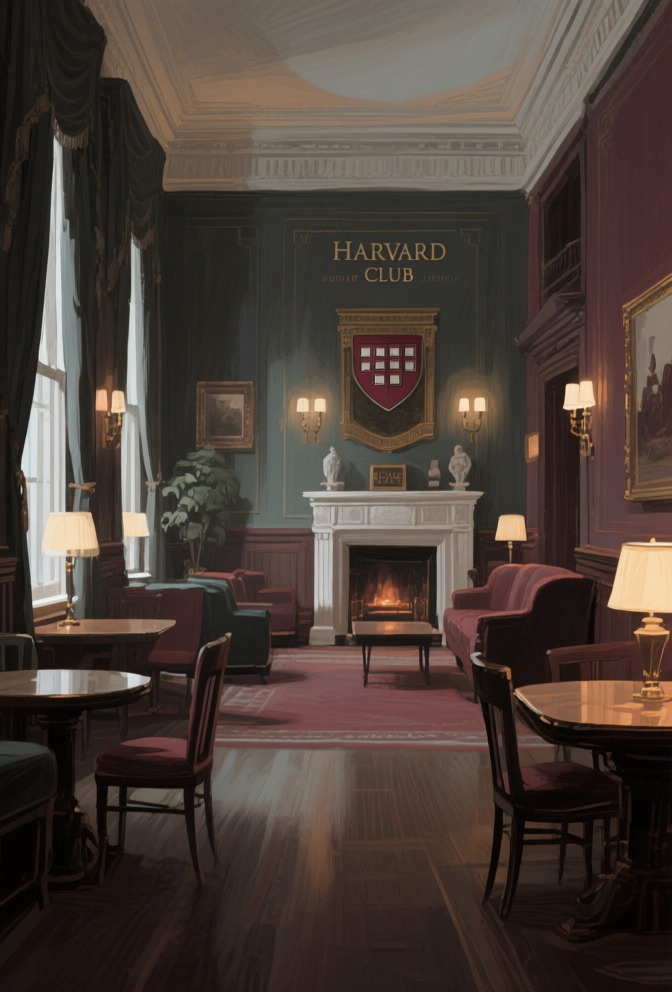
The Harvard Club is a private social club in Midtown Manhattan where Lucius Reeve, a shady art-world figure, confronts Theo Decker over a fraudulent antique chest-on-chest sold by Hobart and Blackwell. The meeting escalates Reeve's blackmail campaign, as he reveals he knows Theo was present when the Fabritius painting was stolen from the Metropolitan Museum and demands half a million dollars for the painting's return, threatening to expose both Theo and Hobie to the authorities.
Frankfurt is a German city that serves as a crucial offstage location in the novel, where the stolen painting The Goldfinch is secretly held by Sascha's associates after the failed Miami deal, and where the German police eventually raid an apartment to recover it along with dozens of other stolen artworks.
The Pond in Central Park is a recurring location in Theo Decker's life, serving as a site of memory, loss, and connection. It is where he and his mother often met, where he scattered her ashes, and where he returns in moments of crisis to confront his grief and the passage of time.
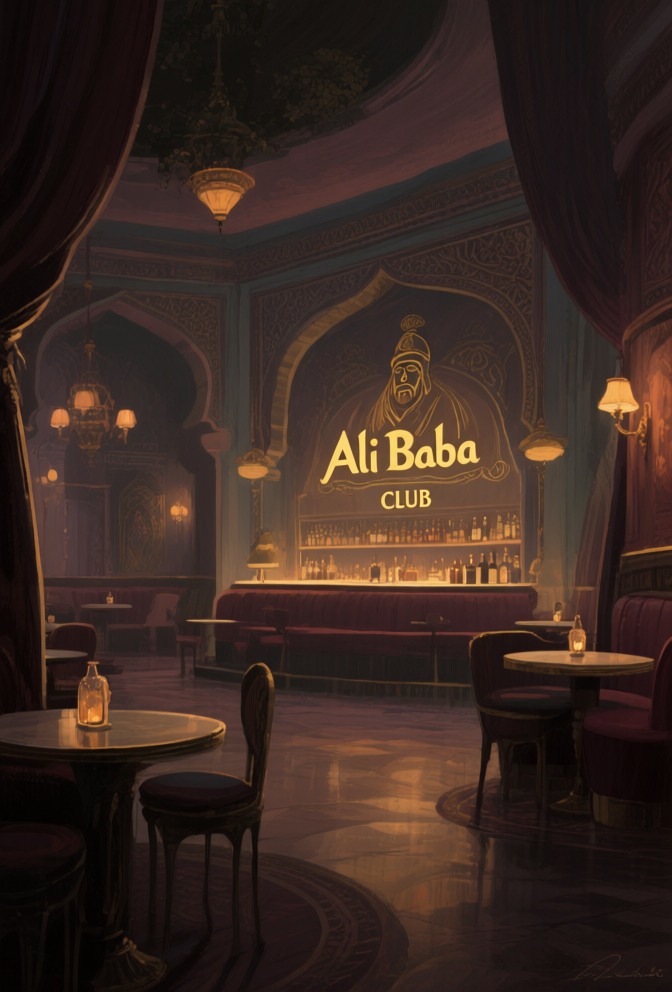
The Ali Baba Club is a gritty, 24-hour-a-day bar on Avenue C in Manhattan's Lower East Side, where Theo Decker and Boris Pavlikovsky go after their reunion in the East Village. It serves as a raw, confessional space where Boris reveals that he stole The Goldfinch from Theo years earlier, and where the two friends, high on cocaine and vodka, confront the central betrayal of their relationship.
Antwerp is a Belgian city that serves as Boris Pavlikovsky's primary European base of operations, where he keeps a flat and a car, and from which he orchestrates the recovery of The Goldfinch. It is also the city where Horst's associate Sascha attempted to use the painting as collateral in a drug deal, and where the final negotiations for its return were conducted.
Texas is the state where Pippa Blackwell is sent to live with her aunt Margaret Blackwell Pierce after the museum bombing, a relocation that separates her from Hobie and Theo and becomes a source of unhappiness for her. The state also serves as the setting for Theo's father Larry Decker's final, fatal car crash, and its vast, empty landscapes contrast sharply with the dense, memory-laden streets of New York City.
The Double R Apartments is a dilapidated transient hotel on the highway between the Las Vegas airport and the Strip, where Kotku lives with her mother. It serves as a key setting for Boris's relationship with Kotku and for the darker, more desperate side of Las Vegas life that Theo encounters.
The emerald earrings, a family heirloom belonging to Theo Decker's mother Audrey, are stolen by Theo's father Larry before he abandons the family, later given to his girlfriend Xandra, and eventually recovered by Theo after his father's death. They serve as a tangible link to his mother and a symbol of the betrayals and losses that shape his life.
The Lexus is the silver luxury sedan that Larry Decker acquires shortly before abandoning his family, a symbol of his secret double life in Las Vegas and the ill-gotten prosperity he flaunts after returning to claim Theo.
The trenchcoat is the white satin trenchcoat worn by Audrey Decker on the morning of her death, a garment that becomes a haunting emblem of loss and memory for her son Theo.
Walden, Henry David Thoreau's account of his experiment in simple living at Walden Pond, serves as a recurring intellectual touchstone for Theodore Decker during his exile in Las Vegas, offering a vocabulary for his alienation and a critique of the consumerist society he finds himself in, while also becoming a point of contention in his English class that introduces him to his only friend, Boris Pavlikovsky.
Boris Pavlikovsky and Myriam are business partners whose relationship is defined by mutual trust, professional competence, and a shared understanding of the criminal underworld. Myriam serves as Boris's right-hand operative, handling logistics, intelligence, and security for his high-stakes operations, including the recovery of the stolen Fabritius painting. Their partnership is characterized by efficiency, loyalty, and a tacit code of silence, with Myriam's judgment often proving decisive in navigating dangerous situations.
Pippa Blackwell's convalescence after the museum bombing is a slow, painful process marked by physical injuries, neurological damage, and psychological trauma, which permanently alters her life and her relationship with the world, music, and Theo Decker.
Theo Decker's drug addiction is a pervasive and destructive force that shapes his adult life, evolving from self-medication for trauma into a full-blown dependency that fuels his fraudulent business practices and nearly destroys him.
The state of being a fugitive pervades Theodore Decker's life from the moment he flees the bombed museum, through his escape from Las Vegas, his years of hiding the stolen painting, and his final flight to Amsterdam, where a shootout forces him to confront the impossibility of outrunning his past.
Loyalty is a central and contested value in *The Goldfinch*, tested repeatedly through betrayal, theft, and sacrifice. The bond between Theo Decker and Boris Pavlikovsky—rooted in shared trauma and adolescent survival—proves the novel's most enduring form of loyalty, surviving years of separation, theft, and violence. In contrast, familial and romantic loyalties (to Larry Decker, Kitsey Barbour, Tom Cable) are shown as fragile, conditional, or self-serving. The novel ultimately argues that true loyalty is not a matter of blood or obligation but of chosen, reciprocal devotion that persists through moral failure and catastrophe.
Reality, in Donna Tartt's *The Goldfinch*, is a deeply unstable and contested category, perpetually dissolving into illusion, artifice, and subjective perception. The novel systematically dismantles any fixed boundary between the authentic and the fake, the real and the simulated, from the hyperreal spectacle of Las Vegas to the morally ambiguous world of antique dealing, where masterful forgeries can be indistinguishable from originals. This pervasive uncertainty about what is real extends to the novel's central symbol, the painting *The Goldfinch*, which, through its theft and underground circulation, becomes a floating signifier whose 'reality' is defined not by its physical substance but by its function within a system of exchange and desire. The narrative ultimately suggests that truth is not a stable object to be possessed but a shimmering, paradoxical 'middle zone' where opposites coexist, and that the most profound human experiences—love, beauty, grief—are themselves a kind of necessary illusion that gives life its only meaning.
The recovery of Carel Fabritius's The Goldfinch, orchestrated by Boris Pavlikovsky through a reward claim with Dutch and German authorities, resolves the novel's central art-theft plot and transforms the painting from a hidden burden into a publicly restored masterpiece, while also generating a legal fortune that allows Theodore Decker to buy back the fraudulent antiques he sold.
Christmas recurs throughout The Goldfinch as a temporal marker of crisis, loss, and fragile reprieve, framing the novel's most pivotal scenes: the Amsterdam bombing aftermath, Theo's flight to Las Vegas, his father's death, and the Amsterdam shootout. The holiday's promise of warmth and family is repeatedly inverted into isolation, violence, and moral reckoning, making it a structural counterpoint to the novel's themes of chance, grief, and the search for meaning.
The Count of Morcerf, Fernand Mondego, shoots himself in his Paris mansion immediately after his wife and son abandon him, following his public exposure as a traitor who betrayed Ali Pasha of Yanina.
The Law of Retaliation is the central ethical principle that drives Edmond Dantes' transformation into the Count of Monte Cristo and governs his systematic campaign of vengeance against those who wronged him. It is the belief that a wrongdoer must suffer precisely the same harm he inflicted, an eye for an eye, a tooth for a tooth, and that this equivalence is not merely a personal desire but a form of divine justice executed through a human agent.
The Superman is a recurring conceptual figure in *The Count of Monte Cristo*, representing the ideal of a human being who, through immense suffering, accumulated knowledge, and vast wealth, transcends ordinary moral and social constraints to become an agent of divine Providence, wielding the power to reward and punish with near-absolute authority.
The Unknown Benefactor is a recurring figure in The Count of Monte Cristo who performs acts of extraordinary generosity while concealing his true identity, most notably saving the Morrel family from ruin and restoring their fortune. This figure is eventually revealed to be Edmond Dantes himself, the Count of Monte Cristo, acting under the alias "Sinbad the Sailor." The concept embodies the novel's themes of secret providence, the power of wealth used for good, and the complex interplay between vengeance and mercy.
Dantes' Arrest is the pivotal event that sets the entire plot of The Count of Monte Cristo in motion. On the day of his betrothal feast, the young and promising sailor Edmond Dantes is seized by police officers acting on a warrant, accused of being a Bonapartist agent. The arrest, orchestrated by the jealous Danglars and Fernand Mondego and ruthlessly exploited by the ambitious magistrate Gerard de Villefort, abruptly shatters Dantes' happiness and condemns him to fourteen years of unjust imprisonment in the Chateau d'If, transforming him from a guileless sailor into the vengeful Count of Monte Cristo.
The discovery of the treasure on the Island of Monte Cristo transforms Edmond Dantes from a fugitive prisoner into the immensely wealthy and powerful Count of Monte Cristo, providing him with the material means to execute his elaborate plan of vengeance and reward.
The execution at the Piazza del Popolo, scheduled for the first day of the Carnival, is a public spectacle of state violence that the Count of Monte Cristo manipulates to demonstrate his power over life and death, revealing the cruelty of human nature and the limits of legal justice.
The Meeting with Abbe Faria is the pivotal event in Edmond Dantes' imprisonment, where the desperate, suicidal young sailor discovers a fellow prisoner digging through the wall from the adjacent cell. This encounter transforms Dantes' fate: Faria, a learned Italian priest, becomes his mentor, reveals the reason for his betrayal, and bequeaths him the secret of the Monte Cristo treasure, thereby setting the course for Dantes' eventual escape and transformation into the Count of Monte Cristo.