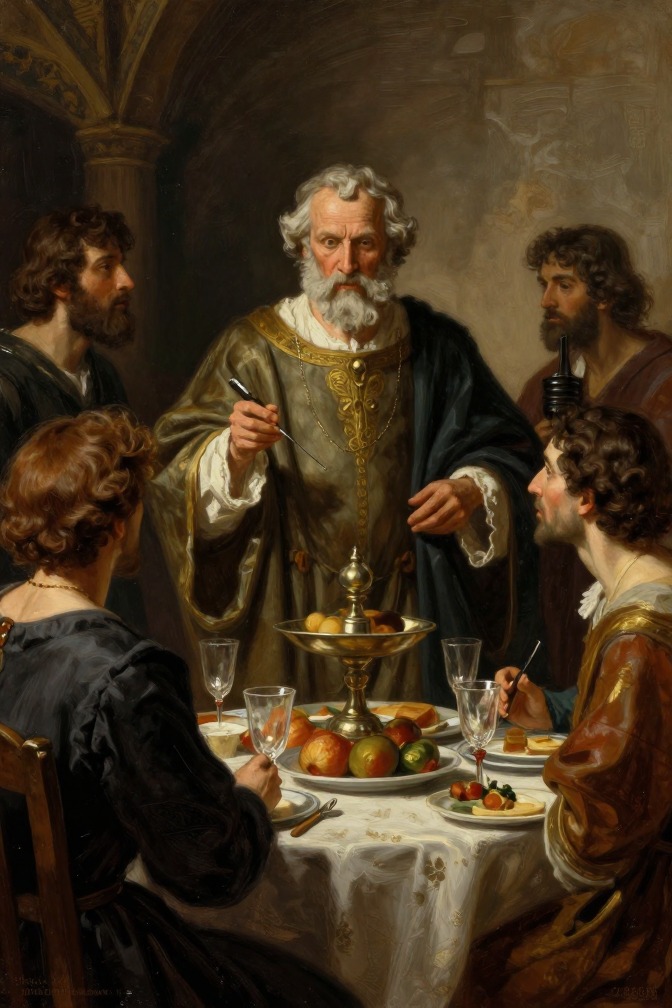
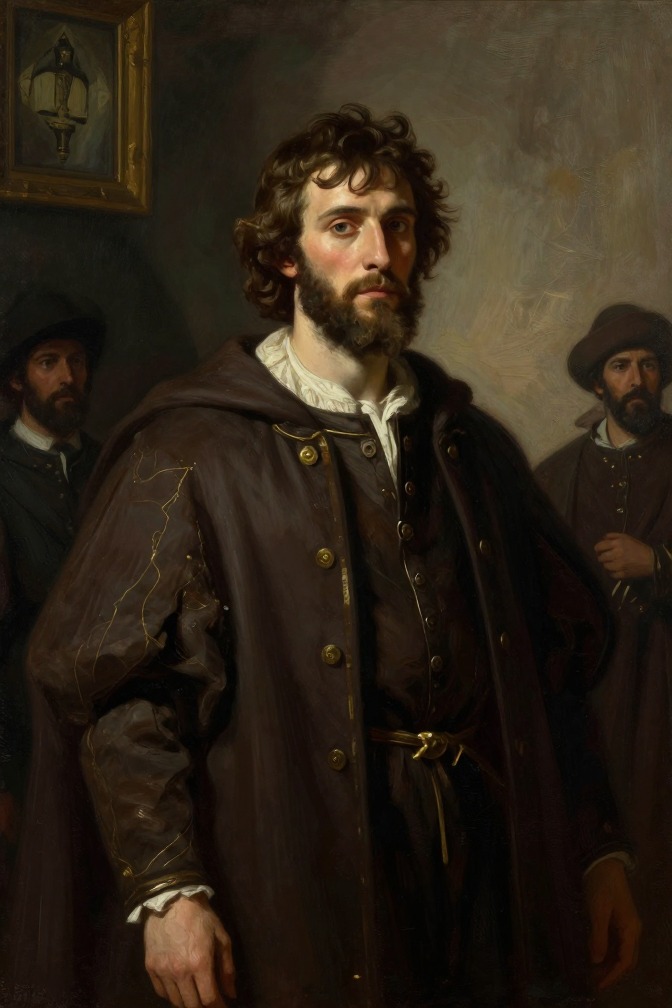
The Feast of St. Peter is one of the four great annual events in Rome, alongside the Carnival, Holy Week, and Corpus Christi, and its approach transforms the city from a state of dull apathy into a feverish murmur of anticipation, marking a sacred pause in the Roman calendar that draws visitors from across the world.
Holy Week is the Christian observance commemorating the Passion, Crucifixion, and Resurrection of Jesus Christ, occurring in the final week of Lent. In The Count of Monte Cristo, Holy Week serves as the temporal backdrop for the novel's climactic Roman episodes, framing the Carnival's conclusion and the subsequent solemnity that accompanies the execution of Andrea Rondolo and Peppino, as well as the moral and spiritual reckonings faced by the characters.
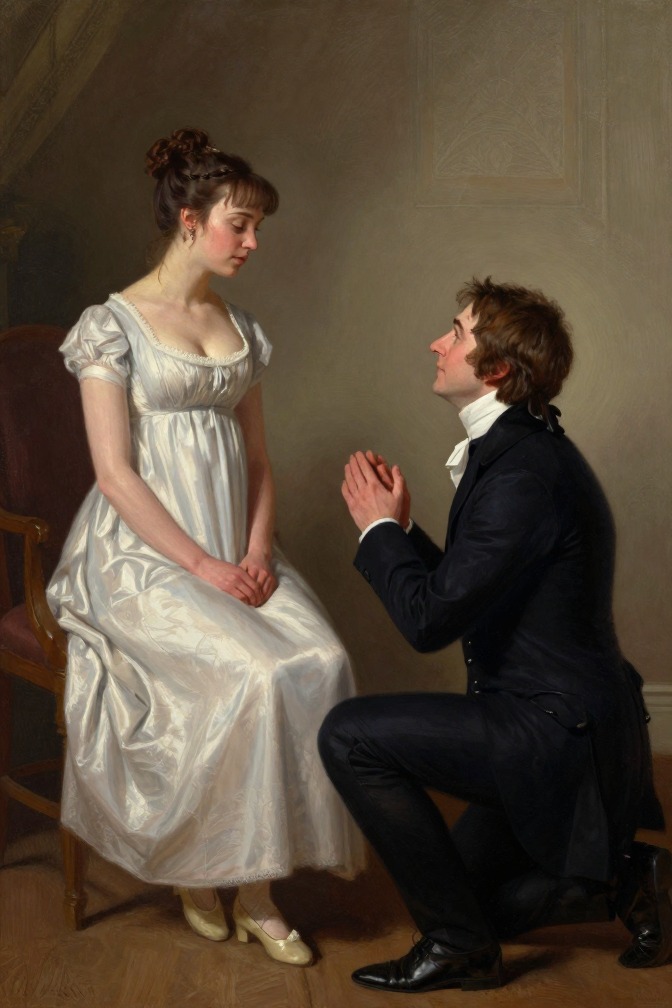
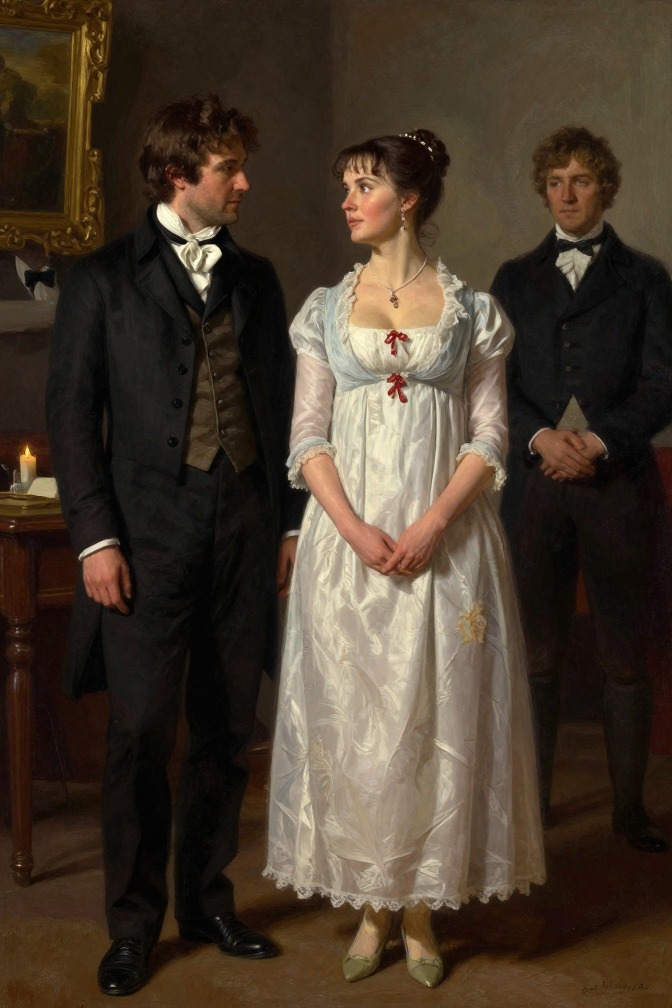
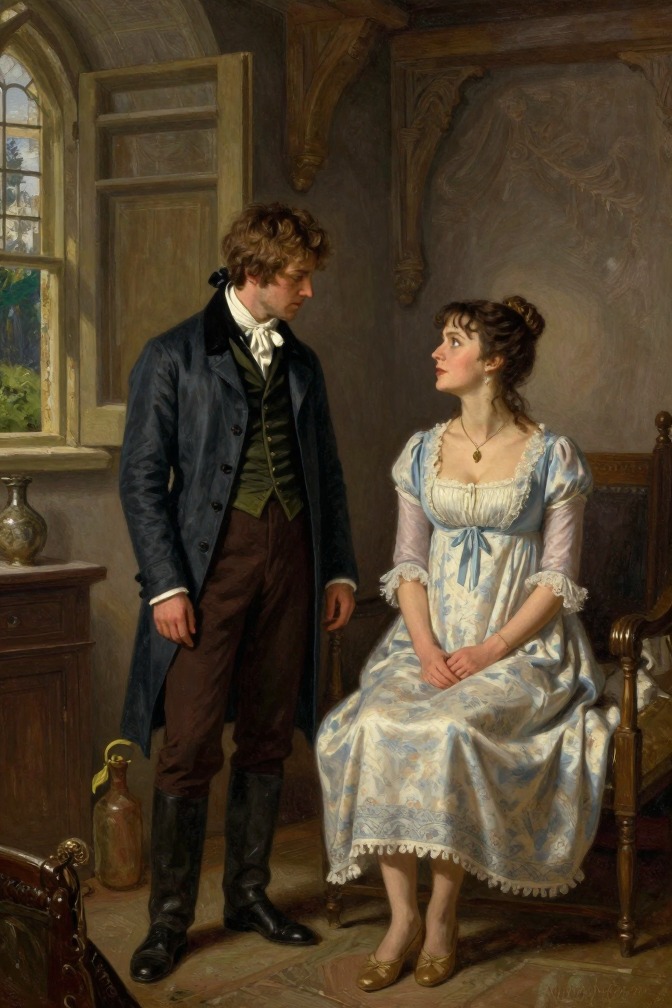
Mr. Collins's proposal to Elizabeth Bennet is a pivotal comic and thematic event in which the absurd, self-important clergyman formally offers marriage to Elizabeth, only to be met with a firm and witty refusal that exposes the gap between his mercenary logic and her insistence on genuine affection.
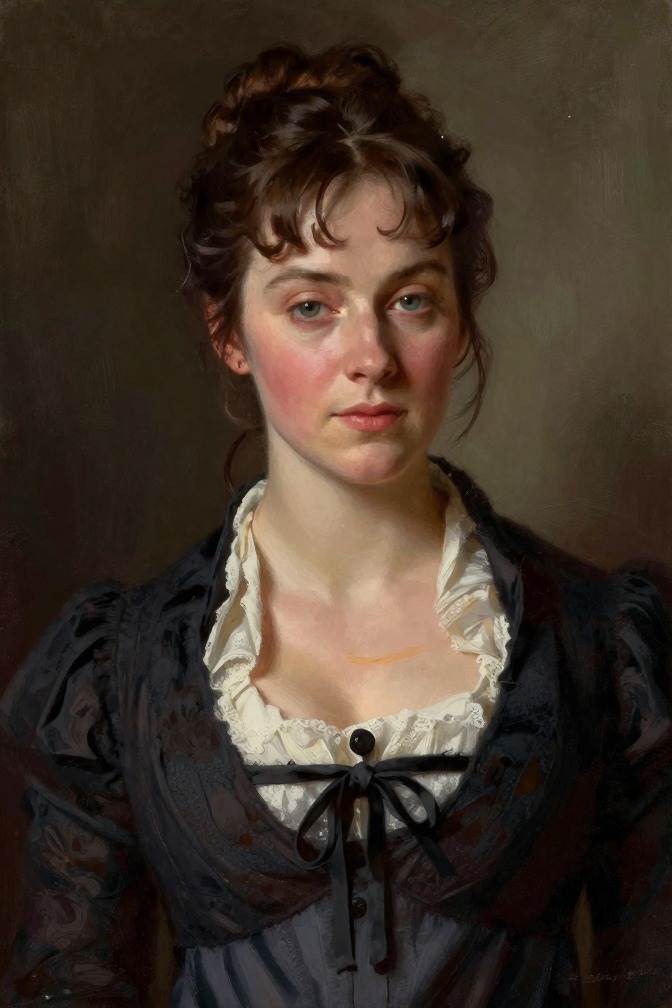
Jane Bennet, the eldest of the five Bennet sisters, is the novel's embodiment of genuine goodness, beauty, and emotional composure, whose quiet but profound attachment to Charles Bingley is nearly destroyed by the interference of his friend and sisters before being triumphantly restored.
Mr. Hurst is a minor character in Pride and Prejudice, the indolent and wealthy husband of Louisa Hurst, whose sole interests are eating, drinking, playing cards, and sleeping, and who serves as a flat embodiment of the fashionable but vapid society of Netherfield Park.
Mrs. Reynolds is the housekeeper at Pemberley, whose warm, detailed praise of Fitzwilliam Darcy's character during Elizabeth Bennet's visit provides a crucial turning point in Elizabeth's understanding of Darcy, challenging her long-held prejudices and initiating her change of heart.
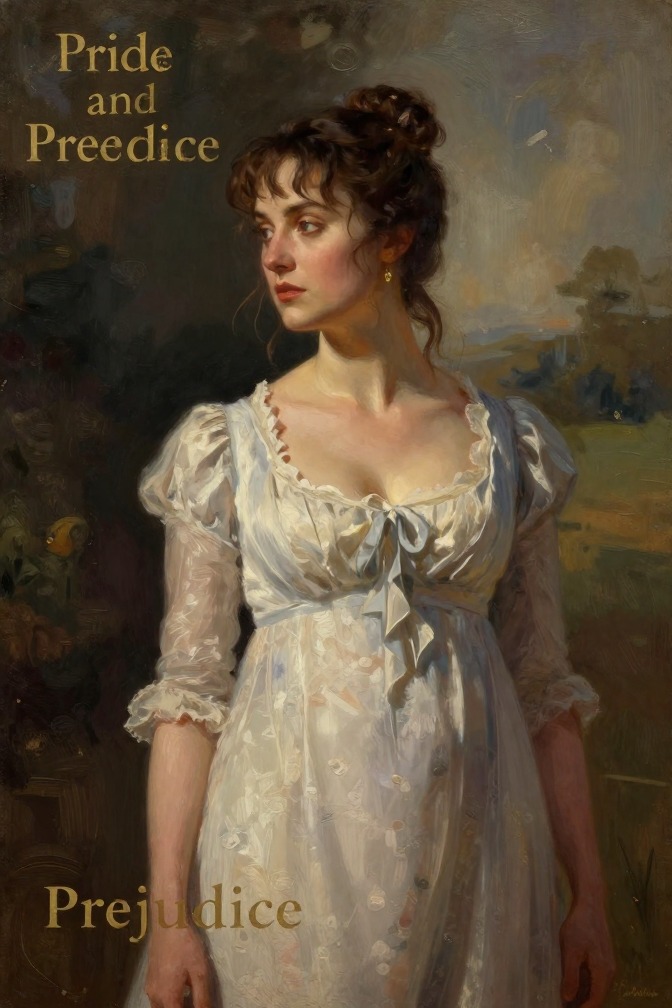
Prejudice is a central theme in Jane Austen's Pride and Prejudice, embodied most powerfully in Elizabeth Bennet's initial, unfounded bias against Fitzwilliam Darcy, which she must recognize, confront, and overcome through a painful process of self-examination and moral growth.
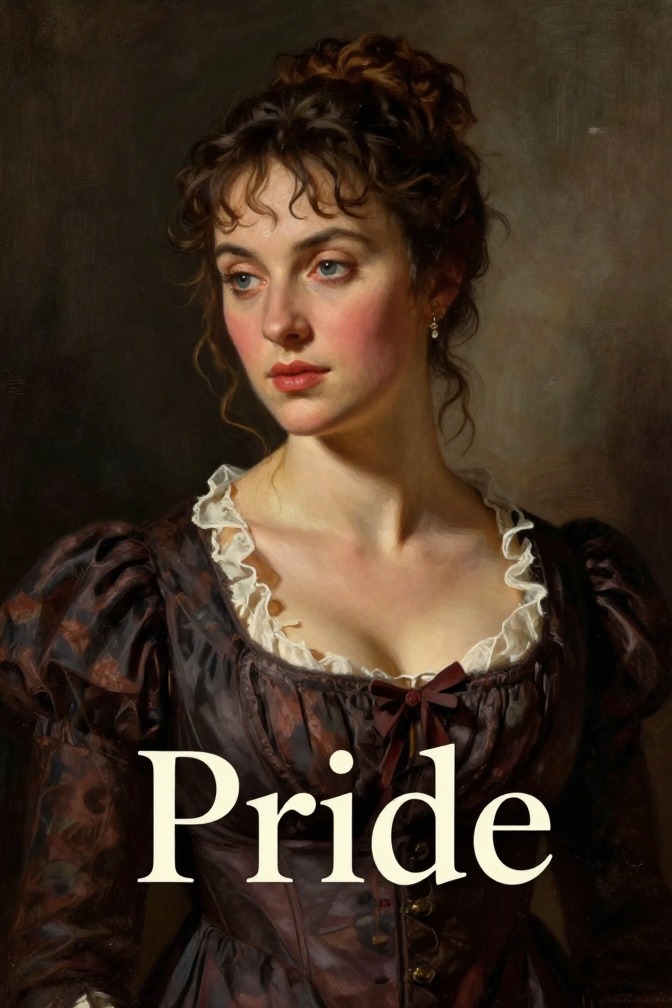
Pride is a central theme in Jane Austen's *Pride and Prejudice*, explored through the characters of Fitzwilliam Darcy and Elizabeth Bennet. Darcy's pride is rooted in his social standing and family, while Elizabeth's pride is wounded by his initial slight, leading to mutual prejudice. The novel traces their journey from pride and prejudice to self-awareness and love, ultimately redefining pride as a quality that, when properly regulated, can coexist with genuine virtue.
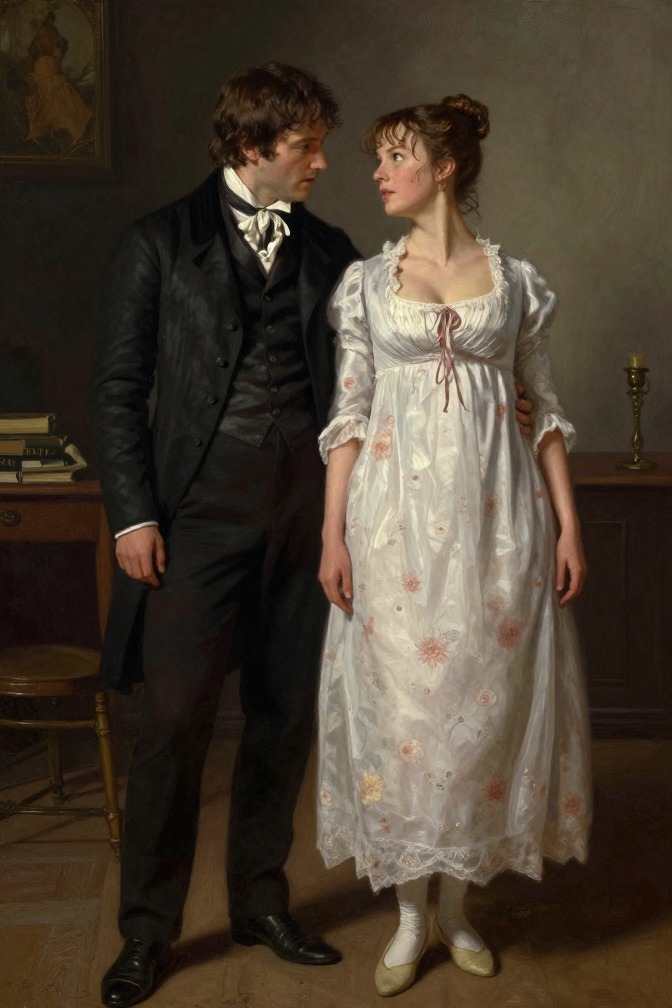
Elizabeth Bennet's engagement to Fitzwilliam Darcy is the romantic climax of Pride and Prejudice, resolving the novel's central conflicts of pride and prejudice through a mutual transformation of character. The event unfolds in two stages: a private walk during which Elizabeth, prompted by gratitude for Darcy's intervention in Lydia's elopement, initiates a conversation that leads to his second proposal and her acceptance, followed by a formal request to Mr. Bennet for his consent. This engagement represents the culmination of Elizabeth's journey from prejudice to self-knowledge and Darcy's from pride to humility.
Lydia Bennet's elopement with George Wickham is the most scandalous event in Pride and Prejudice, a crisis that threatens the social standing of the entire Bennet family and forces a painful reckoning with the consequences of parental indulgence, personal vanity, and the fragility of reputation. The flight from Brighton, the frantic search, and the eventual, costly marriage orchestrated by Fitzwilliam Darcy expose the moral and social fault lines of the novel's world and serve as the crucible in which Elizabeth Bennet's own prejudices are finally burned away.
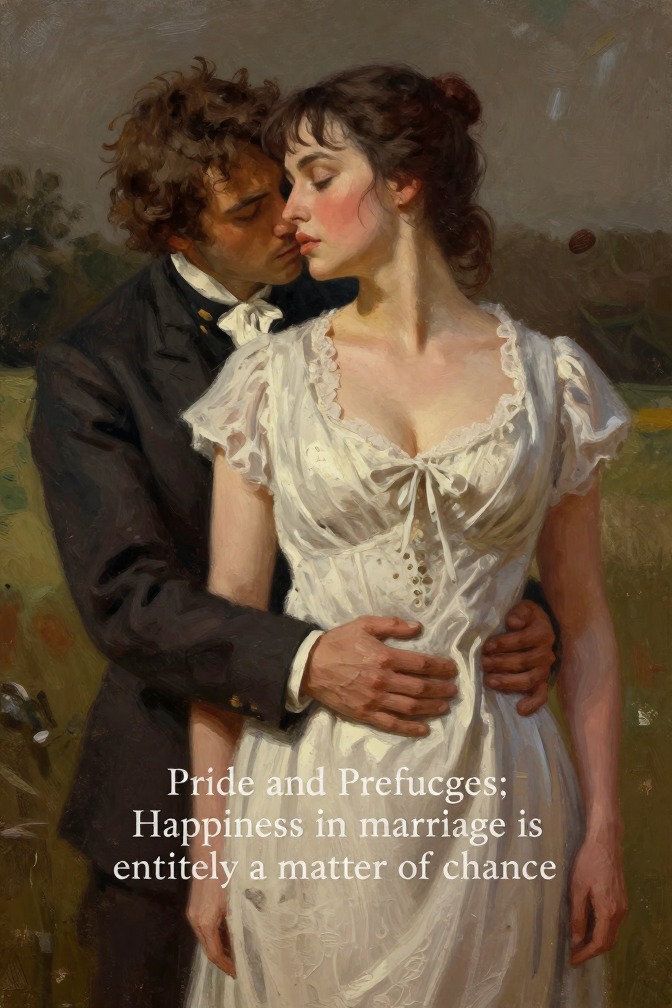
Charlotte Lucas's assertion that "Happiness in marriage is entirely a matter of chance" crystallizes a pragmatic, unsentimental view of matrimony that stands in direct opposition to the romantic idealism of the novel's heroine, Elizabeth Bennet, and serves as a key philosophical statement on the economic and social realities governing women's choices in Regency England.
Charlotte Lucas's declaration "I am not romantic, you know; I never was" is the most explicit statement of the pragmatic philosophy that governs her choice of a husband, and it crystallizes one of the novel's central tensions between romantic love and marriage as an economic institution.
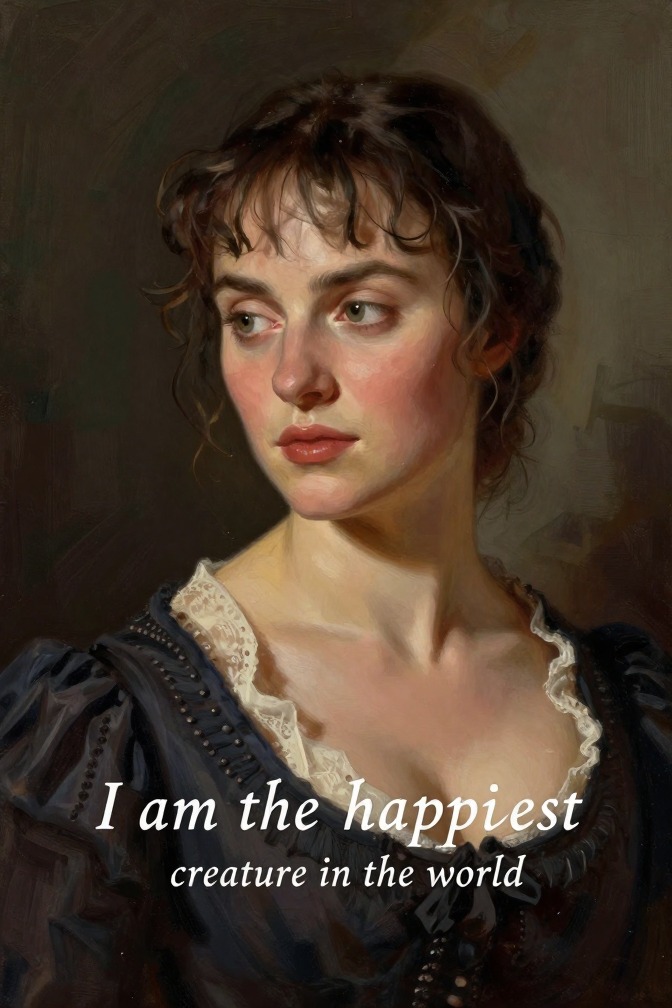
The expression "I am the happiest creature in the world" is Elizabeth Bennet's joyful declaration in her letter to Mrs. Gardiner after her engagement to Fitzwilliam Darcy, marking the culmination of her emotional journey from prejudice to love and serving as the novel's most direct statement of personal fulfillment.
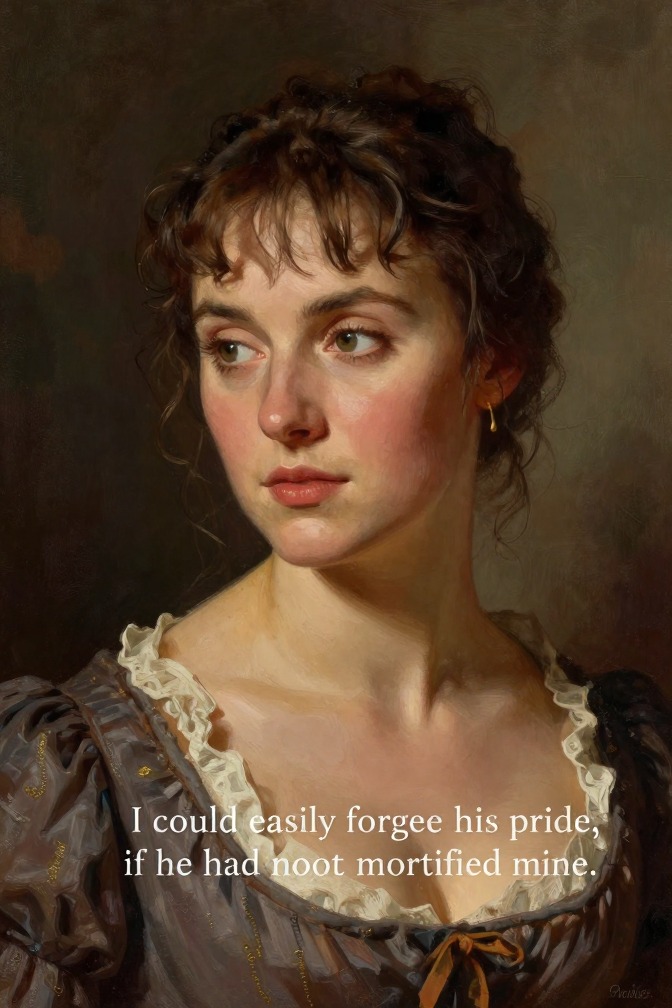
Elizabeth Bennet's declaration that she could easily forgive Fitzwilliam Darcy's pride if he had not mortified hers is a pivotal expression that crystallizes the novel's central conflict between pride and wounded self-regard, marking the moment when personal vanity becomes the lens through which she interprets Darcy's character and her own injured feelings.
This expression, spoken by Fitzwilliam Darcy during a conversation with Elizabeth Bennet at Netherfield, articulates a conventional romantic view that poetry nourishes love, which Elizabeth immediately challenges with a witty, pragmatic counter-argument. The exchange crystallizes the novel's central tension between idealized and realistic conceptions of love, and marks an early, significant intellectual sparring match between the two protagonists.
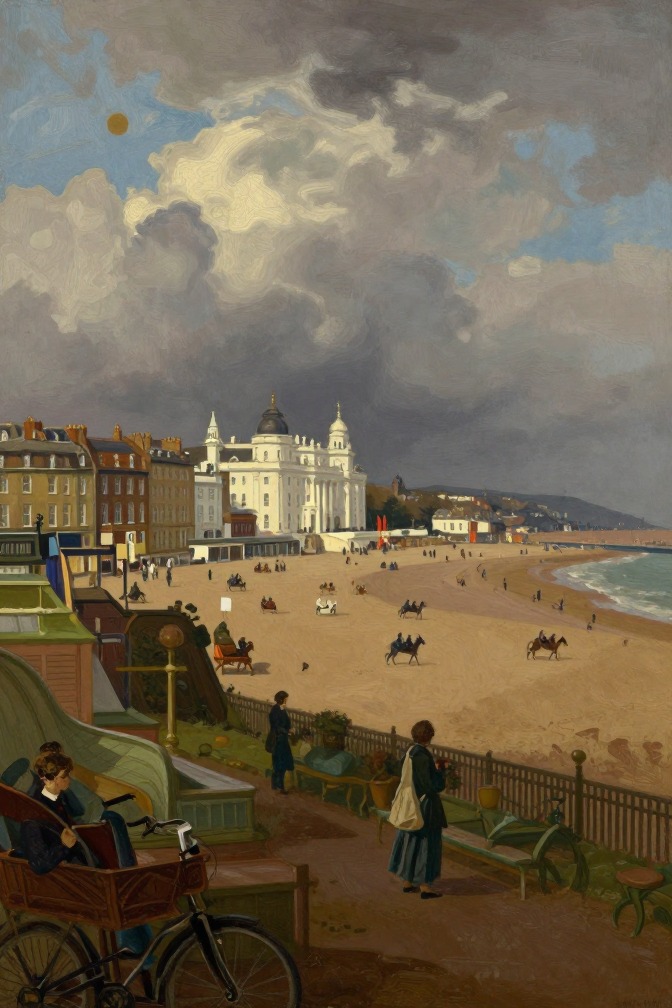
Brighton is the seaside resort in Sussex where Lydia Bennet accompanies the regiment of militia and elopes with George Wickham, triggering the novel's central crisis and forcing Elizabeth Bennet to confront the consequences of her family's imprudence and her own silence about Wickham's true character.
Gracechurch Street is the London residence of Mr. and Mrs. Gardiner, the Bennet sisters' respectable uncle and aunt, and serves as a crucial setting for Jane Bennet's stay in London, the Gardiners' hospitality, and the eventual marriage of Lydia Bennet and George Wickham. It represents the mercantile, middle-class world that the Bingley sisters and Fitzwilliam Darcy initially scorn, yet it becomes a site of kindness, practical assistance, and the ultimate reconciliation of the Bennet family's fortunes.
Hertfordshire is the primary setting of Pride and Prejudice, a rural English county where the Bennet family resides at Longbourn and where the novel's central social and romantic conflicts unfold, establishing the provincial world against which the characters' marriages, fortunes, and reputations are measured.
Kympton is a village in Derbyshire that holds the living which George Wickham claims was unjustly denied him by Fitzwilliam Darcy, serving as a key symbol of Wickham's grievances and the early misunderstandings between Elizabeth Bennet and Darcy.
Meryton is the small market town in Hertfordshire that serves as the social and commercial center for the Bennet family and their neighbors, and the primary setting for the arrival of the militia regiment whose officers become the focus of the younger Bennet sisters' attention.
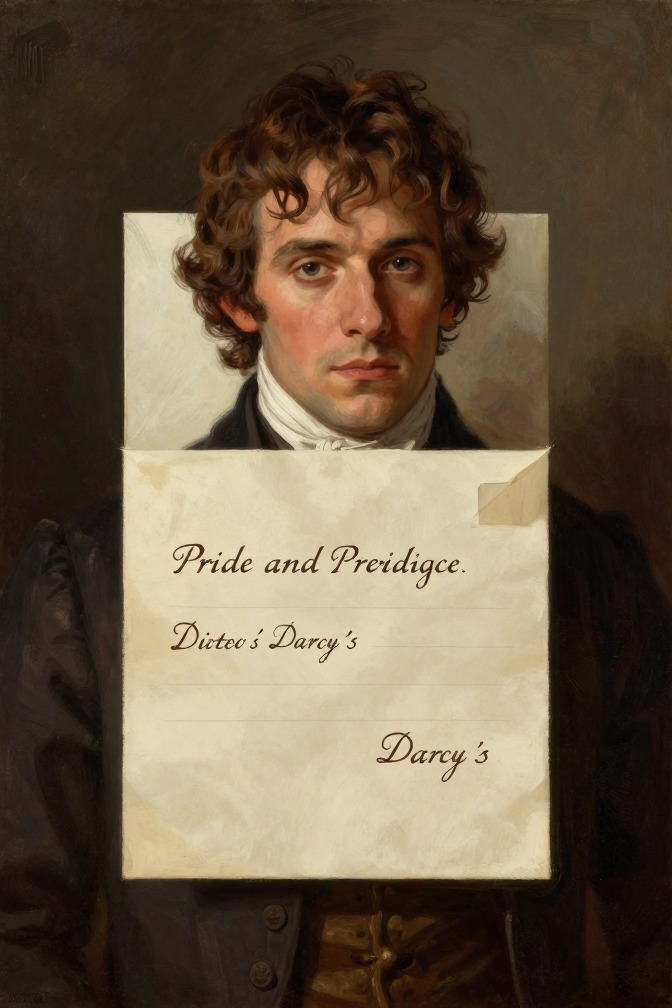
Darcy's letter is the pivotal document in Pride and Prejudice, a two-sheet letter hand-delivered to Elizabeth Bennet the morning after his rejected first proposal. It contains his detailed defense against her two principal accusations: that he unjustly separated Charles Bingley from Jane Bennet, and that he cruelly wronged George Wickham. The letter forces Elizabeth to confront the fallibility of her own judgment, precipitates a profound moral and emotional re-evaluation, and marks the decisive turning point in her feelings toward Darcy.
Colonel Fitzwilliam and Fitzwilliam Darcy are cousins who share a close, trusting relationship marked by mutual respect and candid communication. Colonel Fitzwilliam, the younger son of an earl, serves as a co-guardian of Darcy's sister Georgiana and acts as a confidant to Darcy, revealing key information about Darcy's interference in Bingley's romance and corroborating the truth about Wickham's character. Their bond provides a crucial channel through which Elizabeth Bennet learns the facts that challenge her prejudices, and it ultimately supports Darcy's personal growth and his successful second proposal.
Elizabeth Bennet and Charlotte Lucas share a close friendship that is tested and ultimately transformed by Charlotte's pragmatic decision to marry Mr. Collins, revealing deep differences in their views on marriage and happiness.
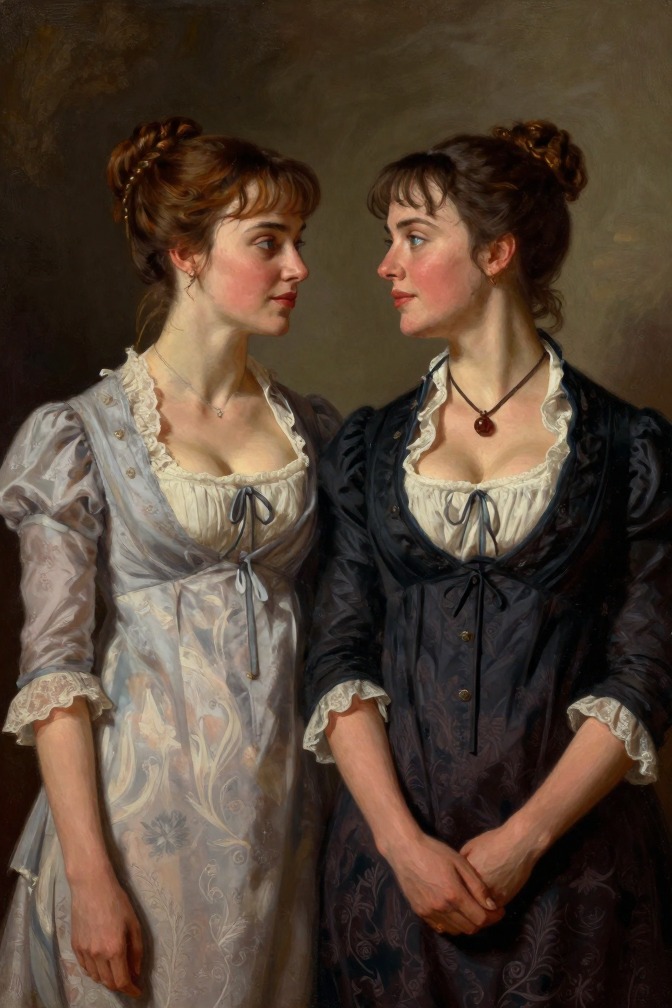
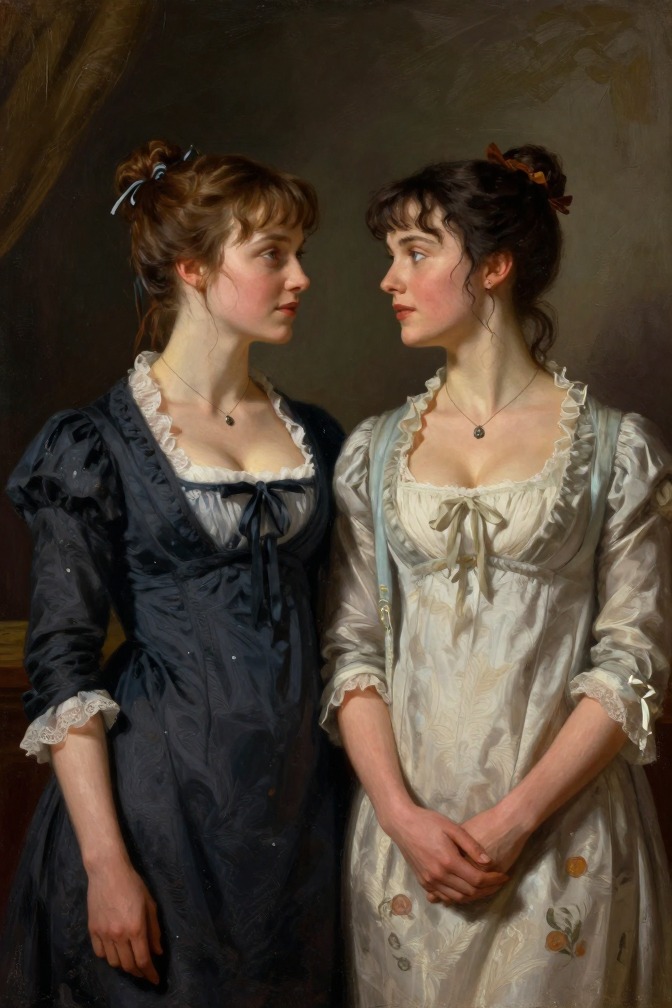
Elizabeth Bennet and Jane Bennet are the two eldest daughters of the Bennet family, whose deep sisterly bond forms the emotional core of the novel. Their relationship is characterized by mutual affection, trust, and a striking contrast in temperament—Jane's gentle, trusting nature versus Elizabeth's lively, discerning spirit—which together provide a stable foundation for navigating the social pressures and romantic entanglements that define their lives.
The living of Hunsford is a valuable ecclesiastical benefice in Kent, granted by Lady Catherine de Bourgh to Mr. Collins, and becomes a central object of contention and revelation in the novel, symbolizing the intersection of patronage, class ambition, and moral character.
Michaelmas, the Feast of St Michael and All Angels, serves as a key temporal marker in *Pride and Prejudice*, anchoring the narrative's seasonal rhythms and the social calendar of the landed gentry. Its mention signals the beginning of autumn, a time for settling into country estates, hosting balls, and making decisions about leases and marriages, thereby framing the novel's central events within a recurring, ritualized cycle of rural life.
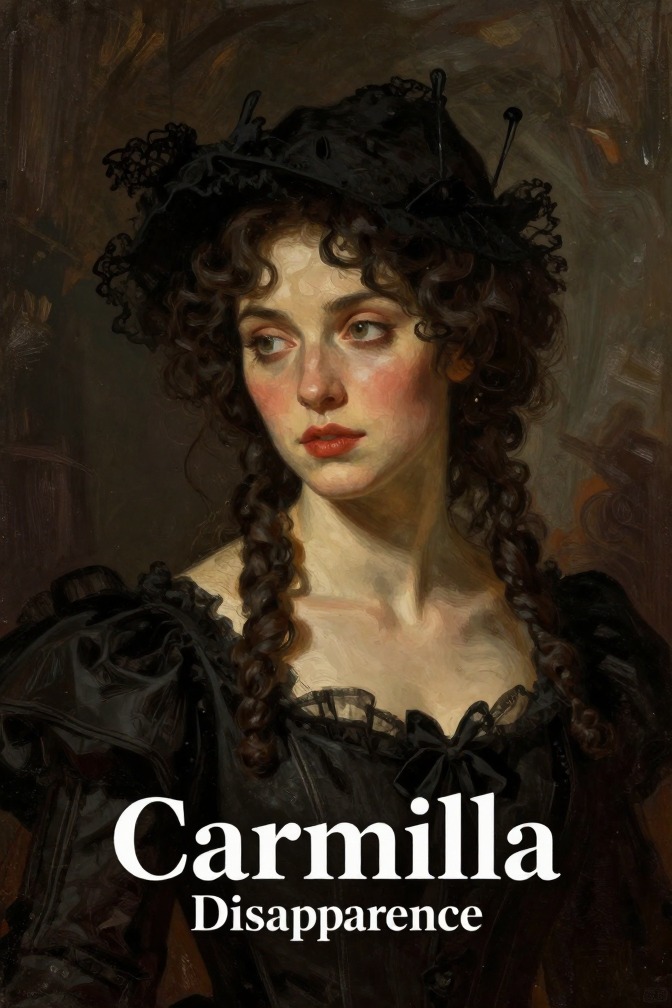
Carmilla's disappearance is a pivotal event in the narrative, marking the first time the household is forced to confront the supernatural nature of the guest who has been draining Laura's life. The episode begins with a terrifying dream in which Laura sees Carmilla bathed in blood, leading to a frantic search that reveals Carmilla has vanished from a locked room, only to reappear the next day with an implausible story of sleepwalking.
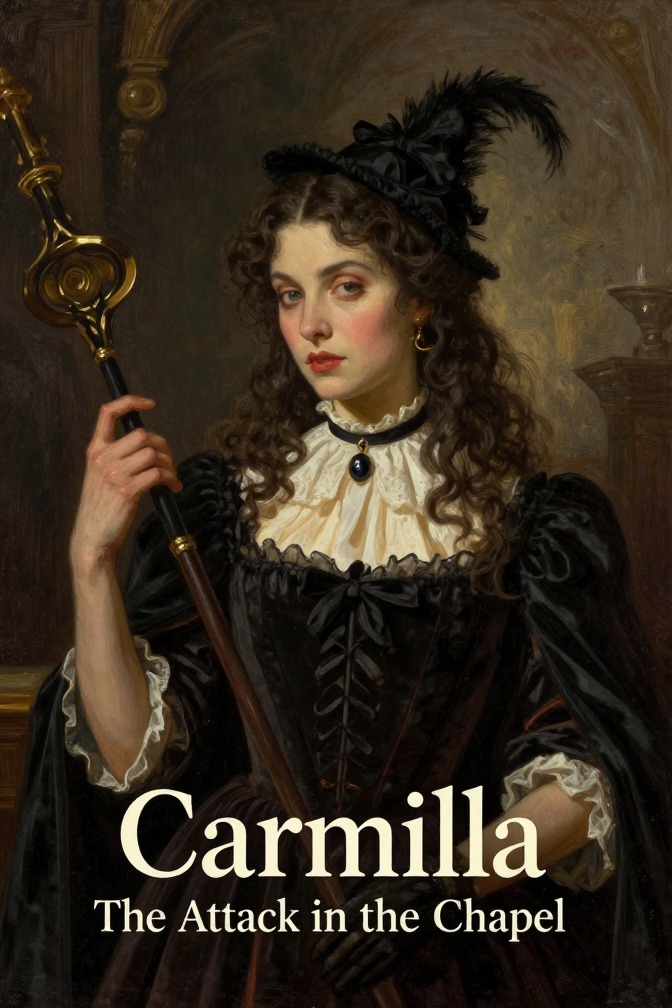
The Attack in the Chapel is the climactic confrontation in which General Spielsdorf, having just narrated the story of his ward Bertha Rheinfeldt's death at the hands of a vampire, recognizes Carmilla as the same creature and attempts to decapitate her with a woodman's hatchet, only for Carmilla to evade the blow, seize his wrist with preternatural strength, and vanish without a trace, confirming her supernatural identity and precipitating the formal exhumation and execution that follows.
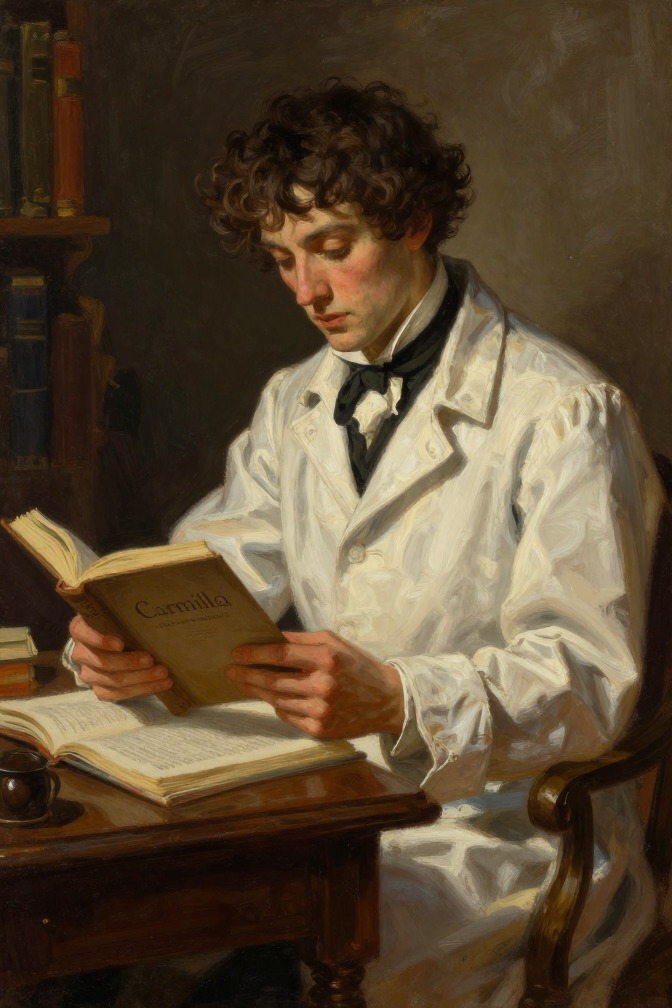
The Doctor's Examination is the pivotal medical scene in Sheridan Le Fanu's Carmilla, where Doctor Spielsberg discovers the telltale puncture marks on Laura's throat, confirming the vampire's attack and setting the stage for the novel's supernatural resolution.
The Early Fright is the foundational childhood trauma of Laura, the narrator, in which she is visited in her nursery by a mysterious female figure who bites her on the chest, an event that foreshadows the vampiric predation she will later suffer at the hands of Carmilla.