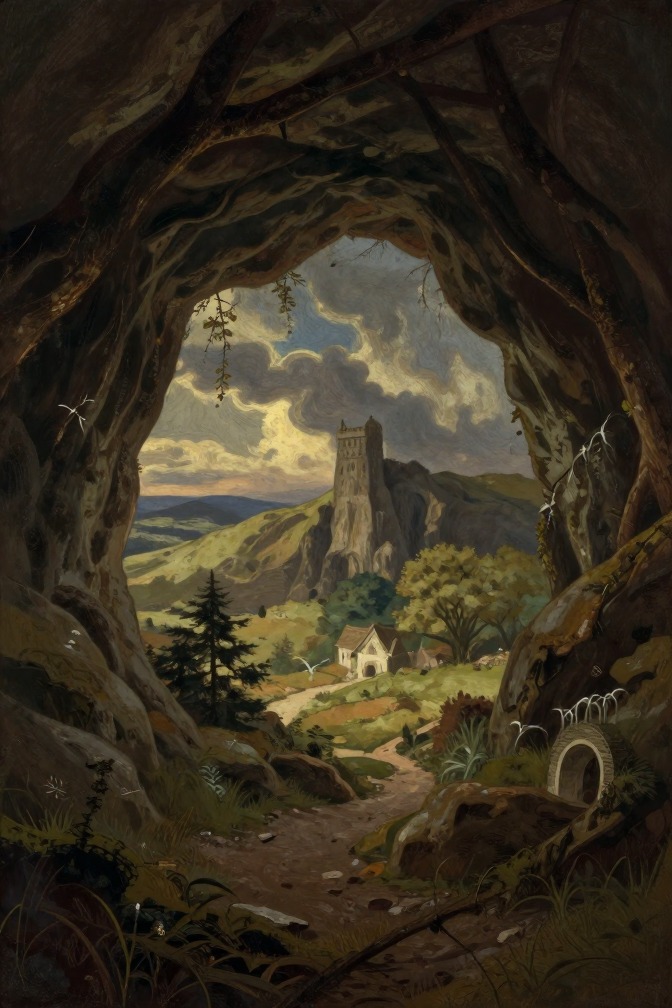
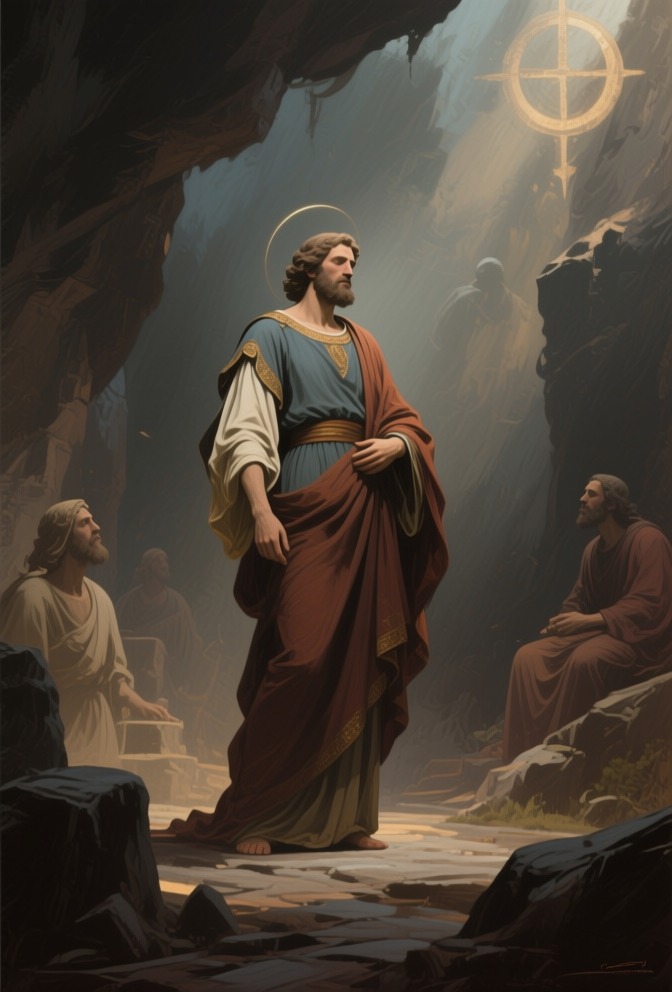
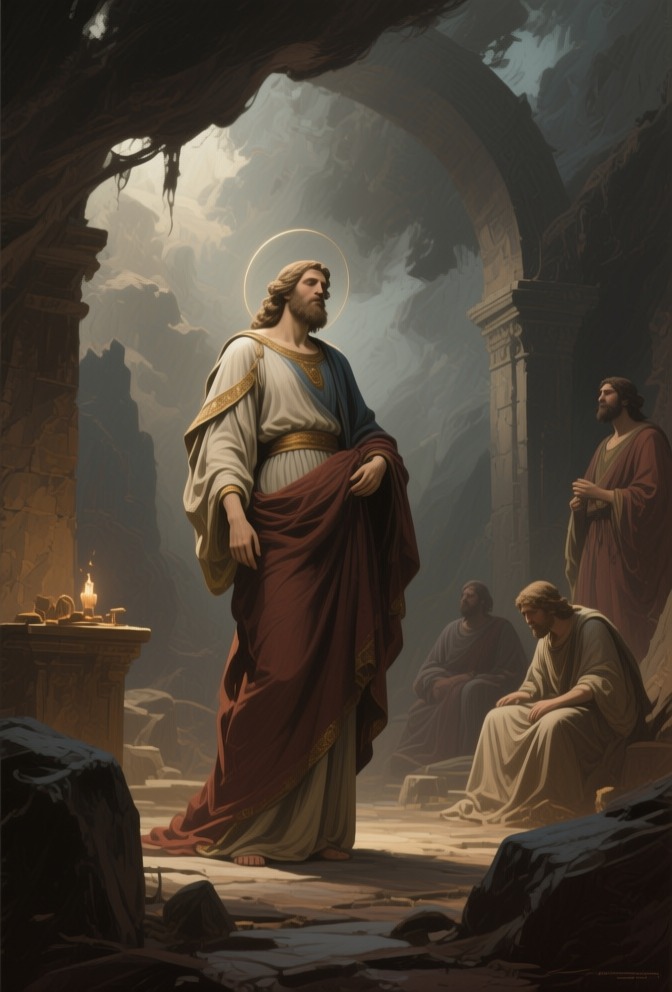
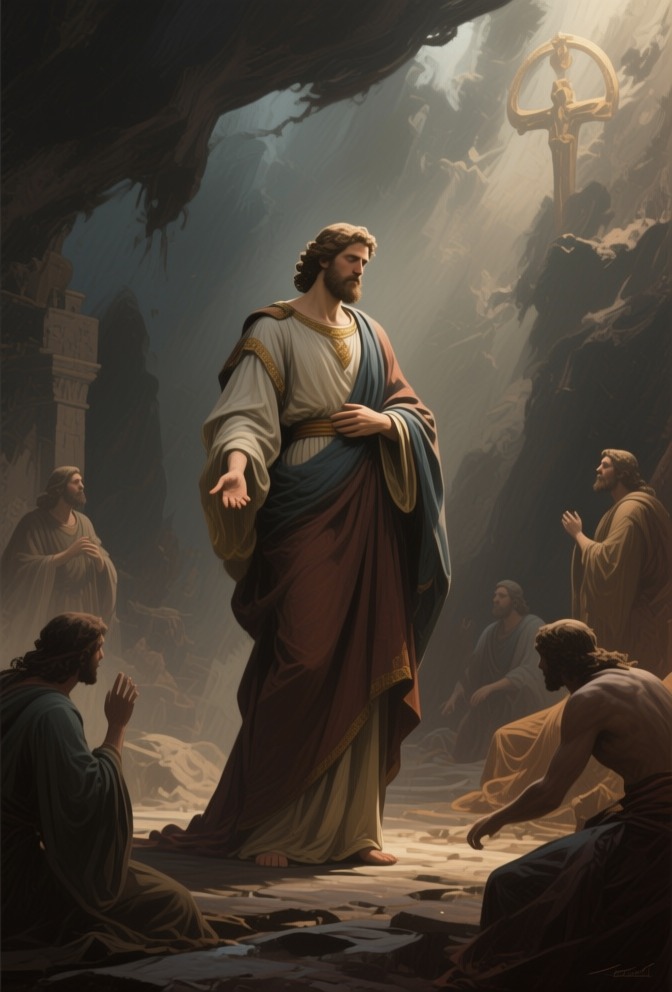
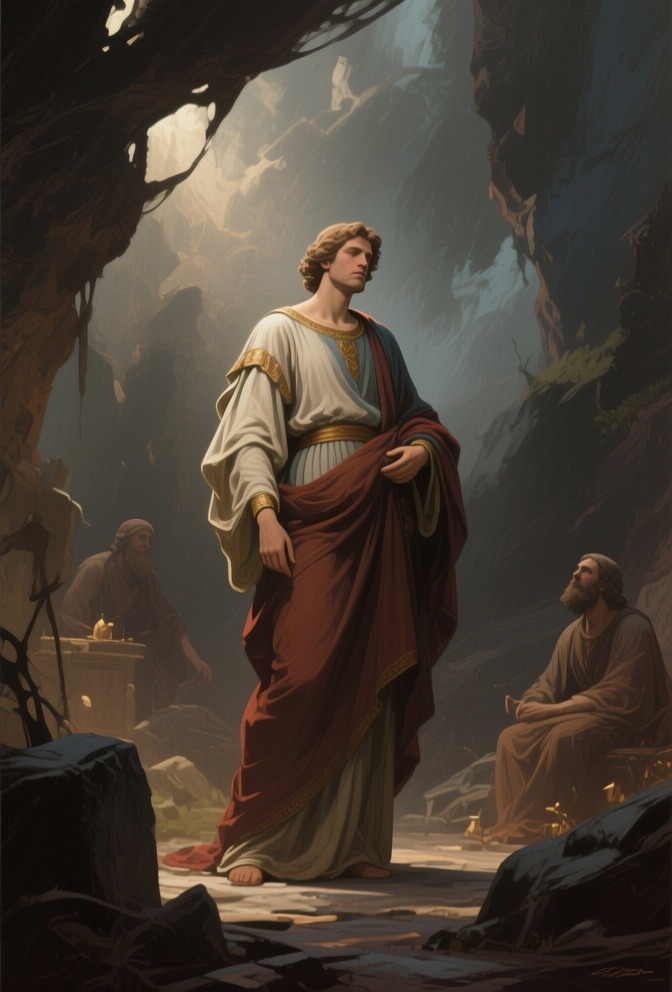
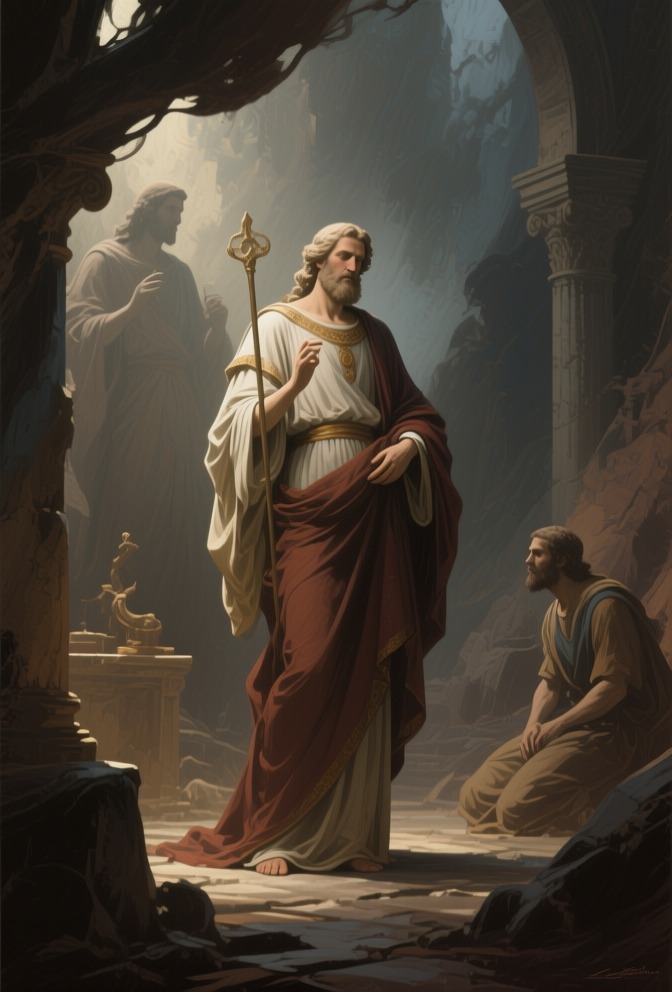
The Fairy Cave is a remote, rocky landmark on the moors near Wuthering Heights, associated with childhood adventure, romantic fantasy, and the gradual reconciliation between Hareton Earnshaw and Catherine Linton.
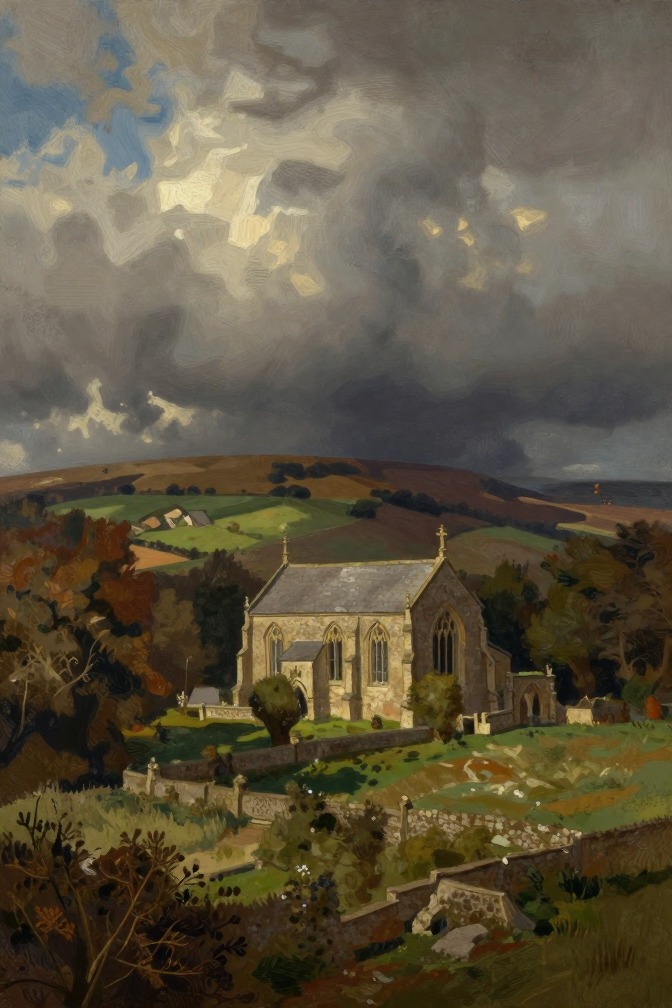
Gimmerton Kirk is the local church and graveyard that serves as the final resting place for the novel's central characters, a site where the unresolved passions of the living intersect with the restless dead, and where the narrative's cycles of love, loss, and haunting find their most concrete geographical expression.
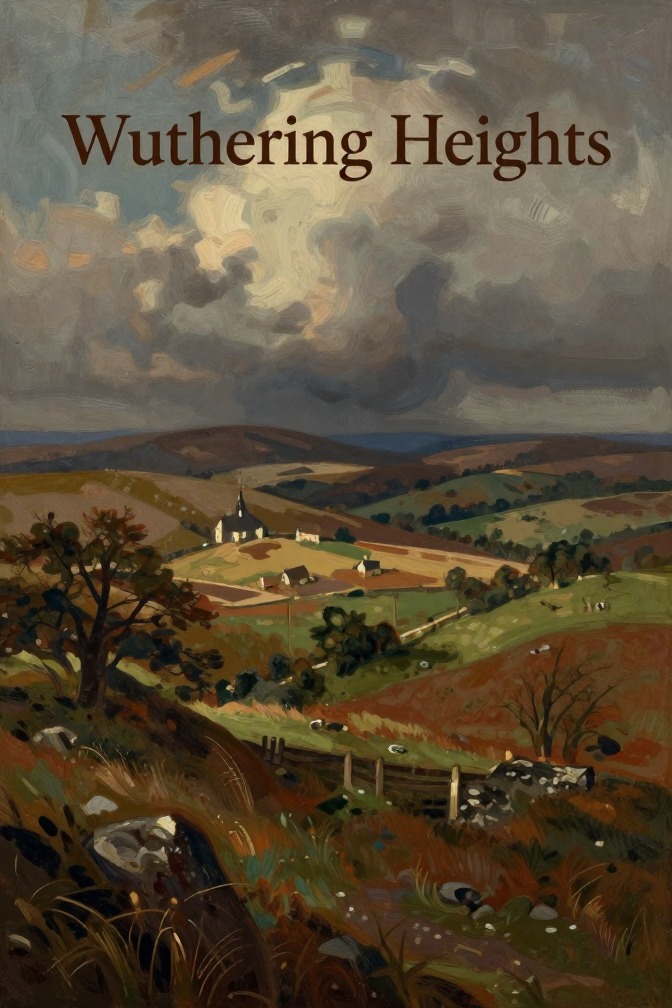
Wuthering Heights is the remote, storm-battered farmhouse that serves as the primary setting of Emily Brontë's novel, a place of stark architecture, brutal emotional intensity, and haunting memories that shapes the lives of its inhabitants across two generations.
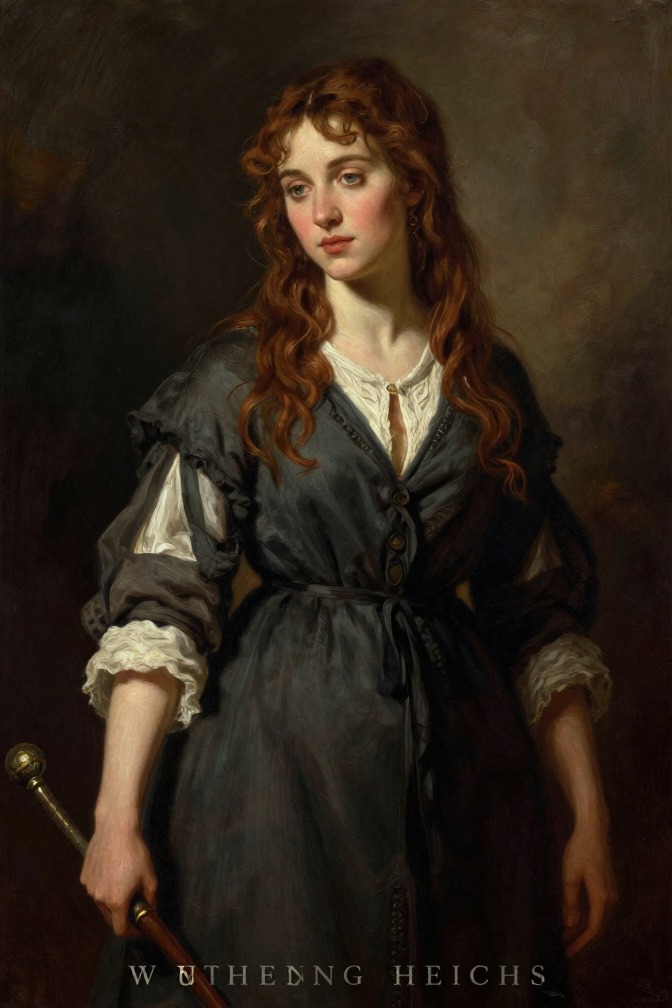
Catherine's whip is a small but symbolically charged object in *Wuthering Heights*, first appearing as a childhood gift from Mr. Earnshaw and later serving as a marker of Catherine Earnshaw's wild nature, her bond with Heathcliff, and the violent undercurrents of her relationships.
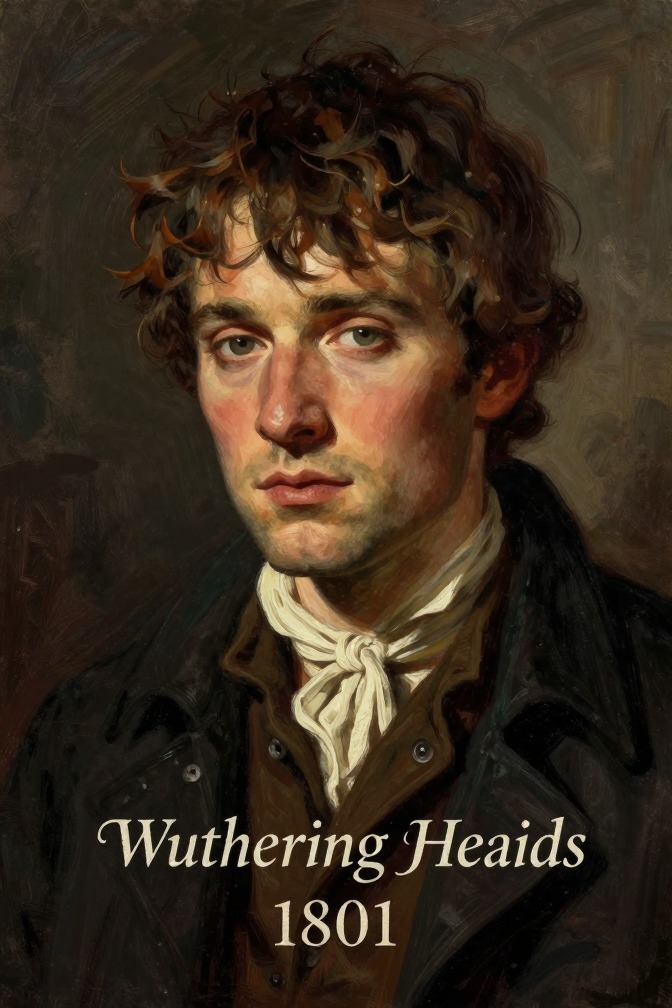
1801 is the year in which the frame narrative of Wuthering Heights begins, when the new tenant Lockwood first visits his landlord Heathcliff at Wuthering Heights and begins to uncover the tumultuous history of the Earnshaw and Linton families through the housekeeper Nelly Dean's retrospective account.
1802 is the final year of the novel's narrative frame, the year in which Lockwood returns to the moors, witnesses the reconciliation of Hareton Earnshaw and Catherine Linton, learns of Heathcliff's death, and visits the graves of the three protagonists, bringing the story to a close with an image of peace.
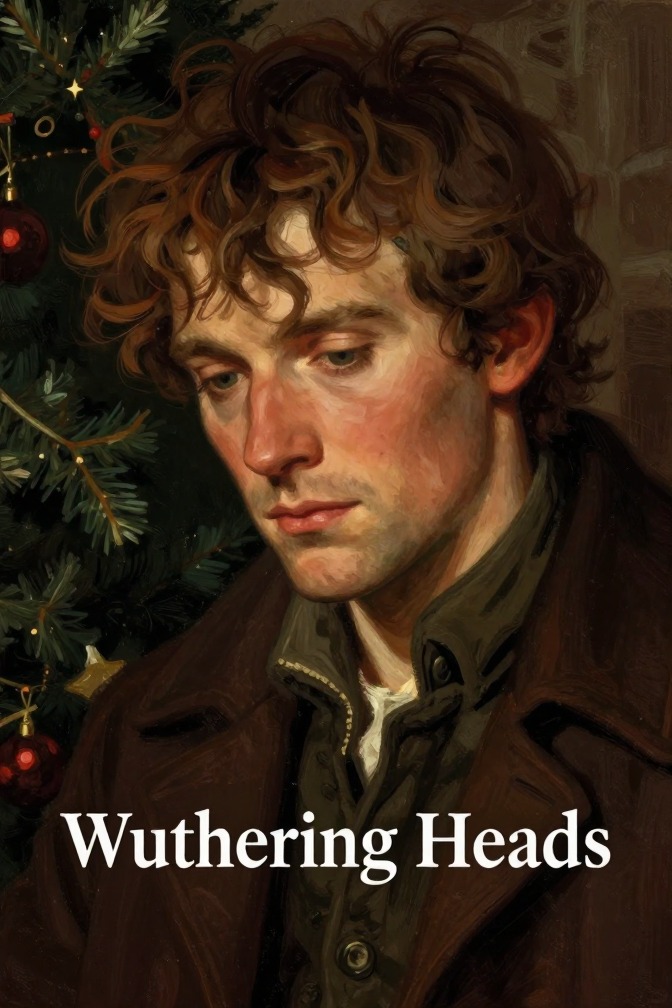
Christmas in *Wuthering Heights* is a recurring temporal marker that punctuates the novel's most significant emotional and relational turning points, from Catherine Earnshaw's return to Wuthering Heights as a transformed young lady to the eventual union of Hareton Earnshaw and Catherine Linton, which promises a new beginning.
New Year's Day in Wuthering Heights marks the planned wedding of Hareton Earnshaw and Catherine Linton, a union that Nelly Dean celebrates as the culmination of her hopes and the restoration of peace to the two households.
Robbie Turner, Corporal Mace, and Corporal Nettle reach the beach at Bray Dunes near Dunkirk, where they confront the chaotic terminus of the British army's retreat—thousands of men waiting in the shallows, no boats in sight, and a surreal, demoralized atmosphere of aimless wandering, drunkenness, and despair.
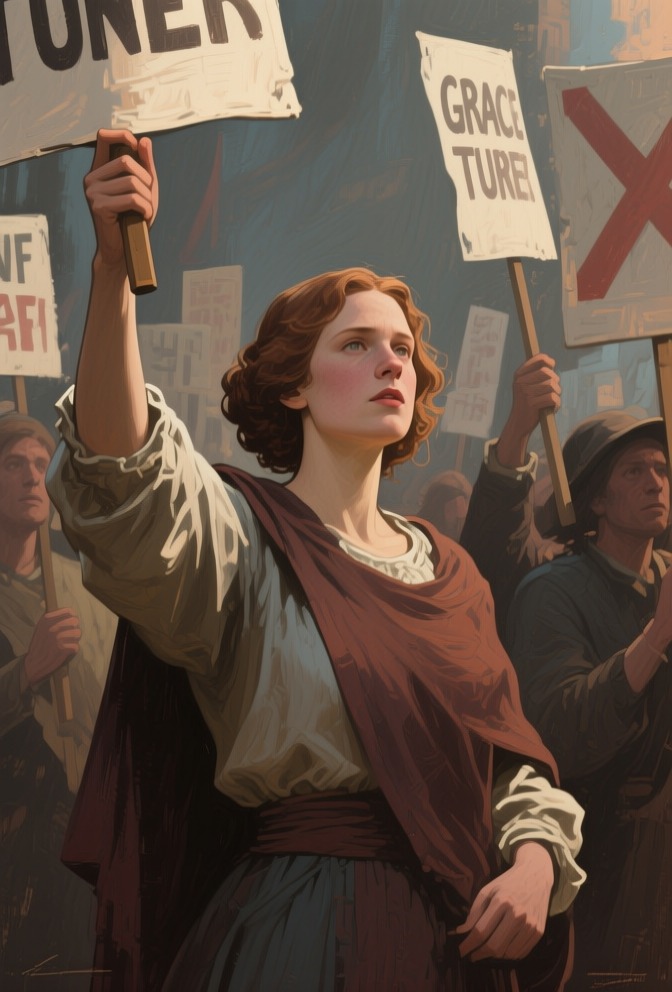
Grace Turner's Protest is the raw, public eruption of a mother's grief and fury as her son, Robbie Turner, is arrested by police in handcuffs and driven away from the Tallis house at dawn on 2 June 1935, an event that crystallizes the injustice at the heart of the novel and exposes the class and power dynamics that enabled the false accusation.
The Meeting the Bonnet Brothers is a pivotal episode during Robbie Turner's retreat to Dunkirk in 1940, where he and two corporals find shelter at a French farm and are confronted by the brothers' hospitality, their mother's hostility, and the brothers' harrowing account of the war's devastation, deepening Robbie's trauma and his resolve to survive.
The Accusation by the Lake is the pivotal event in which thirteen-year-old Briony Tallis, having discovered her cousin Lola Quincey after a sexual assault on the island of the Tallis estate's artificial lake, identifies the attacker as Robbie Turner, a family friend and her sister Cecilia's lover, thereby setting in motion a chain of false testimony, a criminal prosecution, and a lifelong act of atonement.
The Leg in the Tree is a haunting image encountered by Robbie Turner during his retreat to Dunkirk in 1940, a severed human leg wedged in the fork of a plane tree that becomes a symbol of the war's industrial-scale violence and the psychological trauma that pursues him.
The Pig Capture is a surreal, feverish episode during Robbie Turner's retreat to Dunkirk, in which he and Corporal Nettle, desperate for water, chase a young sow through the streets of Bray Dunes on the instructions of a gypsy woman, capturing it with a noose made from telegraph cable and dragging it back to her sty in exchange for water, wine, and food.
The rehearsal of Briony Tallis's play The Trials of Arabella, intended as a grand welcome for her brother Leon, collapses under the weight of her cousins' resistance, Lola Quincey's usurpation of the lead role, and the twins' incompetence, exposing Briony's loss of control over her artistic vision and foreshadowing the catastrophic misunderstandings to come.
The Rejection from Horizon is the letter Briony Tallis receives from Cyril Connolly, editor of the literary magazine Horizon, in response to her submitted novella Two Figures by a Fountain. The letter, which arrives in May 1940 as the British army is retreating to Dunkirk, rejects the work for publication but offers detailed, constructive criticism that forces Briony to confront the evasions of her fiction and, by extension, the moral evasions of her life. It marks a turning point in her understanding of her own guilt and her artistic responsibilities.
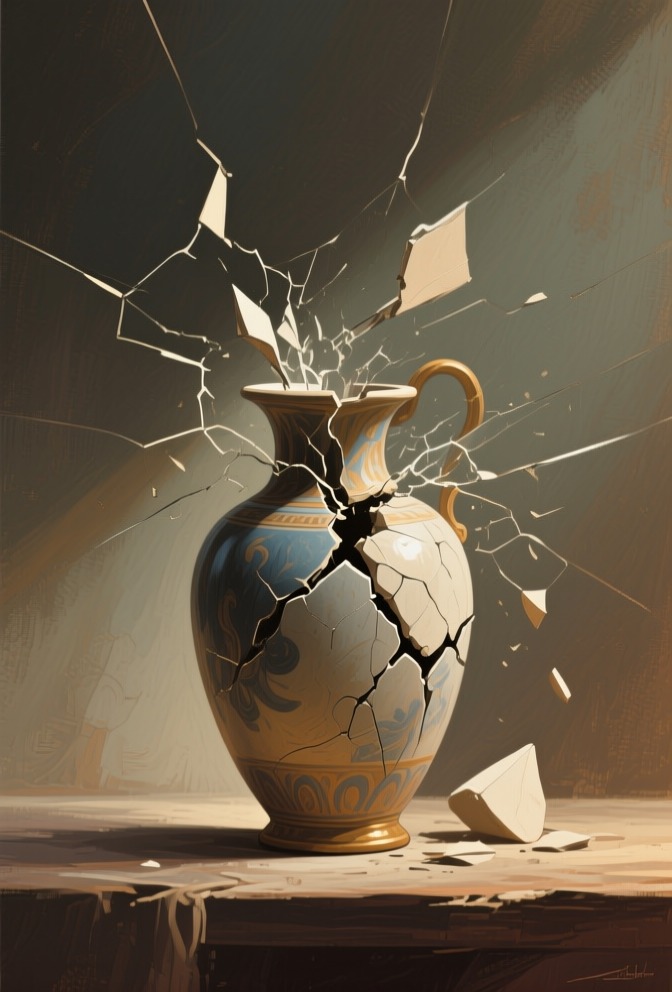
The Vase Breaking is the pivotal early action in which Cecilia Tallis and Robbie Turner, while attempting to fill a Meissen vase at the Triton fountain, snap off a section of its lip during a tense struggle over who should hold it, an accident that crystallizes their long-suppressed attraction and sets in motion the misunderstandings that will destroy their lives.
The hospital in Ian McEwan's Atonement is a complex, multi-layered setting that functions as a site of both physical healing and moral reckoning. It is primarily represented by St. Thomas's Hospital in London, where Briony Tallis undergoes her nursing training and confronts the human cost of war, and where the novel's themes of guilt, atonement, and the fragility of memory are brought to a devastating climax.
The letter is a central object in Ian McEwan's Atonement, a misdelivered note from Robbie Turner to Cecilia Tallis that contains an obscene draft instead of the intended apology. Its interception by thirteen-year-old Briony Tallis triggers a catastrophic chain of false accusation, wrongful imprisonment, and lifelong guilt, making it the novel's pivotal mechanism of misunderstanding and tragedy.
The 1999 birthday performance of The Trials of Arabella is the culminating event of Briony Tallis's life, a theatrical revival of the play she wrote as a thirteen-year-old that serves as both a public celebration and a private reckoning with her past. Performed by the children of her extended family at Tilney's Hotel (the former Tallis House), the production brings together the novel's central themes of storytelling, guilt, and the attempt at atonement, while also revealing Briony's final authorial decision to give her lovers a happy ending.
The Quincey twins, Jackson and Pierrot, flee the Tallis house during the dinner party, precipitating a search that provides the cover for the assault on their sister Lola and for Briony Tallis's false accusation against Robbie Turner.
The Library encounter between Robbie and Cecilia is the pivotal romantic and sexual consummation of their long-suppressed feelings, interrupted by Briony Tallis's intrusion, which cements Briony's misunderstanding and sets the false accusation in motion.
Robbie Turner's misdelivered letter to Cecilia Tallis is the pivotal event that triggers the novel's central tragedy, transforming a private expression of desire into a public accusation of criminality. While composing an apology for breaking the Meissen vase, Robbie types an obscene draft and, in a moment of distraction, folds the wrong sheet into the envelope. He gives the sealed letter to Briony Tallis to deliver to Cecilia, but Briony reads it, is horrified by the word 'cunt,' and interprets it as proof of Robbie's dangerous, maniacal nature. This misreading, combined with her earlier misinterpretation of the scene at the Triton fountain, provides the foundation for her false accusation of rape against Robbie later that night.
The vase-breaking incident at the Triton fountain is a pivotal event that transforms the charged, unspoken tension between Cecilia Tallis and Robbie Turner into open conflict and, paradoxically, the first physical expression of their mutual desire. During a clumsy struggle over the Meissen vase, a section of its lip breaks off, and Cecilia’s furious, theatrical response—stripping to her underwear and diving into the fountain to retrieve the pieces—creates a scene of such strange intimacy and humiliation that it shatters their old childhood friendship and forces them to confront a new, volatile attraction. The incident is witnessed from a window by Briony Tallis, whose profound misunderstanding of what she sees sets in motion the catastrophic chain of false accusations that will destroy Robbie’s life.
The lines "In the deserts of the heart / Let the healing fountain start" from W. H. Auden's poem "In Memory of W. B. Yeats" function as a recurring motif in Ian McEwan's Atonement, carried by Robbie Turner as a talisman of hope and a private code for the possibility of redemption. The quotation appears at two critical junctures—during his retreat to Dunkirk and in Cecilia's final letter—and its imagery of aridity and renewal maps directly onto the novel's central themes of guilt, atonement, and the longed-for restoration of a love shattered by false accusation.
Pass the Amo! is the advertising slogan for Army Amo, a khaki-colored chocolate bar developed by Paul Marshall for inclusion in British Army ration packs, representing the intersection of commercial ambition, militarism, and class aspiration in the novel.
The backbone of a story is a phrase that crystallizes the central aesthetic and moral tension in Ian McEwan's Atonement, representing the conflict between modernist literary experimentation and the fundamental human need for narrative structure, causality, and resolution. It emerges from Cyril Connolly's rejection letter to Briony Tallis and becomes the guiding principle—and ultimate challenge—of her lifelong attempt to atone for her childhood crime through fiction.
The hieroglyph of her displeasure is a recurring phrase in Ian McEwan's Atonement that originates as Briony Tallis's precocious literary description of a king's furrowed brow in her early story, and later becomes a motif for Emily Tallis's silent, unreadable maternal authority and the broader theme of misreading others' inner states.
The leg in a tree is a haunting image encountered by Robbie Turner during his retreat to Dunkirk in Part Two of Atonement, a severed child's limb wedged in the fork of a plane tree that becomes a recurring emblem of war's arbitrary horror and of Robbie's own traumatic memories.
The word is the obscene term 'cunt' that Robbie Turner inadvertently includes in a draft of his letter to Cecilia Tallis, which Briony Tallis reads and misinterprets as proof of Robbie's depravity, setting in motion the false accusation that destroys his life.