June 1932 is a pivotal temporal marker in the novel, anchoring the memory of a single morning when a ten-year-old Briony Tallis, in a dramatic bid for attention, jumped into a river to test whether Robbie Turner would save her, an event that later becomes central to Robbie's retrospective theory of Briony's motive for her false accusation.
The 1930s in Atonement is the decade of the novel's central crime and its long aftermath, a period defined by the lingering shadow of the Great War, the rise of fascism, and the rigid social hierarchies of English country life. It is the era in which Briony Tallis's false accusation destroys Robbie Turner's life, and the decade that culminates in the Second World War, which provides the setting for Robbie's ordeal at Dunkirk and Briony's attempt at atonement through nursing.
The 1940s in Atonement is the decade of war, separation, and irreversible loss, the historical crucible that transforms Robbie Turner from a wrongfully convicted man into a soldier retreating through France, and Briony Tallis from a guilty child into a nurse confronting the consequences of her lie. It is the period in which the novel's central romance is tested by military catastrophe and in which the possibility of atonement is both raised and foreclosed.
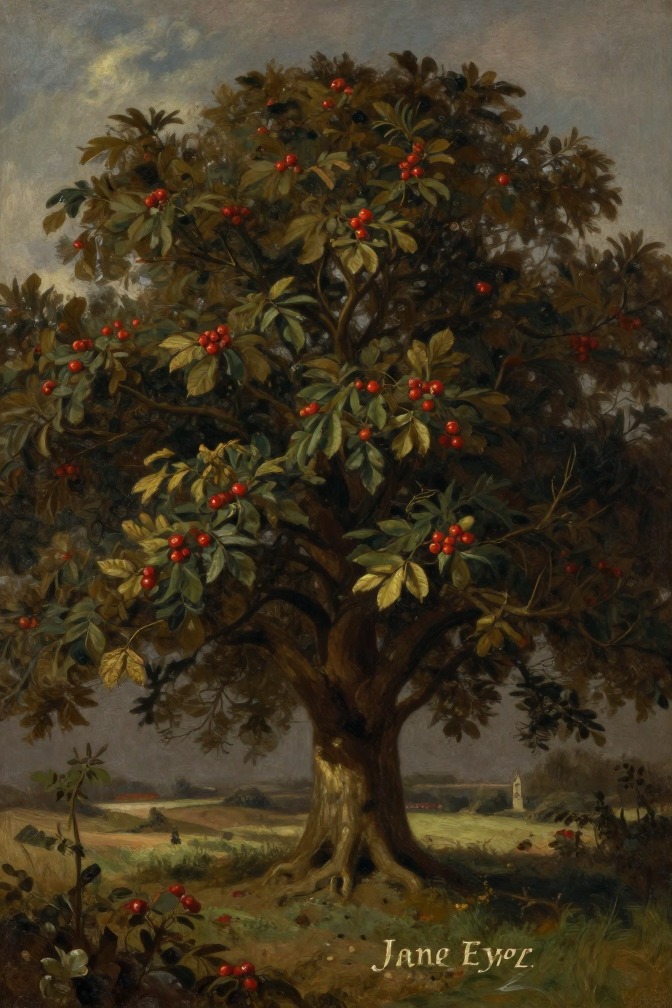
The chestnut tree in the orchard at Thornfield Hall is a powerful symbolic presence in Jane Eyre, marking the site of Jane and Rochester's engagement and its subsequent fracture. Struck by lightning on the night they pledge themselves to each other, the tree becomes a living emblem of their union's vulnerability, the moral and social obstacles that threaten it, and the lasting scars of passion and fate. Its ruined form recurs throughout the novel, linking the lovers' fate to the natural world and serving as a touchstone for themes of destruction, endurance, and the possibility of renewal.
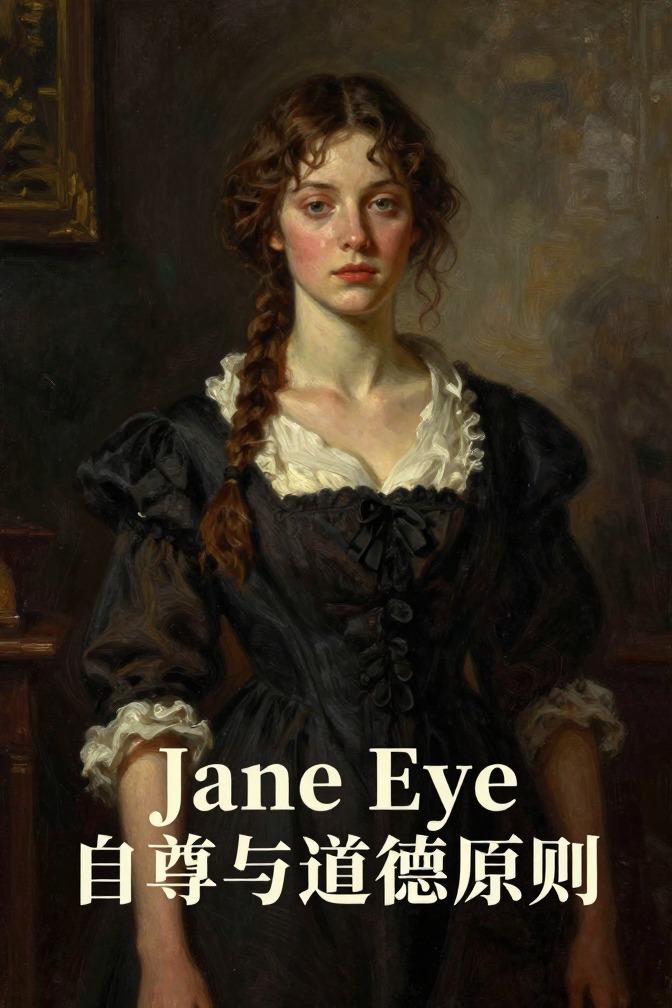
Self-respect and moral integrity are the central ethical principles that govern Jane Eyre's decisions throughout the novel, defining her identity and shaping her relationships. From her childhood defiance against injustice at Gateshead to her ultimate rejection of a bigamous union with Mr. Rochester and her refusal of a loveless marriage to St. John Rivers, Jane consistently prioritizes her own moral code and sense of self-worth over security, passion, or social advancement. This unwavering commitment to principle, which she herself articulates as a law given by God and sanctioned by man, constitutes the core of her character and the engine of the novel's drama.
Bridewell is the word solved in the third tableau of the charades played at Thornfield Hall, a scene that reveals Mr. Rochester's theatrical skill and his deepening rapport with Blanche Ingram, while also exposing the social dynamics of the house party.
The Gytrash is a North-of-England spirit from folklore, recalled by Jane Eyre during her first encounter with Mr. Rochester in Hay Lane, and later echoed in the appearance of his dog Pilot, serving as a motif that bridges the supernatural and the real.
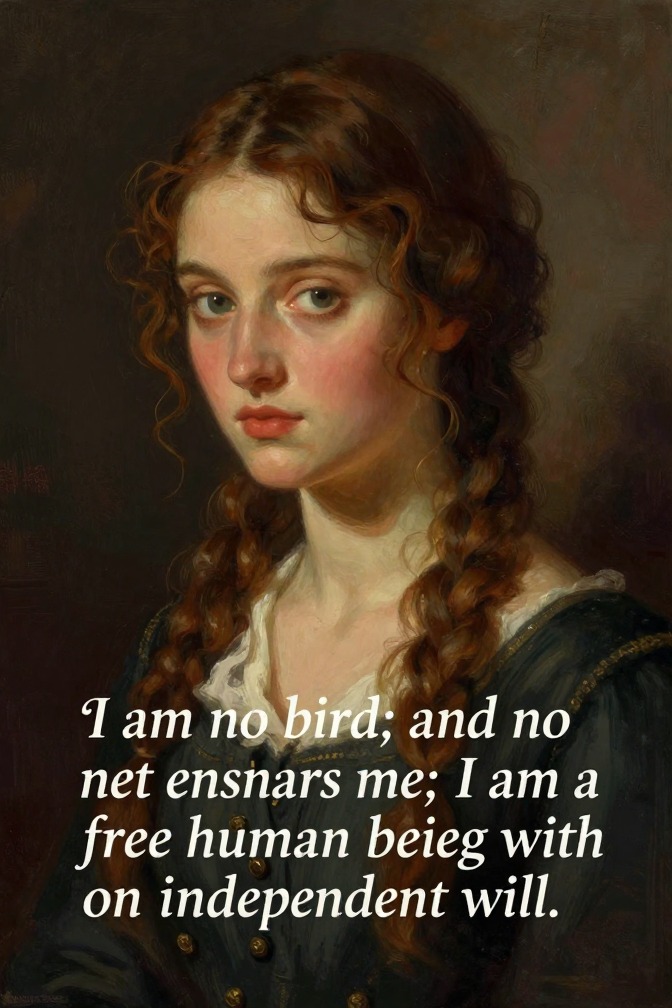
Jane Eyre's declaration of her independent will and equal humanity, spoken during her climactic confrontation with Mr. Rochester in the orchard on Midsummer-eve, is the novel's most concentrated statement of its central themes: the right of even the poorest and plainest woman to claim full personhood, the refusal to accept love at the cost of self-respect, and the insistence that spiritual equality transcends all social and material differences.
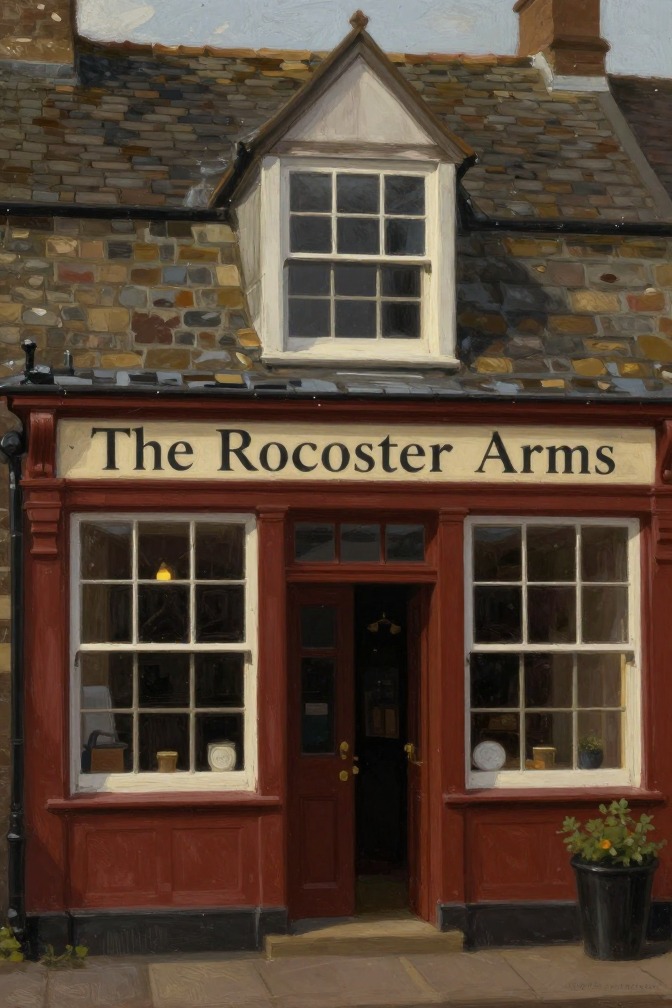
The Rochester Arms is the inn near Thornfield Hall where Jane Eyre stops on her return journey, and its name confirms she has reached her master's lands, marking a pivotal moment of hope and dread before she discovers the ruin of the estate.
Brocklehurst Hall is the ancestral seat of the Brocklehurst family, the residence of Mr. Brocklehurst, the treasurer and manager of Lowood Institution. Though never directly visited in the narrative, the Hall functions as the symbolic headquarters of the evangelical austerity and class prejudice that govern Lowood, and its name is invoked whenever the school's harsh rules, inadequate provisions, and repressive philosophy are enforced or challenged.
London is the capital of England and a recurring geographical reference point in Jane Eyre, serving as a symbol of wealth, society, and the wider world beyond the protagonist's immediate experience. It is the city where Mr. Rochester keeps his banker and jewels, where Blanche Ingram once shone in society, and where the newly married Jane and Edward briefly stay for oculist consultations. London also appears as the origin of the charitable subscriptions that support Lowood, the destination of the coach that carries Jane away from Thornfield, and the residence of the solicitor Mr. Briggs. Its presence in the novel marks the boundary between the provincial settings of Gateshead, Lowood, Thornfield, and Morton and the metropolitan sphere of power, fashion, and legal authority.
Lowton is the small market town nearest to Lowood Institution, serving as the postal and commercial hub for the school and its inhabitants. It is the place where Jane Eyre posts her advertisement for a governess position, receives Mrs. Fairfax's reply, and later meets Bessie Leaven for the last time before departing for Thornfield. The town also appears as the destination for a shopping trip by Mr. Brocklehurst, who buys thread and needles there, and as the location of the Lowton Dispensary, whose matron briefly becomes the housekeeper at Lowood during the typhus epidemic.
Spanish Town, the capital of Jamaica, is the location of the marriage between Edward Fairfax Rochester and Bertha Antoinetta Mason, a union that forms the central secret and tragic backstory of Jane Eyre. This colonial setting is the origin of Rochester's concealed mad wife and the legal impediment that shatters his attempt to marry Jane, making it a pivotal geographical and moral locus in the novel.
Oliver's needle-factory and iron-foundry is the principal industrial enterprise in the village of Morton, owned by Mr. Oliver, the wealthiest man in the parish. It provides the chief non-agricultural employment for the local population, employing men in its two branches of needle-making and iron-founding. The factory's existence shapes the social and economic structure of Morton, and its owner's daughter, Rosamond Oliver, becomes a figure of romantic interest for St. John Rivers, the local clergyman.
Midsummer-eve is the night of June 23, the setting for the pivotal scene in which Jane Eyre and Mr. Rochester confess their love and become engaged under a horse-chestnut tree in the Thornfield orchard, a moment that marks the climax of their courtship and the decisive turn toward the novel's central crisis.
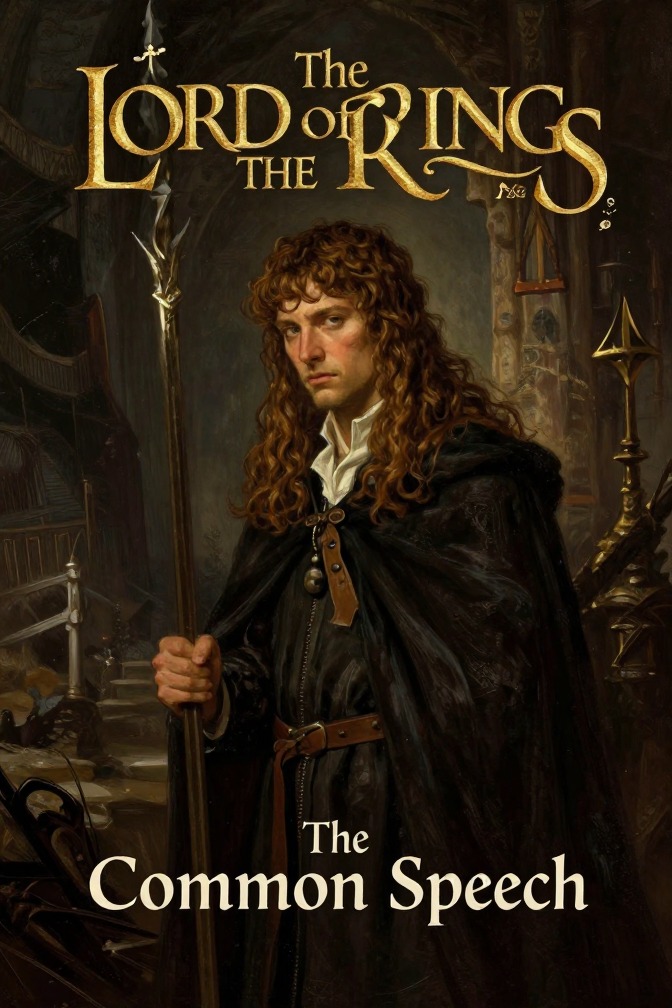
The Common Speech (Westron) is the lingua franca of Middle-earth during the Third Age, the native language of nearly all peoples west of the Misty Mountains and the Ephel Dúath, and the language in which the narrative of The Lord of the Rings is presented. It originated as the Mannish Adûnaic of Númenor, enriched by Elvish influence, and spread through Númenórean trade and dominion. By the time of the War of the Ring, it had become the everyday tongue of Hobbits, Men of Gondor and Rohan, Dwarves, and even Orcs for inter-tribal communication, while Elves and the learned also preserved the ancient Elvish languages.
The Free Peoples are the collective term for the sentient races of Middle-earth who oppose the Dark Lord Sauron, comprising Elves, Dwarves, Men, Hobbits, and Ents. Their unity is a central theme of the War of the Ring, yet their alliance is fragile, marked by ancient estrangements, mutual distrust, and the corrupting lure of the One Ring. The concept is formally invoked at the Council of Elrond, where the Company of the Ring is chosen to represent each of the Free Peoples, and again in the Last Debate, where the Captains of the West decide to march on the Black Gate as a desperate gambit to distract Sauron from the Ring-bearer. The term embodies both the hope of collective resistance and the tragic divisions that the Shadow exploits.
The Reunited Kingdom is the restored dual monarchy of Gondor and Arnor established after the War of the Ring, with Aragorn II Elessar as its High King, symbolizing the end of the Third Age and the beginning of a new era of peace and renewal for the Free Peoples of Middle-earth.
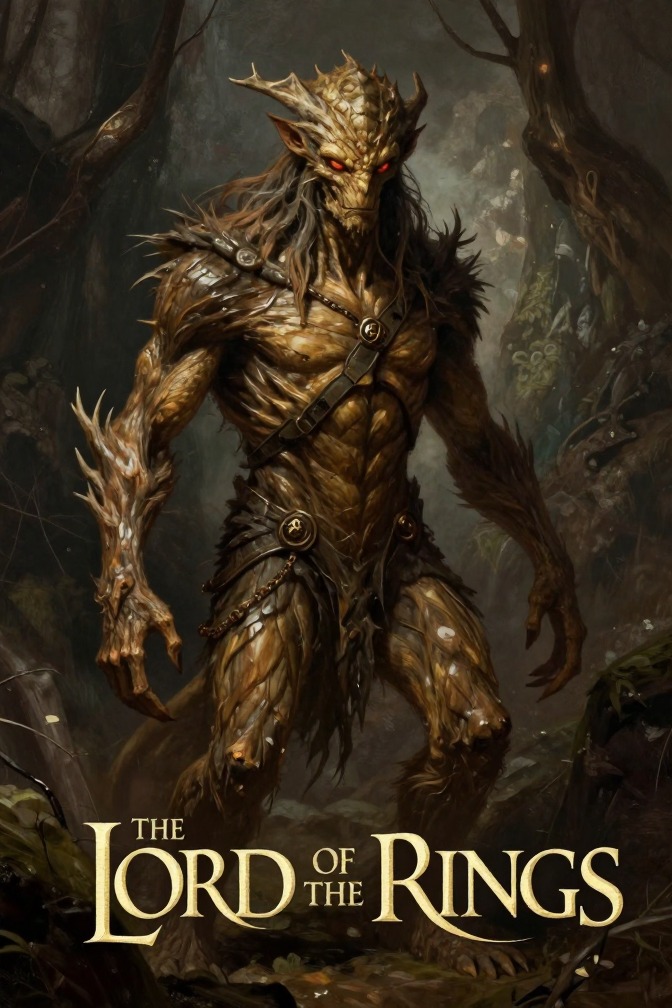
Huorns are a race of tree-like beings that dwell in Fangorn Forest, described as Ents that have become almost entirely tree-like in appearance and temperament. They are dangerous, silent, and capable of swift movement, and they play a decisive role in the War of the Ring by surrounding Isengard and annihilating the fleeing Orcs after the Battle of Helm's Deep.
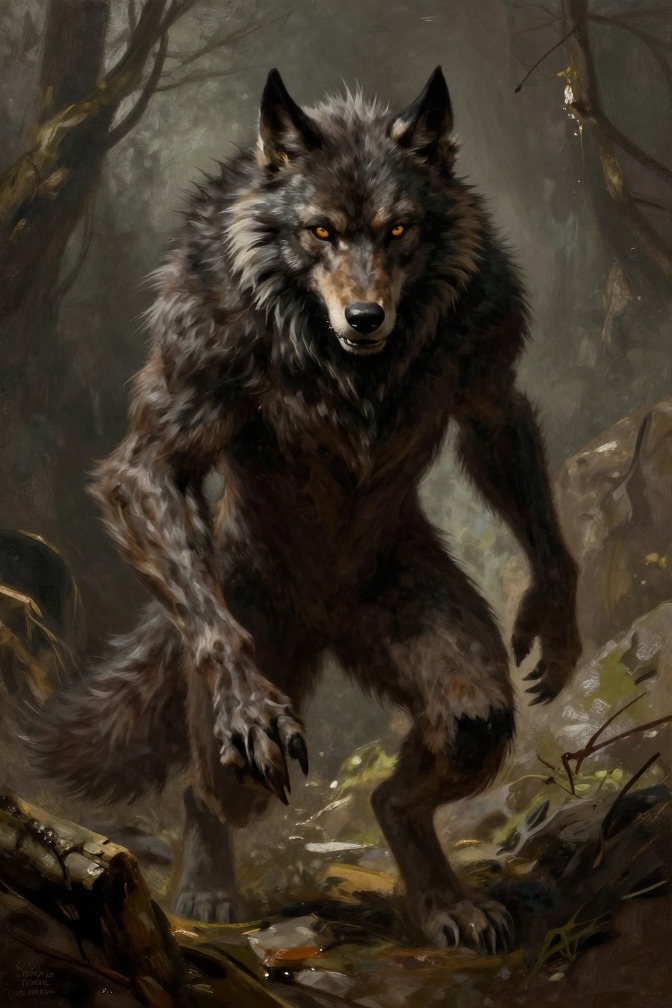
Werewolves are a race of evil, wolf-like creatures in Middle-earth, mentioned in the lore of the Elder Days as servants of Morgoth and later of Sauron. They are distinct from ordinary wolves (Wargs) and are associated with the dark sorcery of the Enemy, appearing in the histories of the First Age and referenced in the Third Age as part of the broader threat of the Shadow.
The Breaking of the Fellowship is the pivotal event in Book Two, Chapter 10 of The Lord of the Rings, where Frodo Baggins, overwhelmed by the Ring's growing power and the corruption it has already begun to work within the Company, resolves to continue the Quest alone. After Boromir succumbs to the Ring's temptation and attacks him, Frodo uses the Ring to escape, then climbs Amon Hen, where he experiences a vision of the war engulfing Middle-earth and feels the direct gaze of Sauron. In that moment of crisis, he chooses to take the Ring and depart secretly, but Samwise Gamgee, having guessed his intention, intercepts him at the boats and insists on accompanying him. The event marks the dissolution of the Nine Walkers as a unified group, scattering them into separate paths: Frodo and Sam east toward Mordor, Merry and Pippin captured by Orcs, Boromir mortally wounded, and Aragorn, Legolas, and Gimli left to pursue the captives.
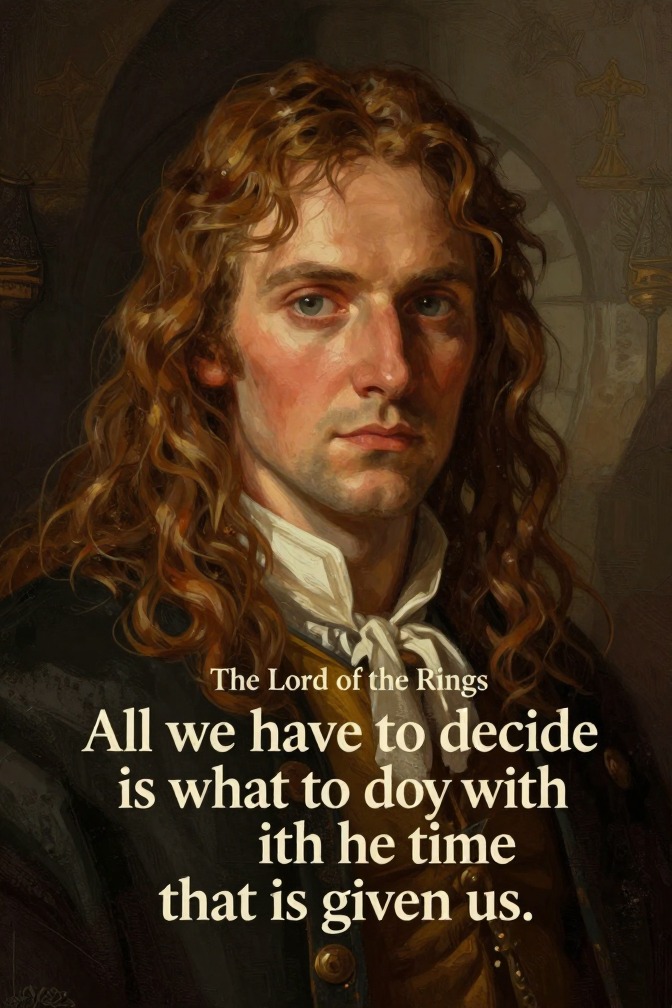
Gandalf's reply to Frodo's wish that the Ring's burden had not fallen in his time, this line crystallizes the existential core of The Lord of the Rings: the rejection of lament over circumstances one cannot control in favor of a resolute focus on the choices available within the given moment. Spoken during the pivotal 'Shadow of the Past' chapter, it reframes the entire quest as a matter of free will and responsibility, becoming a touchstone for Frodo's later decisions and a philosophical anchor for the narrative's treatment of fate, agency, and hope.
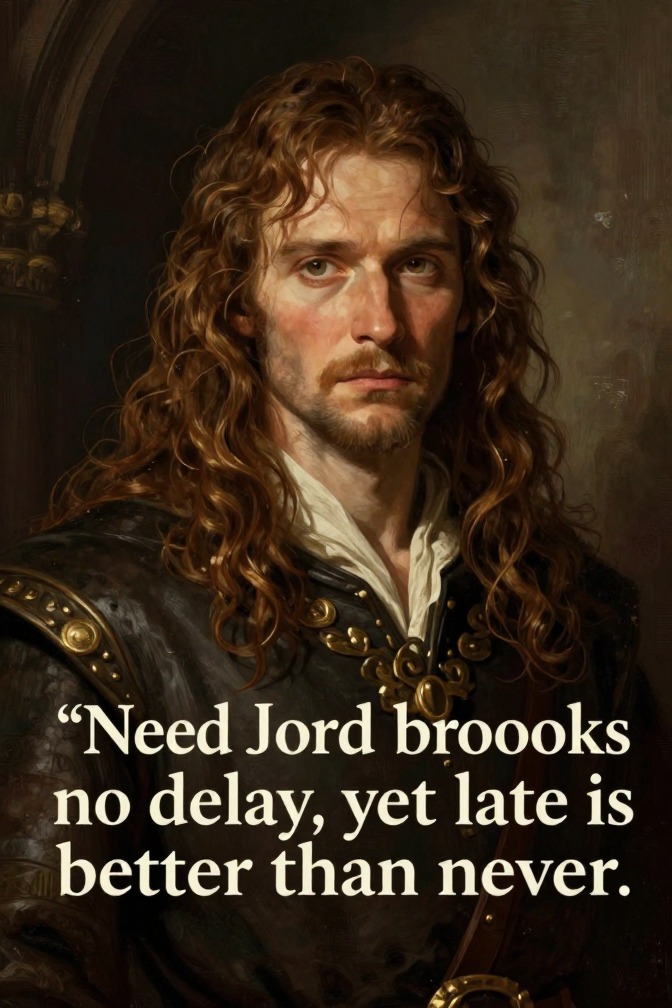
The proverb 'Need brooks no delay, yet late is better than never' is spoken by Éomer in The Two Towers, Book Three, Chapter 2, 'The Riders of Rohan', as the Rohirrim prepare to ride to Gondor's aid. It encapsulates the moral calculus of the War of the Ring: the necessity of immediate action against the urgency of survival, and the hope that even a delayed arrival may prove decisive. The saying, rooted in the practical wisdom of the Horse-lords, becomes a thematic touchstone for the entire campaign, contrasting the fatalism of despair with the stubborn faith that action, however late, is never without value.
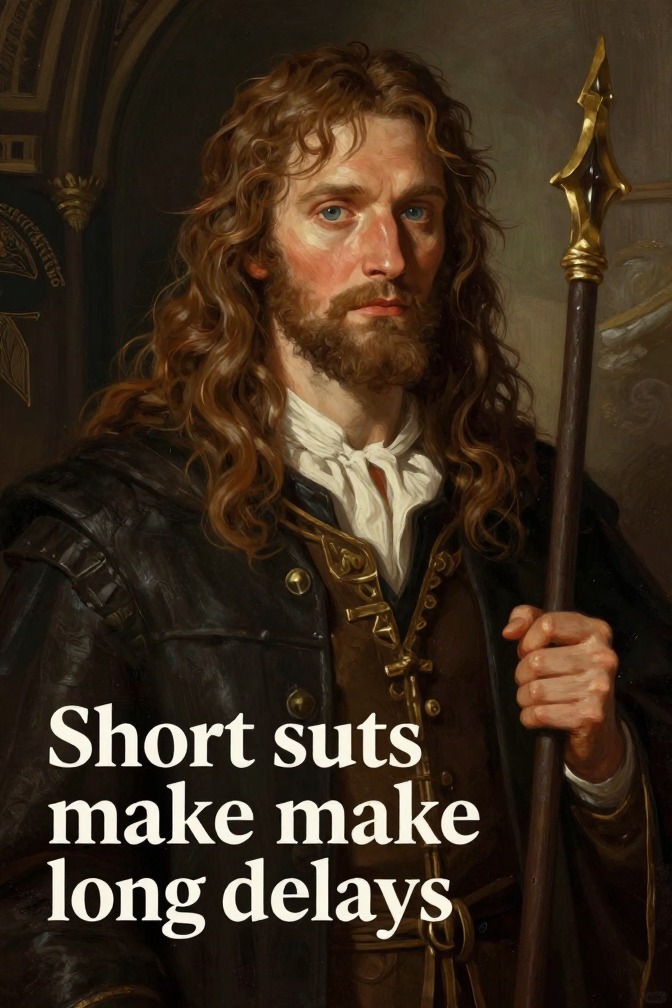
Short cuts make long delays is a proverbial saying in The Lord of the Rings, spoken by Pippin Took during the hobbits' journey through the Old Forest. It encapsulates a recurring theme of the quest: that attempts to find quicker or easier paths often lead to greater peril and longer detours. The saying is first uttered as a wry comment on Frodo's decision to leave the road, and it proves prophetic as the hobbits become lost, encounter Old Man Willow, and are rescued by Tom Bombadil. The proverb also resonates with the broader narrative, where the Fellowship's choices to take shortcuts or avoid direct routes frequently result in unforeseen dangers and delays.
The Eagles are coming! is a pivotal cry in The Lord of the Rings, first heard at the Battle of the Black Gate when Gandalf announces the arrival of the Great Eagles, turning the tide of the war and heralding Sauron's downfall. It is a moment of hope and deliverance, echoing the eagles' earlier role as Gandalf's rescuers and reinforcing the theme of unexpected aid in Middle-earth's darkest hour.
The way is shut. It was made by those who are Dead, and the Dead keep it, until the time comes is a cryptic warning spoken by an ancient guardian at the Door of the Dead in Dunharrow, marking the entrance to the Paths of the Dead. It establishes the central condition of the oathbreakers' curse: the way is barred to the living until the appointed time, when the heir of Isildur will summon them to fulfil their broken oath. The phrase encapsulates the theme of a debt that outlasts death and the necessity of a chosen one to unlock a path that all others fear.
Aelin-uial, the Meres of Twilight, is a vast region of marshes, pools, and mists in the northern reaches of Beleriand, where the rivers Sirion and Aros meet. It is a liminal and treacherous landscape, serving as a natural boundary and a place of concealment, memory, and sorrow, deeply tied to the history of the Elves and the First Age.
Amon Ereb is a lonely hill in the eastern reaches of Beleriand, a place of ancient sorrow and strategic significance during the First Age. It is most famously known as the site where the Elven-king Thingol was slain by Dwarves, an act that set in motion a chain of tragic events. The hill also served as a refuge and rallying point for the Sons of Fëanor after the disastrous Nirnaeth Arnoediad, and later as the place where the young Dior Thingol's heir dwelt before his own fall. In the wider legendarium, Amon Ereb is a landmark that marks the boundary between the realms of East Beleriand and the lands beyond, a silent witness to the ruin of the Elven kingdoms.
Brilthor is a river in Ossiriand, the seventh of the Seven Rivers of that land, mentioned in the song of Treebeard as part of the ancient geography of Beleriand that was lost beneath the waves after the War of Wrath.
Bywater is a village in the Shire, located on the main road between Hobbiton and the Brandywine Bridge. It is the site of the Battle of Bywater, the final military engagement of the War of the Ring, and the home of the Green Dragon inn, Farmer Maggot's farm, and the Cotton family. The village is also the location of the mill that was rebuilt by Lotho Sackville-Baggins and Saruman's men, and it was the scene of the hobbits' final victory over the ruffians.