Winston Smith's diary entry about a secret sexual encounter with a prostitute, three years before the novel's present, serves as a confessional act of rebellion against the Party's sexual repression, revealing the sordid reality of the experience and his complex feelings of shame, disgust, and defiance.
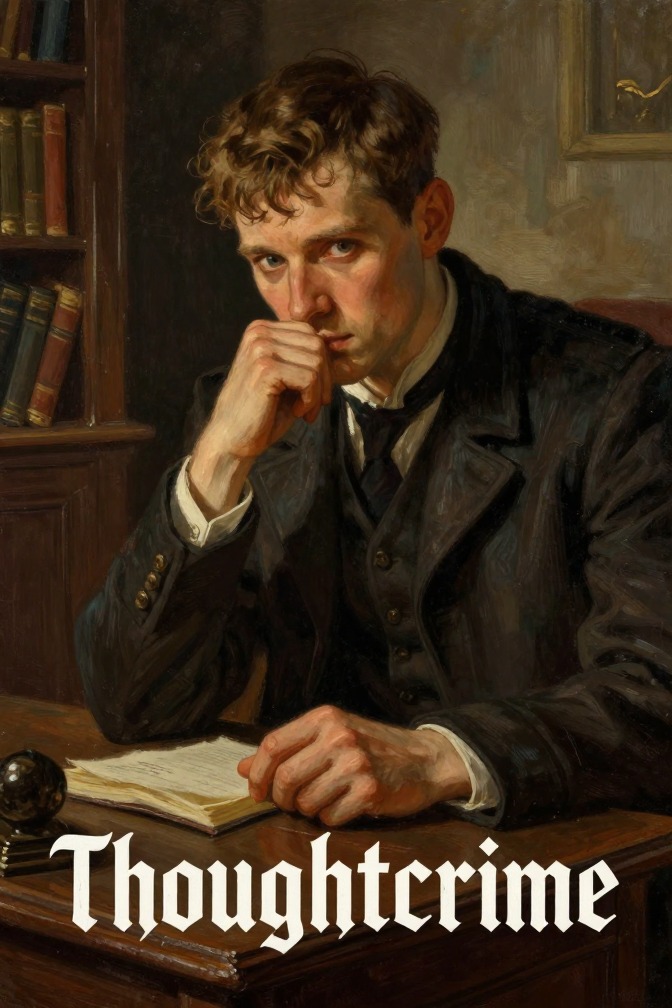
Thoughtcrime is the foundational concept of criminality in Oceania, defined by the Party as the mere possession of heretical thoughts against its doctrines. It is not a statutory offense—there are no laws—but it is the essential crime that contains all others, and carrying it in one's mind is equivalent to death. The existence of Thoughtcrime justifies the omnipresent surveillance of the Thought Police and the brutal punishments of the Ministry of Love, making it the central mechanism through which the Party enforces absolute ideological conformity.
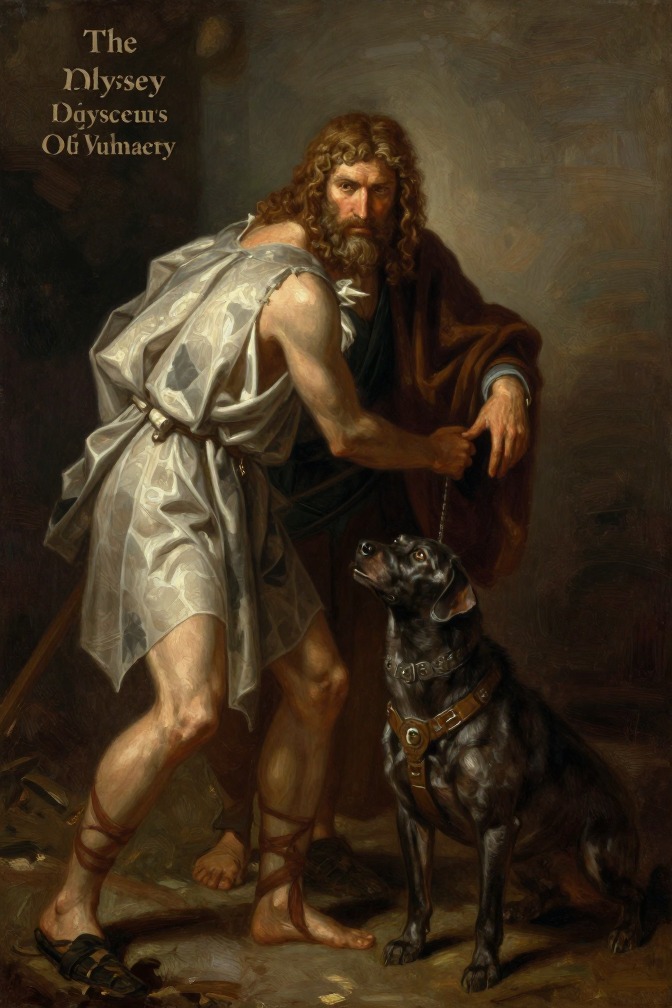
Odysseus's Disguise and Meeting with Eumaeus is the pivotal sequence in which Odysseus, transformed by Athena into a decrepit beggar, first encounters his loyal swineherd Eumaeus upon returning to Ithaca. This episode establishes the foundation for Odysseus's reconnaissance of his household, tests the loyalty of his servants, and initiates the long-deferred process of reclaiming his identity and home.
Clymenus is a minor figure in the Odyssey, mentioned only as the father of Eurydice, the wife of Nestor, and as the father of Iphiclus, a figure in the Cretan false tale told by Odysseus. His appearances are confined to genealogical references that serve to establish the lineage and social standing of other characters within the epic's complex web of family relations.
Crataiis is the mother of the sea monster Scylla, mentioned by Circe in her instructions to Odysseus as the one to whom he should pray in order to prevent Scylla from attacking his ship a second time during the passage of the strait.
Creon is a minor but significant figure in the Odyssey, mentioned as the king of Thebes and the father of Megara, who married Heracles. His brief appearance in Odysseus's catalogue of heroines in the Underworld serves to anchor the Theban cycle within the epic's broader mythological framework, highlighting the interconnectedness of heroic lineages and the poem's engagement with earlier traditions.
Ctesius, father of the loyal swineherd Eumaeus, is a minor but symbolically significant character whose story of lost kingship and a stolen son provides a poignant parallel to Odysseus's own disrupted household and underscores the poem's themes of loss, memory, and the enduring bonds between master and servant.
Damastor is a minor Ithacan nobleman whose son Agelaus becomes one of the leading suitors of Penelope and a prominent voice among those who plot against Telemachus. Though Damastor himself never appears in the poem, his name is invoked to establish Agelaus's lineage and social standing, and his son's actions—first urging moderation, then leading the final armed resistance—trace a small arc from attempted counsel to violent death.
Diocles, son of Ortilochus and grandson of Alpheus, is a minor but recurring figure in the Odyssey who twice offers hospitality to Telemachus and Pisistratus during their journey between Pylos and Sparta, embodying the poem's ideal of xenia (guest-friendship) through his consistent, generous reception of travelers.
Echeneus is an aged Phaeacian elder who, during Odysseus's supplication at the hearth of King Alcinous, breaks the stunned silence by rebuking the king for neglecting the rites of hospitality and by ordering that the stranger be given a proper seat, food, and drink—thereby restoring the social and religious order that the Phaeacian court is meant to embody.
Halios, a son of King Alcinous and Queen Arete of the Phaeacians, is a young prince who participates in the athletic games held in honor of the disguised Odysseus. Though a minor figure, his presence among the Phaeacian nobility underscores the royal family's unity and the competitive spirit of the games that reveal Odysseus's prowess.
Iphthime, the sister of Penelope, appears in the Odyssey only as a dream-vision sent by Athena to comfort her grieving sister. Though she has no active role in the plot, her brief appearance carries significant narrative weight: she delivers divine reassurance, confirms Penelope's fears about Telemachus, and pointedly refuses to reveal Odysseus's fate, thereby maintaining the poem's central suspense.
Pero is a minor but structurally significant female figure in the Odyssey, mentioned in the underworld catalogue of heroines. She is the daughter of Neleus and Chloris, and her extraordinary beauty becomes the object of a dangerous bride-quest that requires the suitor to raid the cattle of Iphicles from Phylace, a task that entraps the seer Melampus and sets in motion a chain of prophecy, imprisonment, and eventual release that illustrates the power of fate and the high stakes of marriage in the epic's world.
Polybus is a wealthy Egyptian nobleman living in Thebes who appears in the Odyssey as a generous host and gift-giver to Menelaus during his wanderings, and whose wife Alcandra gives Helen a golden distaff and a silver work-box; his name is also borne by the father of the suitor Eurymachus in Ithaca, and by a craftsman who makes a red ball for the Phaeacian princes.
Polypheides is a minor seer in the Odyssey, the son of Mantius and a descendant of the great prophet Melampus. He is mentioned only in a genealogical passage during Telemachus's journey, where he is identified as the father of Theoclymenus, the fugitive seer who joins Telemachus's ship and later delivers a crucial prophecy of doom to the suitors. Though Polypheides himself never appears in the narrative, his lineage and his son's role establish a chain of prophetic authority that runs through the poem, linking the world of inherited seercraft to the unfolding of Odysseus's return.
Rhadamanthus is a minor but symbolically potent figure in the Odyssey, appearing in Menelaus's account of Proteus's prophecy as the ruler of the Elysian plain, where he embodies the ultimate reward of a blessed afterlife reserved for the most favored mortals.
Telephus, son of Heracles and king of the Mysians, is a minor but significant figure in the Odyssey, mentioned by Odysseus during his account of the Trojan War as the father of Eurypylus, a hero whom Neoptolemus killed in battle, and whose death is linked to a bribe offered by a woman, illustrating the poem's themes of fate, the costs of war, and the entanglement of personal motives with heroic conflict.
Zethus is a minor but symbolically significant figure in the Odyssey, appearing in the underworld catalogue of heroines and in Penelope's lament, where he is identified as the husband of the nightingale Aedon and the father of Itylus, whose accidental killing by his mother becomes a paradigm of grief.
The land of the Cyclopes is a savage, lawless territory inhabited by giant, one-eyed monsters who live in isolation, without agriculture, laws, or assemblies, and whose encounter with Odysseus results in the blinding of Polyphemus and the lasting enmity of Poseidon.
Erebus is the primordial realm of darkness and the shadowy passage through which the dead descend into Hades in Homer's Odyssey. It functions as the threshold between the living world and the underworld, a space where ghosts gather around sacrificial blood to regain speech and memory. In Odysseus's narrative, Erebus is not merely a location but the site of the Nekyia—the ritual consultation of the dead—where the hero confronts his mother, receives prophecy from Teiresias, and witnesses the eternal punishments of legendary sinners. Its depiction establishes the poem's geography of the afterlife and underscores the boundary between mortal life and the insubstantial existence of shades.
Ismarus is the city of the Cicons in Thrace, the first land Odysseus and his crew sack after leaving Troy, an event that sets the pattern of loss and consequence for the entire voyage.
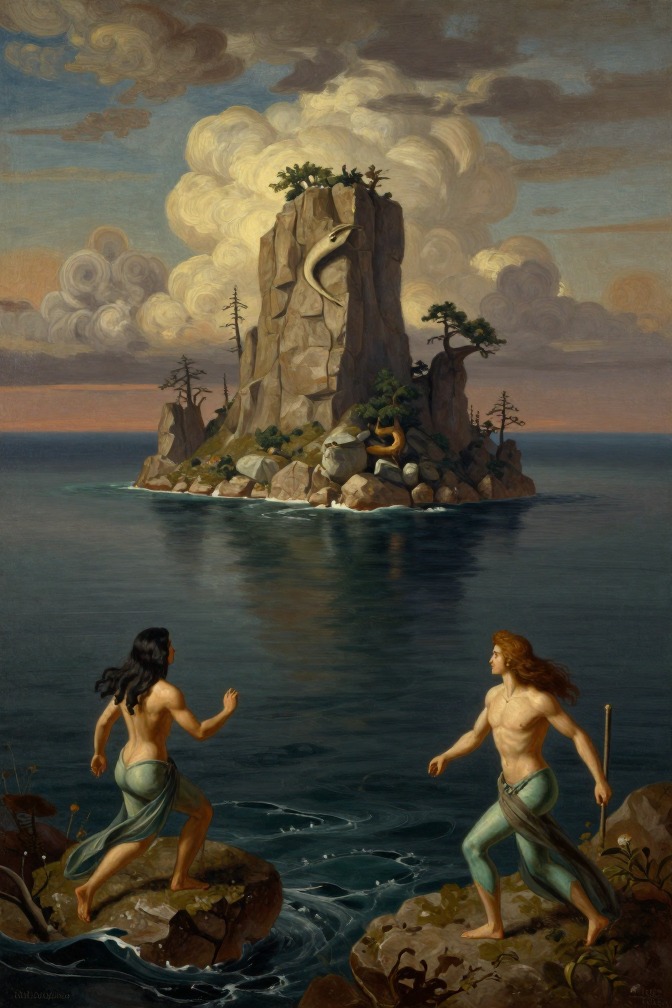
The Sirens' island is a perilous location in the Odyssey where the enchanting but deadly Sirens lure sailors to their deaths with irresistible song, a threat that Odysseus must navigate with cunning and restraint.
Taygetus is a mountain range in the Peloponnese, mentioned in the Odyssey as the setting for the goddess Artemis's hunting expeditions, and it serves as a geographical marker within the poem's broader Mediterranean landscape, contrasting with the idealized, fertile landscapes of Scheria and Calypso's island.
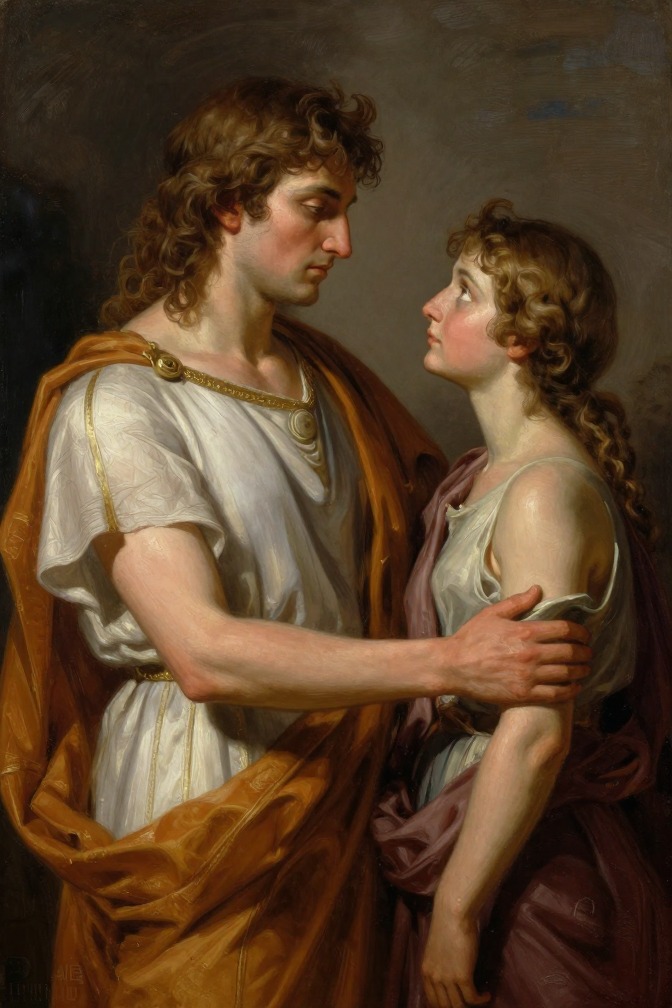
Odysseus and Anticlea (mother and son) is a relationship defined by profound mutual longing and grief, culminating in a poignant underworld encounter that reveals the emotional cost of Odysseus's prolonged absence and the nature of death in Homeric thought.
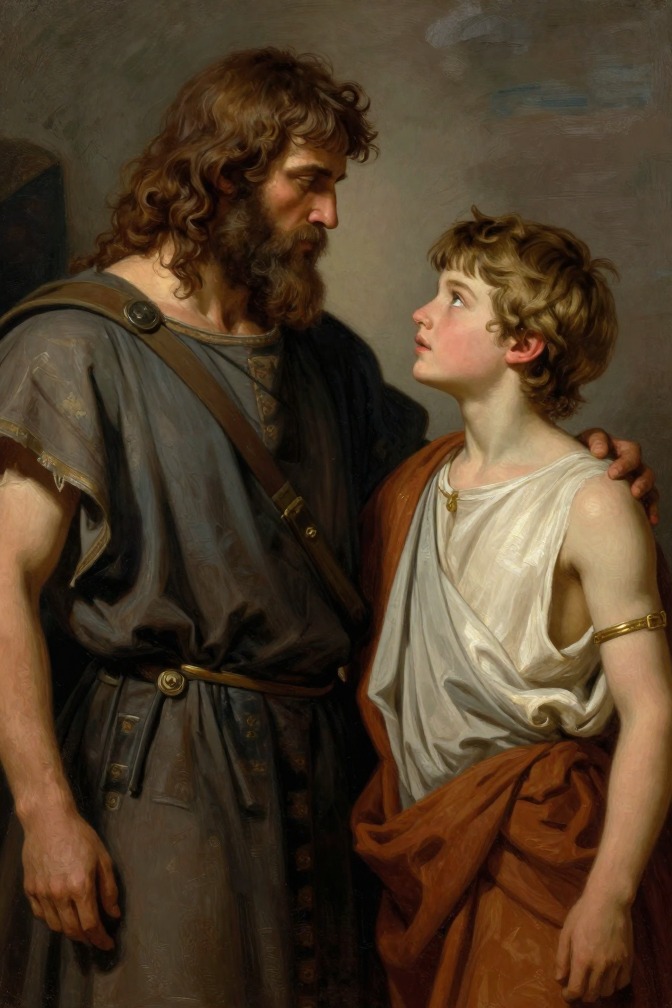
The relationship between Odysseus and Telemachus is the central father-son bond of the Odyssey, defined by a twenty-year separation, a gradual process of mutual recognition, and a strategic partnership that culminates in the violent reclamation of their household. Their reunion transforms Telemachus from a passive youth into an active avenger and restores Odysseus's identity as both king and father, anchoring the poem's themes of inheritance, maturation, and the restoration of order.
The relationship between Telemachus and Athena, who repeatedly appears in the guise of Mentor, is the central mentoring dynamic of the Odyssey, transforming a passive, despairing youth into a decisive agent of his own house. Athena's interventions—first as Mentes, then as Mentor—supply the courage, strategic counsel, and divine backing that Telemachus lacks, and her guidance directly sets in motion the poem's parallel plot of his maturation and his father's return.
Polyphemus's Curse is the prayer uttered by the Cyclops Polyphemus to his father Poseidon after Odysseus blinds him, which becomes the driving supernatural force behind Odysseus's prolonged wanderings and suffering at sea.
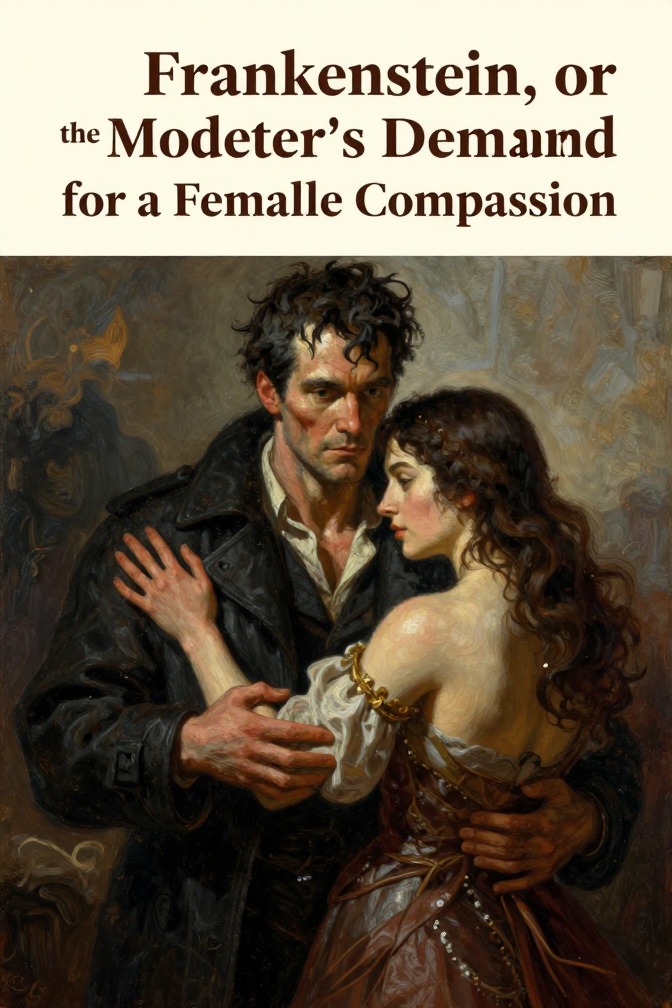
The monster confronts Victor Frankenstein on the glacier and demands that he create a female companion of equal hideousness, arguing that this is the only way to end his isolation and prevent further violence.
Victor Frankenstein agrees to create a female companion for the monster after a prolonged and harrowing confrontation on the glacier of Montanvert, a decision driven by the monster's persuasive narrative, threats against his remaining family, and Victor's own sense of duty as a creator, though the agreement is immediately shadowed by profound dread and moral uncertainty.
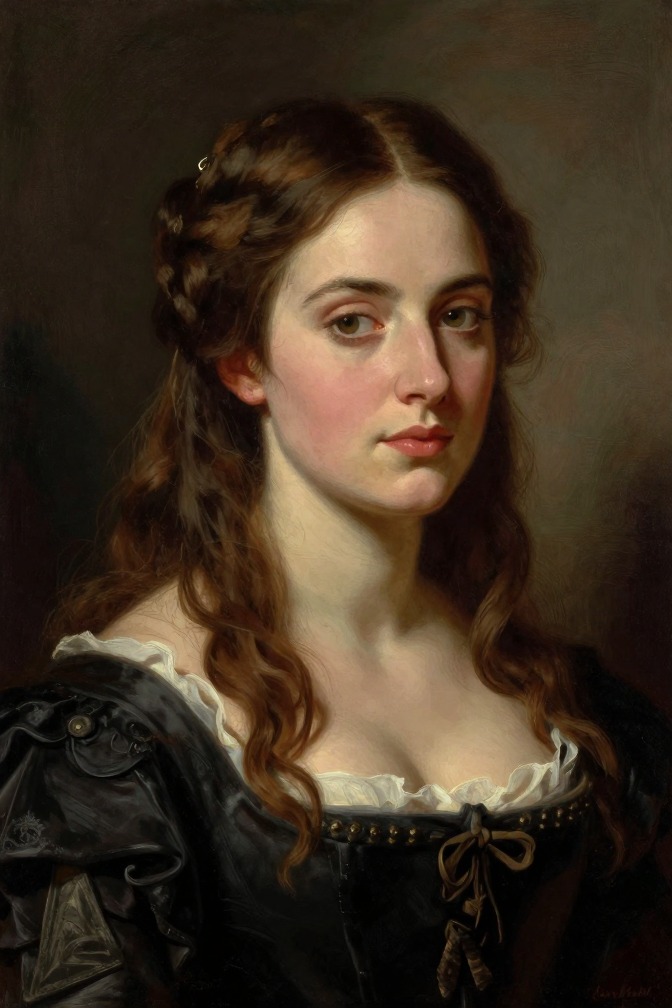
Elizabeth Lavenza is the adopted cousin and later wife of Victor Frankenstein, whose gentle, self-sacrificing nature makes her the emotional center of the Frankenstein family and, ultimately, the final victim of the monster's revenge.