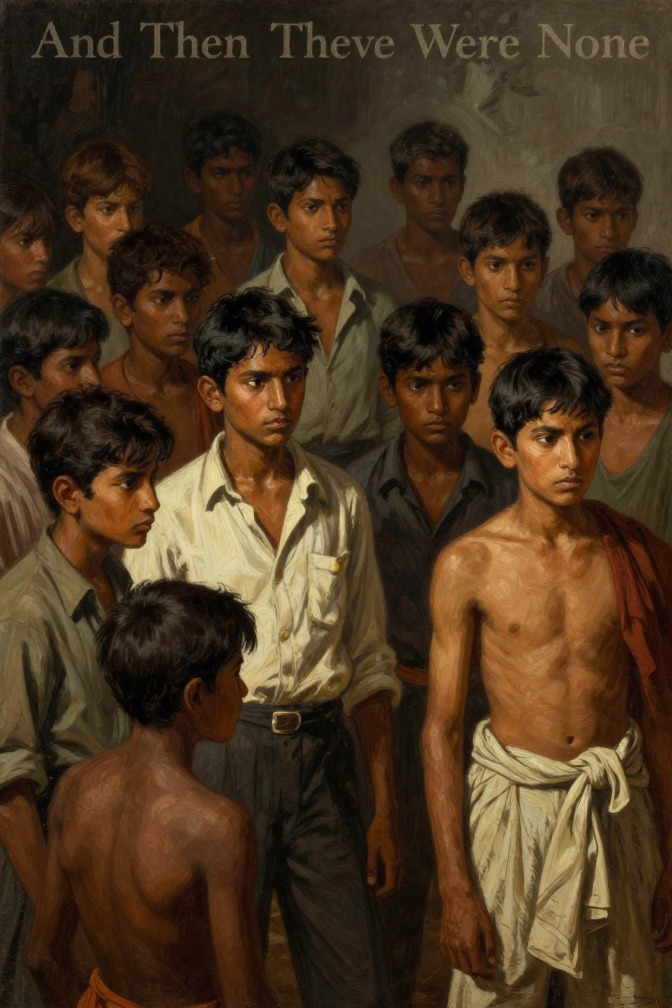
The diminishing number of Indian boy figurines on the dining table serves as a macabre tally of the murders on Indian Island, each disappearance corresponding to a death in the order of the nursery rhyme, and ultimately becomes a key clue in the unsolved mystery.
Lawrence John Wargrave, a retired judge known as a 'hanging judge,' is the mastermind behind the Indian Island murders, driven by a sadistic love of killing and a fanatical sense of justice to execute those beyond the law's reach.
11 August 1935 is the date on which Vera Claythorne drowned Cyril Ogilvie Hamilton, an act that constitutes the central crime for which she is later accused and punished on Indian Island.
August 8th is the date on which all ten guests arrive at Indian Island, marking the beginning of the meticulously orchestrated series of murders that constitute the central plot of Agatha Christie's *And Then There Were None*.
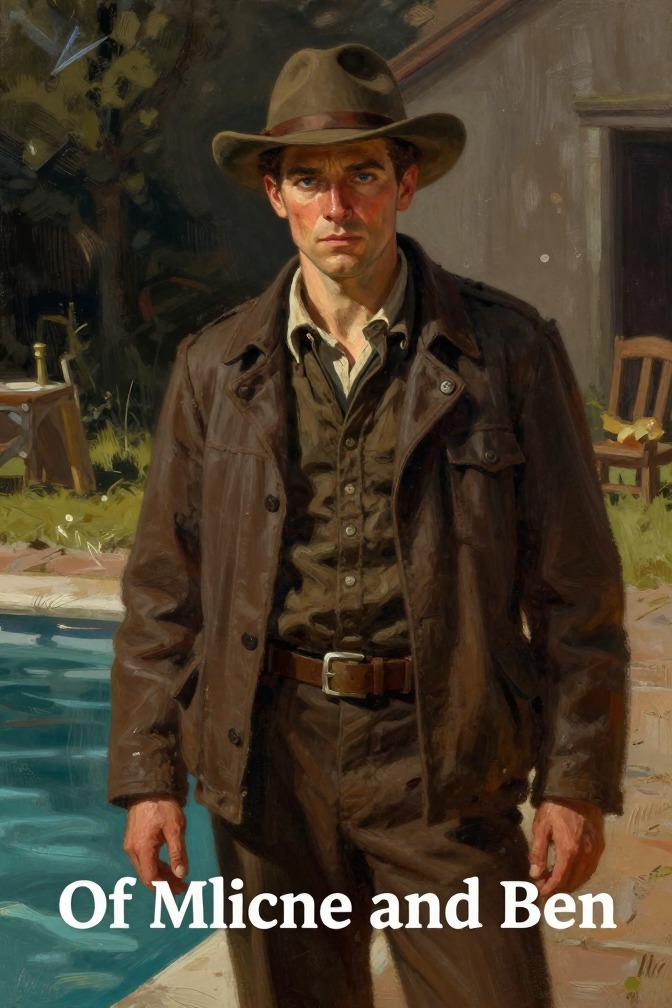
Lennie Small arrives at the pool on the Salinas River, a secluded spot George has designated as a meeting place in case of trouble. The scene establishes the natural setting, Lennie's fearful and guilty state of mind, and his hallucinatory encounters with Aunt Clara and a giant rabbit, which dramatize his internal conflict and foreshadow the story's tragic conclusion.
The chicken is a farm animal that appears in George Milton's vision of the little place, a dream farm he and Lennie Small hope to own one day, symbolizing the modest self-sufficiency and domestic stability they long for.
The cow is a central element of George and Lennie's shared dream of owning a small farm, representing the promise of self-sufficiency, stability, and a life beyond itinerant labor. It appears in the final scene as George recites their vision to calm Lennie before the shooting, making the cow a symbol of the hope that is simultaneously invoked and destroyed.
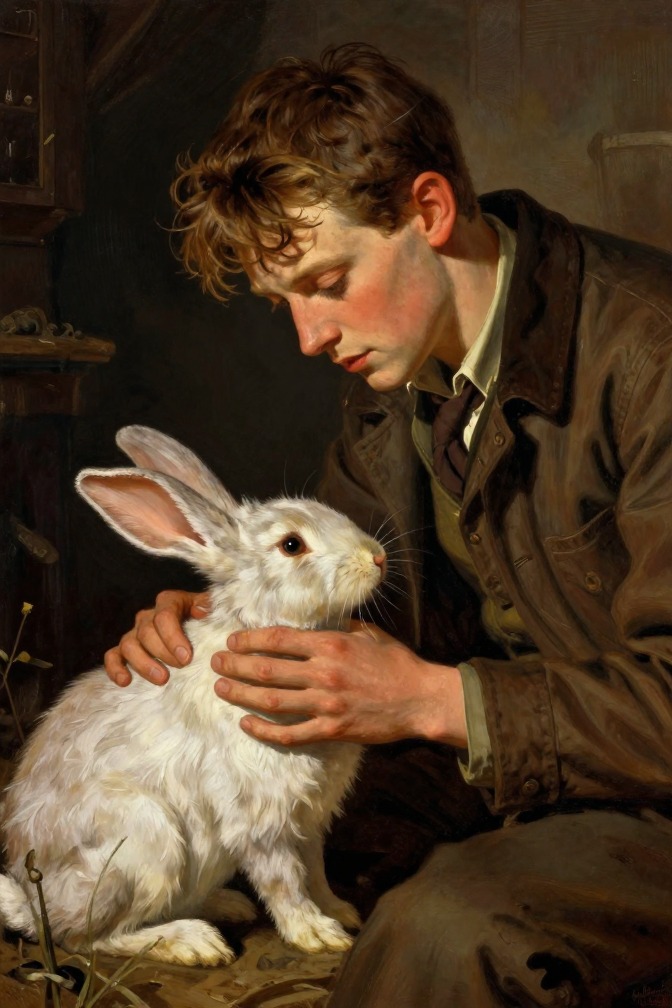
Lennie Small's hallucination of a giant rabbit is a pivotal psychological event in the final chapter of John Steinbeck's *Of Mice and Men*, in which Lennie's guilt, fear, and desperate hope for the future are externalized through a talking rabbit that berates him for his failures and predicts George's abandonment. This vision, following the hallucination of Aunt Clara, crystallizes Lennie's internal conflict and foreshadows the story's tragic resolution.
The phrase "Guys like us got no fambly" is a central expression in John Steinbeck's *Of Mice and Men*, encapsulating the rootlessness and isolation of itinerant ranch workers during the Great Depression. It is spoken by George Milton as part of a recurring dialogue with Lennie Small that defines their unique bond and shared dream, contrasting their companionship with the lonely lives of other men.
Carlson's Luger is the pistol George Milton uses to kill Lennie Small at the Salinas River pool, transforming from a mundane ranch object into the instrument of a mercy killing that ends the dream of the little farm.
George and Carlson's relationship is a brief, functional interaction defined by the aftermath of Lennie's death, where Carlson's practical questions and George's exhausted, fabricated answers reveal the social performance required to conceal the truth of the killing.
George and Curley's relationship is defined by mutual hostility and class tension, culminating in Curley's cold satisfaction at Lennie's death and his dismissive attitude toward George afterward.
George and Lennie's relationship is the emotional and structural core of the novel, a bond of mutual dependence and shared dreaming that is ultimately shattered by a mercy killing. Their friendship, rare among itinerant ranch hands, is defined by Lennie's childlike trust and George's protective care, and it is tested by Lennie's repeated, unintentional acts of violence. The relationship culminates in George's agonizing decision to shoot Lennie himself, an act that both fulfills and destroys their shared dream.
The Dream of the Farm is the central, recurring vision of a self-sufficient smallholding that George Milton and Lennie Small share throughout their itinerant life, and it becomes the emotional and narrative core of the novel's final scene. In the moments before George shoots Lennie beside the Salinas River, the dream is recited one last time—not as a plan for the future, but as a ritual of comfort and a prelude to mercy. The dream's final invocation transforms it from a shared aspiration into a tragic farewell, revealing the depth of the bond between the two men and the impossibility of their vision in a world of rootless labor.
The Ambush at Amiens is a pivotal action sequence in which Athos, separated from d'Artagnan during the journey to London, is trapped and captured by the innkeeper and his accomplices at an inn in Amiens, an event that reveals the coordinated network of Cardinal Richelieu's agents and tests the loyalty and resourcefulness of the Musketeers.
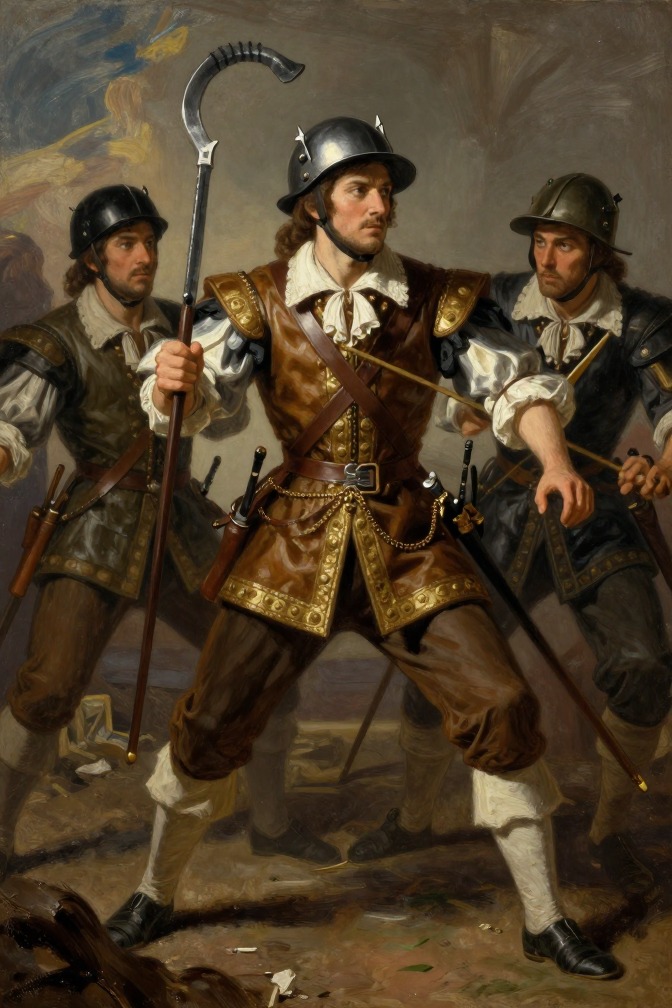
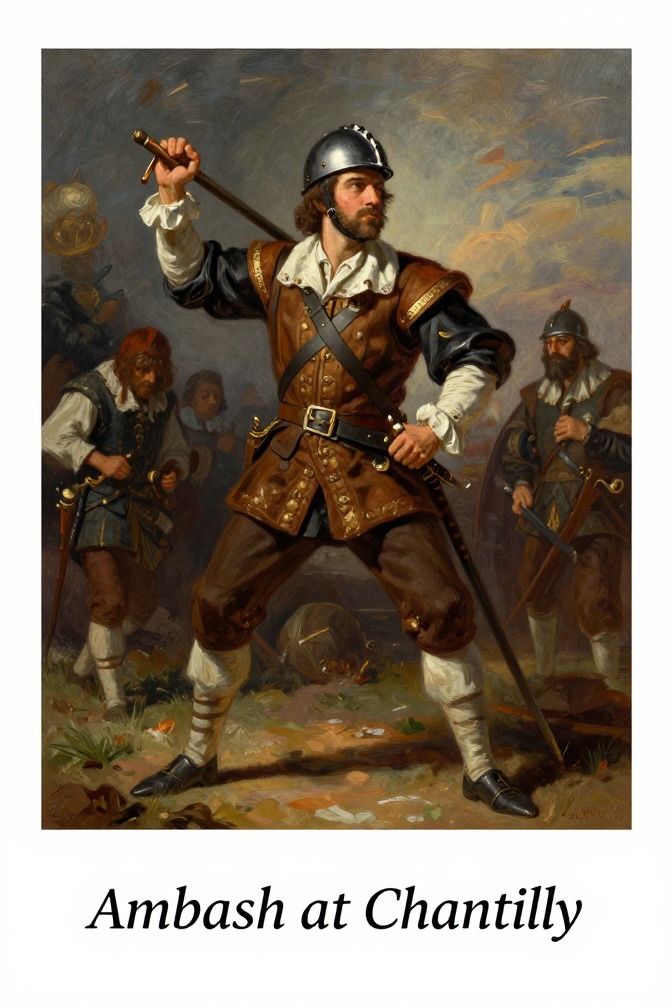
The Ambush at Chantilly is a pivotal event during the four friends' journey to London, where Porthos is deliberately detained by a stranger who provokes a duel, revealing the cardinal's network of agents and testing the Musketeers' solidarity.
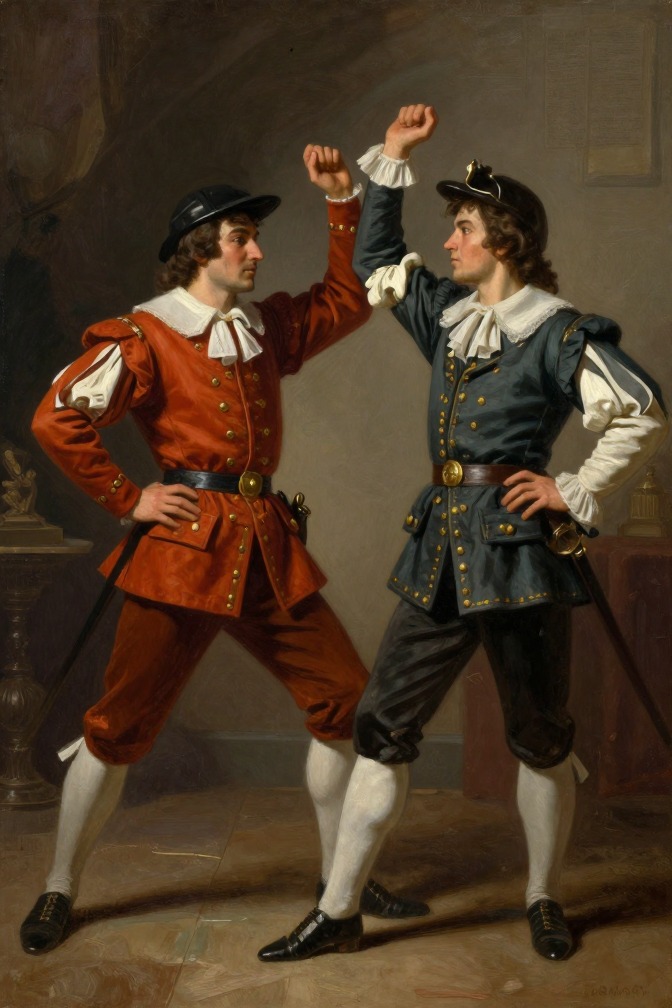
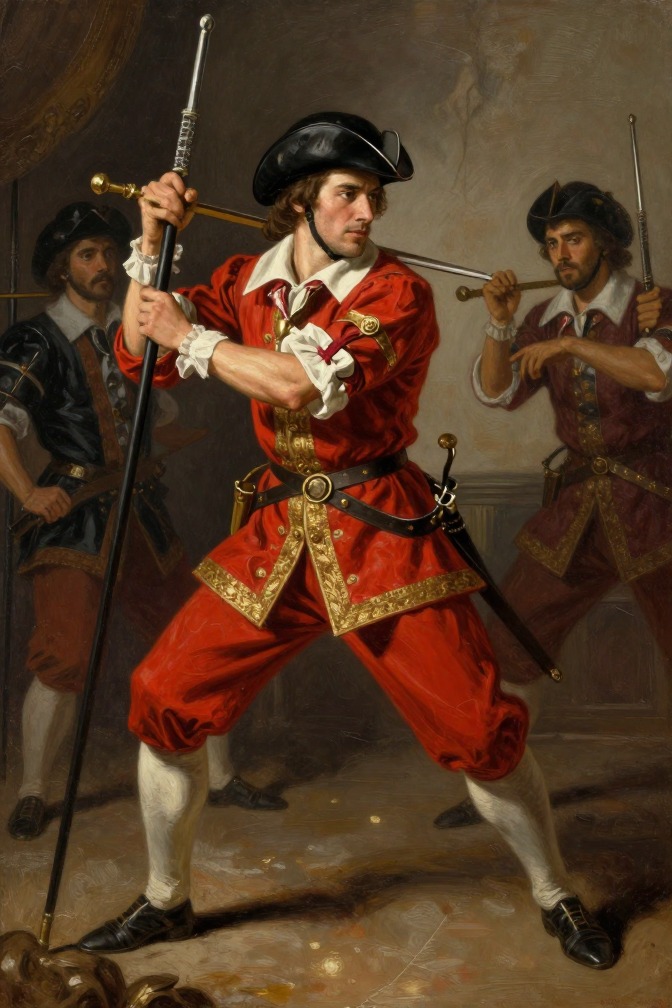
The Duel with Bernajoux is a pivotal early confrontation in which d'Artagnan, newly promoted to the Musketeers, fights and wounds a Cardinal's Guardsman named Bernajoux, triggering a large-scale brawl that escalates into a street battle between the Musketeers and the Cardinal's Guards, ultimately leading to d'Artagnan's formal introduction to King Louis XIII and his first royal reward.
The Fight at the Red Dovecot is a pivotal nocturnal brawl in which Athos, Porthos, and Aramis defend the honor of a mysterious lady against four drunken assailants, an encounter that unexpectedly brings them face to face with Cardinal Richelieu himself and leads to the cardinal's discovery of their loyalty and discretion.
The Meung Brawl is the opening action of the novel, in which the young Gascon d'Artagnan, newly arrived from his province, is provoked by a mysterious stranger at the inn of the Jolly Miller, leading to a humiliating defeat that sets the entire plot in motion.
Bazin is the devout, ambitious valet of Aramis, whose unwavering desire to serve a churchman defines his role throughout the novel. He is a Berrichon, mild, peaceable, and of unimpeachable fidelity, always dressed in black as befits the servant of a future cleric. His master's periodic flirtations with the Musketeer life cause him constant spiritual anguish, while his own aspirations—nourished by reading history and knowing that Sixtus V rose from swineherd to Pope—extend to seeing Aramis become a cardinal and himself a cardinal's attendant. Bazin's trajectory moves from frustrated piety through ecstatic hope to resigned disappointment, making him a comic yet poignant index of Aramis's irresolution.
Comte de Cramail is a minor courtier who appears in the retinue of King Louis XIII during the ball at the Hôtel de Ville, one of the many nobles accompanying the king and thereby forming part of the backdrop against which the central drama of the diamond studs unfolds.
Comte de Rochefort is the cardinal's most trusted agent, a shadowy figure whose recurring appearances across the novel mark the cardinal's unseen hand in every major plot against the queen, d'Artagnan, and their allies. He is the man of Meung who steals d'Artagnan's letter, the orchestrator of Constance Bonacieux's abduction, and the cardinal's personal courier to Milady. His final transformation from implacable enemy to grudging friend of d'Artagnan signals the resolution of the novel's central antagonism.
The Executioner of Lille is a minor but pivotal character in Alexandre Dumas's *The Three Musketeers*, whose testimony during Milady's trial reveals her past crimes and provides the moral and legal justification for her execution. As the brother of the young priest Milady seduced and ruined, he personally branded her with the fleur-de-lis, and his appearance as the masked man in the red cloak transforms the friends' private vengeance into a solemn act of retributive justice.
Jussac is a captain of the Cardinal's Guards who leads the attack on the three Musketeers and d'Artagnan near the Carmes-Deschaux convent, and is famously wounded by d'Artagnan in that encounter, marking the young Gascon's first major victory and his entry into the conflict between the king's Musketeers and the cardinal's men.
King Louis XIII, the reigning monarch of France during the events of the novel, is a weak, capricious, and emotionally dependent ruler whose reign is overshadowed by the superior political genius of Cardinal Richelieu. His character is defined by a constant struggle between his affection for his Musketeers and his subservience to the cardinal, a dynamic that drives much of the courtly intrigue and shapes the fortunes of the novel's heroes.
La Houdiniere is the captain of Cardinal Richelieu's Guards, a loyal and efficient officer who serves as a direct link between the cardinal and the king's Musketeers, and who is present at several key moments of political tension and military action during the siege of La Rochelle.
M. de Benserade is a minor but significant figure in *The Three Musketeers*, a celebrated poet and courtier whose name is invoked to validate the literary and social ambitions of the Musketeer Aramis, and whose quoted Latin verse provides a moment of classical gravitas in the narrative.
M. de Chalais is a minor but historically significant figure in The Three Musketeers, referenced as a nobleman executed by Cardinal Richelieu after a conspiracy, whose fate illustrates the cardinal's ruthless power and the dangers of court intrigue.
M. de la Roche-Guyon is a minor nobleman who appears in the retinue of King Louis XIII during the Ballet of La Merlaison at the Hotel de Ville, serving as a member of the king's entourage and illustrating the hierarchical structure of the court.
Mme. d'Artagnan is the mother of the protagonist d'Artagnan, a minor but symbolically significant figure whose actions—giving her son a miraculous healing balsam and secretly sewing ornamental braiding into his clothes—frame his departure from home and provide him with the practical and emotional resources that sustain him through his early adventures in Paris.