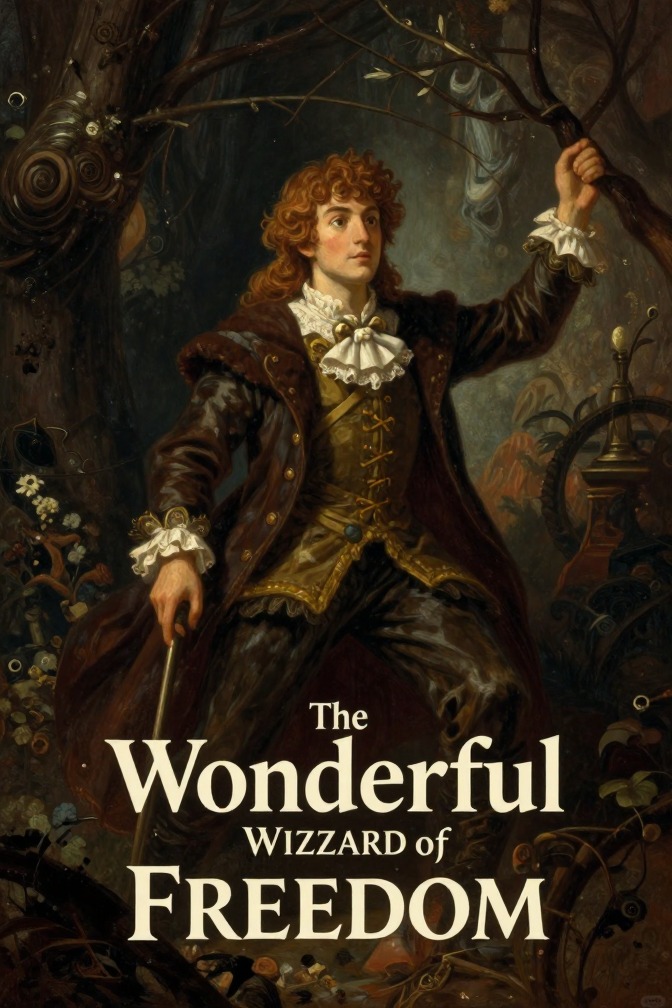
Freedom is a central thematic state in The Wonderful Wizard of Oz, defined by the liberation of entire peoples from oppressive rule and the personal fulfillment of the protagonists through the removal of external constraints.
Kingship in The Wonderful Wizard of Oz is a recurring state of authority that characters earn through demonstrated merit rather than inheritance, culminating in the Cowardly Lion's coronation as King of the Beasts and the Scarecrow's rule over the Emerald City.
Rulership in *The Wonderful Wizard of Oz* is a recurring condition that defines the political structure of the Land of Oz, shifting from oppressive bondage under wicked witches to benevolent governance under the Scarecrow, the Tin Woodman, and the Lion, and ultimately revealing the constructed and deceptive nature of authority itself.
Becka, known as Aunt Immortelle, hides in the rooftop water cistern of Ardua Hall to allow her friends Agnes and Nicole to escape Gilead, a sacrifice that leads to her death.
Nicole, having learned she is Baby Nicole and that her adoptive parents Neil and Melanie were murdered by Gilead agents, agrees to infiltrate Gilead as a fake convert to retrieve a crucial document cache from a secret source inside the regime.
The reunion of Agnes Jemima and Nicole with their mother in Canada is the emotional and narrative culmination of The Testaments, transforming the abstract icon of Baby Nicole into a living family bond and fulfilling the long-deferred hope that drives both sisters' journeys out of Gilead.
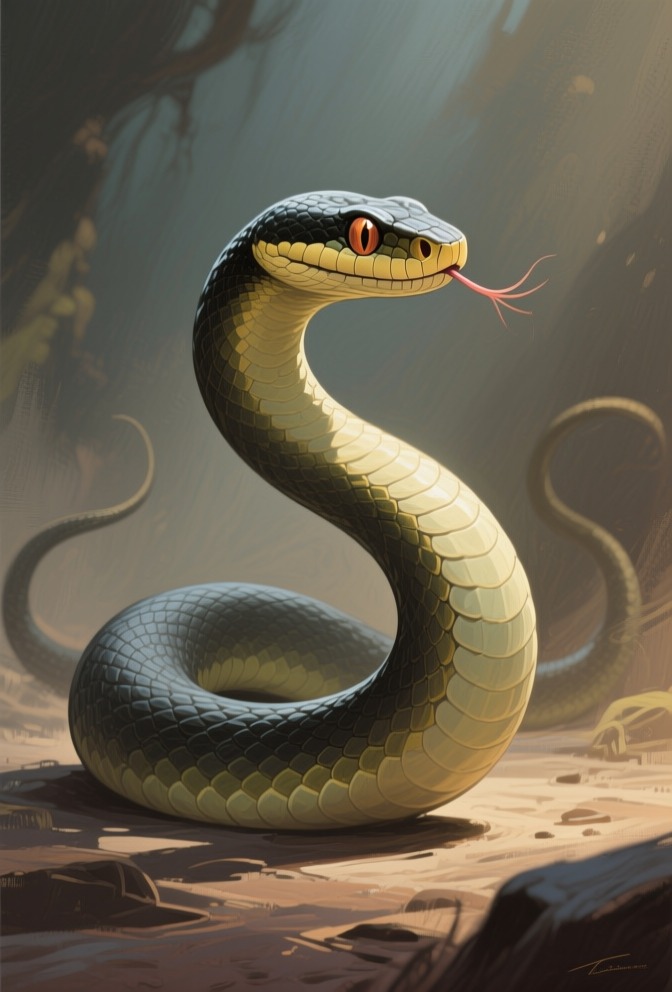
The snake is a recurring symbolic image in The Testaments, appearing in children's games, religious iconography, and the language of moral descent, where it consistently represents sin, temptation, and the fall from grace within Gilead's rigid theological framework.
Aunt Lydia inserts a microdot containing a cache of incriminating documents into Nicole's arm, using the scarified GOD/LOVE tattoo as a hiding place, transforming Nicole into a carrier pigeon for the evidence that will help bring down Gilead.
Bringing in the Pearls is a hymn sung at the Thanks Giving ceremony in Gilead, celebrating the return of Pearl Girls from their missions and the conversion of new recruits, known as "Pearls." It serves as a tool of ideological reinforcement, transforming the recruitment of women into a sacred, joyful act of religious duty.
Fee Fie Fiddle-Oh is a children's singing game and counting rhyme from the Vidala School in Gilead, used by younger girls to process the violent realities of their society through play.
Praise be is a fixed liturgical expression used throughout Gilead as a formulaic response of gratitude, submission, and ideological conformity. It functions as a verbal marker of the regime's control over language, turning every acknowledgment of good fortune into a reaffirmation of the divine order and the speaker's place within it.
The Concubine Cut into Twelve Pieces is a biblical story from Judges 19–21 that is weaponized by the Aunts in Gilead as a cautionary tale to enforce female obedience and submission, and its brutal details and the Aunts' deliberate misrepresentation of it become a catalyst for Agnes Jemima's crisis of faith and her eventual disillusionment with Gilead's theology.
The Precious Flower is a central metaphor and ideological tool in Gilead, used to indoctrinate girls into a system of extreme sexual purity and vulnerability. It frames female bodies as fragile, valuable treasures that must be protected from the uncontrollable urges of men, thereby justifying the regime's strict dress codes, early marriage, and the suppression of female autonomy. The metaphor is taught by Aunts like Vidala and Estée, but its terrifying implications are internalized by girls like Agnes Jemima, shaping their deepest fears and their eventual resistance.
The Testaments is the title of the novel itself, a work that functions as both a sequel and a companion to The Handmaid's Tale. It is the overarching narrative container for the three distinct testimonies—the Ardua Hall Holograph of Aunt Lydia and the witness testimonies of Agnes Jemima and Nicole—that together recount the internal decay and eventual downfall of the Republic of Gilead.
The Unbaby is a term used in Gilead for a stillborn, severely deformed, or otherwise non-viable infant, a common and feared outcome of the regime's reproductive system that serves as a marker of divine disfavor and a source of personal and social shame.
The Reading Room is a restricted-access chamber within the Hildegard Library at Ardua Hall, where the most dangerous books in Gilead are kept locked in boxes and where the Aunts conduct their most sensitive work, including the study of classified files and the preparation of official speeches.
The Refectory is the communal dining hall of Ardua Hall, the central institution of the Aunts in Gilead, where the Aunts and Supplicants gather for meals and ceremonial occasions. It is a site of both enforced communal piety and subtle power struggles, where the regime's austerity is enforced through a monotonous diet and where Aunt Lydia observes the behavior of her rivals, such as Aunt Elizabeth's secret hoarding of extra food.
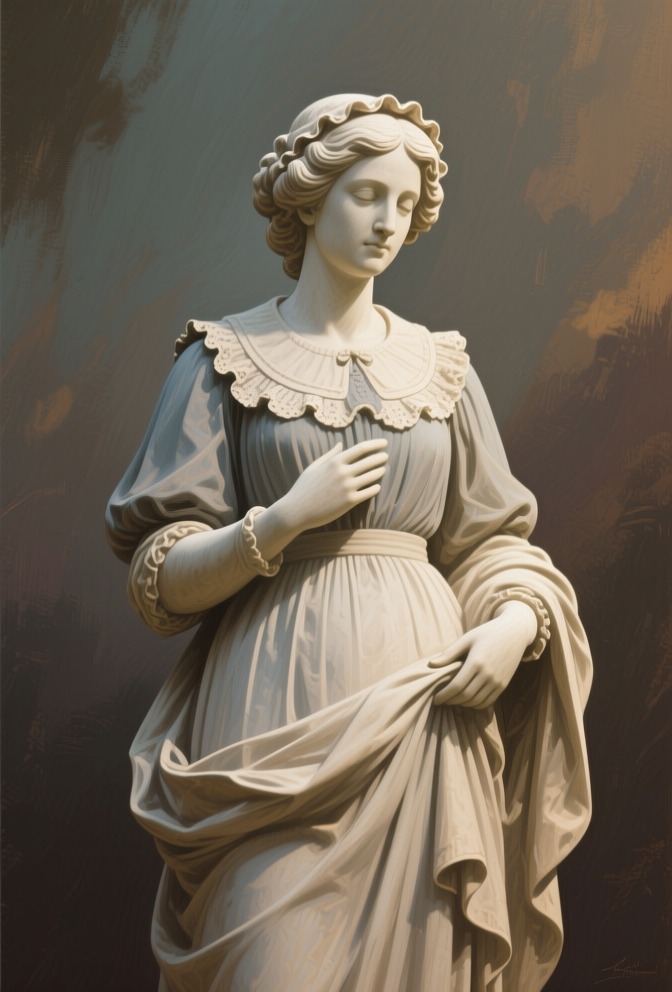
Boston Common is the location of a post-Gilead memorial statue honoring Becka (Aunt Immortelle), erected by her sisters Agnes and Nicole, which serves as a key piece of evidence confirming the authenticity of the witness testimonies and the survival of the main characters.
The Campobello Refugee Medical Centre, located on Campobello Island, New Brunswick, served as the temporary medical facility where Agnes Jemima and Nicole were treated after their harrowing escape from Gilead. It was here that the two half-sisters were reunited with their mother, marking the culmination of their journey and the beginning of their new lives in freedom.
The Meeting House, a Quaker place of worship in Toronto, serves as a critical safe house and transit point for the SanctuCare refugee organization, where Daisy (Nicole) is brought after the murder of her adoptive parents and where she first encounters the reality of Gilead's refugees.
The Penobscot River is a key geographical feature in the escape of Agnes Jemima and Nicole from Gilead, serving as the final waterway they navigate by motorboat before reaching the Atlantic Ocean and their rendezvous with the schooner Nellie J. Banks.
Aunt Lydia's statue, erected while she was still alive, is a monument to her power and a focal point for the political and psychological struggles within Ardua Hall. It serves as a site of idolatry, surveillance, and intrigue, reflecting the regime's contradictions and Lydia's own complex legacy.
The Baby Nicole Poster is a ubiquitous propaganda image in Gilead, depicting the infant smuggled out of the country by her Handmaid mother. It functions as a sacred icon, a tool for political mobilization, and a key plot device that drives the search for the missing child and ultimately enables the regime's downfall.
The Black Van is the vehicle used by the Sons of Jacob to transport arrested professional women—including Aunt Lydia—from their workplaces to the stadium prison during the coup that established Gilead. It functions as a threshold between the old world of legal rights and the new order of arbitrary detention, and its design—windowless, with a solid panel separating the prisoners from the driver—enforces the complete disorientation and powerlessness of its passengers.
The Computalk is a communication device used in Gilead, primarily by the Aunts and Commanders, to issue orders, coordinate operations, and maintain control. It appears in key moments of the narrative, such as during the birth of Baby Mark and in the daily management of Ardua Hall, symbolizing the regime's reliance on technology for surveillance and command.
The dollhouse is a central object in Agnes Jemima's childhood, given to her by her adoptive mother Tabitha. It serves as a miniature replica of her home in Gilead, reflecting the rigid social hierarchy and gender roles of the regime. The dollhouse becomes a site of play, fantasy, and rebellion, where Agnes acts out her frustrations and desires, and it later symbolizes her lost innocence and the painful truths of her past.
The GOD/LOVE Tattoo is a scarified tattoo on the left forearm of Nicole (alias Jade), demanded by the Mayday source inside Gilead as a non-negotiable identifier. It serves as both a recognition marker for the Pearl Girls and, after a microdot is inserted into the base of the O, a concealed carrier for the document cache intended to bring down Gilead. The tattoo embodies the tension between the religious language it appropriates and the secular, subversive purpose it serves, and its physical presence—painful, itchy, infected—becomes a constant reminder of the bodily risk Nicole undertakes.
The inflatable boat is the final, fragile vessel that carries Agnes Jemima and Nicole from the Nellie J. Banks to the Canadian shore, a material object whose failure nearly kills them and whose successful crossing marks the climax of their escape from Gilead.
The Microdot Camera is an obsolete espionage technology repurposed by Mayday and its unknown Gilead source to smuggle miniature documents across the border, hidden on Pearl Girls brochures, until its discovery by the Eyes forces a crisis that accelerates the final escape plot.
The Orange is a recurring object in The Testaments that functions as a votive offering, a source of sustenance, and a tool of political manipulation within the power struggles of Ardua Hall. Its appearances trace a trajectory from a simple, refreshing fruit to a piece of evidence in a scheme to discredit Aunt Lydia, and finally to a stolen token of defiance during the escape from Gilead.