The Prohibition on Women Reading and Writing is a foundational law of Gilead that denies women literacy, reserving the ability to read and write exclusively for men and the Aunts, who are permitted to read only for religious and administrative purposes. This rule is enforced through the destruction of books, the use of picture-only signs, and the threat of severe punishment, and it serves as a central mechanism of patriarchal control, shaping the education, identity, and resistance of female characters throughout the novel.
Easter is a religious holiday observed in Gilead as part of its liturgical calendar, marked by the consumption of dyed eggs and a special grace recited by Aunt Lydia at Ardua Hall. The holiday serves as a moment of communal ritual and reflection, but also as a stage for Aunt Lydia's manipulation of symbols—such as Baby Nicole—to reinforce ideological control.
The June moon is a password used by the Mayday resistance network to identify contacts during the escape of Agnes Jemima and Nicole from Gilead. It appears in the escape plan devised by Aunt Lydia, serving as the second half of a two-part verbal authentication code that the fugitives must deliver to their next contact after crossing the border.
March 21 is a calendrical date that, in the world of The Testaments, marks the first full moon after the spring equinox, anchoring the annual Spring Equinox Grace ceremony at Ardua Hall. This fixed point in the liturgical calendar becomes the occasion for Aunt Lydia's public prayer for the return of Baby Nicole, revealing the regime's propaganda machinery and her own private calculations.
The first full moon after March 21 is a calendrical marker within Gilead that anchors the Spring Equinox celebration at Ardua Hall, a rare moment of ritual festivity that Aunt Lydia uses to reinforce ideological control, observe her rivals, and reflect on the regime's fragility and her own mortality.
The Dodo is a bird who presides over the Caucus-race on the bank of the pool of tears, inventing the race to dry the soaked party and then declaring that everyone has won and all must have prizes, thereby establishing a logic of collective reward that defines Wonderland's absurd social order.
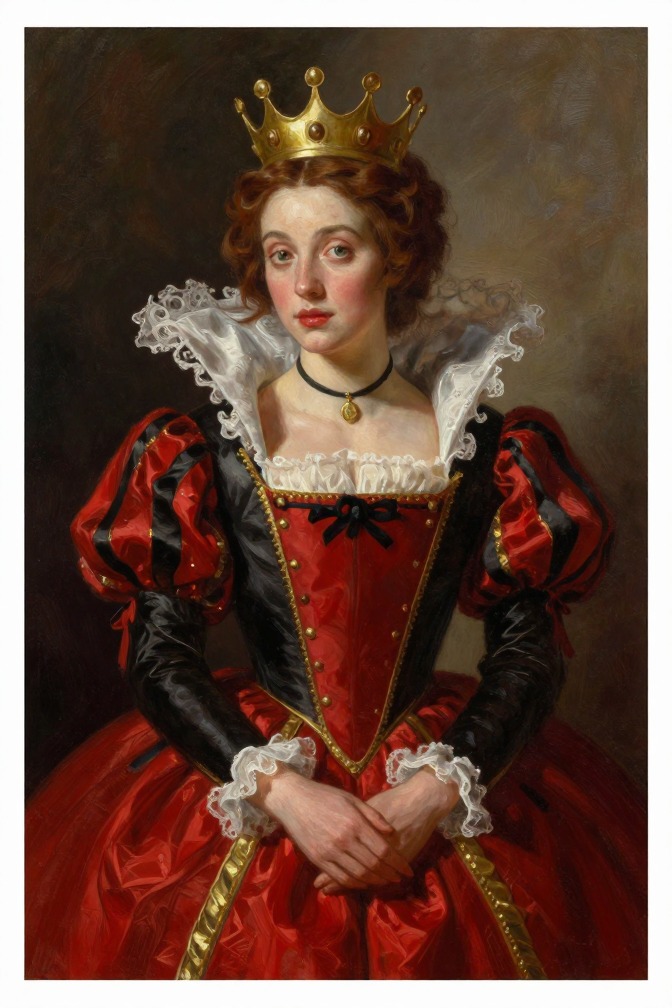
The Queen of Hearts is the tyrannical monarch of Wonderland whose defining characteristic is her immediate and arbitrary order to behead anyone who displeases her, embodying the absurd and threatening nature of the authority Alice encounters.
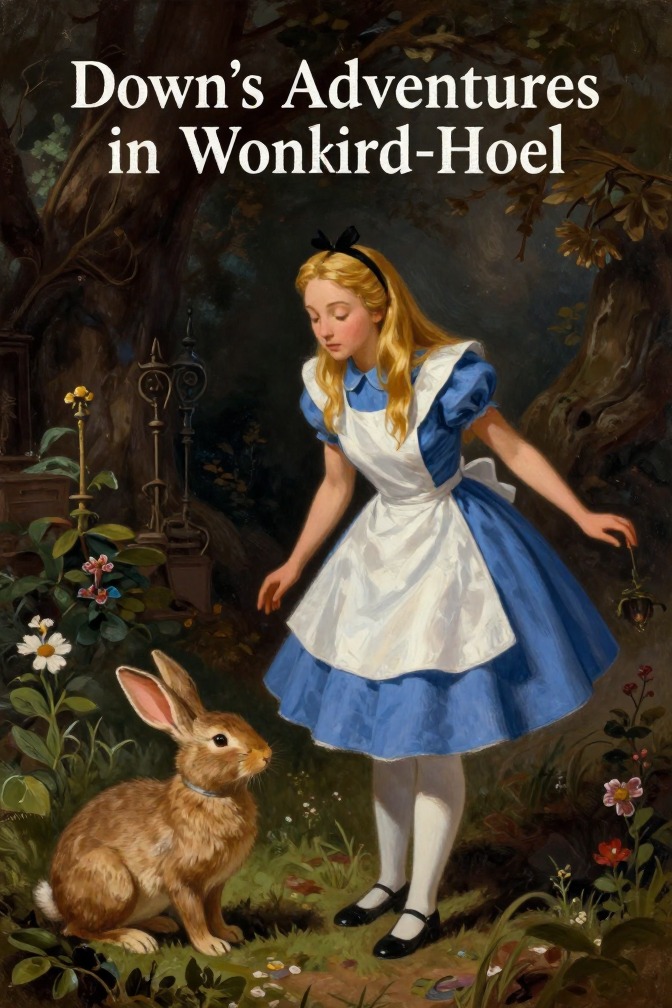
Down the Rabbit-Hole is the opening event of Alice's Adventures in Wonderland, in which the bored seven-year-old Alice follows a hurrying White Rabbit into a deep well-like tunnel and begins her surreal journey into Wonderland, an episode that establishes the dream-logic, physical instability, and identity crisis that define the entire book.
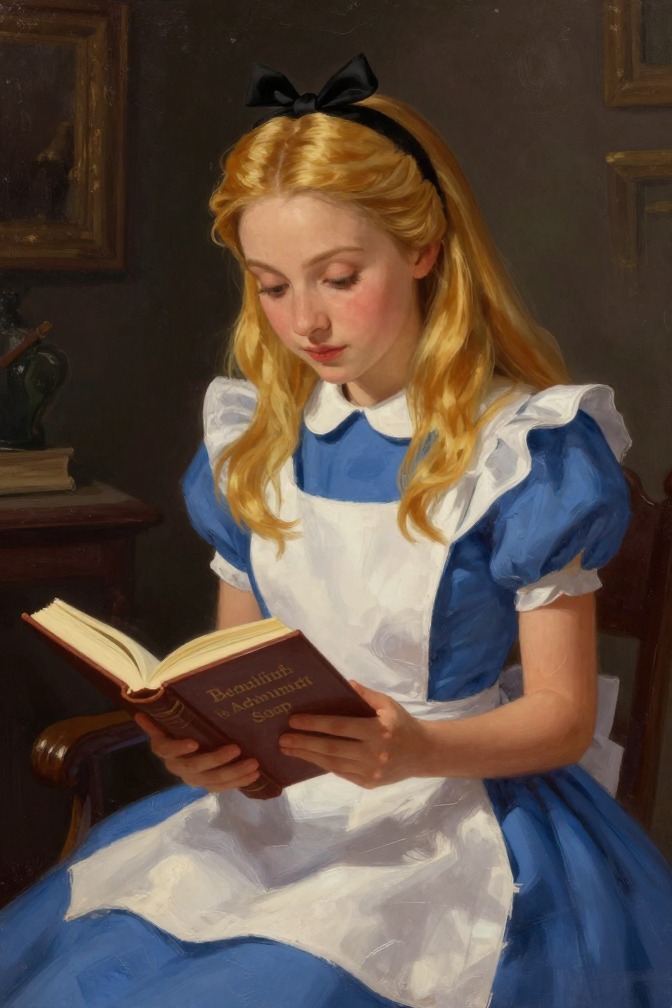
Beautiful Soup is a song sung by the Mock Turtle in Chapter X of Alice's Adventures in Wonderland, a melancholy, parodic ballad that mourns a lost culinary pleasure and encapsulates the Mock Turtle's sentimental, self-pitying character. Its performance is interrupted by the call of the trial, and its lingering refrain echoes in the dreamlike closing of the book, marking it as one of the most memorable and thematically resonant nonsense poems in the story.
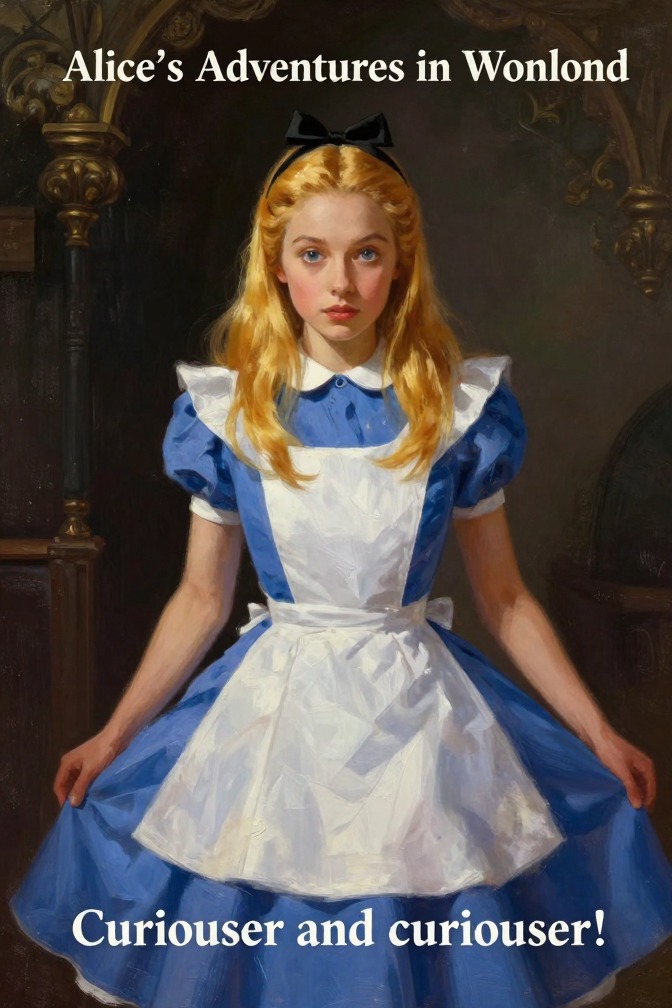
Alice's exclamation "Curiouser and curiouser!" is the first verbal marker of her transformation in Wonderland, crystallizing the moment she realizes that the rules of language, size, and identity have all become unstable. The phrase, a deliberate grammatical error, recurs throughout the narrative as a signature of her disorientation and defiance, and it ultimately frames the entire adventure as a dream in which the familiar is perpetually made strange.
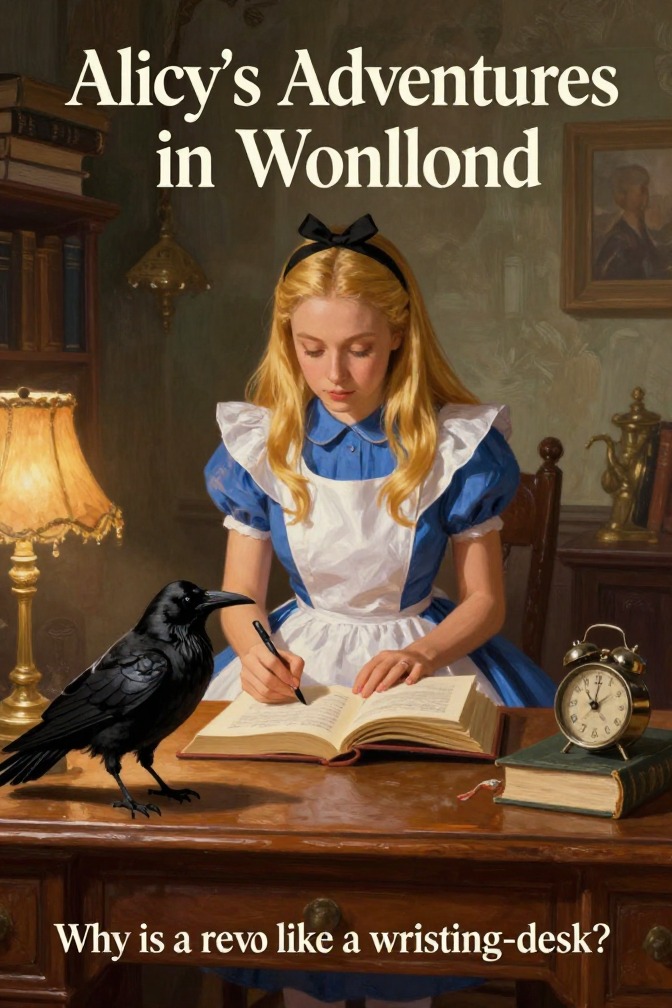
The riddle "Why is a raven like a writing-desk?" is the most famous unanswered question in Wonderland, posed by the Hatter at the Mad Tea-Party and later echoed in the trial, embodying the story's core logic of absurdity, the failure of language to communicate, and the inversion of meaning itself.
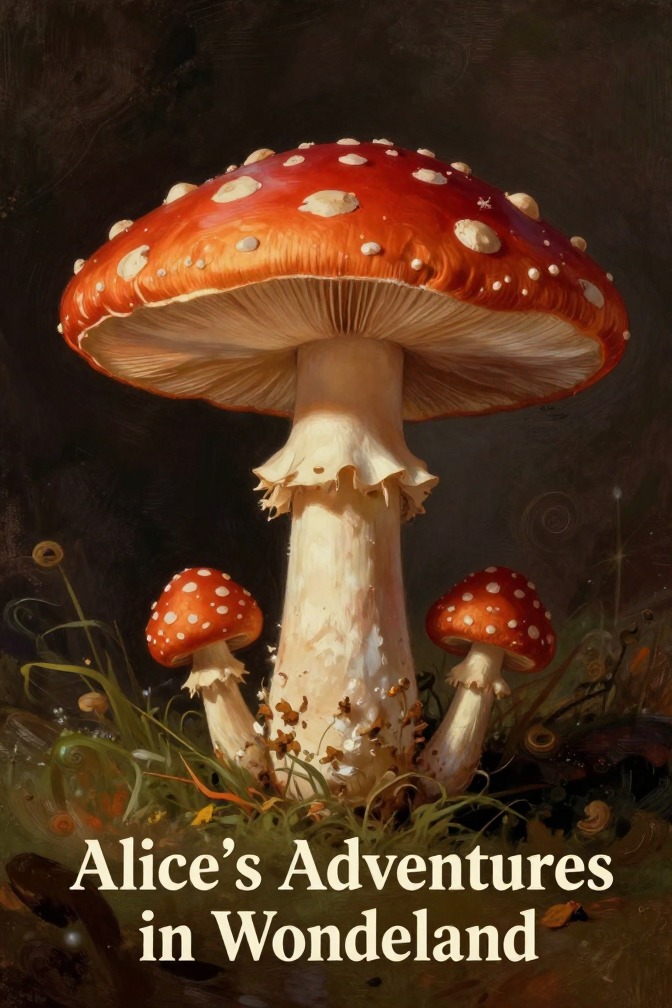
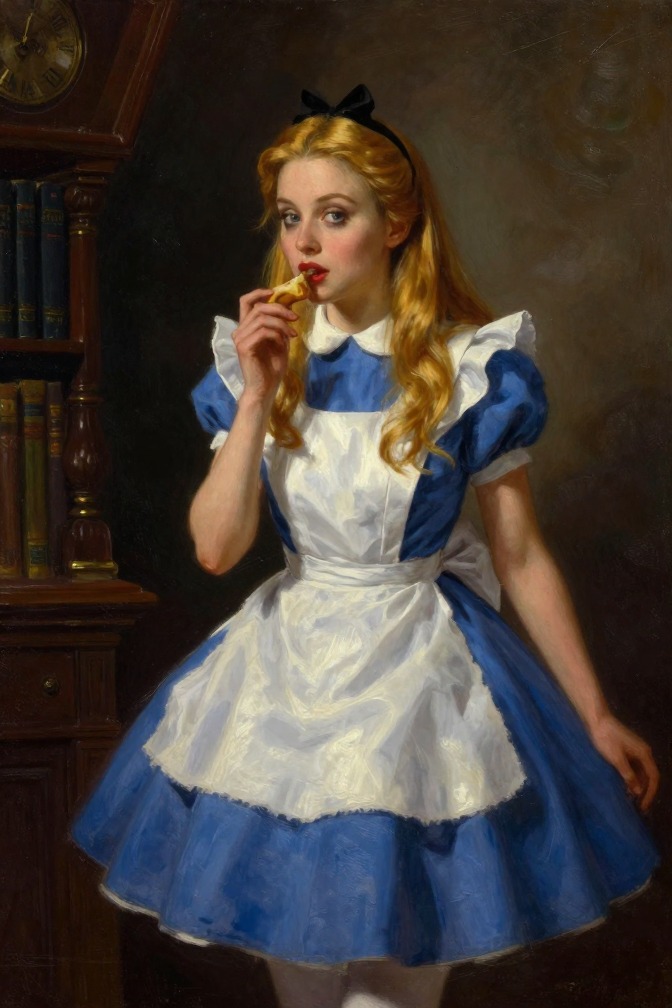
The Magic mushroom is a pivotal object in Alice's Adventures in Wonderland that grants Alice the power to control her own size, first encountered when she meets the Caterpillar, who reveals that one side makes her grow taller and the other side makes her grow shorter. It becomes her primary tool for navigating the physical and social challenges of Wonderland, allowing her to adjust her height at will and ultimately enabling her to enter the garden and later to confront the Queen of Hearts.
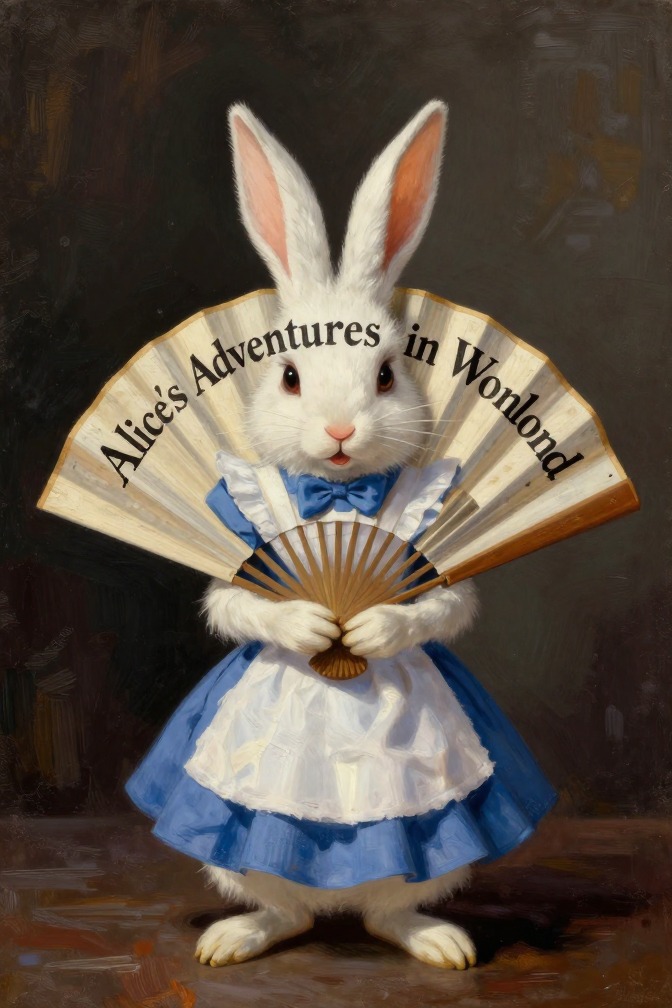
The White Rabbit's fan is a small but consequential object in Alice's Adventures in Wonderland, first appearing when the White Rabbit drops it in fright and later causing Alice to shrink uncontrollably, nearly vanishing entirely. Its material presence triggers a crisis of identity and scale, and its loss sets off the entire sequence of events in the White Rabbit's house, making it a pivot of both physical transformation and narrative momentum.
Madness is the defining condition of Wonderland, a state that the Cheshire Cat explicitly declares universal among its inhabitants and that Alice must navigate through her encounters with the realm's illogical rules, absurd conversations, and her own fluctuating identity.
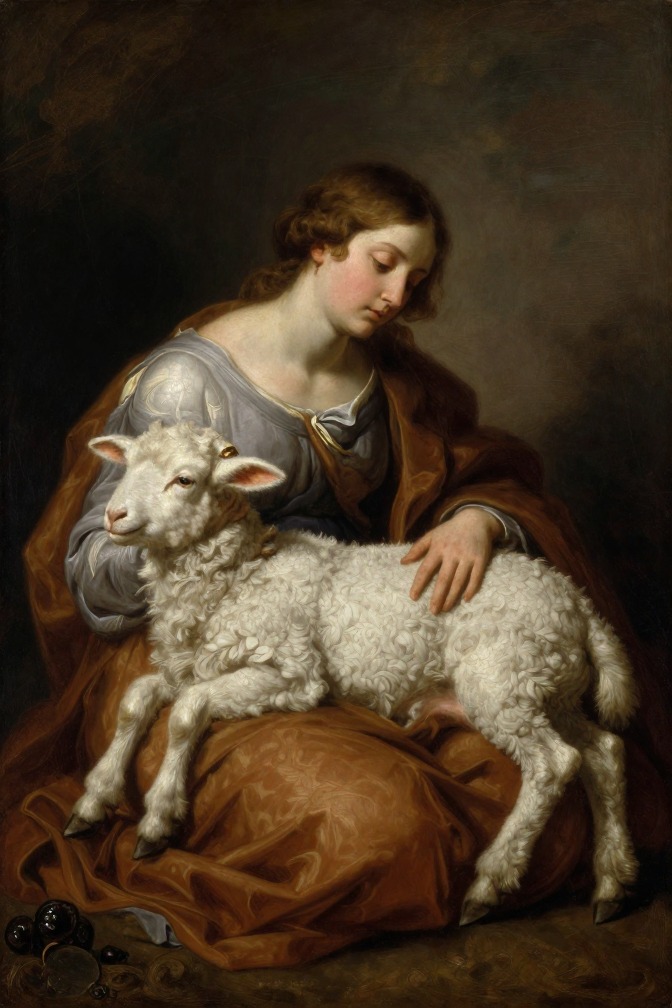
The Adoration of the Lamb, the van Eyck altarpiece panel known as The Just Judges, is a stolen masterpiece that Clamence keeps hidden in his Amsterdam room, using it as a symbol of the separation of justice from innocence and as a tool for his own domination.
The heights are a central concept in Jean-Baptiste Clamence's self-conception, representing his psychological need for dominance, moral elevation, and escape from judgment. Clamence associates heights with freedom, power, and a sense of being above the ordinary human condition, while depths and enclosed spaces symbolize guilt, confinement, and the inescapable judgment of others.
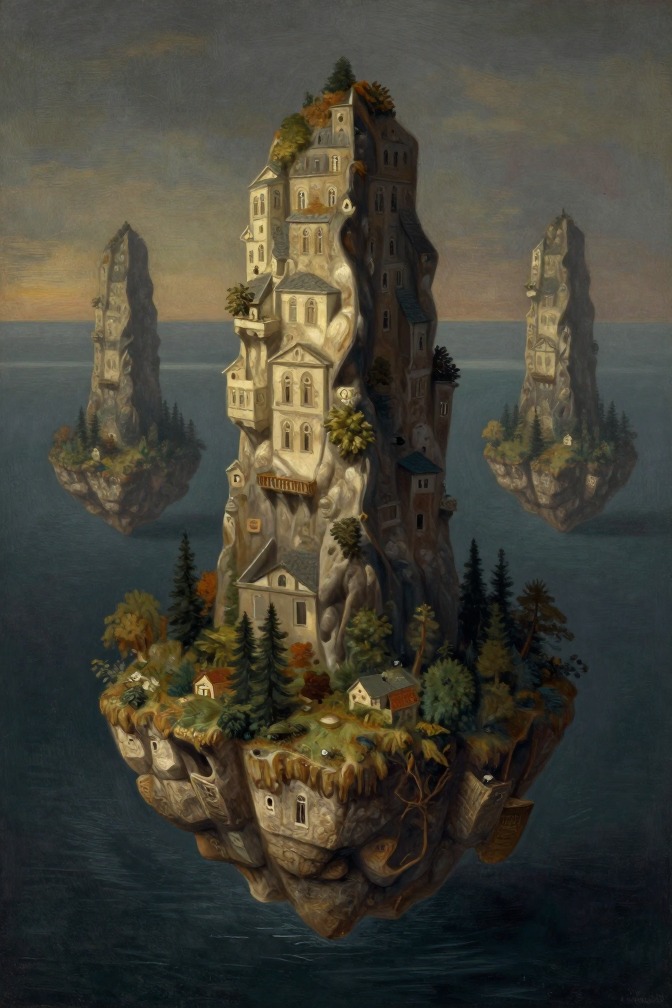
The islands are a recurring motif in Jean-Baptiste Clamence's confession, representing an idealized realm of freedom, sensuality, and domination that stands in stark contrast to the foggy, canal-bound Amsterdam where he now lives. They function as a symbol of lost innocence, a geographical and psychological escape from guilt, and a site of colonial desire and mastery.
The lie is a central concept in Jean-Baptiste Clamence's confession, representing the fundamental duplicity of human existence and the falsehoods that structure his life and identity.
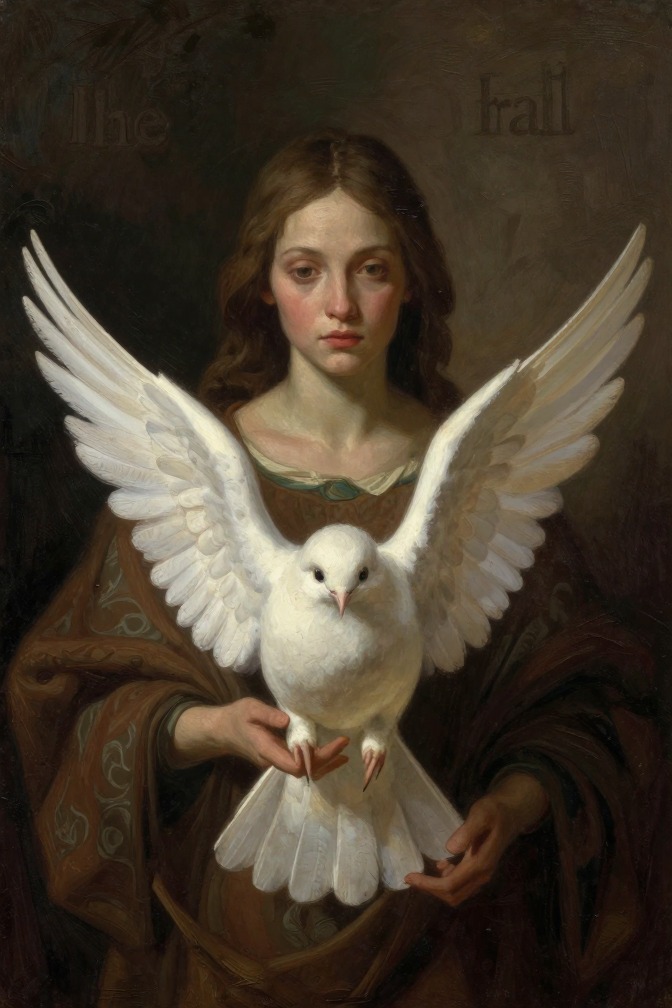
In Albert Camus's *The Fall*, the dove is a recurring, multilayered symbol that embodies the novel's central themes of innocence, judgment, and the elusive possibility of grace. Appearing in the skies above Amsterdam and in the narrator's final monologue, the doves function as a complex emblem of the human condition, representing both a yearning for purity and the impossibility of achieving it in a world defined by guilt and complicity.
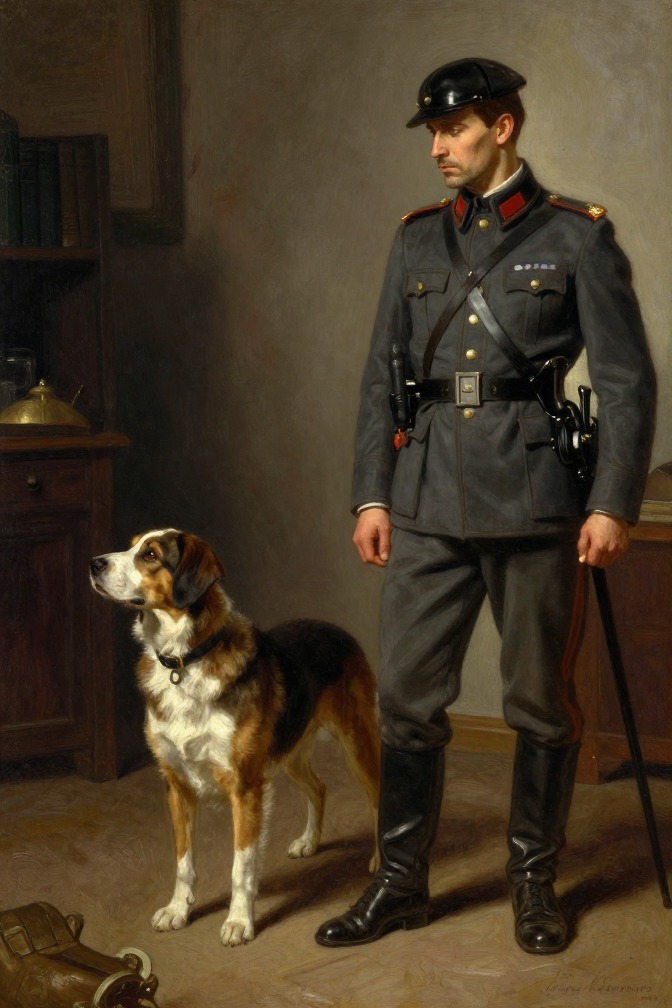
The Dog and the German Soldier is a pivotal event in Jean-Baptiste Clamence's narrative, where a chance encounter with a stray dog on a Paris subway platform triggers his sudden, self-aware discovery of patriotism during the German occupation, revealing the depth of his vanity and his instinct for domination.
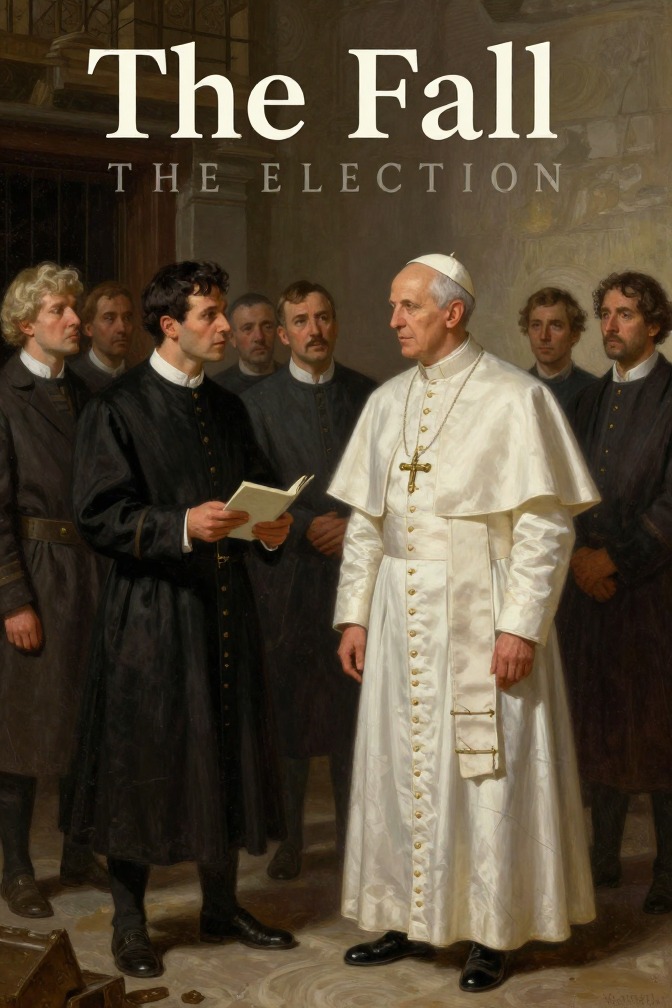
The Election as Pope in the Prison Camp is a pivotal event in Jean-Baptiste Clamence's narrative, occurring during his internment near Tripoli in World War II. In a camp of suffering and deprivation, a young Frenchman named Du Guesclin, driven by a profound melancholy and a vision of a new kind of spiritual leader, proposes that the prisoners elect a pope from among themselves—someone who embodies both vices and virtues and who will keep alive the community of their suffering. Clamence, half in jest, raises his hand when asked who has the most failings, and is elected. He exercises this pontificate for several weeks, administering to the group and making difficult decisions, including the distribution of water. The event culminates in Clamence drinking the water of a dying comrade, an act he justifies by his duty to survive for the others, an act that closes a circle and reveals the birth of empires and churches under the sun of death. This episode is a microcosm of Clamence's later philosophy of universal guilt and the need for a master, and it directly prefigures his self-appointed role as a judge-penitent.
Austerlitz of our passion is a metaphor used by Jean-Baptiste Clamence to describe the climactic, decisive moment he anticipated in his love affairs, a moment of ultimate conquest that never arrived, revealing his deeper pattern of avoiding genuine commitment.
De Gaulle is a figure invoked by Jean-Baptiste Clamence as one half of an ideal of complete manhood—the combination of physical dominance (symbolized by the boxer Cerdan) and political authority (symbolized by de Gaulle)—that Clamence once dreamed of embodying, and whose collapse after a public humiliation reveals the violent, domineering core beneath his cultivated persona.
Elijah without a messiah is a self-description Jean-Baptiste Clamence uses to characterize his role as a hollow prophet in a degraded age, encapsulating his isolation, his failed aspirations to transcendence, and his ironic inversion of biblical prophecy.
La Vie en rose is a popular French song that, in Albert Camus's The Fall, becomes a symbol of the protagonist Jean-Baptiste Clamence's profound aversion to love and romantic sentiment after his failed attempts at genuine emotional connection.
The Liebestod, or 'love-death,' is a musical and thematic motif that appears in Jean-Baptiste Clamence's narrative as a symbol of the impossible, total love he once dreamed of but never achieved, and which he now regards with bitter irony as part of his failed search for transcendence.
The apéritif is a recurring metaphor in Jean-Baptiste Clamence's monologue, representing the trivial, self-serving emotional stimulation that people seek from tragedy and death to break the monotony of their lives.
The judgment of men is a central concept in Albert Camus's *The Fall*, representing the inescapable, relentless, and often hypocritical moral scrutiny that human beings impose on one another, which Jean-Baptiste Clamence identifies as a more immediate and terrifying reality than any divine Last Judgment.
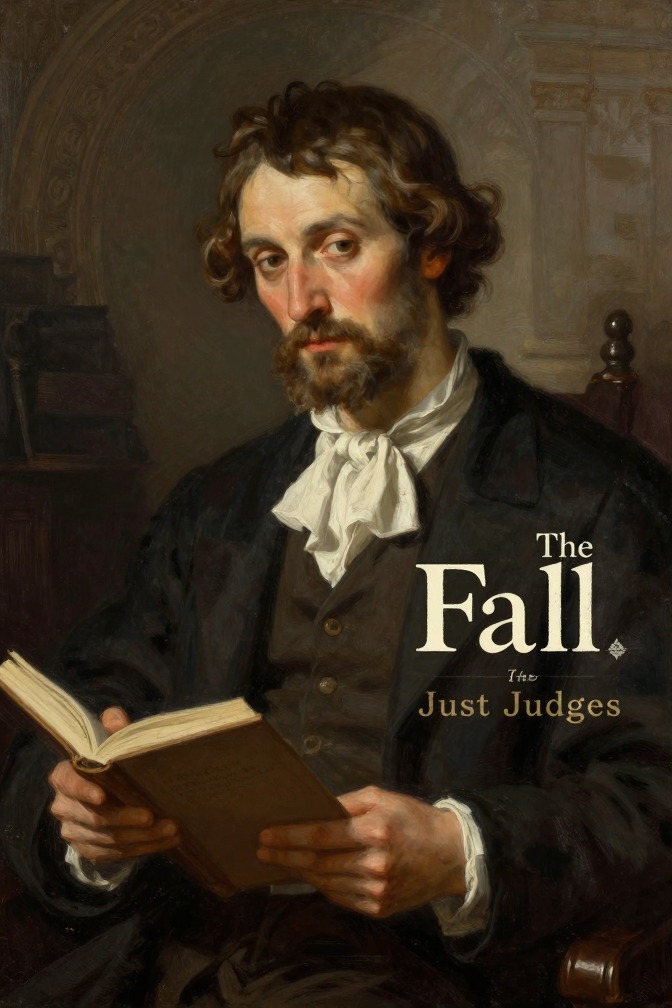
The Just Judges is a stolen panel from the van Eyck altarpiece The Adoration of the Lamb, which Jean-Baptiste Clamence keeps hidden in his Amsterdam room and uses as a central prop in his self-appointed role as judge-penitent, symbolizing the separation of justice from innocence and his own claim to dominate through hidden knowledge.
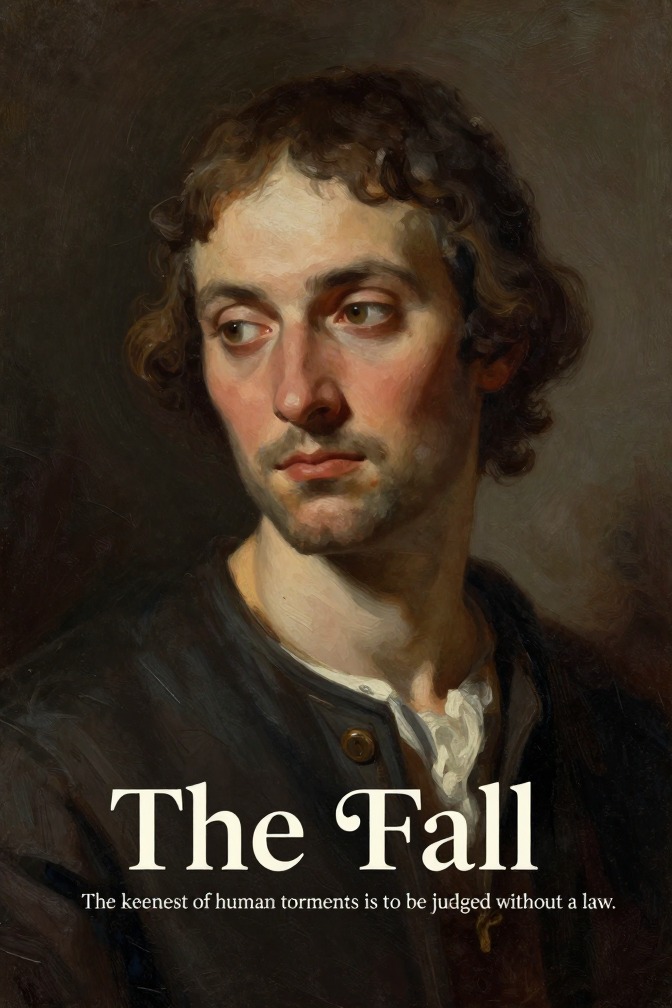
The keenest of human torments is to be judged without a law is a central philosophical expression in Albert Camus's The Fall, articulated by Jean-Baptiste Clamence to describe the unbearable condition of being subject to judgment in the absence of any fixed moral or legal framework. It encapsulates the novel's core theme of the modern individual's desperate search for authority and order in a world stripped of transcendent guarantees.