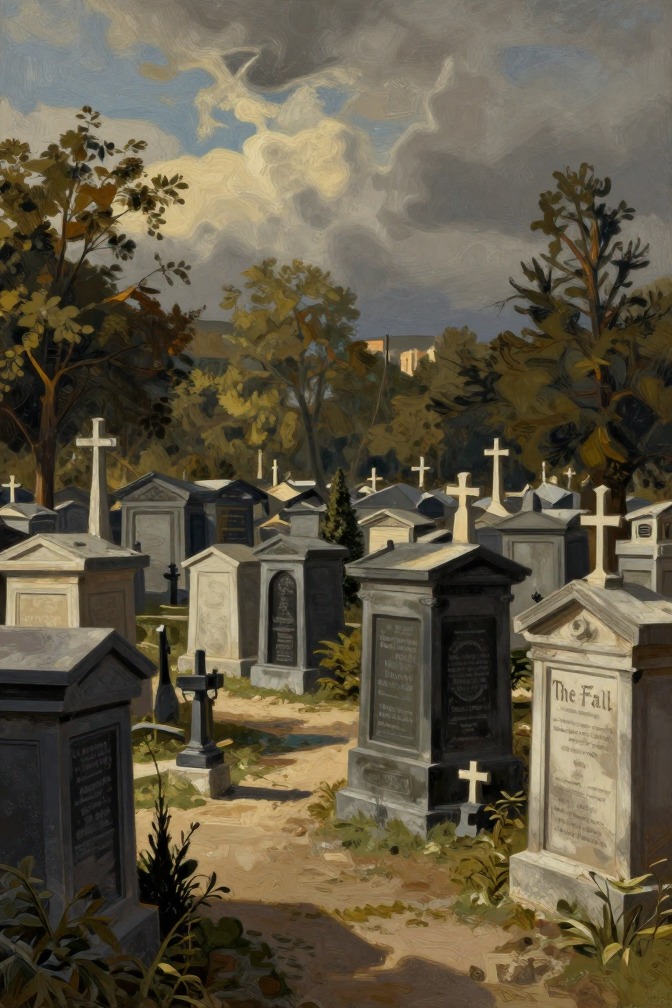
Montparnasse Cemetery is a Parisian burial ground that appears in Jean-Baptiste Clamence's confession as a site of his petty theft and self-deception, symbolizing the gap between his virtuous public acts and his private moral failures.
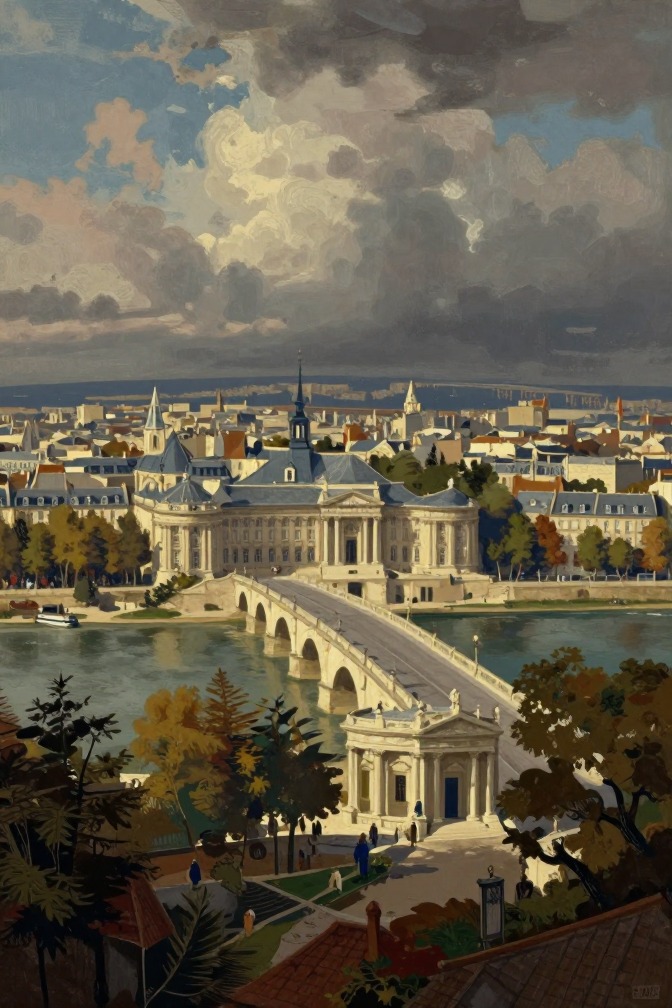
The Pont Royal is the Parisian bridge where Jean-Baptiste Clamence witnessed the suicide of a young woman and failed to act, an event that becomes the central, unacknowledged wound of his life and the catalyst for his entire subsequent confession.
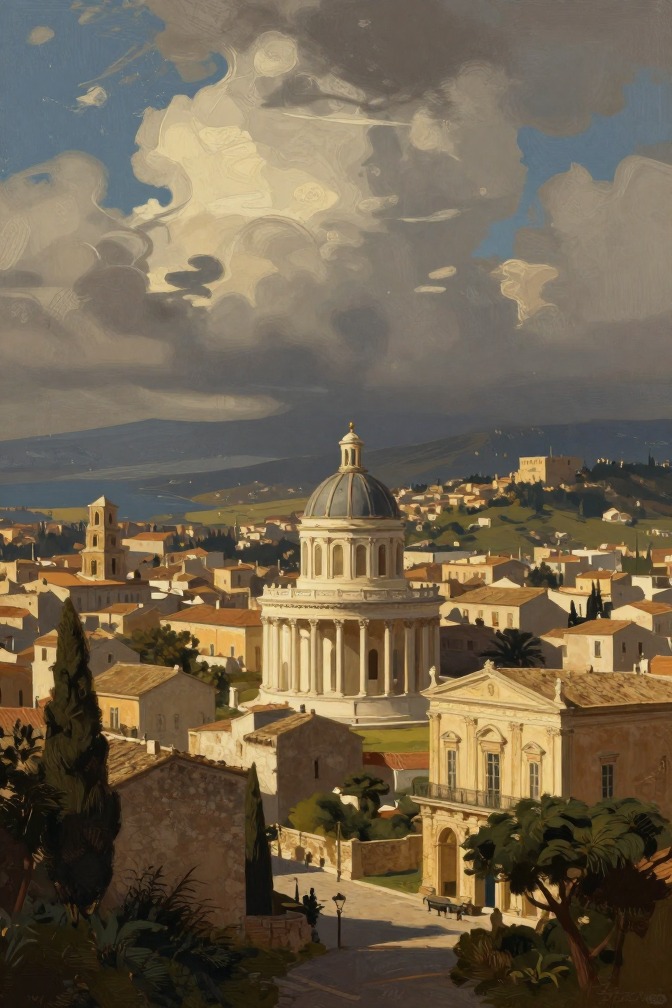
Sicily, and especially Mount Etna, represents for Jean-Baptiste Clamence the ideal of a sunlit, dominating height—a place of clarity, mastery, and pure joy that stands in stark contrast to the foggy, stagnant, and morally ambiguous landscape of Amsterdam where he now lives.
The Southern Zone is the unoccupied region of France during World War II to which Jean-Baptiste Clamence travels after his patriotic awakening, intending to join the French Resistance but ultimately hesitating and failing to commit.
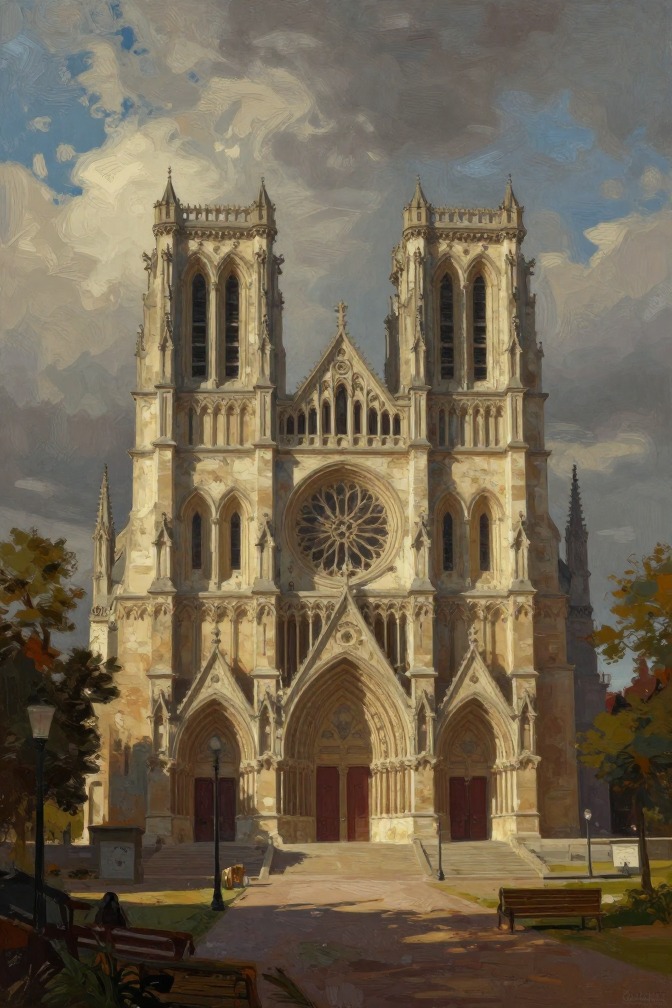
St. Bavon Cathedral in Ghent is the original home of the van Eyck altarpiece panel "The Just Judges," which was stolen in 1934 and later surfaces in Jean-Baptiste Clamence's Amsterdam room, becoming a central symbol of his judge-penitent philosophy.
Tripoli, the Libyan city where Jean-Baptiste Clamence was interned in a prison camp during World War II, serves as the setting for his election as a mock pope and the moral crucible in which he first tasted the corrupting logic of power over others.
The Zeedijk is the sailors' quarter of Amsterdam where Jean-Baptiste Clamence establishes his post-Paris life as a judge-penitent, a district of bars, prostitutes, and criminal clientele that serves as the physical and symbolic setting for his new profession and his nightly confessions at the Mexico City bar.
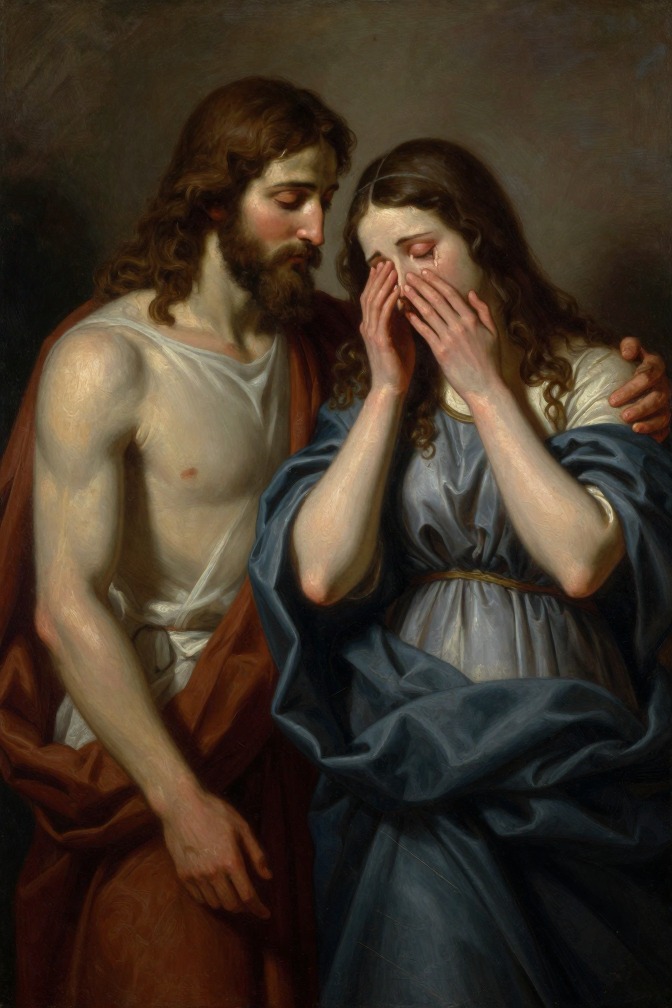
Christ and Rachel's weeping is a theological and psychological relation that Jean-Baptiste Clamence invokes to argue that Christ was not innocent, but bore the guilt of the Slaughter of the Innocents, and that this awareness of complicity in the deaths of others—of not dying oneself while others die—is the unbearable truth that Christ, and every human, must face.
The rule of the game is a central concept in Jean-Baptiste Clamence's self-analysis, representing the artificial, agreed-upon framework within which he finds the only moments of genuine sincerity and innocence in his life, and which he contrasts with the hypocritical seriousness of social and professional existence.
Drunkenness in Albert Camus's *The Fall* is not merely a personal habit of the narrator Jean-Baptiste Clamence but a central, deliberate practice that serves as a substitute for love, a path to a false immortality, a tool for liberation from obligation, and the very medium through which he conducts his self-appointed role as a judge-penitent in the Amsterdam bar Mexico City.
Indifference is the emotional and moral state that defines Jean-Baptiste Clamence's prelapsarian existence and his subsequent self-awareness, serving as both the engine of his former happiness and the target of his later confession.
Sincerity, in Jean-Baptiste Clamence's world, is not a moral virtue but a performance, a weapon, and a mask. Clamence's entire narrative, his confession, is built on the revelation that he has never been sincere, that his life was a series of calculated gestures designed to elicit admiration and dominate others. The concept of sincerity is thus central to his self-understanding and his critique of modern humanity, as he exposes the impossibility and undesirability of true sincerity in a world where everyone is a judge and every confession is a bid for power.
Debauchery is the state of systematic sensual excess that Jean-Baptiste Clamence adopts as a deliberate substitute for love and as a means of silencing the mocking laughter that haunts him after his moral collapse. It becomes a temporary refuge from judgment, a way to achieve a kind of immortality through oblivion, and ultimately a stage in his descent toward the invention of the judge-penitent role.
Fatigue is a pervasive and transformative state in *The Fall*, experienced by Jean-Baptiste Clamence as both a physical ailment and a psychological condition that marks the decline of his former vitality and the onset of his moral crisis. It is not merely a symptom but a central force that reshapes his existence, leading him from a life of effortless superiority to one of debauchery, illness, and ultimately, his adopted role as a judge-penitent.
Boredom is a pervasive and defining state in Jean-Baptiste Clamence's life, serving as both a driver of his actions and a lens through which he interprets the human condition. It is not a mere absence of interest but a profound existential void that fuels his need for diversion, his contempt for others, and his ultimate embrace of a theatrical, self-serving existence.
Limbo, in Albert Camus's *The Fall*, is the vestibule of Hell where neutral angels reside, and Jean-Baptiste Clamence uses it as a metaphor for the moral and existential condition of modern humanity—caught between guilt and innocence, unable to commit fully to either good or evil, and perpetually awaiting a judgment that never comes.
Hypocrisy is the central psychological and moral condition of Jean-Baptiste Clamence, the narrator of Albert Camus's *The Fall*. It is not merely a personal failing but the structural principle of his entire existence—a systematic duplicity that allows him to appear virtuous while serving his own vanity, power, and self-love. Clamence's eventual self-awareness of this hypocrisy, triggered by a laugh on the Pont des Arts and the memory of a woman's suicide, shatters his complacency and drives him to invent the profession of "judge-penitent," a role that transforms his hypocrisy into a method for dominating others.
The year 1934 marks the theft of the panel 'The Just Judges' from the van Eyck altarpiece 'The Adoration of the Lamb' in St. Bavon Cathedral, Ghent, an event that becomes a central symbol in Jean-Baptiste Clamence's narrative, representing the separation of justice from innocence and the foundation of his self-appointed role as judge-penitent.
The Last Judgment is a central theological and existential concept in Albert Camus's The Fall, radically reinterpreted by the narrator Jean-Baptiste Clamence as an ongoing, immanent process of human judgment rather than a future divine event. Clamence transforms the traditional Christian eschatological idea into a psychological and social mechanism through which he justifies his own profession of judge-penitent, arguing that the Last Judgment takes place every day in the relentless scrutiny of others and oneself.
The Middle Ages, as invoked by Jean-Baptiste Clamence in *The Fall*, functions not as a historical period but as a moral and architectural metaphor for the inescapable condition of guilt and judgment that defines modern humanity. Clamence repeatedly draws on medieval imagery—the concentric circles of hell, the dungeon cell called the little-ease, the spitting-cell, and the practice of public confession—to argue that the Middle Ages understood, with a brutal clarity that the modern world has lost, the fundamental truth that every man is guilty and that innocence is a state that must be earned through suffering. For Clamence, the Middle Ages represent a time when the mechanisms of judgment were honest, explicit, and physically inescapable, in contrast to the hypocritical, hidden judgments of contemporary society.
The Ascent to the First Heaven marks the beginning of Dante's journey through Paradise, where he and Beatrice ascend from the Earthly Paradise into the celestial spheres, beginning with the Moon. This event establishes the cosmological and theological framework for the entire Paradiso, as Beatrice explains the nature of the universe's order, the cause of Dante's miraculous ascent, and the relationship between divine love and the structure of creation.
The Passage through the Gate of Purgatory is the ritual threshold of Dante Alighieri's purgatorial journey, where an angelic gatekeeper inscribes seven P's (peccata) on his forehead with a sword, opens the door with two keys, and warns that those who look back will not return, marking the formal beginning of the penitential ascent.
The Passage through the Wall of Fire is the climactic ordeal of Purgatory proper, the final barrier that Dante must cross before entering the Earthly Paradise. It is the purification of the seventh and last terrace, where the sin of lust is burned away, and it represents the ultimate test of the pilgrim's will, faith, and love, requiring him to trust his guides and endure a flame that consumes the body but cannot harm the soul.
Forese Donati is a Florentine glutton and close friend of Dante Alighieri, encountered in Purgatory's sixth terrace, where his emaciated form and joyful reunion with Dante reveal the power of intercessory prayer and the transformative nature of purgatorial suffering.
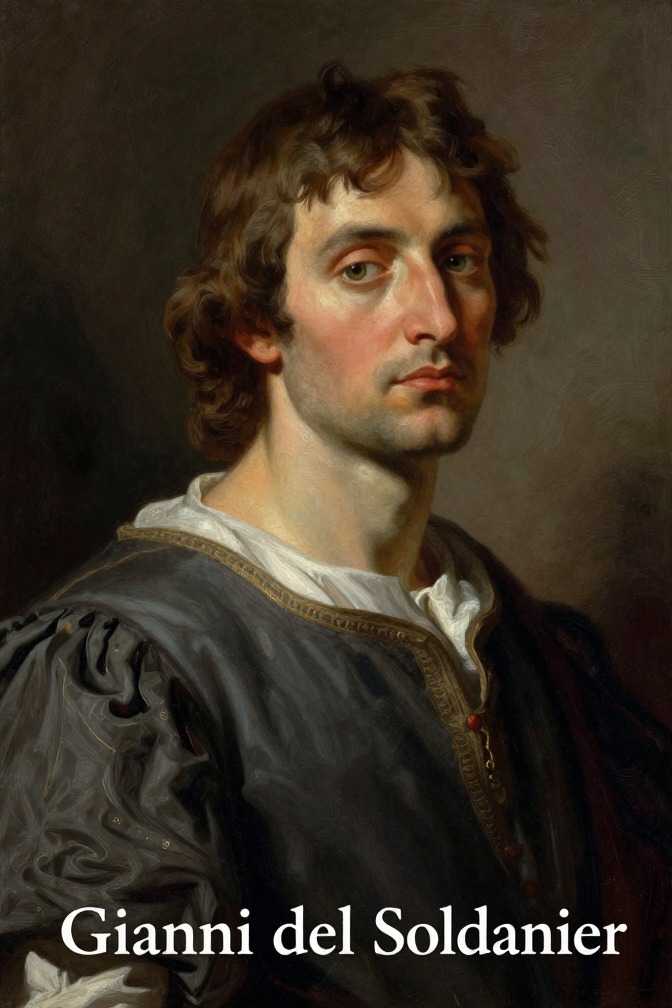
Gianni del Soldanier is a minor figure in Dante Alighieri's Inferno, named among the traitors punished in the frozen second ring of the Ninth Circle, Antenora, for betraying his political party and country.
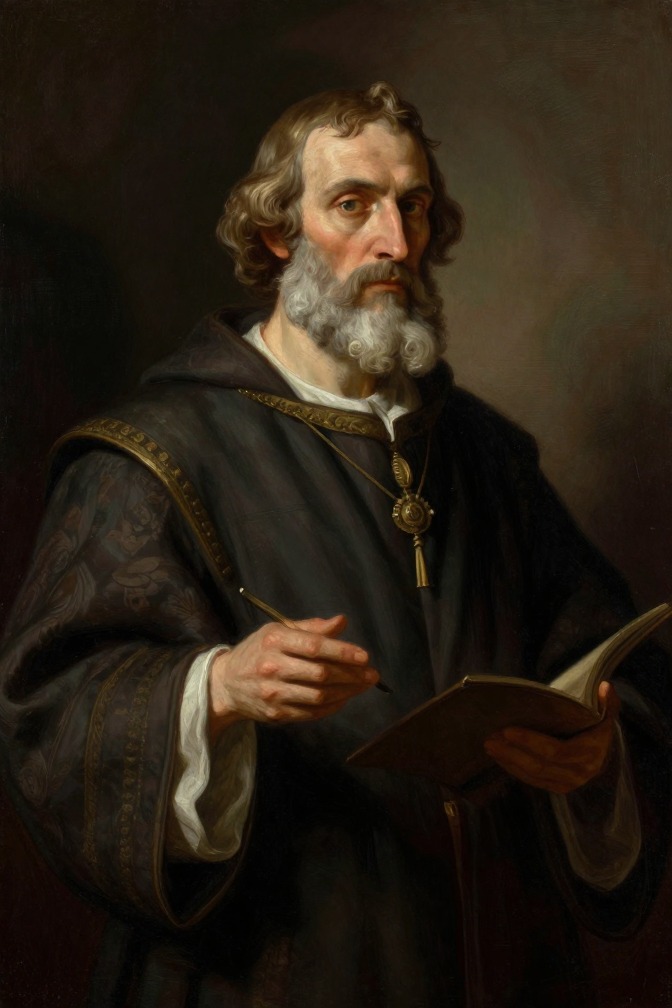
St. Bernard of Clairvaux is the final guide in Dante's Paradiso, replacing Beatrice at the threshold of the Empyrean and leading the pilgrim to the Beatific Vision through his prayer to the Virgin Mary.
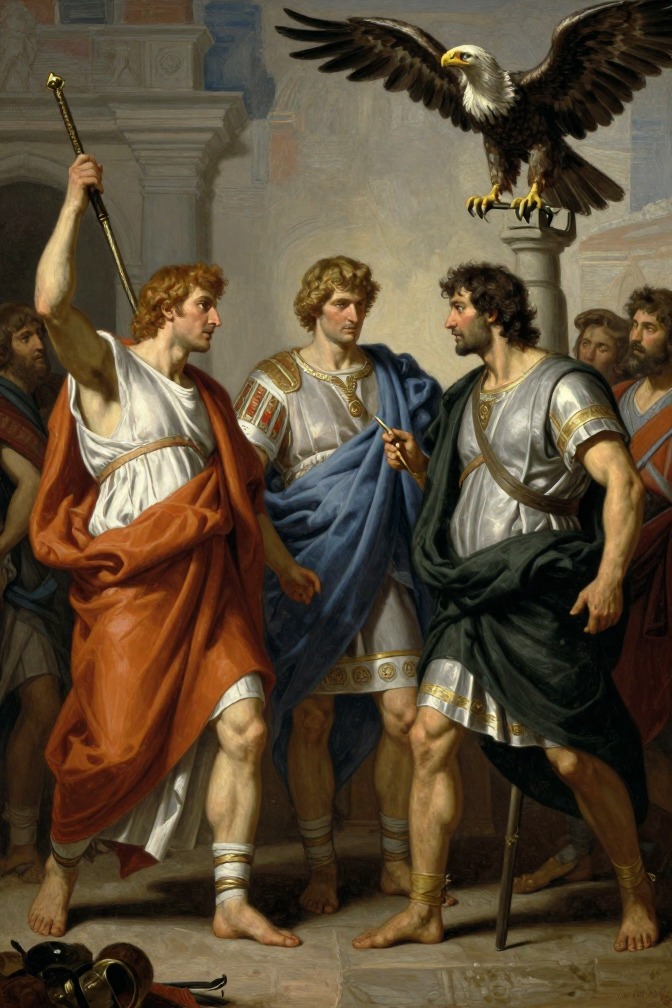
In the second heaven of Paradise, the spirit of the Emperor Justinian recounts the history of the Roman Eagle, the imperial standard, from its origins in Troy through the Roman Republic and Empire to its Christian destiny under Charlemagne, and denounces both Guelphs and Ghibellines for misusing it, while also explaining the nature of the blessed souls in this sphere and concluding with the story of Romeo, a faithful minister ill-rewarded.
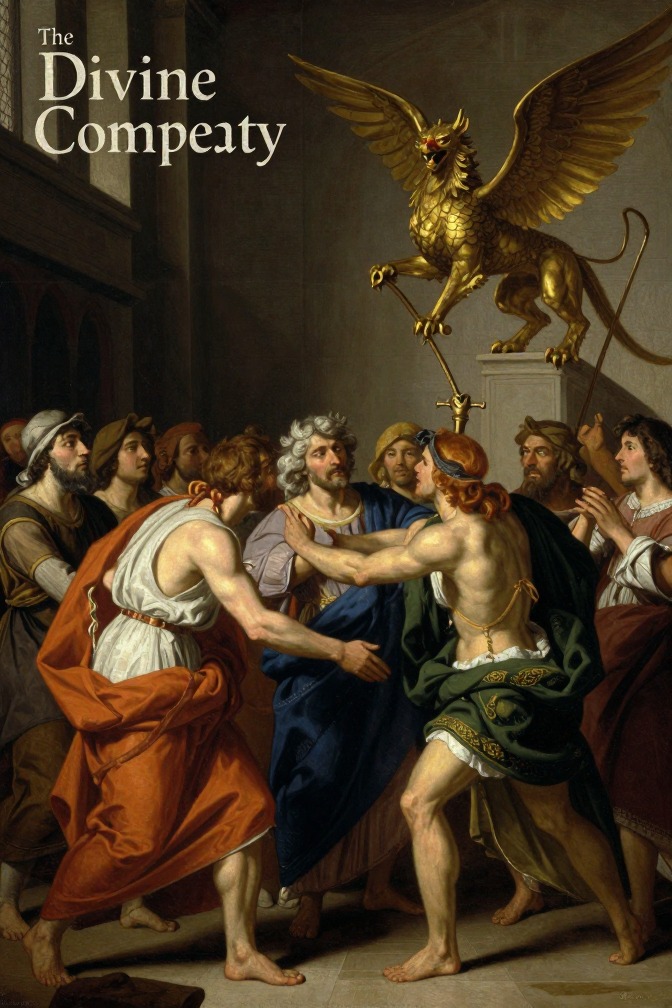
The Procession of the Church and the Griffin is the climactic allegorical pageant in the Earthly Paradise of Purgatory, where a magnificent procession of biblical and symbolic figures escorts a Griffin-drawn chariot, culminating in the appearance of Beatrice and the revelation of the Church's history and destiny.
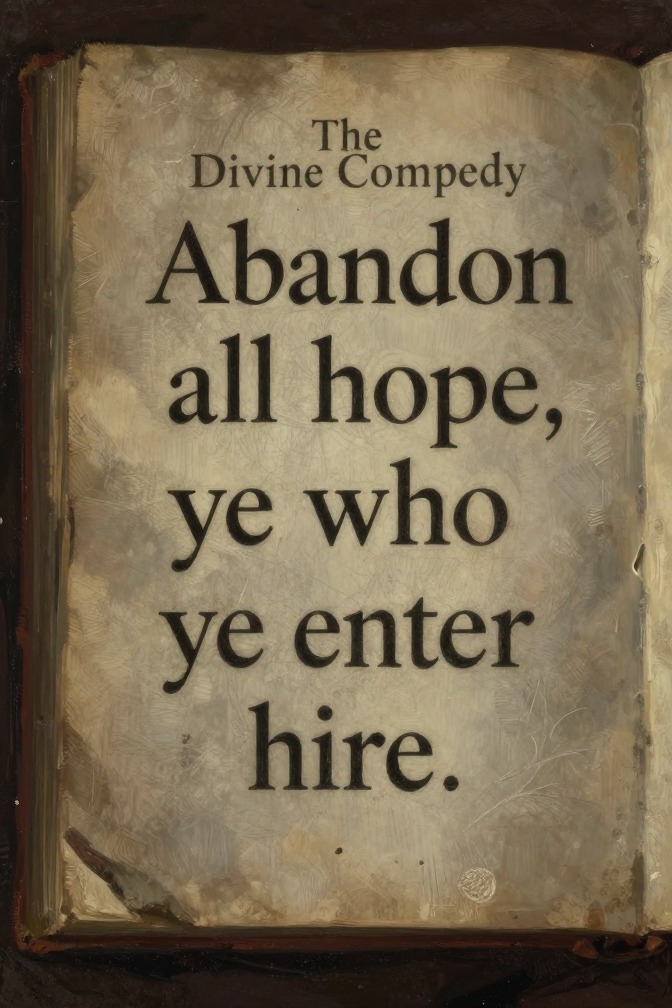
The inscription 'Abandon all hope, ye who enter here' is the warning carved upon the Gate of Hell in Dante Alighieri's Inferno, marking the irreversible threshold between the living world and the eternal realm of the damned. It encapsulates the poem's central theme of divine justice and the absolute finality of damnation.
The line "Thence we came forth to rebehold the stars" (Italian: "E quindi uscimmo a riveder le stelle") is the final verse of the Inferno, marking Dante and Virgil's emergence from Hell onto the shore of Mount Purgatory. It is one of the most famous and resonant lines in the Divine Comedy, encapsulating the transition from the darkness of damnation to the hope of purification and the promise of celestial light.