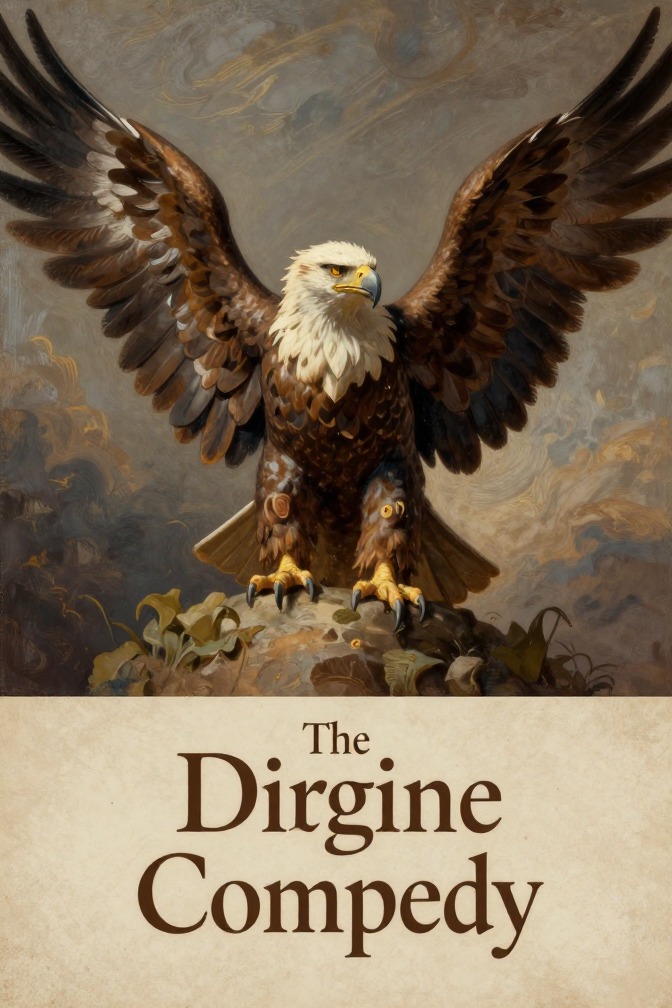
The Eagle of Jupiter is a celestial sign formed by the souls of just rulers in the sixth heaven of Paradise, which speaks as a single voice to Dante on the nature of divine justice, the necessity of faith for salvation, and the condemnation of corrupt Christian kings.
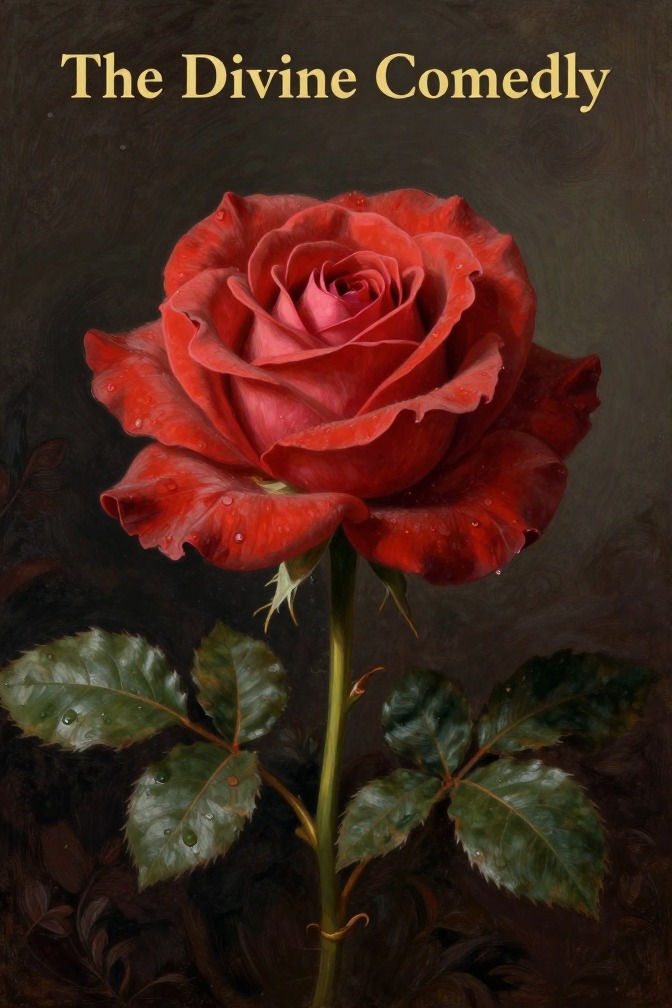
The Rose of Paradise is the culminating vision of the Divine Comedy, a vast white amphitheater of blessed souls arranged in petals around the Virgin Mary, where the entire structure of the cosmos is made visible as a single flower of light.
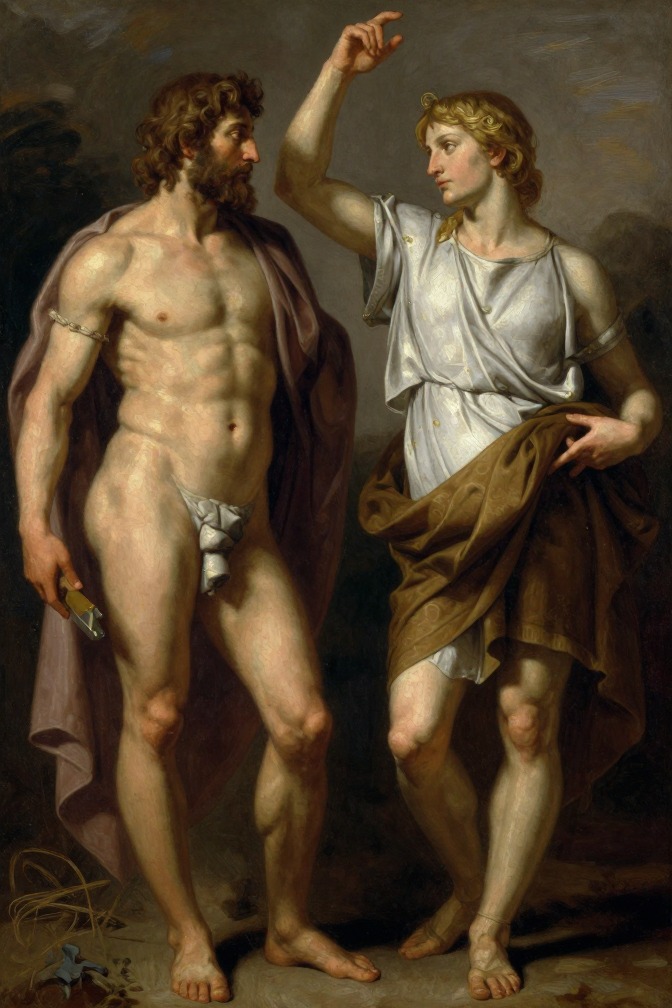
The relation between Adam and Dante in The Divine Comedy is a theological and genealogical link that frames Dante's journey as a recovery of humanity's lost inheritance. Adam appears in Paradise as the first soul created by God, and his story—of original sin, exile, and the long wait for redemption—provides the backdrop against which Dante's own exile and spiritual quest are measured. Through Adam's own words, Dante learns about the nature of the Fall, the mutability of human language, and the hope of restoration, making Adam both a type of the exiled poet and a witness to the grace that Dante seeks.
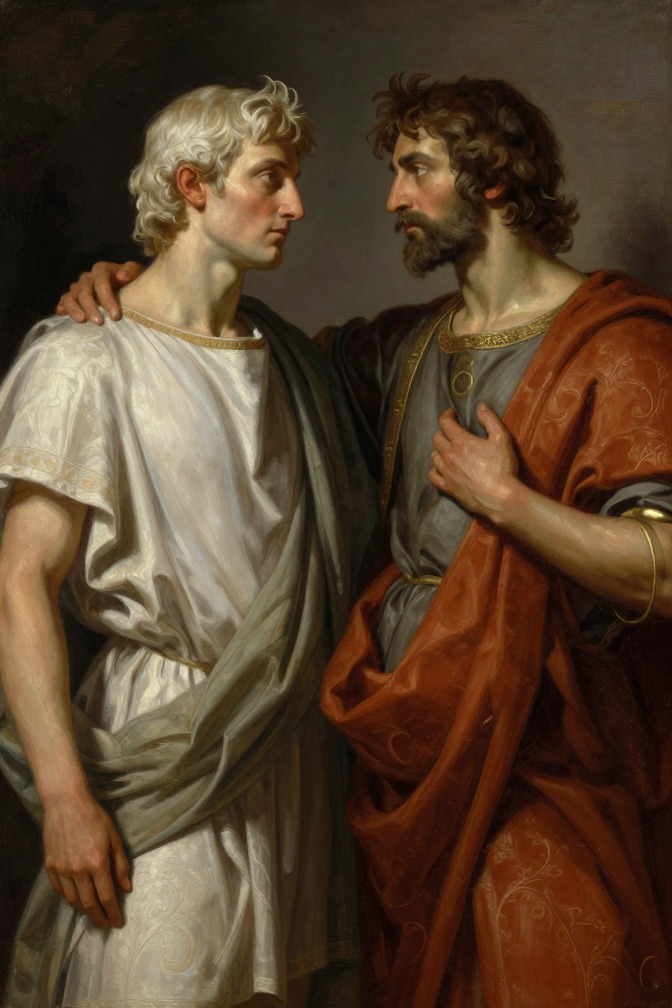
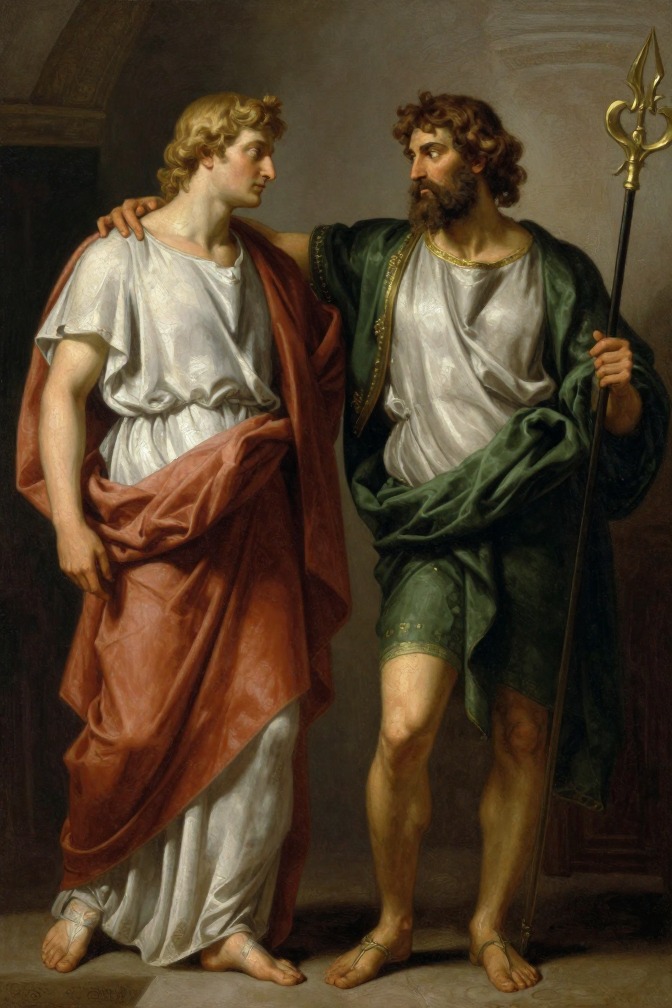
The meeting between Dante and Sordello in Purgatory is a pivotal moment of shared civic identity and political lament, transforming a chance encounter into a profound meditation on Italy's fractured state and the unifying power of a common homeland.
Mahomet and Ali are two schismatics encountered by Dante in the Ninth Bolgia of the Eighth Circle of Hell, where they are perpetually cleft and mutilated by a demon's sword as punishment for having sown religious discord and schism during their lives.
St. John and Dante is a pivotal relation in the Paradiso, where the Apostle John examines Dante on the theological virtue of charity (love), testing the pilgrim's understanding and embodiment of divine love before he can ascend to the final vision of God.
The inscription above the Gate of Hell, 'All hope abandon, ye who enter in,' is the most famous and decisive statement of the poem's moral and emotional stakes, establishing Hell as a realm of eternal despair from which no soul returns.
Contrapasso is the principle of symbolic punishment that governs Dante's Inferno, Purgatory, and Paradise, where the penalty or purification of each soul mirrors the nature of its sin or virtue in life, serving as the structural and moral foundation of the entire Divine Comedy.
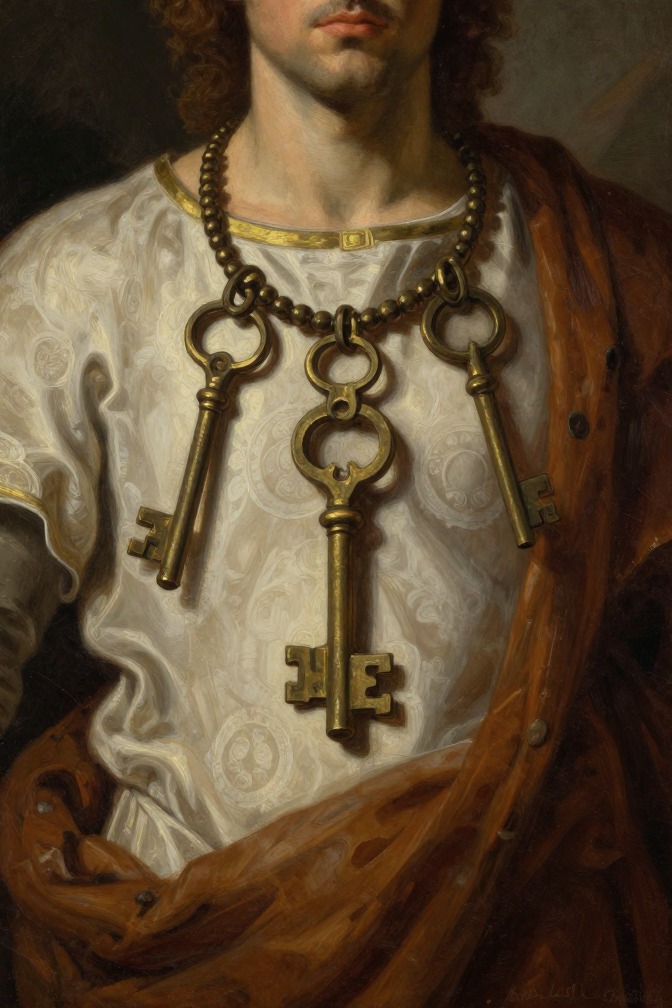
The Keys of St. Peter are the two symbolic keys entrusted by Christ to the Apostle Peter, which in Dante's Purgatory are held by the angelic gatekeeper at the entrance to Purgatory proper. They represent the power to bind and loose, the authority of the Church to grant absolution, and the theological distinction between the grace of confession (the gold key) and the discernment required for true repentance (the silver key). Their appearance marks the transition from Ante-Purgatory to the seven terraces of purification and establishes the sacramental framework within which Dante's own purgation will unfold.
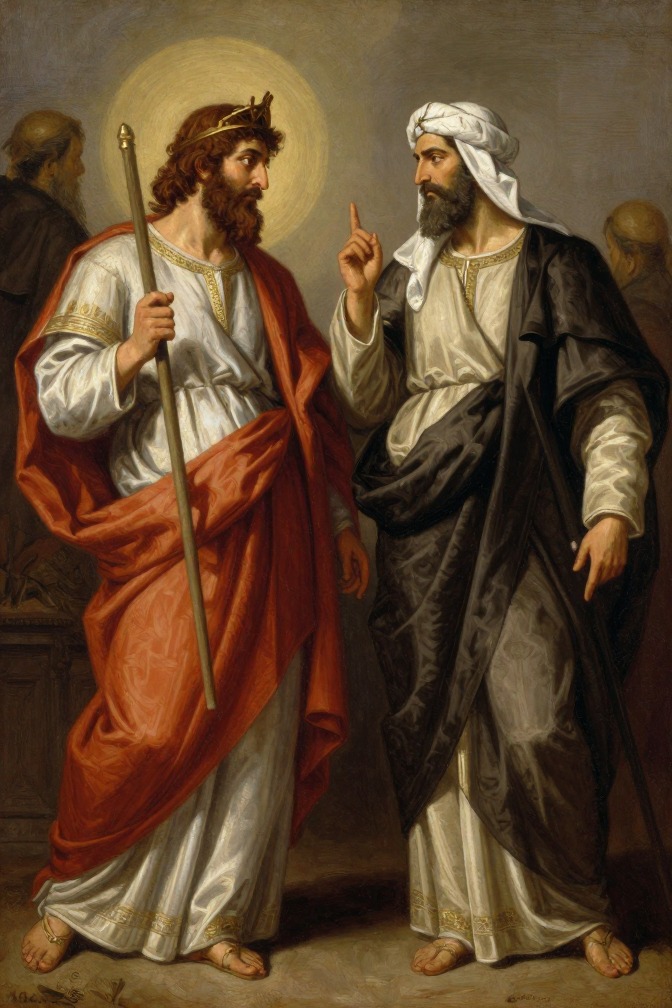
Exile is the central political and spiritual condition that defines Dante Alighieri's life and work, transforming him from a Florentine citizen into a homeless wanderer whose banishment becomes the generative force behind the Divine Comedy. The poem itself is a product of exile, and its narrative repeatedly returns to the experience of being cast out—from one's city, from one's home, from grace itself—making exile not merely a biographical fact but a structural and thematic principle that organizes the entire journey from Hell to Paradise.
Gluttony, the third of the seven deadly sins, is punished in the Third Circle of Hell and purged on the Sixth Terrace of Purgatory, where the sin of excessive appetite for food and drink is subjected to Dante's contrapasso—eternal, foul rain in Hell and a tormenting hunger and thirst in Purgatory that mirror the soul's former indulgence.
The Matin Hour is a liturgical time of dawn prayer that, in Dante's Purgatorio, marks the moment when the pilgrim's journey begins and when the souls of the negligent are stirred to action, serving as a threshold between the darkness of error and the light of grace.
The Third Hour, or terce, is a canonical hour of the Divine Office recited at approximately 9:00 AM, marking the third hour after sunrise. In Dante Alighieri's Divine Comedy, it serves as a temporal marker that anchors the narrative's cosmic chronology, linking the earthly liturgical cycle to the celestial motions of the heavens.
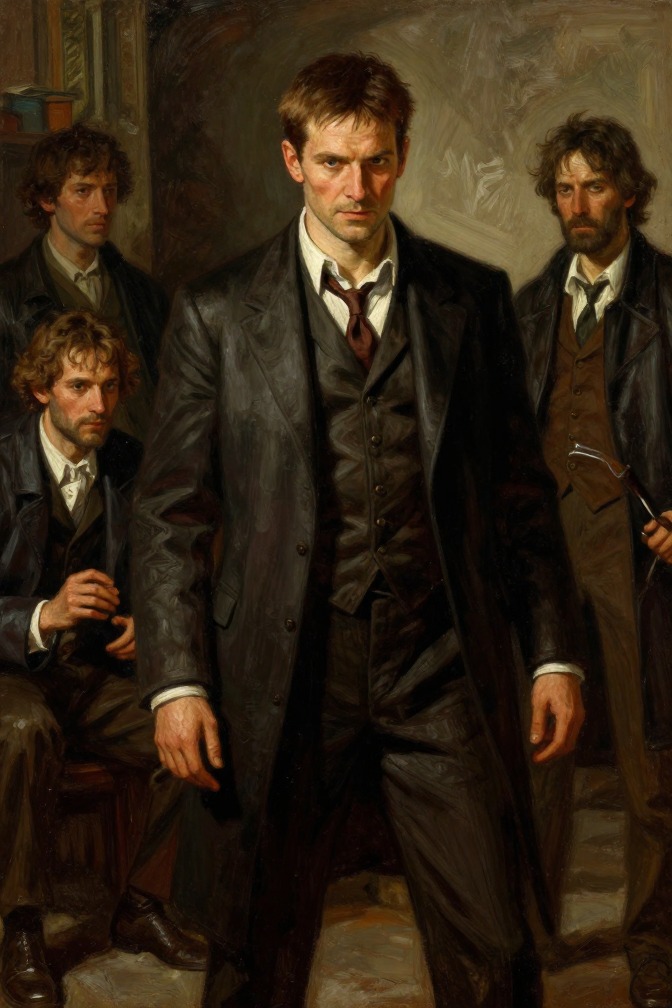
The Attack at Château Villette is the pivotal confrontation in which Silas, acting on the Teacher's orders, infiltrates Sir Leigh Teabing's estate to seize the Priory keystone, only to be subdued by Teabing and Sophie Neveu, forcing the group's flight to England.
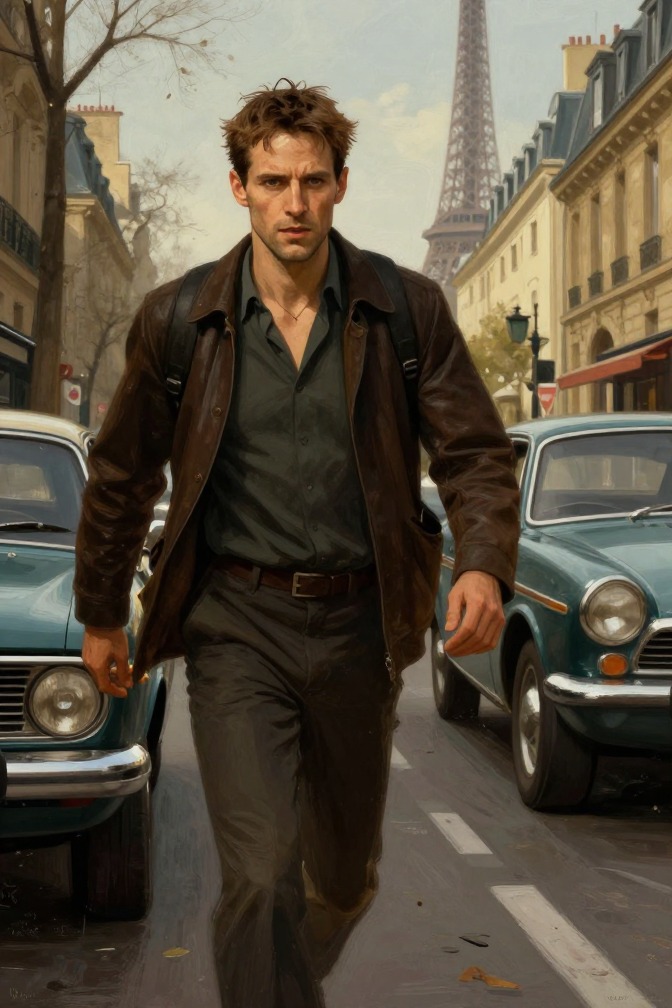
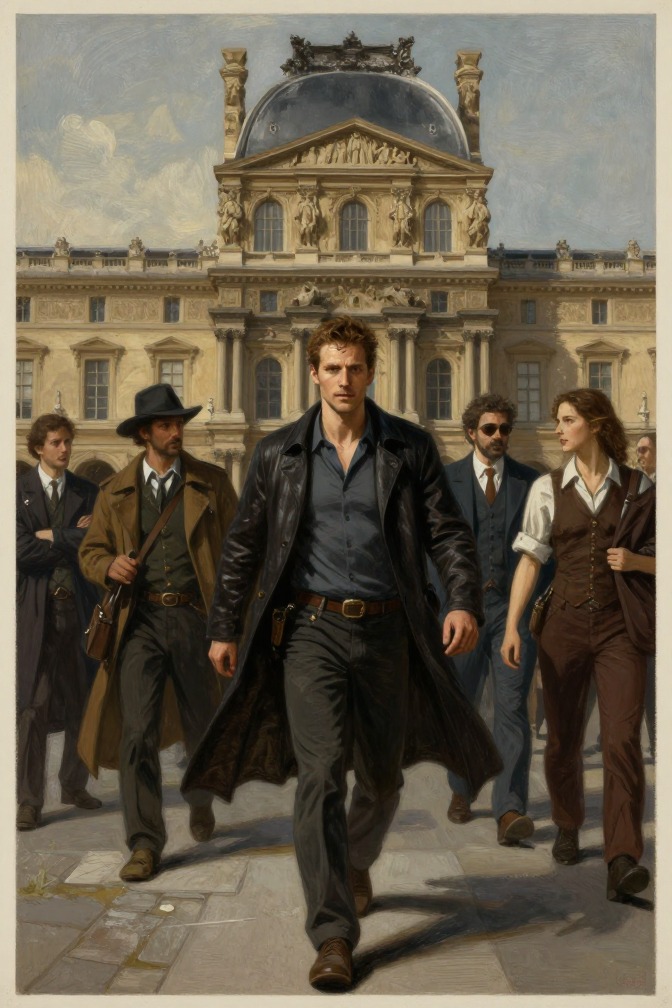
The car chase through Paris is a high-speed pursuit sequence in which Sophie Neveu drives Robert Langdon away from the Louvre in her SmartCar, weaving through the city's streets and landmarks while evading the French Judicial Police. The chase marks a critical turning point in the narrative, transforming Langdon from a cooperative witness into a fugitive and deepening the mystery surrounding Jacques Saunière's murder.
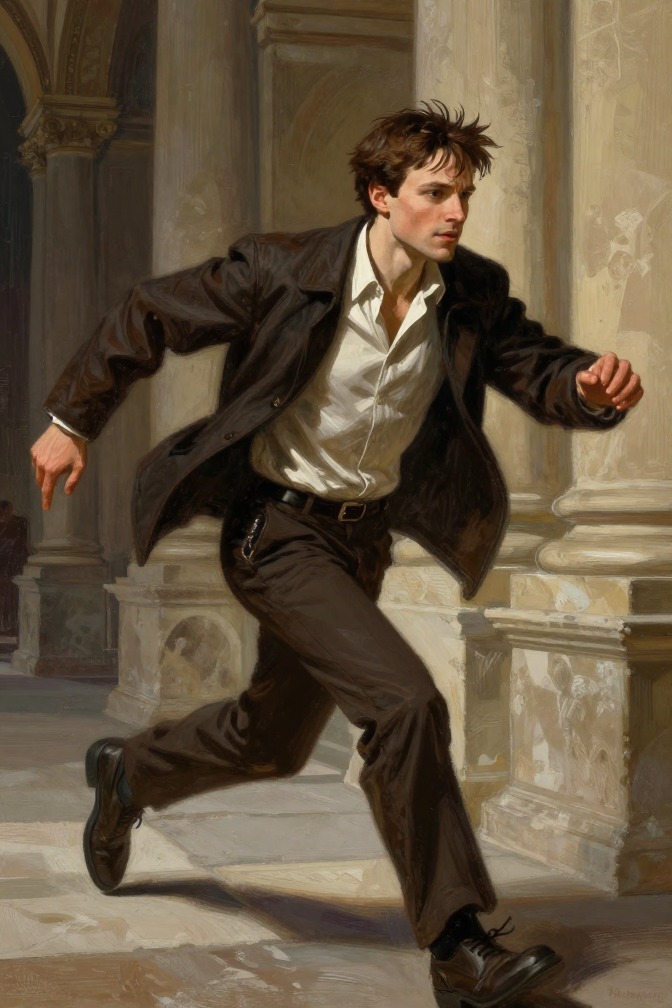
Langdon's escape from the Louvre is a pivotal action sequence in which Sophie Neveu, a cryptographer with the French Judicial Police, orchestrates a daring deception to free Robert Langdon from the museum while simultaneously framing a bar of soap as his decoy, thereby turning him from a suspect into a fugitive.
Jacques Saunière, the curator of the Louvre, is shot and killed by the albino monk Silas inside the Grand Gallery. Before dying, Saunière stages his own body as a replica of Leonardo da Vinci's Vitruvian Man, draws a pentacle on his abdomen in his own blood, and writes a cryptic message on the floor in invisible ink, setting in motion the novel's central mystery.
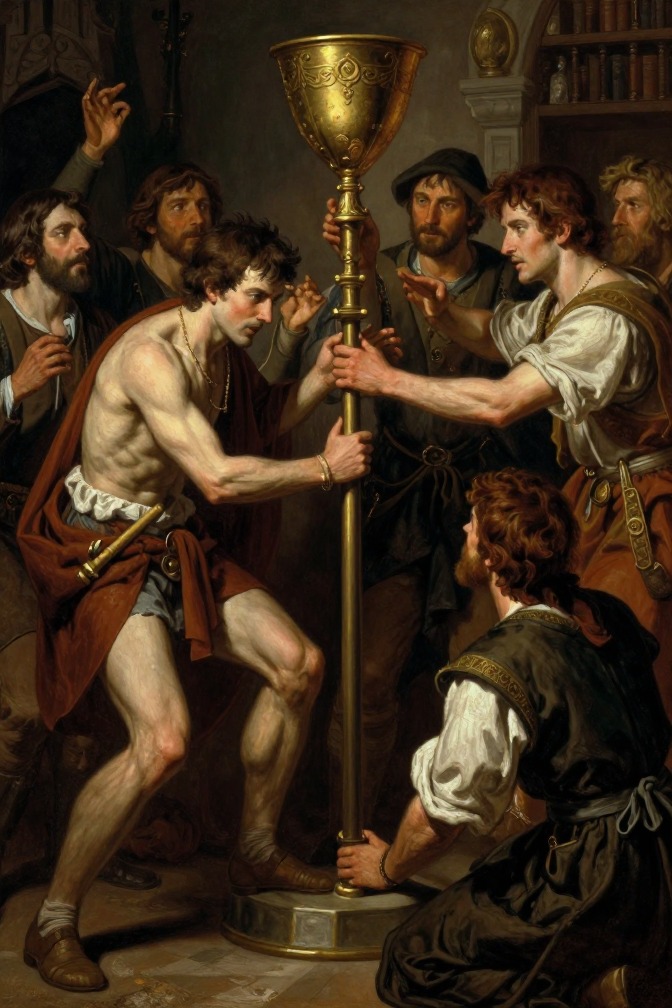
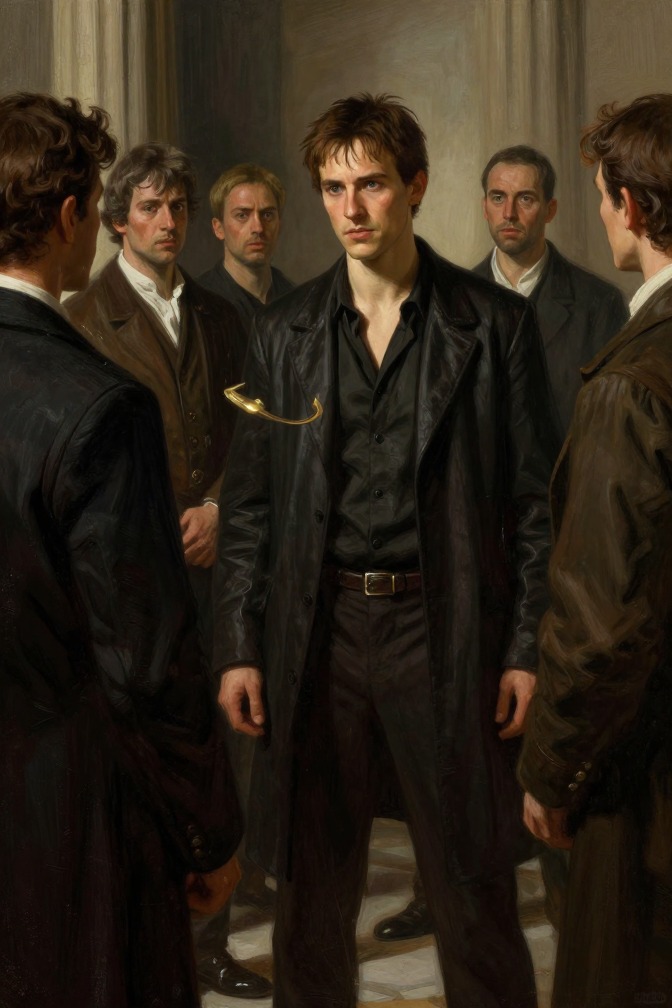
The Temple Church confrontation is the pivotal scene in which Rémy Legaludec, Sir Leigh Teabing's manservant, reveals his true allegiance to the Teacher and forcibly seizes the keystone from Robert Langdon and Sophie Neveu, exposing Teabing's complicity and escalating the quest for the Holy Grail into a direct, armed struggle.
Marie Chauvel is Sophie Neveu's grandmother, the wife of Jacques Saunière, and the curator of the Rosslyn Trust. She reveals to Sophie that her parents were Merovingian descendants of Jesus Christ and Mary Magdalene, that her brother survived the car accident that supposedly killed the entire family, and that the family's separation was a protective measure by the Priory of Sion. Her role is pivotal in resolving Sophie's personal mystery and in providing the final, elusive interpretation of Saunière's Grail poem.
Rémy Legaludec is the manservant of Sir Leigh Teabing, a Frenchman who secretly serves the Teacher, the mastermind behind the plot to steal the Priory of Sion's keystone. He poses as a loyal butler while carrying out surveillance and ultimately betrays his employer, kidnapping Teabing and seizing the keystone before being killed by the Teacher to eliminate a loose end.
Jacques Saunière's murder is the inciting event of the novel, a brutal assassination inside the Louvre that triggers a desperate, coded message, a manhunt, and the revelation of a centuries-old secret society.
The Biggin Hill Deception is the sequence in which Sir Leigh Teabing, using his private jet and the complicity of his pilot and manservant, smuggles Robert Langdon, Sophie Neveu, and the bound Silas out of France and into England, evading the French police by having the plane land at his private hangar rather than the terminal, and then concealing the fugitives inside a stretch limousine.
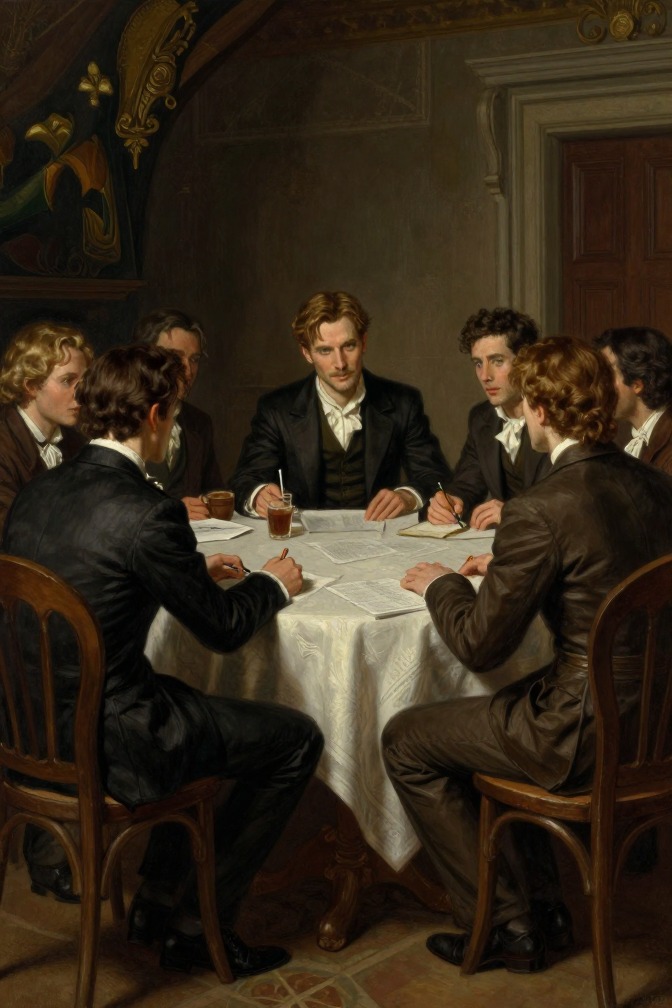
The Château Villette Meeting is the pivotal scene in which Robert Langdon and Sophie Neveu, fleeing the French police, seek refuge with Sir Leigh Teabing, a British Royal Historian and Grail scholar. During this meeting, Teabing reveals the true nature of the Holy Grail—that it is not a cup but Mary Magdalene, the wife of Jesus Christ and bearer of his royal bloodline—and explains the history of the Priory of Sion and the Church's suppression of the sacred feminine. This revelation transforms Sophie's understanding of her grandfather's message and sets the stage for the quest to unlock the keystone.
Robert Langdon, after deciphering the final clue from Jacques Saunière's poem, realizes that the Holy Grail is not hidden in a distant tomb but lies beneath the Louvre's inverted pyramid in Paris, directly on the ancient Rose Line, marking the final resting place of Mary Magdalene.
Silas, an albino monk of Opus Dei, enters the Church of Saint-Sulpice in Paris to retrieve the Priory of Sion's keystone, which he believes is hidden beneath the Rose Line. After breaking a floor tile at the base of the obelisk, he finds a stone tablet bearing a Bible verse, which he interprets as a clue. He then murders Sister Sandrine Bieil, the church's caretaker, who had attempted to warn the Priory. The event reveals the keystone's location and the brutal lengths to which Silas will go, while also setting in motion the Priory's silent alarm system.
Robert Langdon and Sophie Neveu escape from the Louvre Museum by tricking Captain Bezu Fache and the DCPJ, using a bar of soap containing a GPS tracking dot to fake Langdon's leap from a restroom window onto a passing truck, then hiding in the Grand Gallery as Fache pursues the decoy.
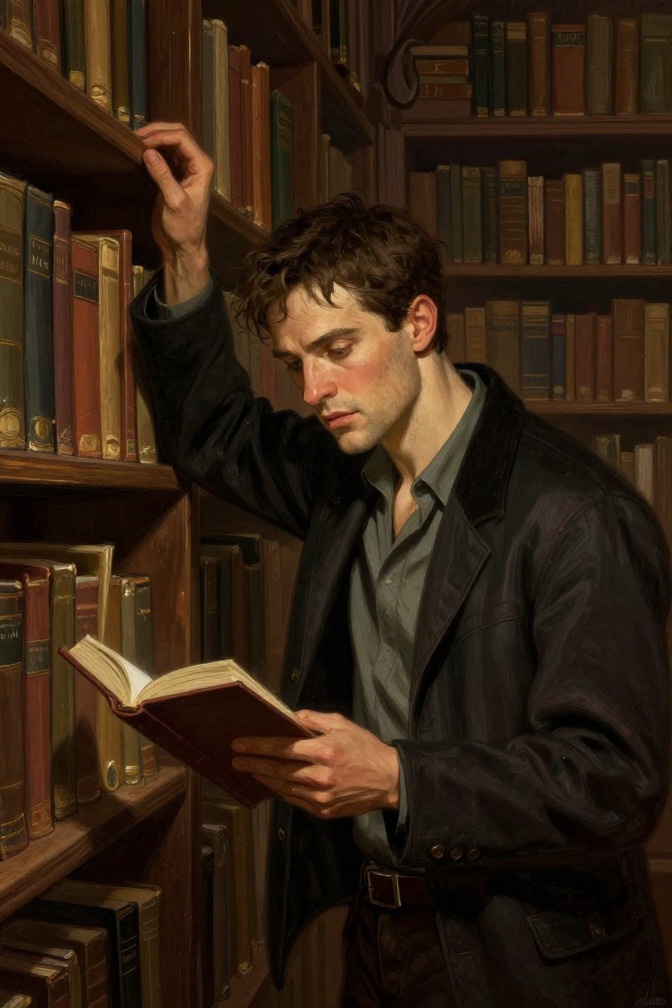
The Library Search is the event in which Robert Langdon and Sophie Neveu, having lost the keystone to Leigh Teabing and Silas, visit the King's College religious studies library to identify the knight's tomb referenced in Saunière's poem, using the electronic database to narrow down the search and ultimately deducing that the knight is Sir Isaac Newton.
Robert Langdon is awakened at the Hotel Ritz Paris by a DCPJ agent who summons him to the Louvre to consult on the murder of curator Jacques Saunière, unwittingly walking into a police interrogation that will make him the prime suspect.
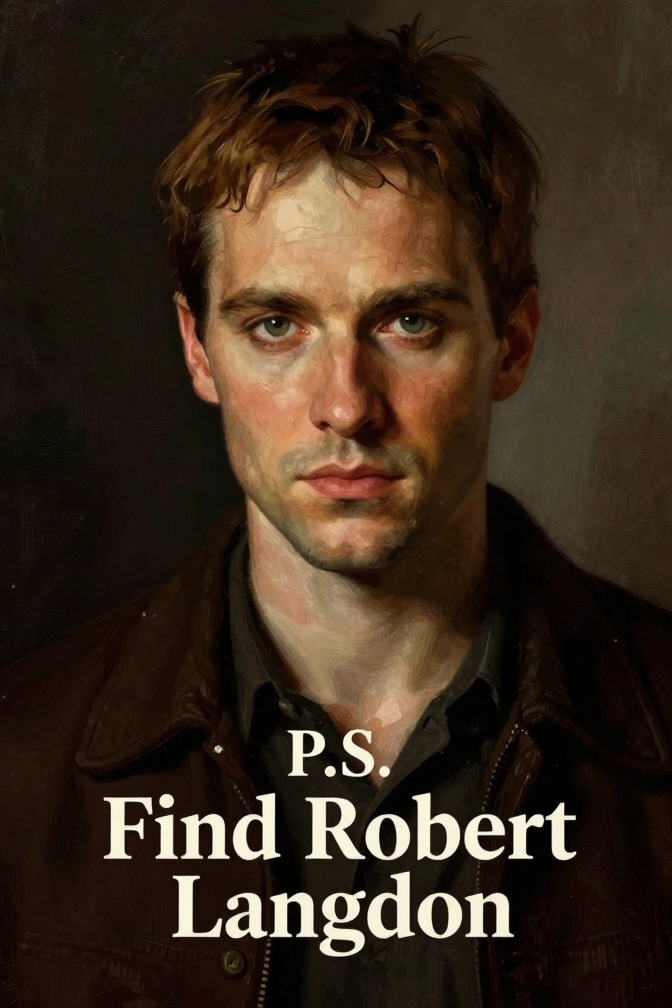
P.S. Find Robert Langdon is the final line of the dying message left by Louvre curator Jacques Saunière on the floor of the Grand Gallery, written in invisible ink and revealed only under black light. This postscript, which Captain Bezu Fache initially erased from the crime scene, transforms Robert Langdon from a consulting symbologist into the prime suspect in Saunière's murder and sets in motion the entire night's flight and investigation.
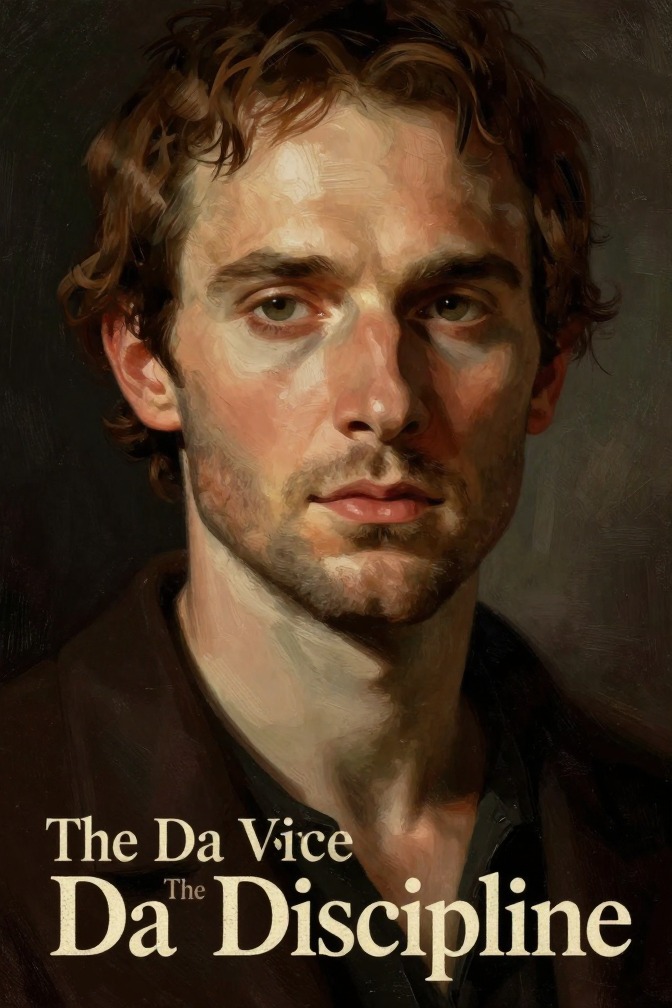
The Discipline is a knotted rope used by Silas for the Opus Dei practice of corporal mortification, a ritual of self-flagellation that he performs to purify his soul after committing acts of violence in the name of God.