Oviedo, a city in northern Spain, is the site of Silas's spiritual rebirth and his first encounter with Bishop Manuel Aringarosa, who gives him a new name and purpose after he escapes from an Andorran prison.
Roland Garros is the tennis stadium complex in Paris that serves as a key geographical reference point for the location of 24 Rue Haxo, the address of the Depository Bank of Zurich, where Sophie Neveu and Robert Langdon retrieve the keystone from Jacques Saunière's safe-deposit box.
St. Germain des Prés is a Parisian neighborhood that appears in the novel as the location where the taxi driver claims to have purchased his counterfeit Rolex watch from a street vendor, a detail that nearly exposes the escape of Robert Langdon and Sophie Neveu.
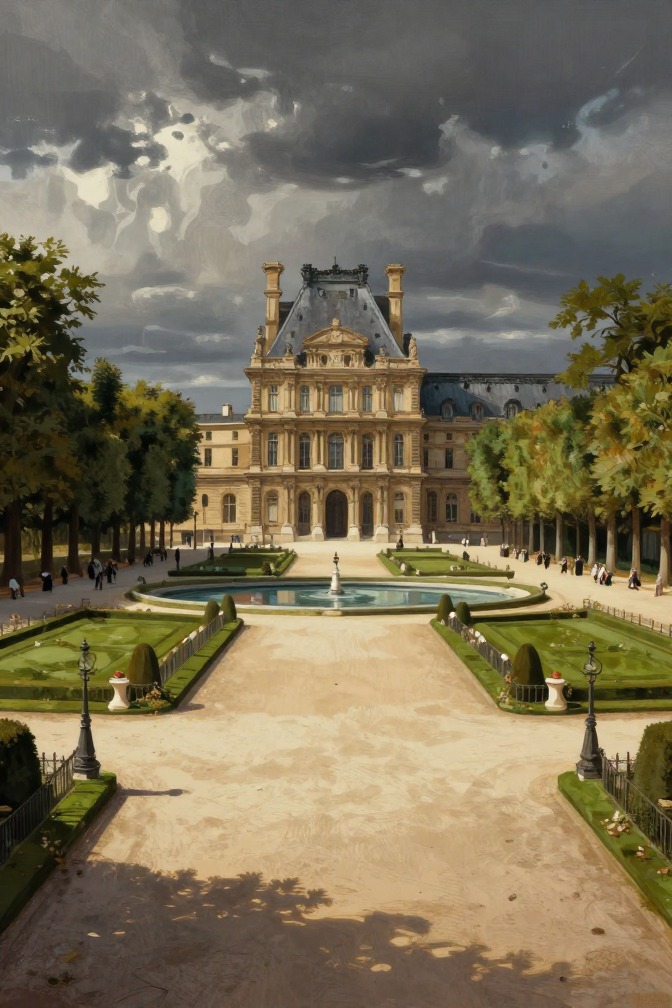
The Tuileries Gardens, a historic park in Paris, serves as a symbolic and narrative threshold in The Da Vinci Code, marking the transition from the modern city into the realm of ancient secrets and danger. It is the site where Robert Langdon is transported from his hotel to the Louvre, and its layered history—from clay quarry to Impressionist birthplace—mirrors the novel's themes of hidden meanings beneath familiar surfaces.
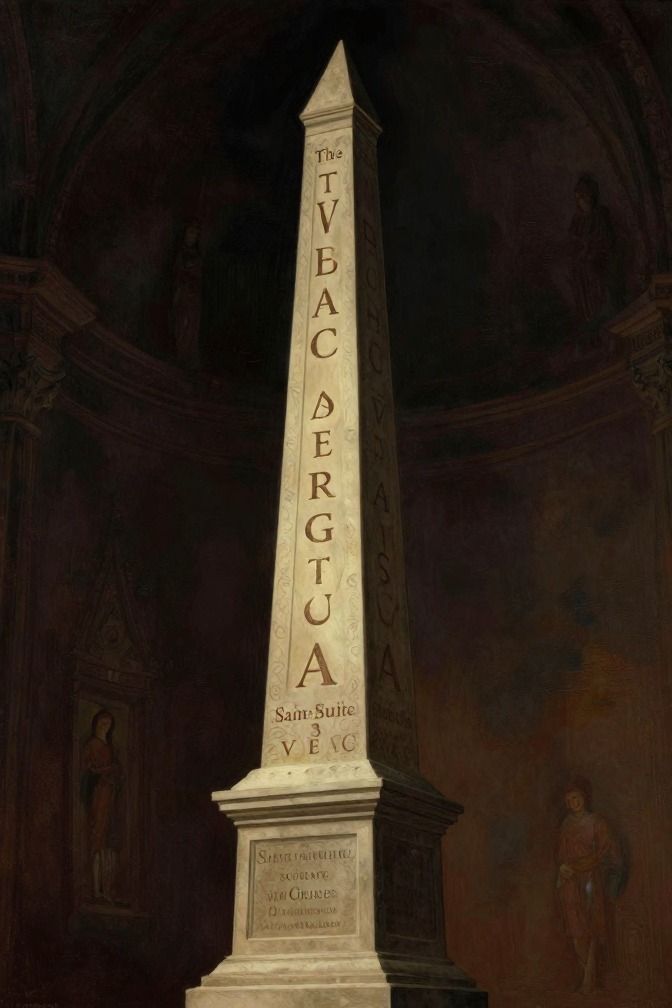
The Saint-Sulpice Obelisk is a colossal Egyptian obelisk located in the Church of Saint-Sulpice in Paris, serving as the physical marker of the ancient Parisian meridian, the Rose Line. It becomes the focal point of Silas's search for the Priory of Sion's keystone, which he believes is hidden beneath it, and its discovery triggers a chain of events that reveals the brotherhood's deception and the nun Sister Sandrine's secret role as a sentry.
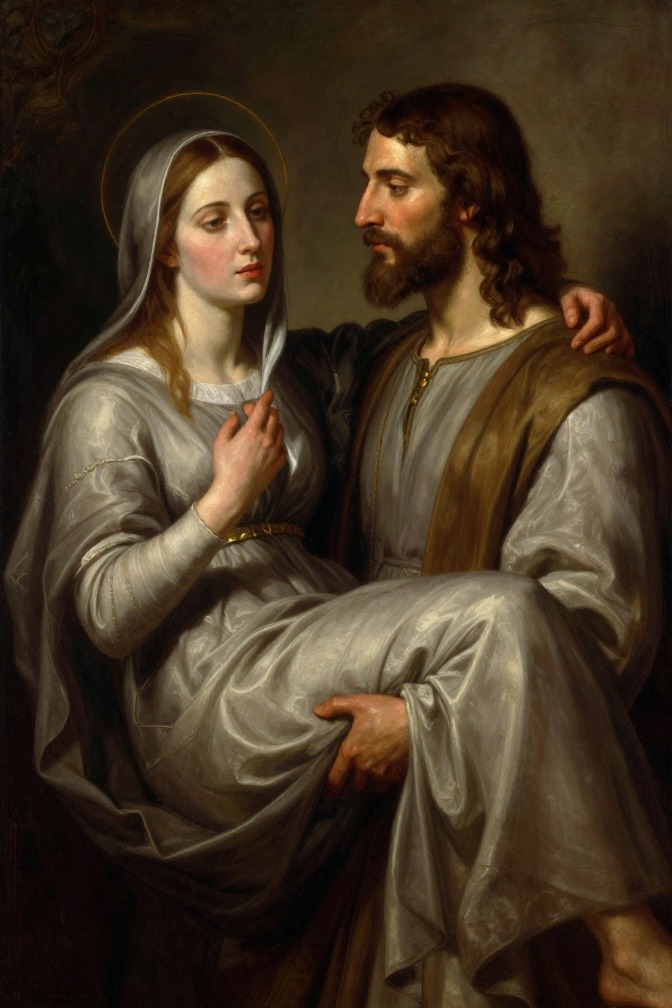
In The Da Vinci Code, Mary Magdalene is revealed not as a prostitute but as the Holy Grail itself—the wife of Jesus Christ and the bearer of his royal bloodline, a secret the Church has suppressed for centuries.
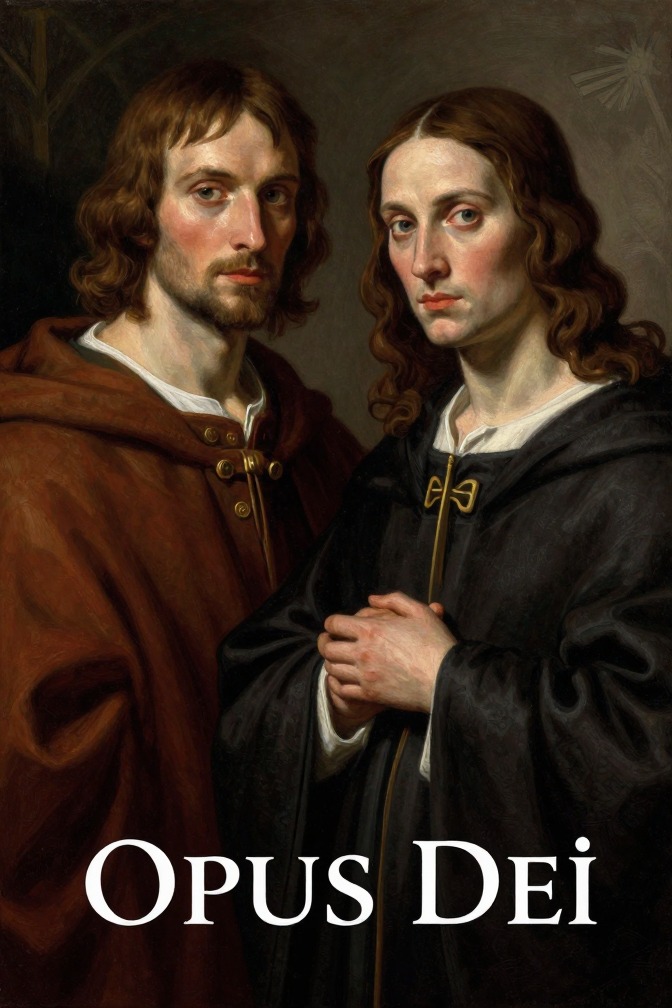
Opus Dei is a Catholic prelature, a personal prelature of the Pope, whose status and practices are central to the novel's conflict. The organization's conservative values, controversial practices like corporal mortification, and its threatened disassociation from the Vatican drive Bishop Aringarosa's desperate plot to obtain the Holy Grail, making it a key institutional antagonist.
Opus Dei's gender segregation is a strict institutional policy that separates men and women within the organization's residential and communal spaces, enforced through architectural design and daily practice.
The Church's threatened position is the central crisis that drives the plot of The Da Vinci Code: the revelation of the Holy Grail—understood as the secret that Jesus Christ married Mary Magdalene and fathered a bloodline—would devastate the foundational doctrine of Christ's divinity and the authority of the Roman Catholic Church. This existential threat motivates the Teacher (Sir Leigh Teabing) to murder the four top members of the Priory of Sion, including Grand Master Jacques Saunière, in order to seize the keystone that leads to the Sangreal documents, and it explains the Church's historical campaign to suppress the sacred feminine, demonize pagan symbols, and eliminate evidence of Christ's human lineage.
The Hiding of the Holy Grail is the central, centuries-long state of secrecy maintained by the Priory of Sion to protect the Sangreal documents and the tomb of Mary Magdalene from the Church, a condition that is shattered when the Priory's top four members are murdered and the keystone is passed to Sophie Neveu.
The suppression of the sacred feminine is a central theme in *The Da Vinci Code*, presented as a deliberate, centuries-long campaign by the Roman Catholic Church to eradicate the worship of the female divine and to demonize women. The novel argues that this suppression began with Emperor Constantine's political consolidation of Christianity in the 4th century, which involved recasting pagan goddess symbols as evil, rewriting history to diminish women's spiritual role, and violently persecuting those who preserved the old traditions. This historical erasure is depicted as the root cause of modern societal imbalances, and the plot is driven by the quest to restore the lost truth of the sacred feminine, embodied by Mary Magdalene.
The 1980s serve as a crucial temporal backdrop in The Da Vinci Code, marking the decade when the Priory of Sion's secret history entered the mainstream through the publication of Holy Blood, Holy Grail, and when the modern Church's conflict with Opus Dei intensified, setting the stage for the novel's central conspiracy.
Friday the 13th is a date that, within the novel's historical framework, marks the day in 1307 when Pope Clement V orchestrated the mass arrest and execution of the Knights Templar, an event that the narrative uses to explain the origin of the date's unlucky reputation and to establish the long-standing conflict between the Church and the guardians of the Holy Grail.
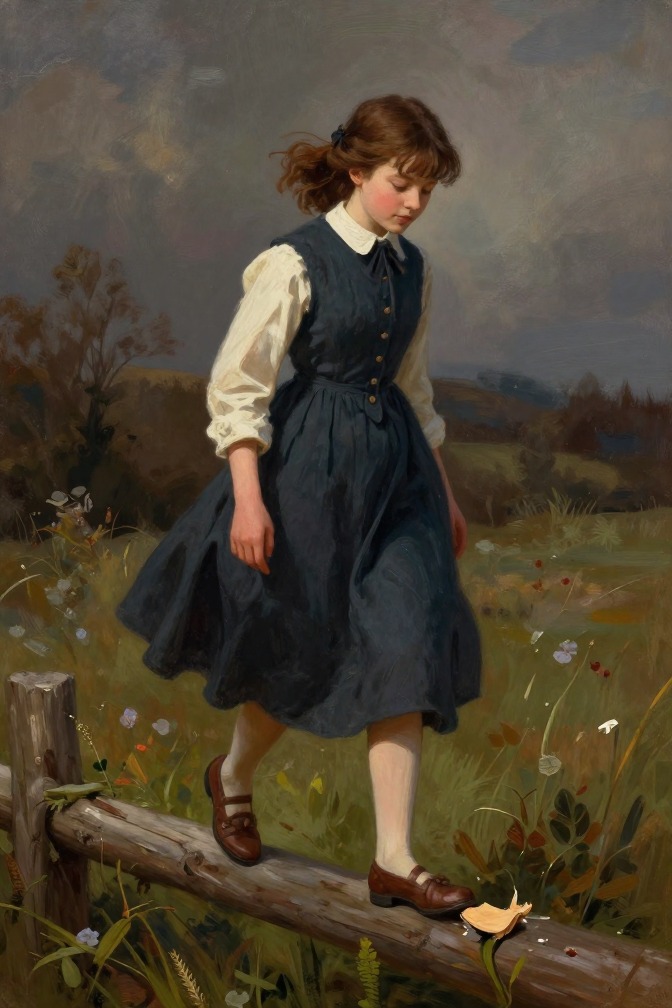
Anne walking the ridgepole and breaking her ankle is a pivotal event in Anne of Green Gables where Anne, goaded by a dare from Josie Pye at Diana Barry's party, attempts to walk the ridgepole of the Barry kitchen roof, falls, and breaks her ankle. The accident leads to a seven-week convalescence that reveals the depth of Marilla's love for Anne and introduces the new teacher, Miss Stacy, whose influence shapes Anne's ambitions.
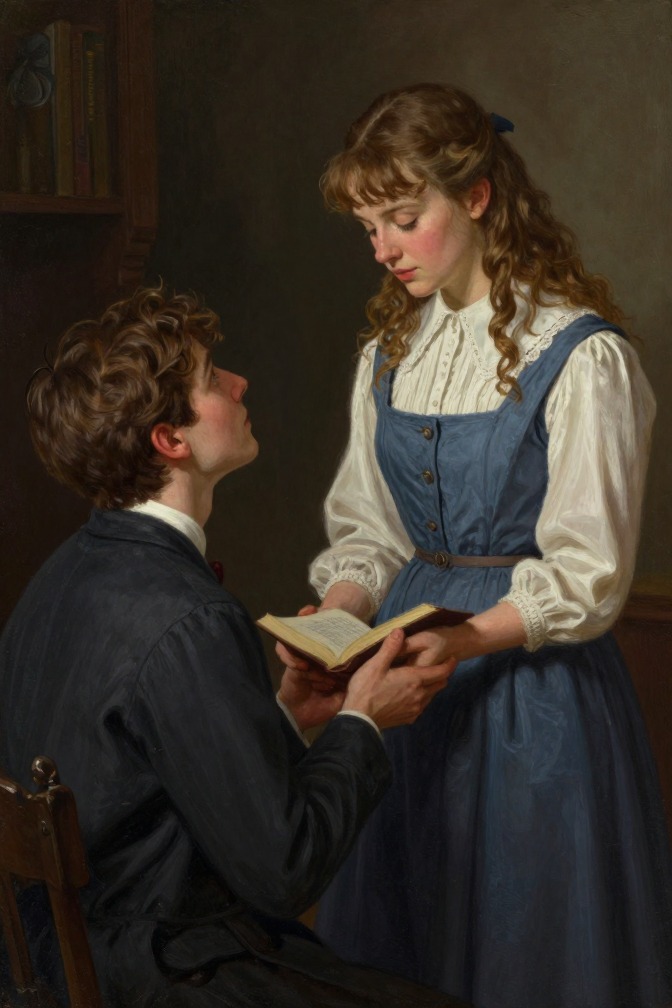
Gilbert Blythe withdraws his application for the Avonlea school teaching position so that Anne Shirley can have it, enabling her to stay at Green Gables with Marilla Cuthbert after Matthew Cuthbert's death and Marilla's failing eyesight. This self-sacrificing act, which requires Gilbert to take a less convenient and more expensive position at White Sands, marks the decisive end of their long-standing enmity and the beginning of a deep, mature friendship.
Diana Barry is Anne Shirley's first and dearest bosom friend at Avonlea, whose steadfast loyalty, shared imagination, and eventual reconciliation after a tragic misunderstanding define the emotional core of Anne's early years at Green Gables.
Dr. Blair is the Avonlea physician who treats the Cuthberts and their community, appearing in several key medical episodes across the novel.
Matthew Cuthbert is the shy, gentle, and deeply kind brother of Marilla Cuthbert, who lives with her at Green Gables farm in Avonlea. Though he dreads strangers and women, his quiet, steadfast love for the orphan girl Anne Shirley transforms both her life and his own, making him the first person to truly believe in her and the one whose sudden death marks the novel's most profound loss.
Mr. Andrew Bell is a minor but recurring figure in Anne of Green Gables, a farmer and landowner whose properties—the spruce grove, the woods containing Violet Vale and the Birch Path, and the field where the Sunday-school picnic is held—serve as key settings for Anne Shirley's adventures and misadventures. His role is primarily that of a place-name, a landholder whose woods and fields become the stage for Anne's imaginative life, her social triumphs, and her most frightening encounter with her own imagination.
Mr. Bell is the Avonlea Sunday-school superintendent and a local trustee whose long, uninspired prayers and rigid piety serve as a foil to Anne Shirley's imaginative, heartfelt spirituality, while his practical authority—granting prizes for pigs and presiding over school discipline—anchors the conservative institutional order that Anne must navigate.
Mr. Silas Sloane is a minor but recurring Avonlea landowner whose property—the barrens where Mayflowers grow and the big woods bordering Violet Vale—provides key settings for Anne Shirley's imaginative and social life, while his name is also associated with the eccentric old farmer who planted the apple trees that form the Avenue, one of the novel's most celebrated landscapes.
Mr. Wright (Eben Wright) is a minor Avonlea resident whose house serves as the boarding place for the schoolmaster, Mr. Phillips, and whose property and family are woven into the daily life and gossip of the Avonlea schoolchildren.
Priscilla Grant is a minor but memorable character in Anne of Green Gables, introduced during Anne Shirley's first year at Queen's Academy in Charlottetown. She is one of the two close friends Anne makes among her fellow students, the other being Stella Maynard. Priscilla is described as a pale, spiritual-looking maiden, yet she is full to the brim of mischief, pranks, and fun, a combination that endears her to Anne and enriches Anne's experience of city life and higher education.
Ruby Gillis is a minor but vividly drawn character in Anne of Green Gables, a pretty, sentimental, and conventionally-minded girl who serves as a foil to Anne Shirley's imaginative and intellectual depth. She is defined by her preoccupation with beaus, fashion, and romantic notions, and her presence in the story highlights the social norms and peer pressures of Avonlea girlhood.
Stella Maynard is a fellow student at Queen's Academy who becomes one of Anne Shirley's closest friends during her first year in Charlottetown. Known as the "rose-red" girl for her vivid, black-eyed beauty, Stella is part of the small circle of thoughtful, imaginative, and ambitious students that Anne draws around her, and she remains a dear friend even as Anne's plans shift toward staying at Green Gables.
Puffed sleeves are a recurring fashion motif in *Anne of Green Gables*, representing Anne Shirley's longing for beauty, acceptance, and a sense of belonging. The desire for puffed sleeves becomes a symbol of her struggle against the plain, utilitarian standards imposed by Marilla Cuthbert and a marker of her social integration and personal growth.
The moth is a recurring creature in Anne of Green Gables, appearing in moments of natural beauty and domestic twilight, often intertwined with Anne's imaginative and emotional life.
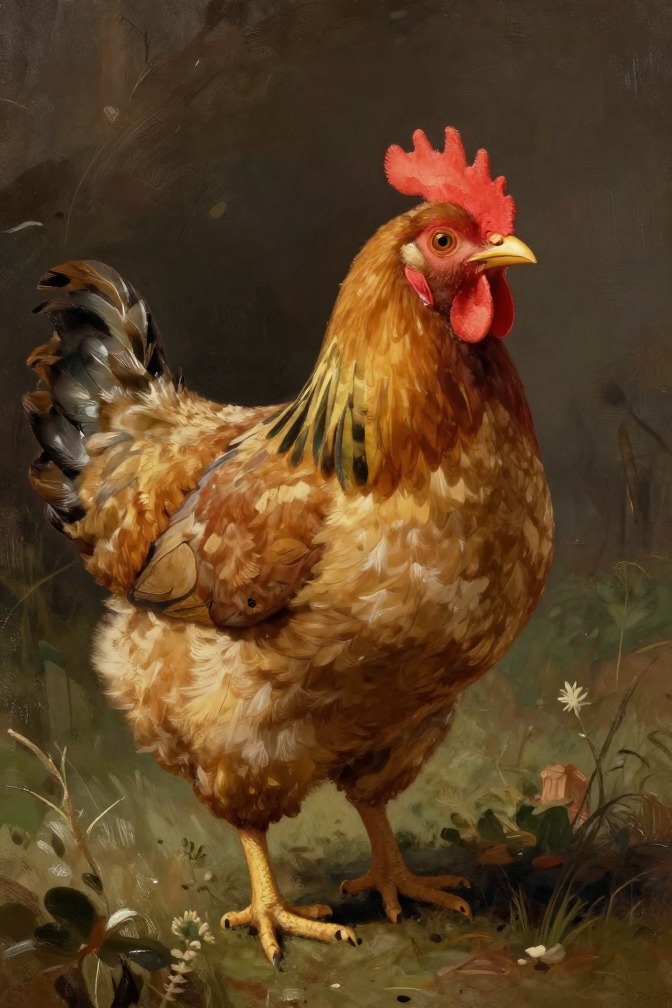
Chickens appear throughout *Anne of Green Gables* as a routine part of farm life at Green Gables, where Marilla Cuthbert tends them as part of her daily chores. They serve as markers of domestic order, economic necessity, and the rhythms of rural existence that shape Anne Shirley's new home.
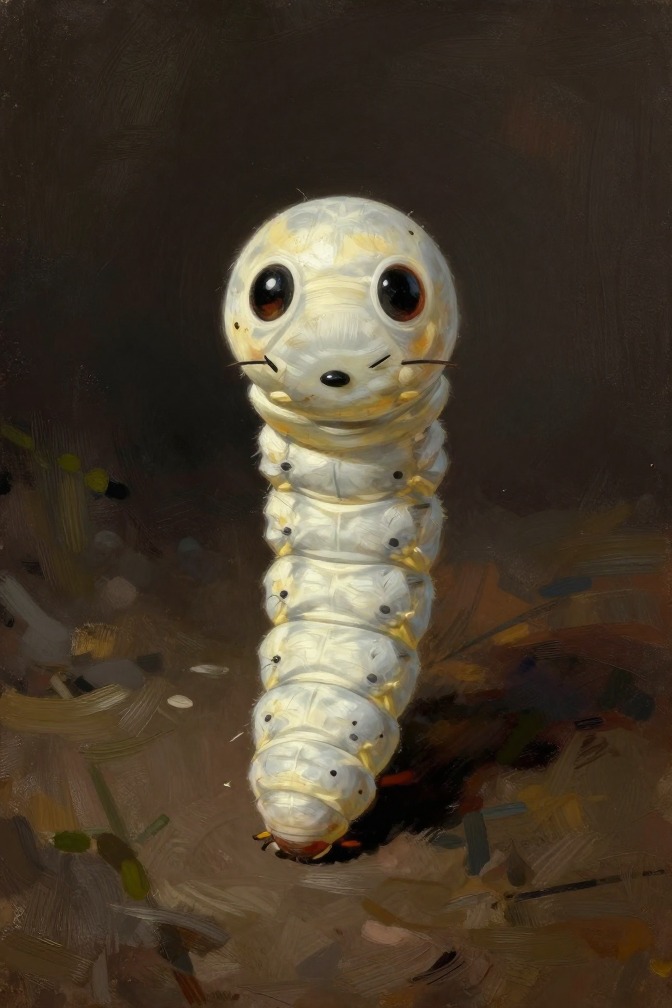
The white grub is a minor but memorable creature in Anne of Green Gables, appearing in a single conversation between Anne Shirley and Matthew Cuthbert during their first drive from Bright River to Green Gables. Anne asks Matthew if things ever give him a thrill, and he replies that seeing ugly white grubs spaded up in cucumber beds gives him a thrill—a response that highlights the comic contrast between Anne's romantic imagination and Matthew's practical, earthbound sensibility. The grub thus functions as a brief comic device that illuminates character and the gap between two ways of experiencing the world.
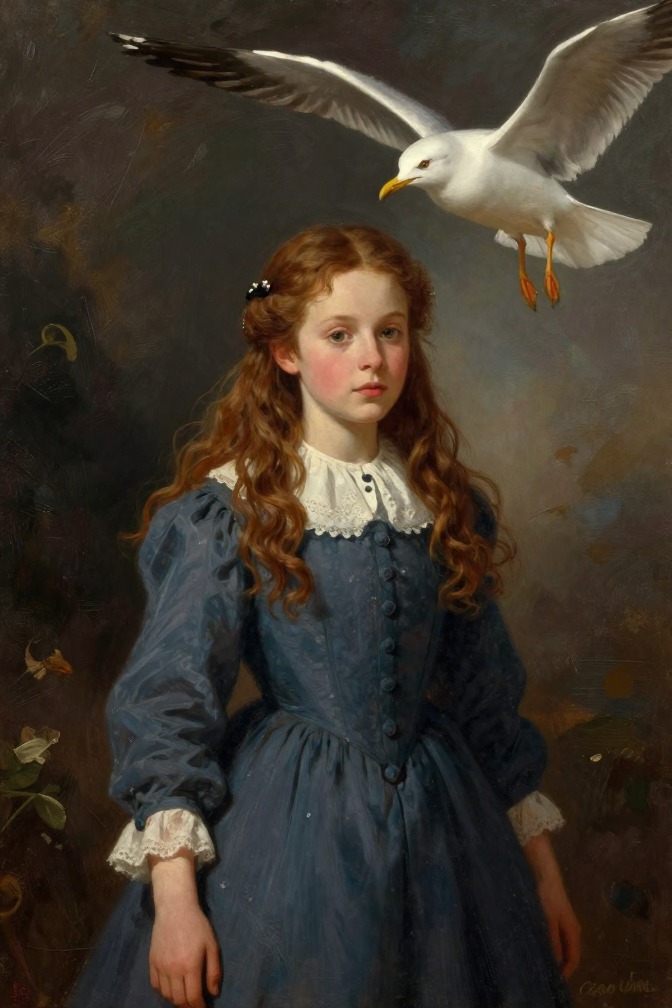
Seagulls appear in Anne of Green Gables as vivid markers of the natural world's beauty and freedom, particularly during Anne's drive along the shore road and her rapturous contemplation of the sea. They embody the wild, untamed spirit that Anne herself possesses and serve as objects of her imaginative identification, reflecting her longing for a life of grace and liberation.