Anne Shirley and Josie Pye maintain a persistent, low-level antagonism throughout the novel, rooted in Josie's petty cruelties and Anne's fierce pride, yet the rivalry never escalates into a major plot driver, serving instead as a recurring foil that highlights Anne's emotional growth and the social dynamics of Avonlea.
The relationship between Anne Shirley and Marilla Cuthbert is the emotional and moral backbone of Anne of Green Gables, tracing a trajectory from wary guardianship and mutual incomprehension to a deep, unspoken love that transforms both characters. Marilla, a stern, duty-bound spinster, initially accepts Anne only as a reluctant obligation, while the orphaned, imaginative Anne craves affection and belonging. Through a series of mistakes, confessions, and shared grief—especially Matthew's death and Marilla's threatened blindness—their bond deepens into a secure, maternal attachment that ultimately leads Anne to sacrifice her college scholarship to stay at Green Gables and care for Marilla.
The relationship between Anne Shirley and Matthew Cuthbert is the emotional heart of Anne of Green Gables, transforming from a mistaken adoption into a profound, wordless father-daughter bond that gives Anne her first experience of unconditional love and belonging, and whose loss reshapes her life's path.
Anne Shirley's relationship with Miss Stacy, her teacher at Avonlea school, is one of the most formative and nurturing bonds in Anne's adolescence. Miss Stacy recognizes Anne's intellectual gifts and emotional intensity, guiding her academic ambitions, refining her literary taste, and providing a model of womanhood that combines competence, imagination, and moral seriousness. The relationship transforms Anne from a brilliant but undisciplined pupil into a focused scholar who wins the Avery scholarship, and it gives Anne a trusted confidante who helps her navigate the challenges of growing up.
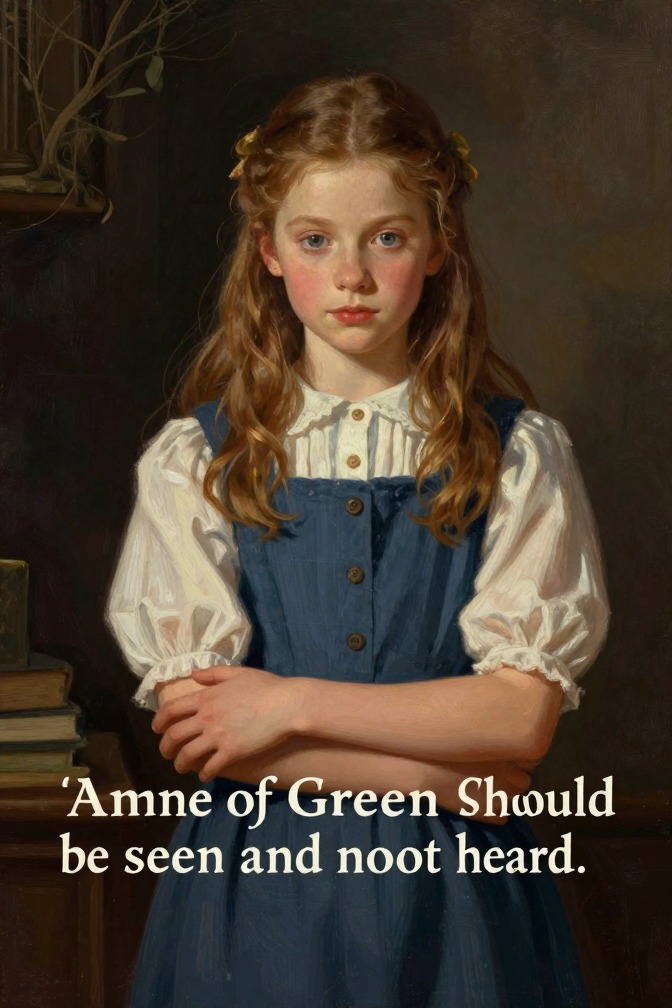
The maxim "Children should be seen and not heard" is a recurring social rule in Avonlea that Anne Shirley repeatedly encounters and resists. It represents the adult expectation of silent, obedient childhood, against which Anne's talkative, imaginative nature constantly clashes. The rule is invoked by various authority figures—Marilla Cuthbert, Mrs. Rachel Lynde, and others—as a tool of discipline and normalization, but Anne's persistent violation of it ultimately helps to reshape the community's understanding of what a child can be.
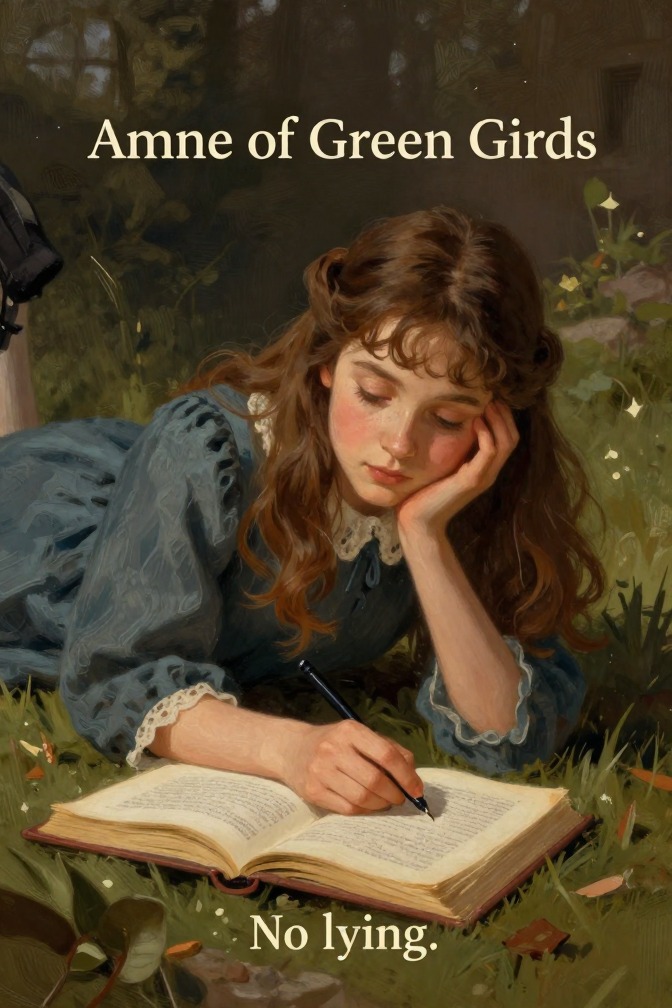
The rule against lying is a central moral principle in Anne of Green Gables, tested repeatedly through Anne's struggles with truthfulness, her imaginative confessions, and her eventual understanding that honesty is essential to trust and belonging.
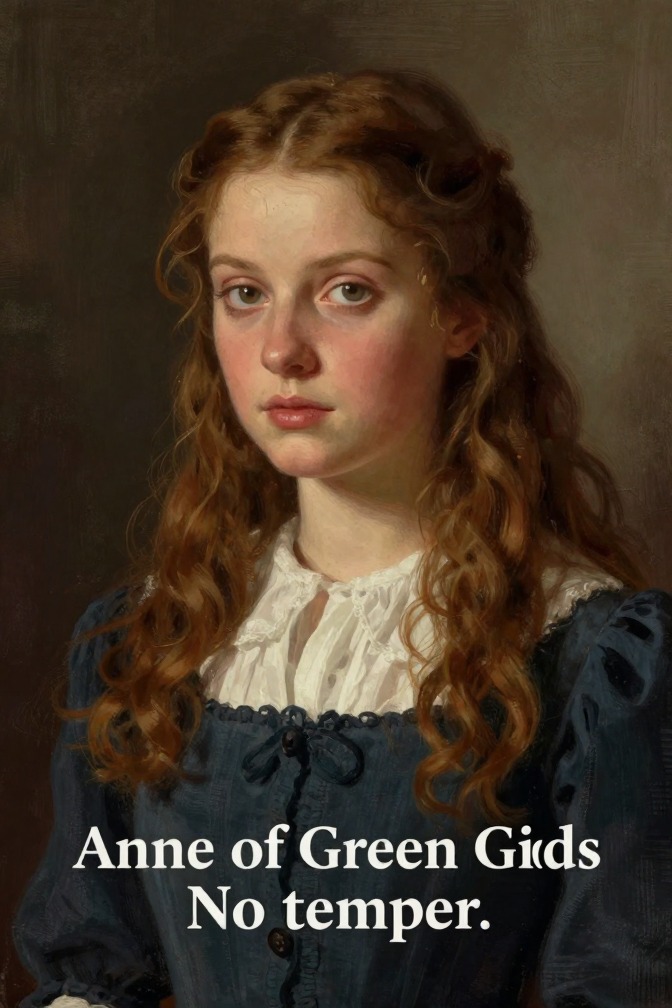
The rule "No temper" is a central moral and disciplinary principle in Anne of Green Gables, repeatedly invoked by Marilla Cuthbert and other authority figures to curb Anne Shirley's passionate, impulsive nature. It represents the tension between the community's demand for self-control and Anne's intense emotional responses, which are rooted in her traumatic past as an orphan. The rule is tested in key episodes—Anne's outburst at Mrs. Rachel Lynde, her rage at Gilbert Blythe, and her later reflections on anger—and ultimately evolves from an external command into an internalized value as Anne matures.
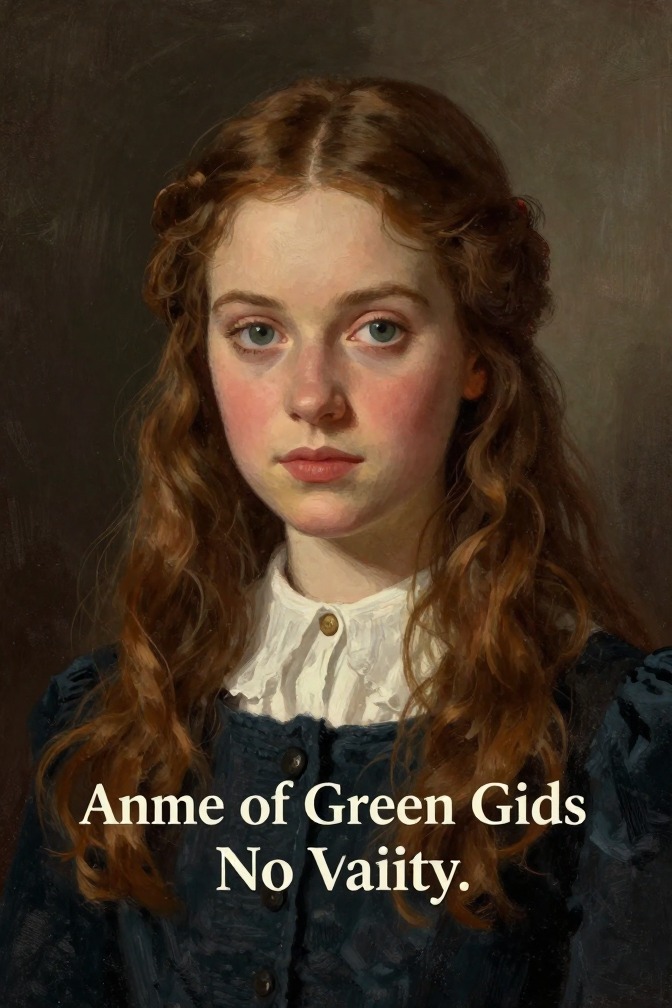
No vanity is a moral rule enforced by Marilla Cuthbert at Green Gables, aimed at curbing Anne Shirley's preoccupation with her appearance, especially her red hair and desire for fashionable clothing. The rule surfaces repeatedly through Marilla's reproofs and Anne's own struggles, culminating in the disastrous hair-dyeing incident that forces Anne to confront the consequences of vanity. It functions as a key disciplinary principle in Anne's upbringing, shaping her moral education and her eventual acceptance of herself.
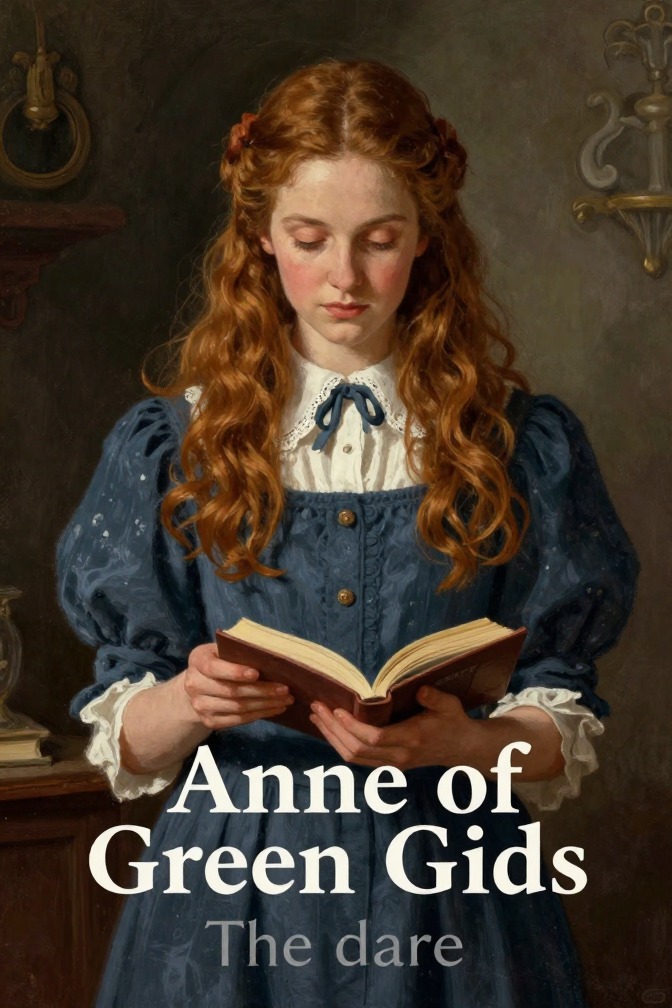
The dare is a social rule among the children of Avonlea that compels a challenged child to perform a risky or dangerous act under threat of public shame, functioning as a test of honor and a source of both thrilling adventure and serious injury.
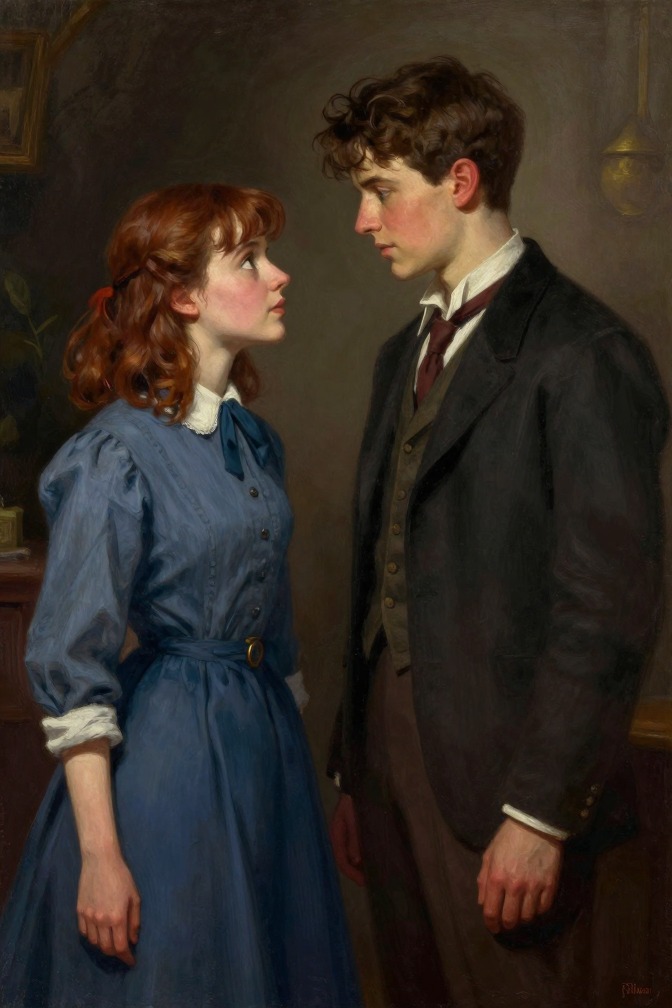
Anne and Gilbert's rivalry is the central competitive dynamic of the novel, evolving from a bitter personal insult into a mutually respectful academic contest that shapes both characters' ambitions and ultimately leads to reconciliation and friendship.
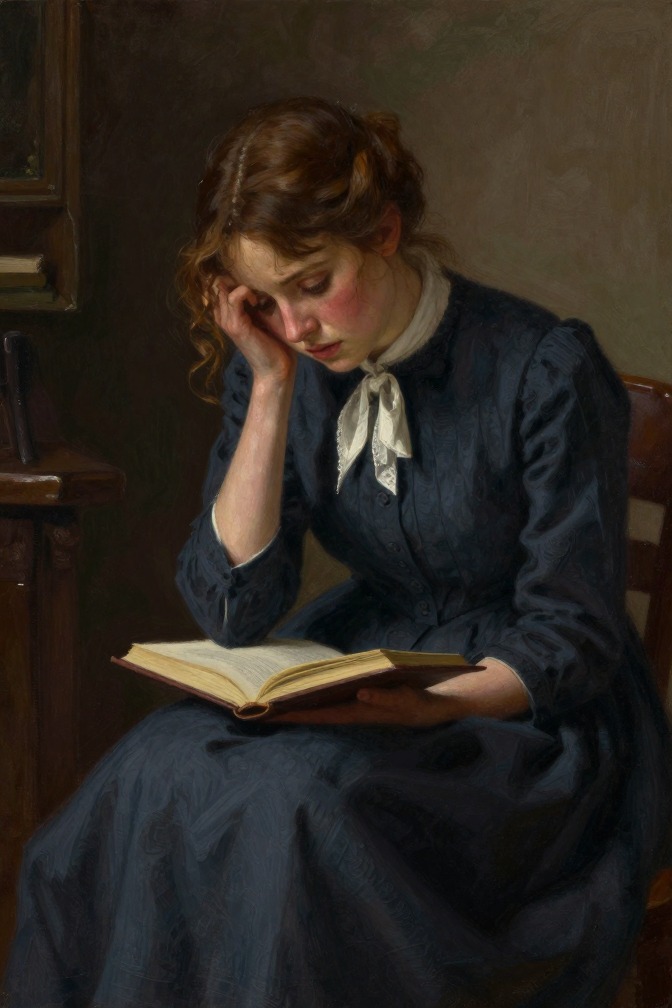
Anne's despair is a recurring emotional state that marks the deepest lows of her journey at Green Gables, arising from rejection, loss, and her own mistakes, and serving as the counterpoint to her characteristic joy and imagination.
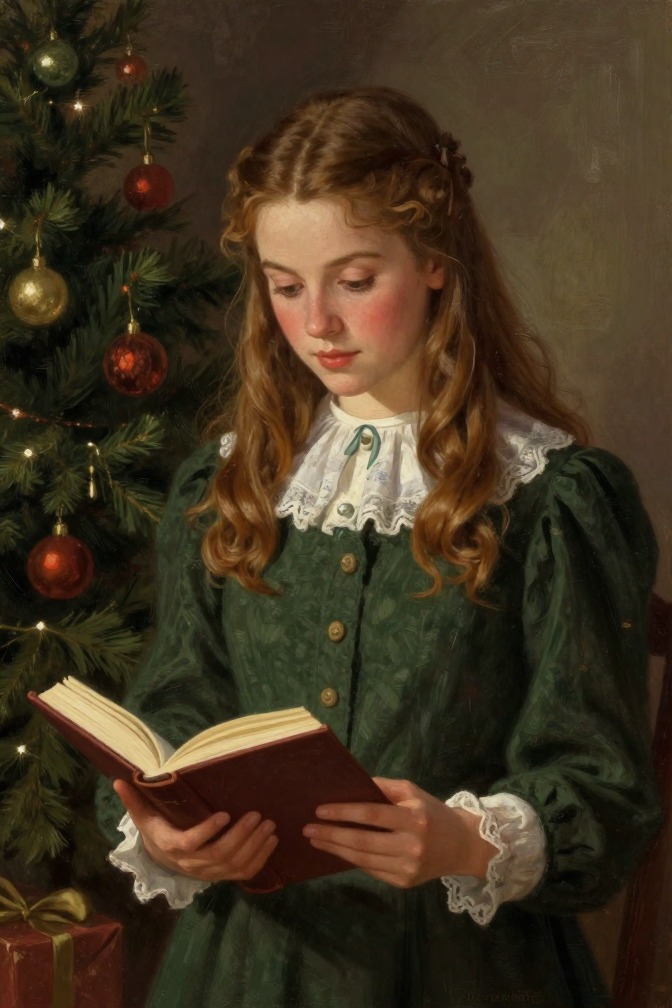
Christmas at Green Gables is a pivotal celebration that crystallizes Anne Shirley's integration into the Cuthbert family and her community, marked by Matthew's gift of a fashionable dress with puffed sleeves—the material symbol of her longed-for belonging—and the triumphant school concert that confirms her place as Avonlea's brightest star.
Winter for Two is the present-day frame narrative of The Notebook, in which an elderly Noah Calhoun reads the story of his and Allie's reunion to Allie, who suffers from Alzheimer's disease and no longer recognizes him. This section transforms the love story into a meditation on memory, identity, and the daily miracle of love persisting through loss.
Allie Nelson is the female protagonist of The Notebook, whose summer romance with Noah Calhoun in 1932 shapes her life, her engagement to Lon Hammond Jr., and her eventual return to Noah, culminating in a marriage that endures through her Alzheimer's disease.
Anne Nelson is the mother of Allie Nelson, a figure whose social conservatism and protective instincts shape the central conflict of the novel. She intercepts Noah Calhoun's letters to her daughter, perpetuating a fourteen-year separation, and her eventual confrontation with Allie at Noah's house forces the novel's climactic choice. Though she acts out of a belief that she is shielding her daughter from a mismatch of class and feeling, her intervention is the primary mechanism that keeps the lovers apart, and her late apology—returning the withheld letters—represents a partial, painful acknowledgment of the harm she caused.
David is one of the five children of Noah Calhoun and Allie Nelson, mentioned in the novel's later sections as an adult who, along with his siblings, listens to his father's story of how their parents reunited. He is part of the family that Noah proudly reflects on, and his presence in the narrative underscores the enduring legacy of Noah and Allie's love.
Poetry is a central motif and emotional language in *The Notebook*, serving as a medium of connection, healing, and identity for Noah Calhoun. It shapes his childhood, defines his love for Allie Nelson, and becomes the primary tool through which he attempts to reach her during her battle with Alzheimer's disease.
Letters are a central narrative device and thematic symbol in *The Notebook*, representing both the painful separation and the enduring love between Noah Calhoun and Allie Nelson. They function as a tangible link across time, a source of misunderstanding, and ultimately a tool for memory and connection in the face of Alzheimer's disease.
The class divide is a central conflict in The Notebook, shaping the characters' choices, relationships, and life trajectories. It manifests as a rigid social barrier that separates Noah Calhoun, a working-class laborer, from Allie Nelson, a wealthy socialite, and it is the primary reason for their initial separation and the source of enduring tension between them.
The ghost is a central metaphor in The Notebook, representing the persistent memory of lost love that haunts Noah Calhoun and shapes his life, relationships, and eventual reunion with Allie Nelson.
Art, particularly painting, is a central motif in The Notebook, representing Allie Nelson's suppressed creative identity, the passionate connection she shares with Noah Calhoun, and the enduring legacy of her spirit. The narrative traces her journey from a gifted young artist whose talent is stifled by social expectations, through a period of abandonment, to a final, celebrated career as one of the best southern painters of the twentieth century, with her work serving as a tangible symbol of her love and a key to her memory.
The cricket is a recurring natural sound in *The Notebook*, serving as an auditory marker of peaceful evenings, romantic intimacy, and the passage of time in Noah Calhoun's life.
The mockingbird appears in The Notebook as a brief but resonant symbol of natural beauty and domestic harmony, serenading Noah and Allie during a peaceful lunch on the porch and later serving as a subtle marker of the enduring love and memory that Noah strives to preserve.
The mosquito is a minor but recurring natural presence in The Notebook, appearing in a single scene during Noah and Allie's reunion dinner, where its nuisance prompts them to move indoors. Its brief mention underscores the sensory realism of the evening and the couple's immersion in the natural world that surrounds Noah's restored home.
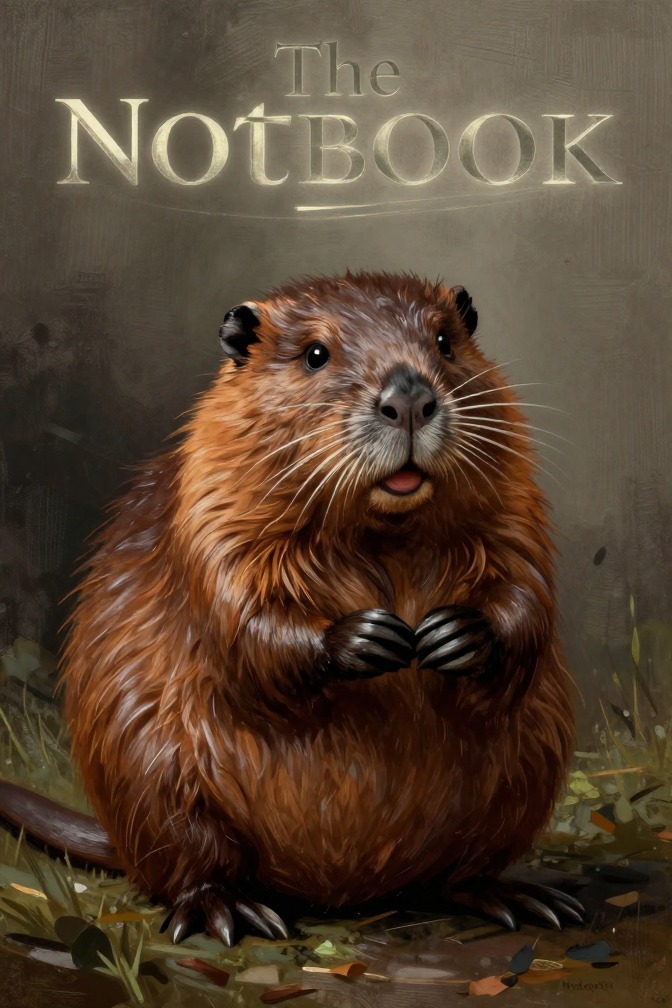
The North American beaver (Castor canadensis) appears in The Notebook as a minor but resonant element of the natural world that surrounds Noah Calhoun's restored plantation home on Brices Creek, contributing to the novel's pervasive sense of place and its thematic contrast between the enduring rhythms of nature and the transience of human life.
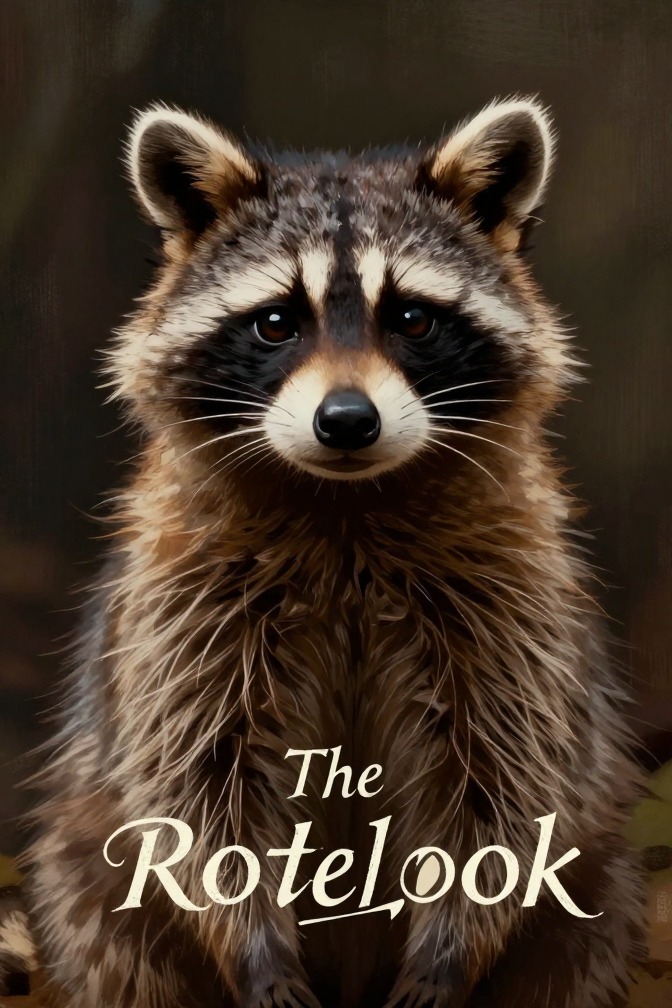
The raccoon is a recurring wild animal in The Notebook, appearing at key moments that frame Noah Calhoun's solitary life and the emotional turning points of his reunion with Allie Nelson. Its presence marks the natural world that surrounds Noah's restored plantation home and the creek, and it serves as a subtle narrative device that punctuates scenes of memory, longing, and the passage of time.
The starling is a recurring bird in The Notebook, appearing at a pivotal moment of Allie's return to New Bern and serving as a natural emblem of the story's themes of memory, instinct, and the persistence of love.
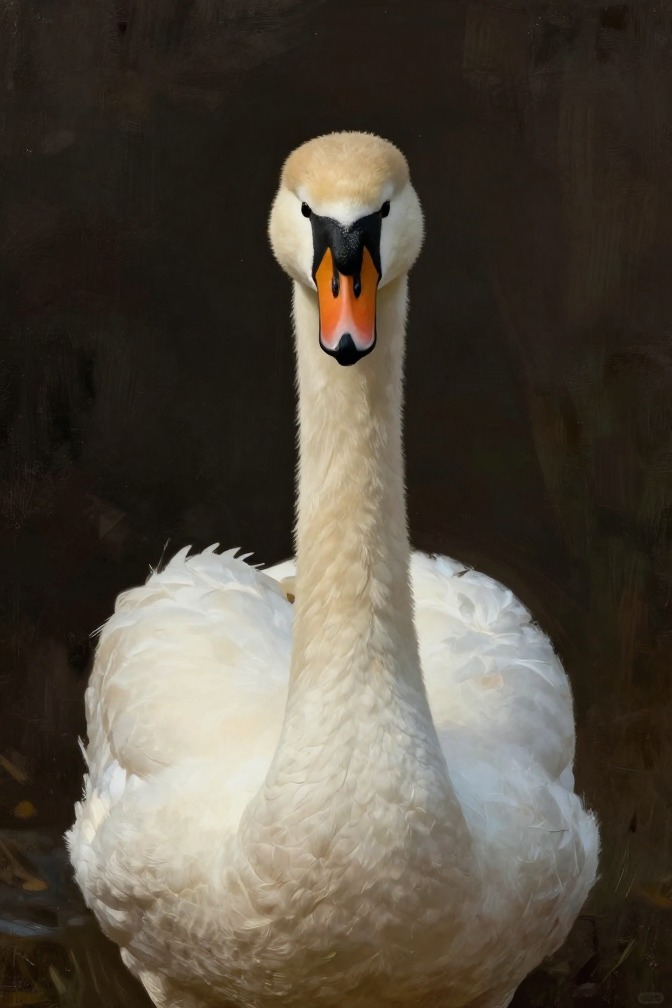
The Tundra swan is a migratory bird that appears in The Notebook as a symbol of natural beauty, instinct, and the possibility of return, most notably during the canoe trip to a hidden lake where thousands of swans and Canada geese surround Noah Calhoun and Allie Nelson.
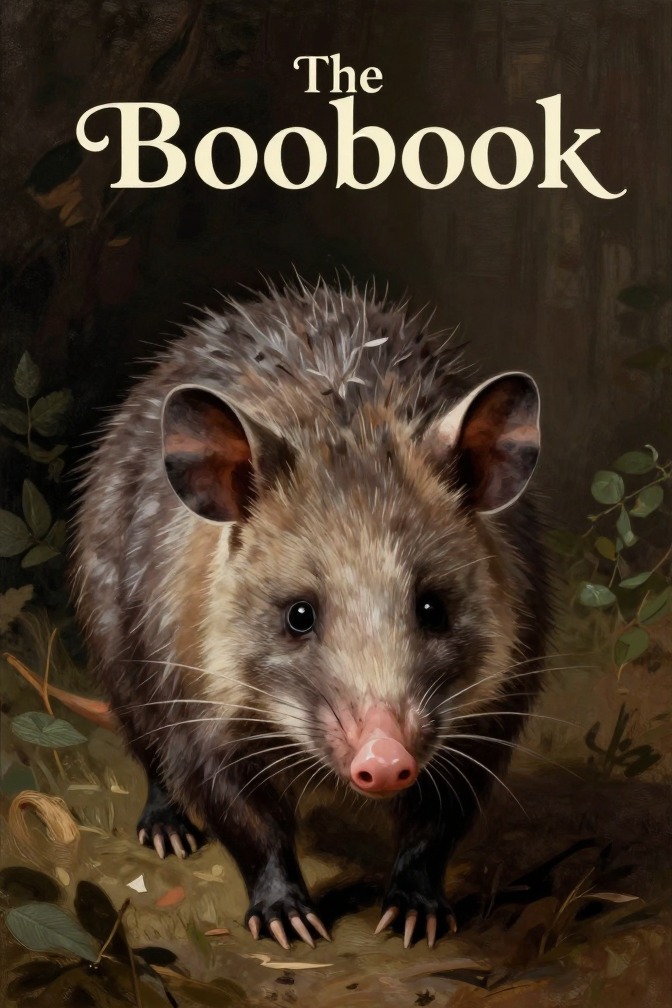
The Virginia opossum appears as a minor but recurring element in the natural landscape surrounding Noah Calhoun's restored plantation home on Brices Creek, contributing to the novel's rich evocation of the North Carolina coastal ecosystem and Noah's deep attunement to the rhythms of the wild.
New Jersey is the state where Noah Calhoun worked for Morris Goldman's scrap yard during the Great Depression and World War II, a period that transformed his economic fortunes and ultimately enabled him to buy and restore the plantation house in New Bern.