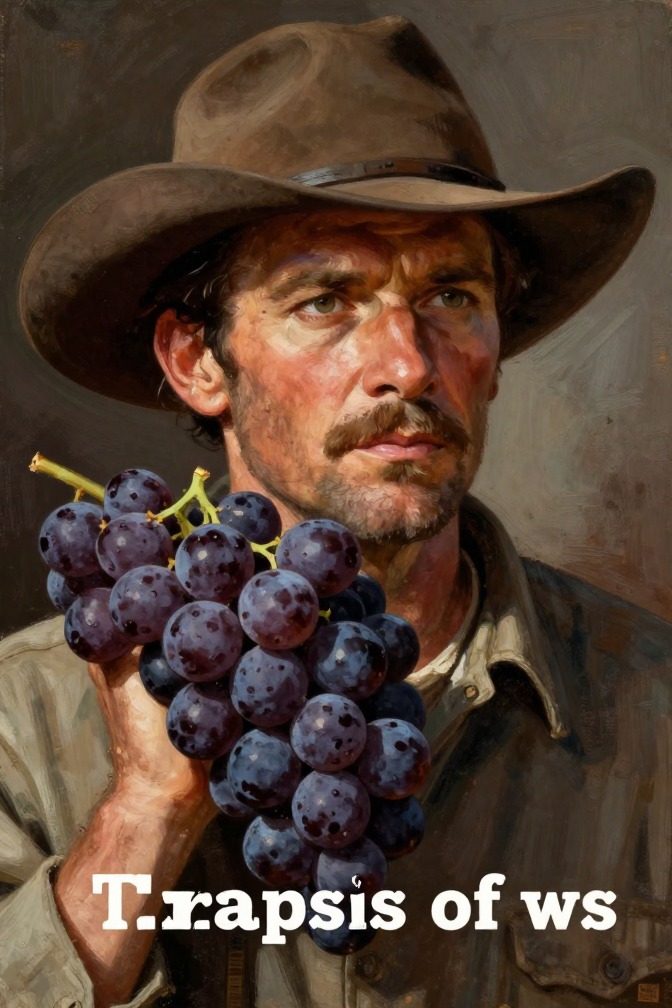
Tom Joad and Jim Casy share a friendship and spiritual mentorship that forms the moral and philosophical core of The Grapes of Wrath. Their relationship begins with a chance meeting on the road and deepens through shared hardship, culminating in Casy's martyrdom and Tom's transformation into a committed agent of collective justice.
Tom Joad's parole from the Oklahoma State Penitentiary at McAlester defines his legal status throughout The Grapes of Wrath, creating a constant tension between his desire to stay with his family and the threat of re-incarceration that forces him into hiding and ultimately into permanent flight.
Christmas appears in The Grapes of Wrath as a marker of the temporal dislocation and emotional poverty of the Joad family's exile, a holiday reduced to a prison joke and a forgotten card, stripped of its traditional warmth and abundance.
The American Civil War (1861–1865) is a foundational historical reference point in John Steinbeck's The Grapes of Wrath, used to measure the depth of the Joad family's American lineage, to frame the dispossession of tenant farmers as a conflict as grave as the nation's bloodiest internal struggle, and to contrast the heroic, land-taking violence of the pioneer past with the impersonal, legalistic violence of the corporate present.
The 1960s mark the period in which John Steinbeck, the author of *The Grapes of Wrath*, died and in which his novel's legacy was consolidated through enduring sales, critical reassessment, and cultural impact, including its adaptation into a Tony Award-winning play and its inclusion in polls ranking it among the premier works of twentieth-century English literature.
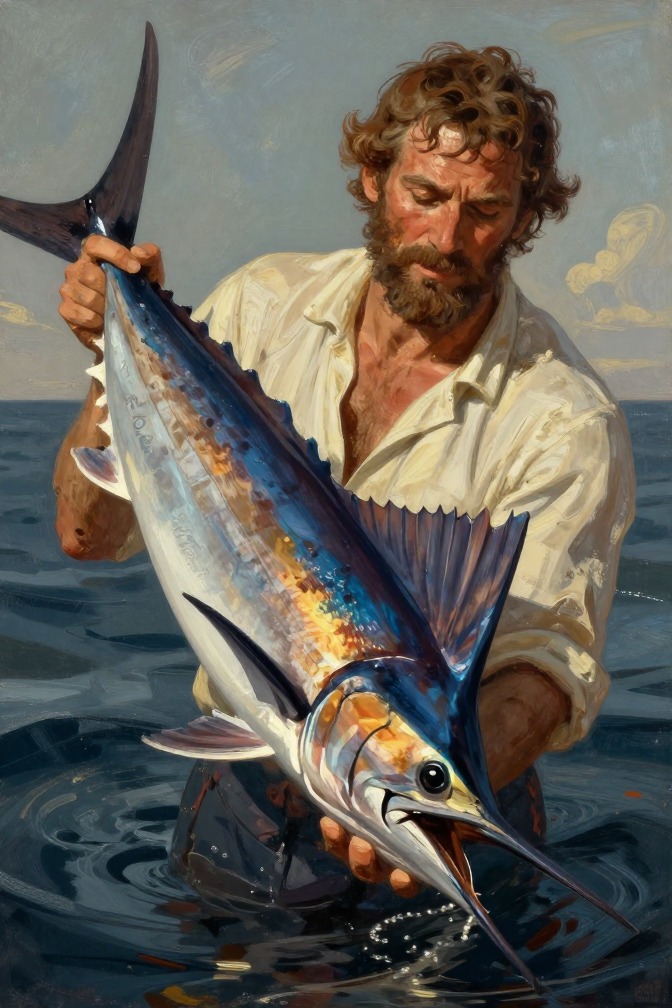
The Hooking of the Marlin is the pivotal action in which Santiago, after eighty-four days without a fish, hooks a gigantic marlin that begins to tow his skiff far out to sea, initiating the central ordeal of the novella.
Charlie Shribner is the dedicatee of Ernest Hemingway's The Old Man and the Sea, appearing in the book's front matter as one of two men to whom the novel is inscribed, a gesture that links the work to Hemingway's personal and professional relationships.
La mar is the Spanish feminine name for the sea that Santiago uses throughout his ordeal, reflecting his intimate, respectful, and sometimes contradictory relationship with the ocean as a living, feminine force that gives or withholds great favors, and as a brother, friend, and enemy.
Martin as a benefactor is the Terrace owner whose unsolicited generosity toward Santiago—providing meals and beer without expectation of return—establishes a pattern of communal support that contrasts with the old man's isolation at sea and underscores the economic interdependence of the fishing village.
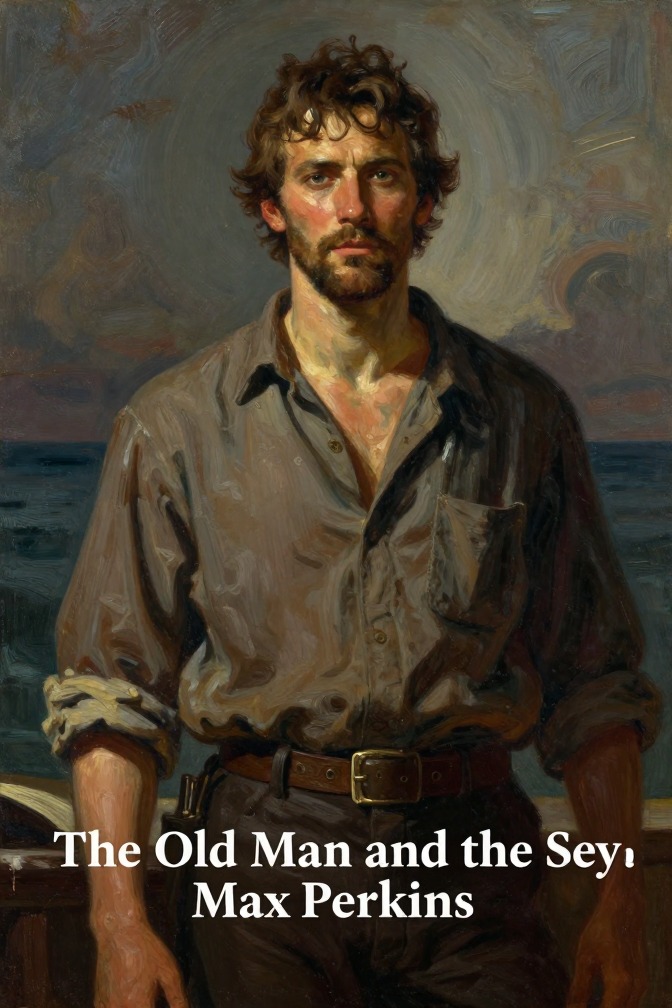
Max Perkins as a dedicatee refers to the dedication of Ernest Hemingway's *The Old Man and the Sea* to Max Perkins, Hemingway's longtime editor and friend, whose influence and support shaped the author's career. The dedication, appearing alongside one to Charlie Shribner, signals the profound professional and personal bond between writer and editor, a relationship that undergirds the novel's themes of loyalty, endurance, and the solitary struggle for meaning.
Pedrico is a fellow fisherman in Santiago's village who, after Santiago's epic struggle with the marlin, is entrusted with the fish's head for use in fish traps, embodying the quiet, practical bonds of mutual aid that sustain the community.
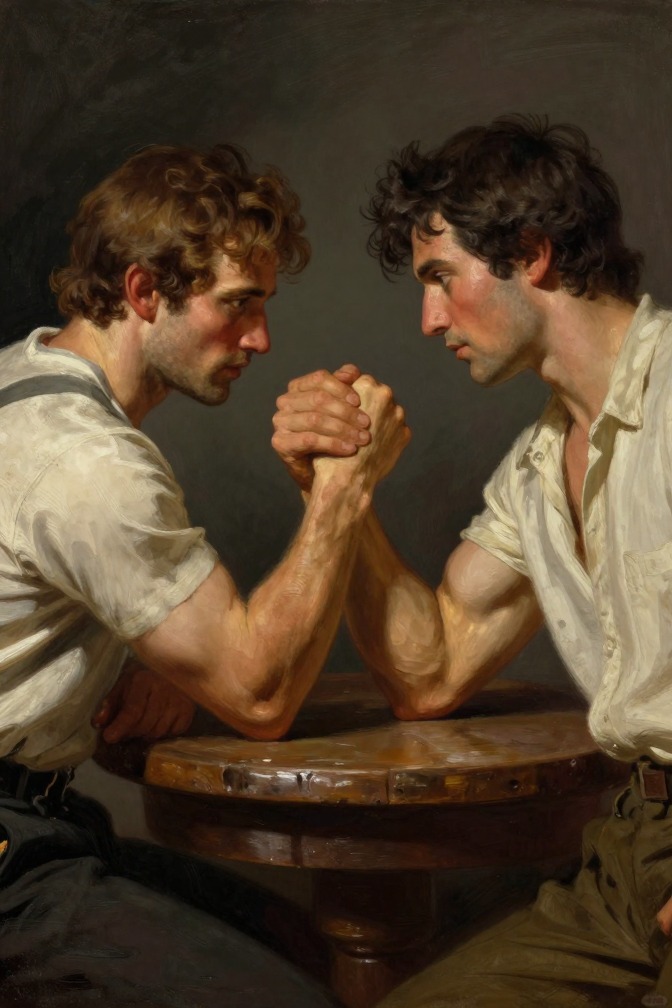
The arm-wrestling match between Santiago and the great negro from Cienfuegos is a defining episode from the old man's past that establishes his legendary strength, his identity as "Santiago El Campeon," and the physical and psychological foundation for his later solitary battle with the marlin. Recalled at a critical moment of exhaustion during the epic struggle at sea, the memory serves as a deliberate act of self-reassurance, linking his present suffering to a past triumph of will and endurance.
In The Old Man and the Sea, baseball functions as a vital cultural and psychological link for Santiago, connecting him to the wider world, to his own past, and to the ideals of heroism and endurance he strives to embody.
In The Old Man and the Sea, baseball serves as a vital link between the isolated Santiago and the wider world, a source of personal mythology and endurance, and a cultural marker that connects his Cuban village to American popular culture, ultimately contrasting the clarity of his heroic struggle with the mundane incomprehension of the tourists who mistake the marlin's skeleton for a shark's.
The bettors are the anonymous spectators who wager on the hand game between Santiago and the great negro from Cienfuegos, a contest that becomes a defining test of strength and will in Santiago's past and a touchstone of his identity as a champion.
The brisa is the light, steady wind that rises during Santiago's ordeal at sea, serving as both a practical aid to his sailing and a symbolic companion that reflects the shifting fortunes of his struggle with the marlin and the sharks.
The code of the fisherman is an unwritten ethical and practical system that governs Santiago's conduct at sea, shaping his relationship with the ocean, his catch, and his community. It demands silent endurance, precise craftsmanship, respectful killing, and a brotherly bond with the fish, while also enforcing a strict economy of gratitude and mutual aid among fishermen. This code is the moral backbone of the novella, defining Santiago's identity and his ultimate, paradoxical defeat.
The current is the ocean's constant, invisible force that shapes Santiago's voyage, his struggle with the marlin, and his return, acting as a collaborator, a conveyor of scent, and a measure of his fate.
In The Old Man and the Sea, the dentuso (Mako shark) is portrayed as a noble, beautiful, and fearless predator, distinct from the scavenging galanos, and its attack on Santiago's marlin represents a direct, honorable confrontation that tests the old man's will and skill.
The great DiMaggio is a recurring symbol in The Old Man and the Sea, representing the ideal of flawless performance under physical adversity. Santiago repeatedly invokes the New York Yankees star as a measure of his own endurance, using DiMaggio's example to sustain his will during the three-day struggle with the marlin and to frame his own suffering as part of a larger code of manhood.
The great well as a fishing spot is a deep oceanic location in the Gulf Stream, known to the fishermen of Havana as a sudden seven-hundred-fathom depression where currents swirl against steep underwater walls, concentrating shrimp, bait fish, squid, and the large game fish that feed on them, and it is the place where Santiago, after eighty-four days without a catch, finally hooks the giant marlin that defines his epic struggle.
The Gulf Stream as a highway is a central concept in The Old Man and the Sea, representing the vast, flowing current that serves as both a physical route for Santiago's journey and a symbolic artery of life, commerce, and connection between Cuba and the wider world.
The Indians of Cleveland are one of the baseball teams that Santiago, the old fisherman, fears and follows in the American League, serving as a recurring reference point in his conversations with the boy Manolin and in his solitary thoughts at sea, linking his struggle to the wider world of professional sport and the heroic standard set by Joe DiMaggio.
The kerosene lights appear in Santiago's memory of his legendary hand-game match against the great negro from Cienfuegos in a Casablanca tavern, illuminating the scene of his greatest physical triumph and serving as a symbol of the raw, communal contest of strength that defined his youth.
The lottery is a recurring symbol of hope, luck, and economic desperation in Santiago's life, appearing as a practical plan to buy a ticket for the eighty-fifth day and as a metaphor for the gamble of existence itself.
The negro from Cienfuegos is the formidable opponent Santiago faced in a legendary hand-wrestling match in Casablanca, a contest that defined Santiago's reputation as "The Champion" and serves as a crucial touchstone for his endurance and will during his battle with the marlin.
The party of tourists who visit the Terrace at the end of the novel see the marlin's skeleton in the water and, misunderstanding what it is, mistake it for a shark, a final ironic misreading that underscores the gap between the old man's epic struggle and the outside world's inability to comprehend it.
The photograph of his wife is a relic of Santiago's past marriage that he has removed from the wall of his shack because seeing it makes him too lonely, yet he keeps it on a shelf under his clean shirt, a gesture that encapsulates his relationship with memory, loss, and the deliberate management of grief.
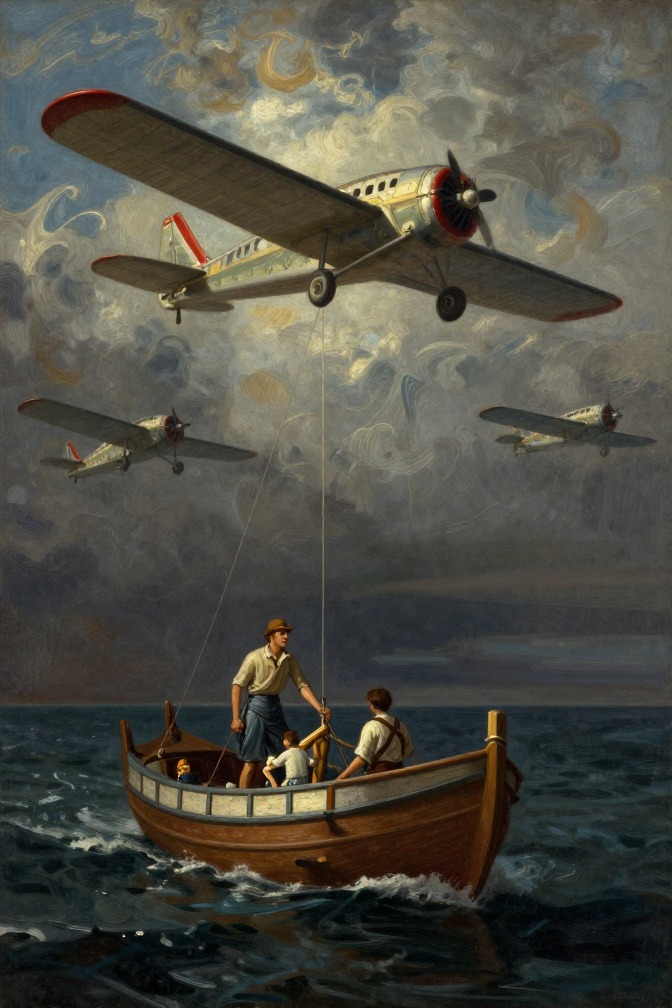
The planes as search vehicles represent the organized, institutional effort to locate Santiago when he fails to return from his fishing expedition, contrasting the solitary nature of his struggle with the communal concern that mobilizes modern technology on his behalf.
The plankton is a recurring natural element in the sea that serves as a vital indicator of marine life, weather, and the old man's connection to the ocean's cycles.