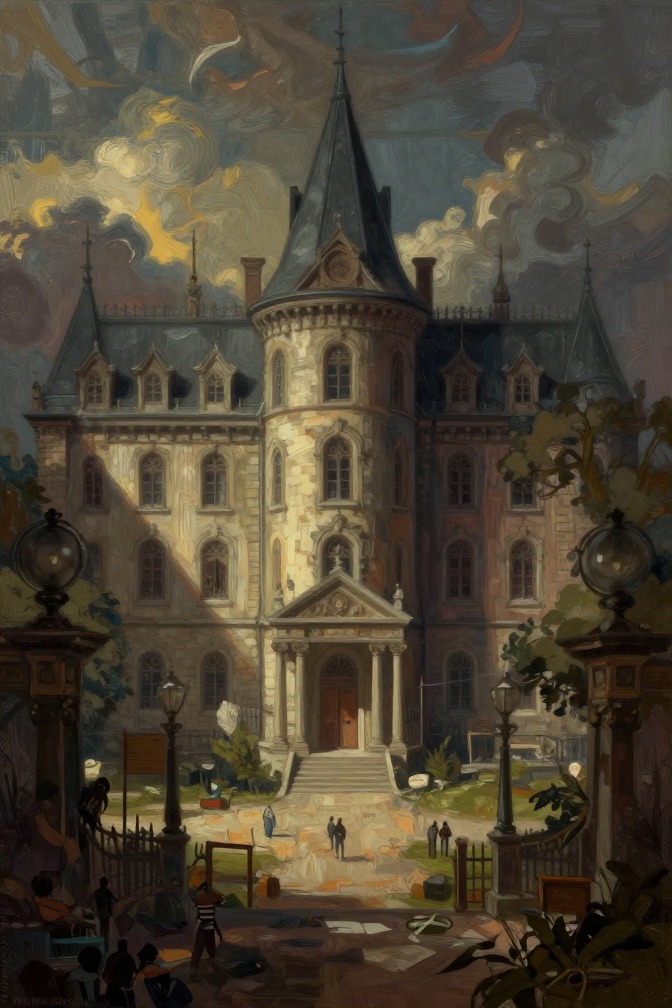
The Madhouse is the institution where Nathaniel is confined after his sanity collapses upon discovering that Olympia is a lifeless automaton, marking the story's decisive descent into irreversible madness.
The Half-moon is a celestial location in the childhood folklore of Nathaniel, serving as the destination where the Sandman carries children's eyes to feed his own offspring. It originates from the nanny's terrifying tale and becomes a central image in Nathaniel's traumatic imagination, later resurfacing in his adult madness as a symbol of his fractured psyche.
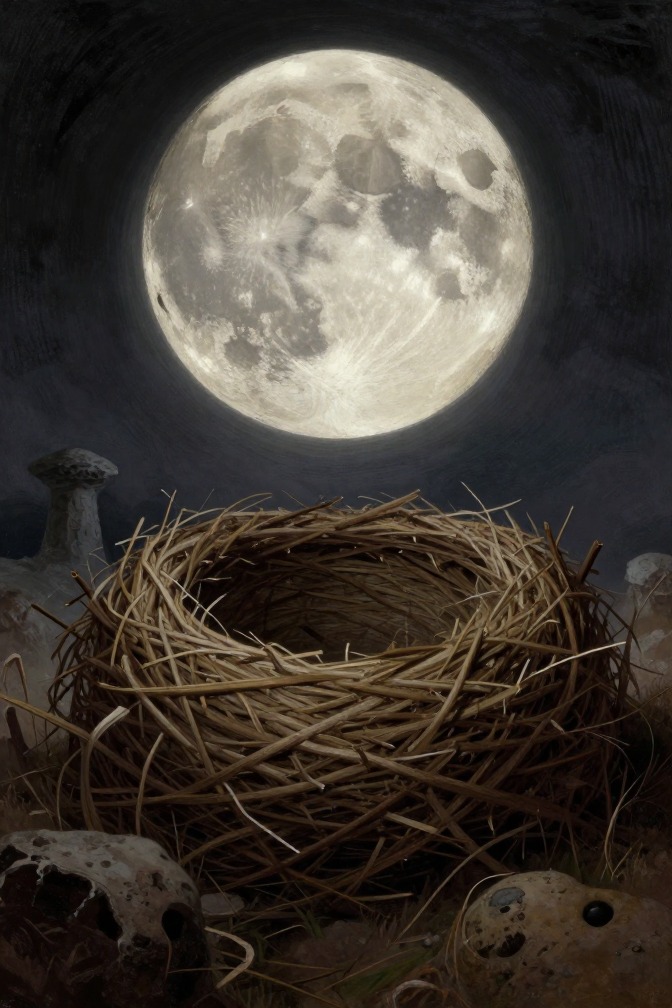
The Nest on the moon is a terrifying location in the Sandman myth, described by Nathaniel's nanny as the place where the Sandman takes the eyes of naughty children to feed his own offspring, who have crooked beaks like owls.
Coppola's looking-glass is a small, finely crafted pocket telescope that Nathaniel purchases from the optician Giuseppe Coppola, who is later revealed to be the sinister Coppelius in disguise. The looking-glass possesses the uncanny power to make distant objects appear with unnatural clarity and to animate the lifeless, transforming Nathaniel's perception of the automaton Olympia and ultimately triggering his final descent into madness and death.
The nine o'clock bedtime rule is a central domestic ritual in E. T. A. Hoffmann's 'The Sandman' that governs the childhood of Nathaniel and his siblings, serving as the nightly trigger for the appearance of the Sandman and the gateway to the story's core trauma.
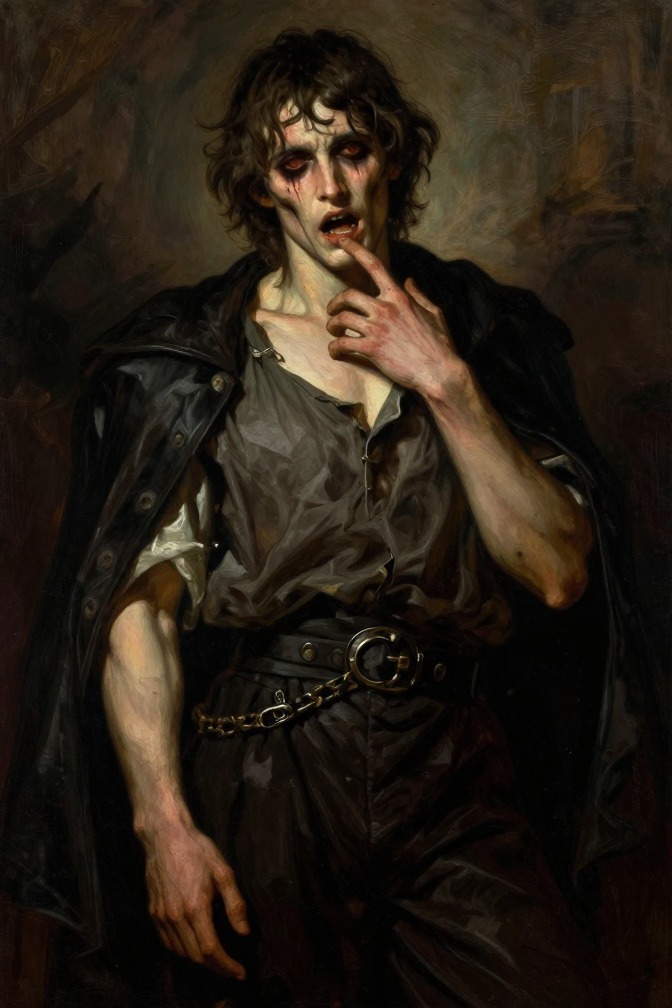
The Sandman's threat is the central, recurring menace in E. T. A. Hoffmann's "The Sandman," a figure of terror that evolves from a nursery bogeyman into a real, destructive force in the life of the protagonist Nathaniel. Originating in a childhood fairy tale told by a nursemaid, the threat is embodied by the sinister lawyer Coppelius, who is revealed to be the Sandman and who ultimately causes Nathaniel's psychological ruin and death.
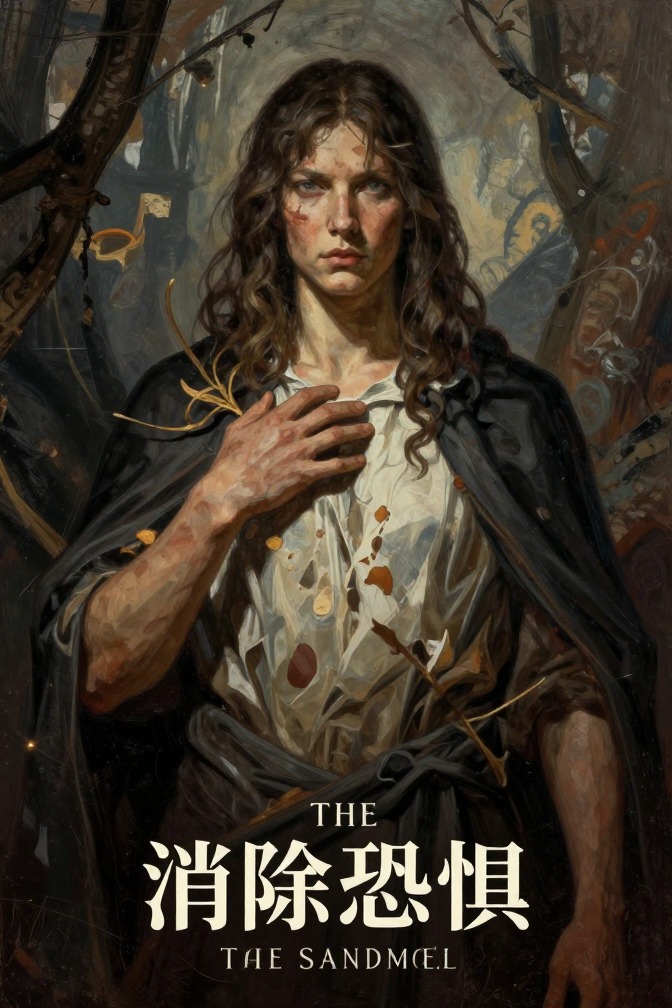
Eliminate fear image is a psychological strategy advocated by Clara in E. T. A. Hoffmann's 'The Sandman', representing her rationalist attempt to counter Nathaniel's terror of the Sandman/Coppelius by denying the external reality of the threatening figure and insisting that belief alone gives it power.
The rule of secrecy from mother is a tacit agreement among Nathaniel, Clara, and Lothar to shield Nathaniel's mother from any knowledge of Coppelius, the man they hold responsible for her husband's violent death. This rule governs the family's emotional life after the tragedy, shaping what can be spoken and what must remain buried, and it is tested by Nathaniel's subsequent encounters with Coppelius's doppelgänger, Coppola.
Nathaniel's madness is the central psychological catastrophe of E. T. A. Hoffmann's 'The Sandman', a recurring state of psychotic raving triggered by the traumatic return of repressed childhood terrors and culminating in his suicide. It manifests as violent delusions, compulsive repetition of the phrase 'wooden doll, turn!', and a fatal inability to distinguish between living beings and mechanical constructs, ultimately destroying his relationship with Clara and his own life.
The revelation of Olympia as an automaton in E. T. A. Hoffmann's 'The Sandman' triggers a widespread social distrust of human figures, as the public becomes paranoid that seemingly living people might be mechanical constructs, leading to a crisis of perception and relationship testing.
Mittelstaedt is a former classmate of Paul Bäumer who, after being wounded and returning to the rear, becomes a non-commissioned officer and exacts a methodical, ironic revenge on his former schoolmaster Kantorek, reversing their old power relationship and exposing the hollowness of pre-war authority.
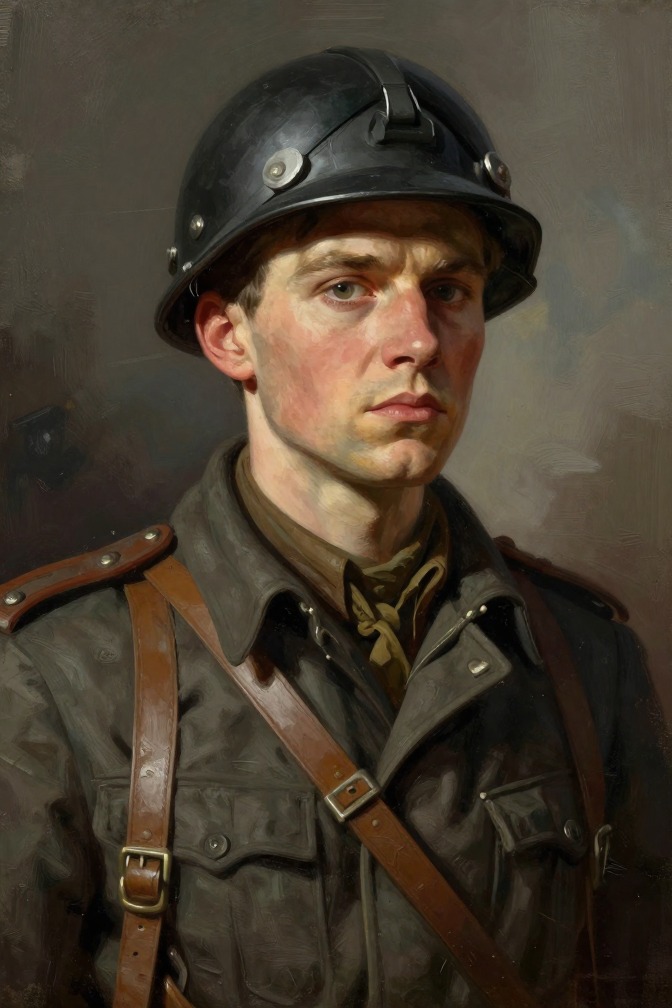
Paul Bäumer is the nineteen-year-old narrator and protagonist of Erich Maria Remarque's All Quiet on the Western Front, a German soldier whose first-person account chronicles the physical and psychological destruction of his generation by the First World War. Through his eyes the novel presents the brutal reality of trench warfare, the collapse of the ideals taught by his elders, and the profound comradeship that becomes the only sustaining force in a world of meaningless death.
The louse is a constant, intimate companion of the soldier in All Quiet on the Western Front, a creature whose presence defines the physical squalor of trench life and becomes a measure of the men's degradation and their grim, practical humor. Far more than a mere pest, the louse is a symbol of the war's relentless, petty assault on the body and dignity, a shared enemy that the soldiers combat with ingenious, communal rituals that both acknowledge their misery and reinforce their bond.
Rats are a pervasive and repulsive presence in the trenches of World War I, serving as both a physical nuisance and a grim symbol of the decay and horror of war. They infest the soldiers' living spaces, destroy their precious food, and are associated with the dead, becoming a constant source of disgust, conflict, and a darkly comic focus for the men's pent-up frustrations.
Stanislaus Katczinsky, the shrewd and resourceful leader of Paul Bäumer's group, dies in the late summer of 1918 from a tiny stray splinter to the head while Paul is carrying him to the dressing station, a death that severs Paul's last deep bond and leaves him utterly alone.
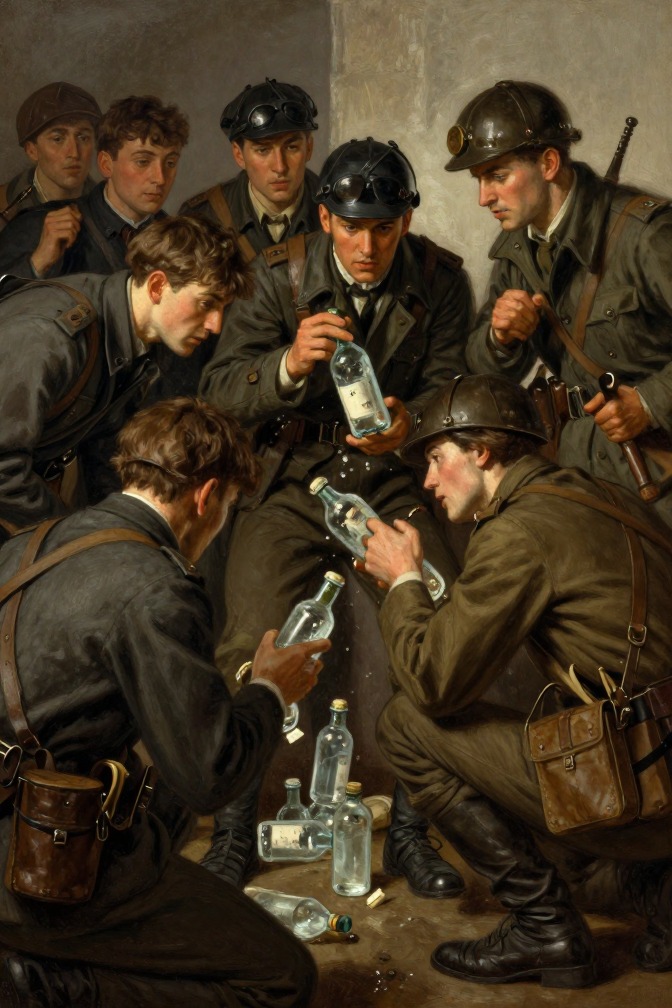
The Hospital Bottle-Throwing Incident is a defiant act of resistance by wounded soldiers in a Catholic hospital, where Paul Bäumer and his comrades throw a bottle to disrupt the morning prayers of the nuns, an event that reveals the deep chasm between the soldiers' brutal reality and the pious, institutional routines of the home front, and introduces Josef Hamacher, a patient whose 'shooting licence'—a medical certificate of periodic insanity—grants him immunity and becomes a symbol of the absurd power structures that persist even in a place of healing.
The Killing of Gérard Duval is the pivotal event in which Paul Bäumer, trapped alone in a shell-hole during a night patrol, stabs and kills a French printer named Gérard Duval in a desperate hand-to-hand struggle, then spends hours beside the dying man in a state of profound psychological crisis that forces him to confront the humanity of his enemy and the moral devastation of war.
The Trench Assault and Capture of Supplies is a pivotal combat event in which Paul Bäumer and his comrades, after enduring a prolonged and devastating bombardment, launch a desperate counter-attack against French forces, overrun an enemy trench, and seize valuable provisions, revealing the transformation of soldiers into instinct-driven fighters and the primal role of food in sustaining their will to survive.
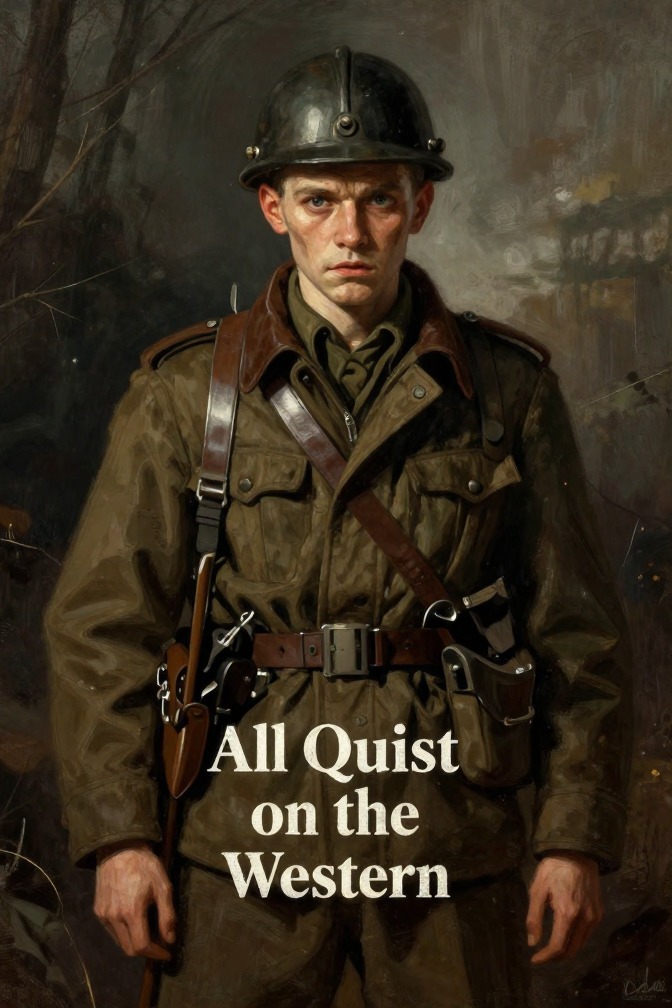
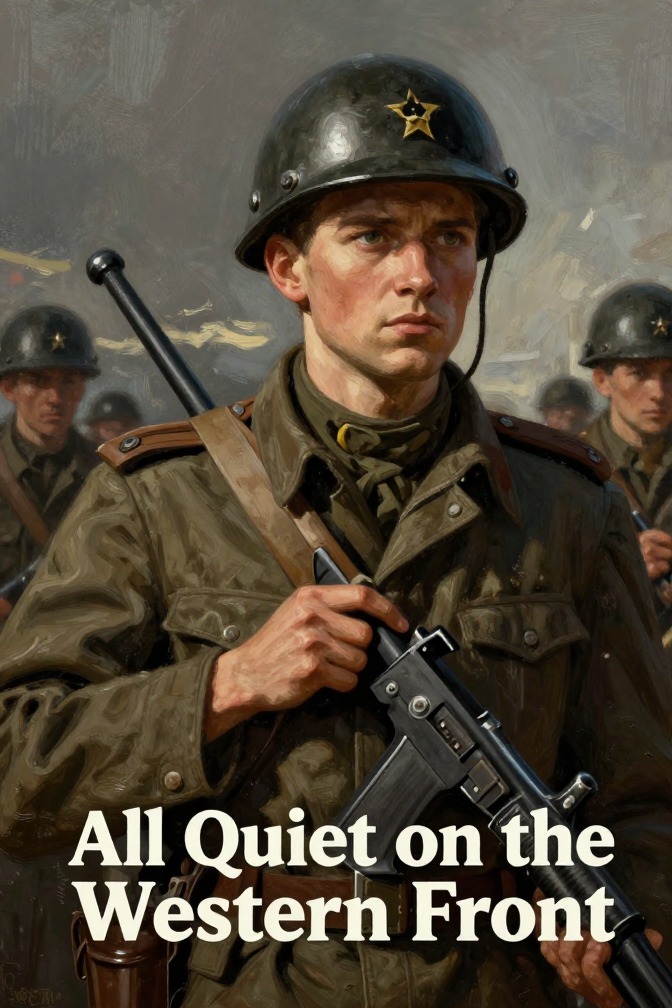
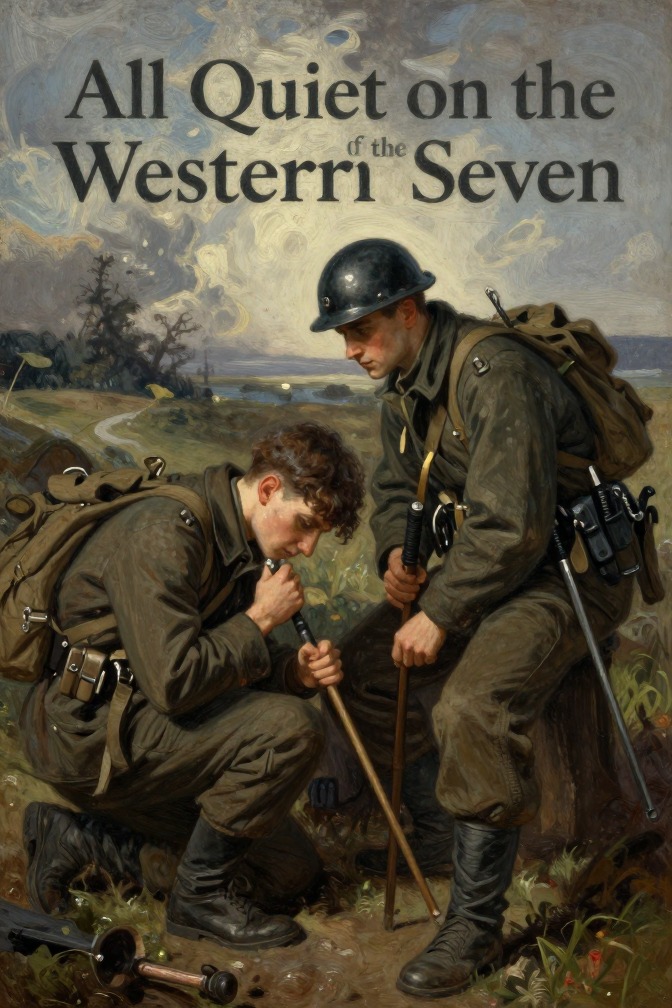
All Quiet on the Western Front is the novel's title and its final, devastatingly ironic army report, encapsulating the chasm between official language and the reality of war.
Valenciennes is a French city that appears in Paul Bäumer's memories as a place of fleeting, almost surreal normalcy—a cinema he recalls during a moment of paralyzing fear on patrol—and as a location where the war's sensory horrors, from the stench of gangrene to the roar of shellfire, are starkly registered.
The violin of a Russian prisoner of war becomes a haunting symbol of shared humanity and the profound melancholy of captivity, its music bridging the gulf between enemy soldiers and evoking a lost world of culture and peace.
The Second Company is the German infantry unit to which Paul Bäumer and his classmates belong; it is the collective body through which the novel tracks the decimation of a generation, shrinking from 150 men to just 32 after a single tour and eventually losing nearly all its original members.
Must obey orders is a foundational rule of military life in All Quiet on the Western Front, enforced from basic training through the front lines and into the hospital. The novel shows how this absolute command strips soldiers of autonomy, subjects them to arbitrary authority, and persists even when orders are absurd, unjust, or lethal. The rule is not merely a background condition but an active force that shapes every character's experience, from the parade-ground humiliations of Himmelstoss to the medical coercion of the hospital surgeon, and ultimately to the senseless deaths that continue until the final day of the war.
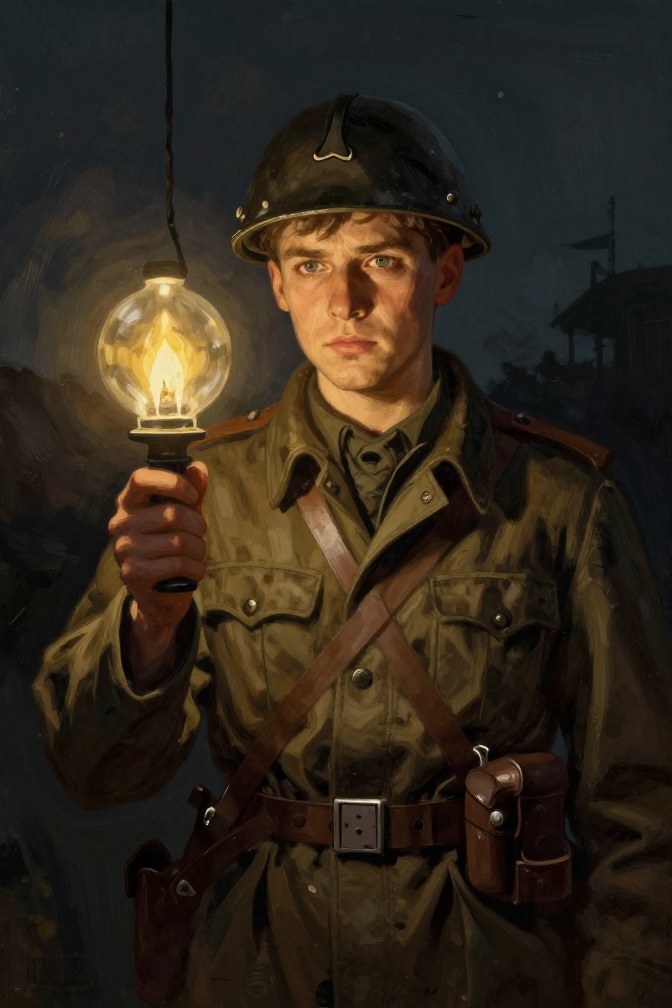
The rule "No lights at night" is a fundamental survival regulation on the Western Front, enforced to prevent enemy artillery and aircraft from detecting troop positions. In the world of All Quiet on the Western Front, this rule is not merely a matter of discipline but a constant, life-or-death condition that shapes every movement, every moment of rest, and the very psychology of the soldiers. The novel repeatedly demonstrates how this prohibition against light governs the soldiers' actions, from the mundane act of smoking to the desperate crawl of a lost patrol, and how its violation, or the fear of it, carries immediate and lethal consequences.
No desertion is the military rule that forbids soldiers from abandoning their posts or fleeing the battlefield, enforced by courts-martial and field gendarmes. In *All Quiet on the Western Front*, this rule is shown as a rigid, often cruel mechanism that punishes desperate acts of homesickness and psychological breakdown, revealing the chasm between the army's legal code and the human reality of the front.
The gas alarm rules are a set of emergency procedures that govern the soldiers' response to gas attacks on the Western Front, representing the mechanized, impersonal horror of modern warfare and the constant, life-or-death vigilance required of the front-line soldier.
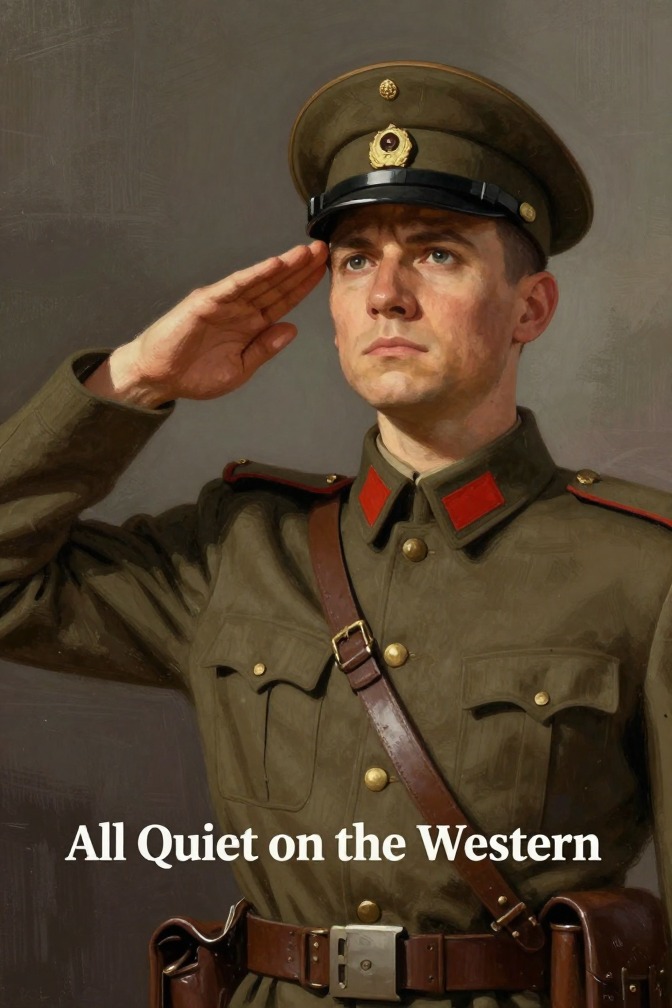
The rule requiring soldiers to salute officers is a central mechanism of military discipline in *All Quiet on the Western Front*, repeatedly shown to be enforced with absurd rigidity behind the lines while becoming meaningless under fire. Paul Bäumer's encounters with this rule—from his brutal training under Corporal Himmelstoss to a humiliating confrontation with a major during his leave—reveal how the army uses saluting as a tool of power and dehumanization, a practice that the front-line soldiers come to resent and subvert.
The Last of the Seven refers to Paul Bäumer's status as the sole survivor among the seven classmates who volunteered together for the war, a position that encapsulates the novel's central theme of a generation destroyed by conflict. By the autumn of 1918, Paul is the last of the seven from his class, a fact that underscores the immense loss and the profound isolation of the surviving soldier, who faces a future without his comrades and without the hopes of youth.
1918 is the final year of World War I, the year in which the novel's protagonist Paul Bäumer is killed and the war ends. It marks the culmination of the physical and spiritual destruction of Paul's generation, a period of intensified suffering, dwindling hope, and the ultimate collapse of the world they knew.
Sienna attacks Ferris is a pivotal action in which Sienna Brooks, having discovered that Jonathan Ferris has been lying to her and secretly communicating with the provost, strikes him in the chest with a martial-arts pressure-point technique inside St. Mark's Basilica, disabling him just as the SRS team arrives and forcing Langdon to flee with her.