The Conspiracy is the secret, collective plan by twelve passengers aboard the Orient Express to execute Samuel Edward Ratchett, the kidnapper and murderer of Daisy Armstrong, as an act of vigilante justice after he escaped legal punishment. This organized plot, conceived by the victims' family and servants, transforms the murder into a ritualized execution carried out by a self-appointed jury, and forms the central revelation and moral crux of the novel.
The Solution is the final explanation of the murder of Samuel Edward Ratchett, propounded by Hercule Poirot in the dining-car of the snowbound Orient Express. Poirot presents two alternative theories: a conventional one involving an outside assassin who escapes, and a second, extraordinary solution that reveals the crime as a collective execution carried out by twelve passengers, each connected to the Armstrong kidnapping tragedy. The second solution is accepted by M. Bouc and Dr. Constantine as the official account to be given to the police, allowing the conspirators to go free.
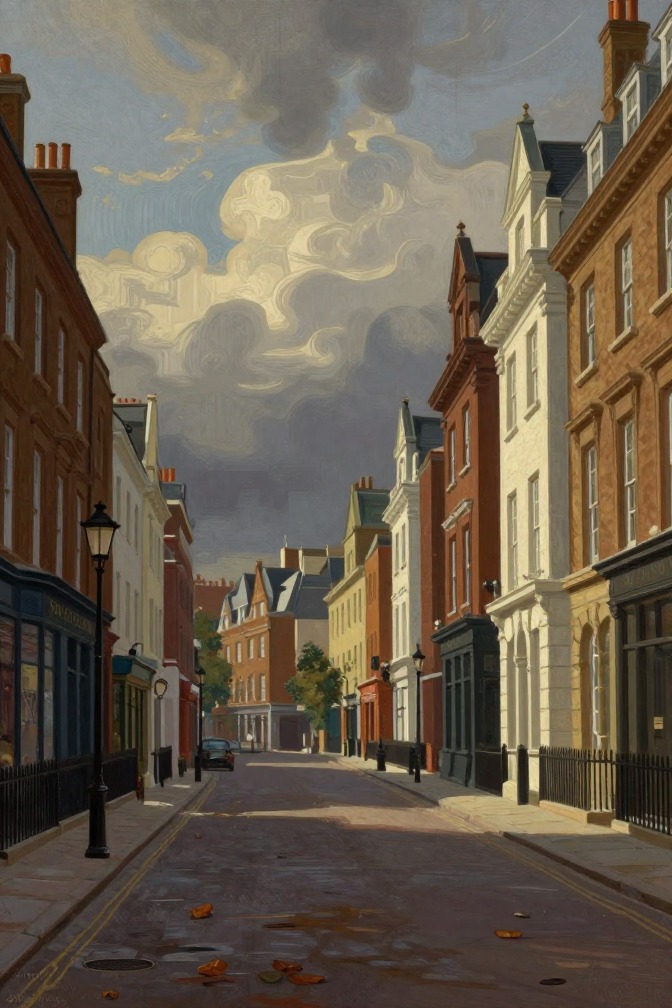
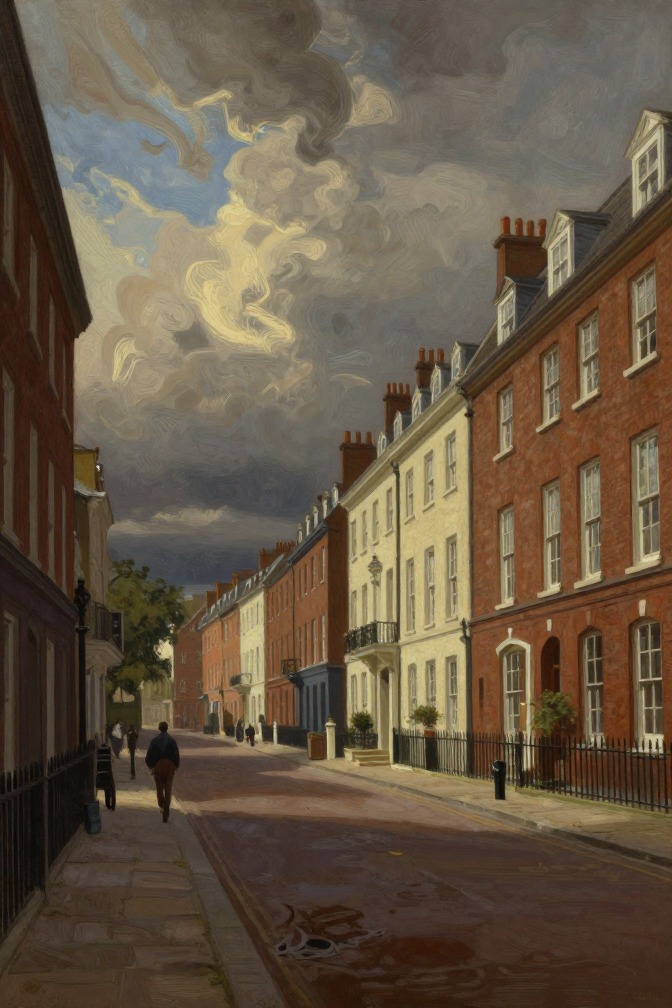
Curzon Street, in London's Mayfair, is the location of Lord Henry Wotton's house, where Dorian Gray visits him and where the novel's philosophical and psychological seduction of Dorian is deepened through Lord Henry's aphorisms and influence.
The Orleans Club is a fashionable London gentlemen's club that serves as a key social setting in the novel, where Lord Henry Wotton has an appointment that he nearly abandons to stay with Dorian Gray, and where the club's atmosphere and Lord Henry's characteristic cynicism are on display.
Wardour Street is a London street where Lord Henry Wotton goes to bargain for a piece of old brocade, an errand that delays his meeting with Dorian Gray and underscores his aesthetic preoccupation with acquiring beautiful objects.
The Royal Academy of Arts is a London institution that Lord Henry Wotton dismisses as too large and vulgar for exhibiting Basil Hallward's portrait of Dorian Gray, serving as a symbol of conventional artistic establishment against which the novel's aesthetic values are measured.
Dr. Hastie Lanyon is a respected London physician and an old friend of Henry Jekyll, whose rationalist worldview is shattered when he witnesses Edward Hyde's transformation into Jekyll, an event that destroys his health and leads to his death.
Inspector Newcomen is the Scotland Yard detective who investigates the Carew murder case, accompanying Mr. Utterson to Hyde's Soho residence and uncovering crucial evidence that confirms Hyde's guilt.
Mr. Guest is Mr. Utterson's head clerk, a minor but pivotal character whose expertise in handwriting analysis reveals the crucial link between Dr. Jekyll and Edward Hyde.
Sir Danvers Carew is a distinguished Member of Parliament and client of Mr. Utterson whose brutal murder at the hands of Edward Hyde serves as the story's central crime, triggering the police investigation that exposes the deadly consequences of Henry Jekyll's experiment.
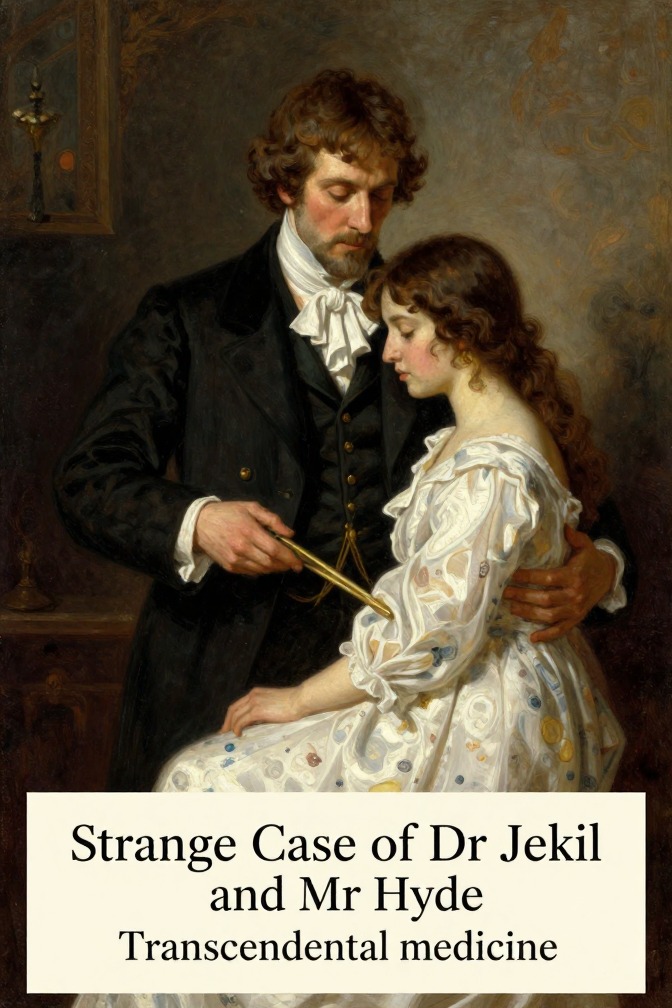
Transcendental medicine is a term used by Dr. Hastie Lanyon to dismiss Henry Jekyll's scientific work, representing the clash between materialist and mystical approaches to science that lies at the heart of the novel's exploration of human duality.
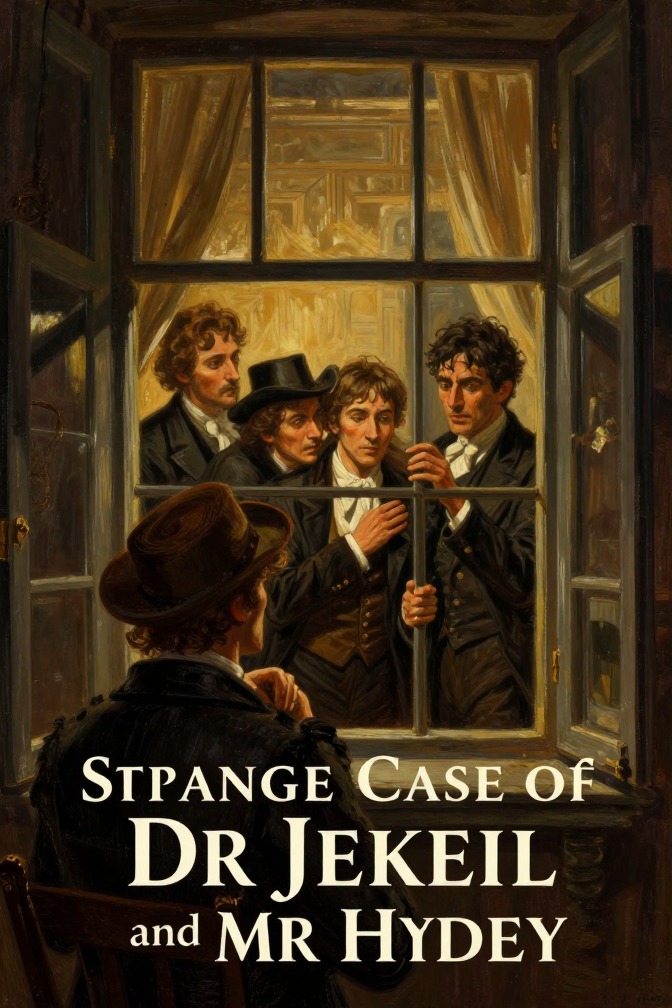
The Incident at the Window is a brief but pivotal scene in which Mr. Utterson and Mr. Richard Enfield, during their Sunday walk, see Dr. Jekyll at a window of his laboratory, only to witness his expression transform into one of abject terror before the window is violently shut, confirming that Jekyll is in a state of extreme and inexplicable distress.
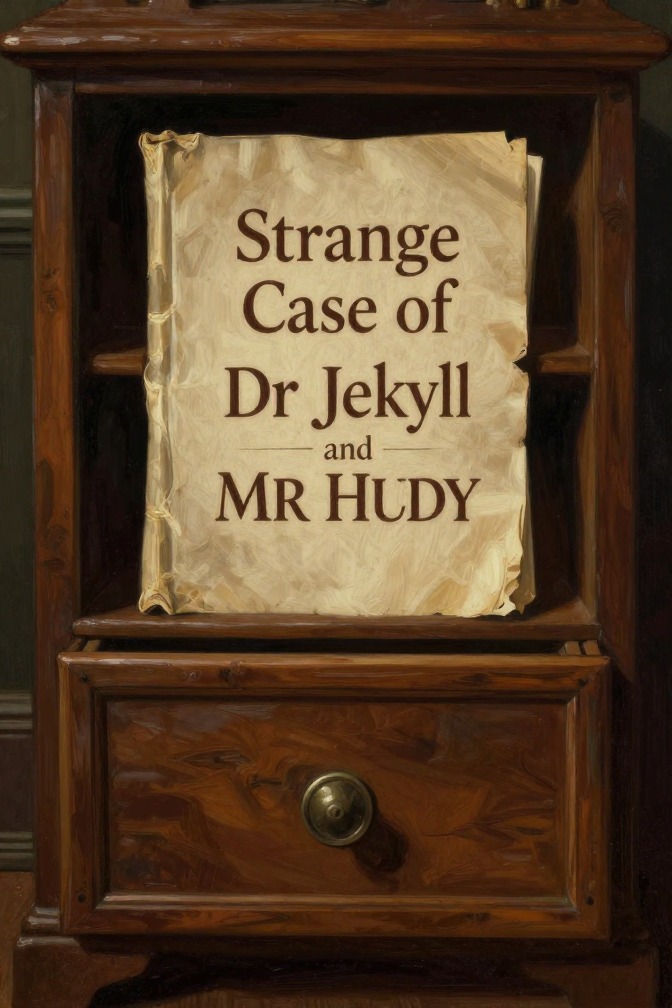
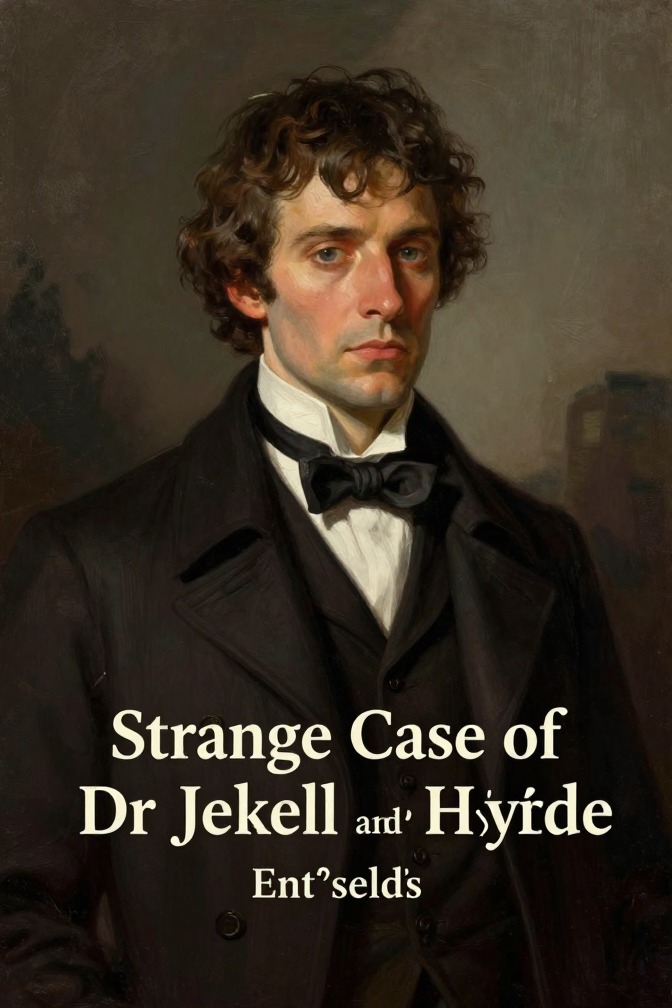
The thorough and primitive duality of man is the central philosophical concept in Robert Louis Stevenson's Strange Case of Dr Jekyll and Mr Hyde, articulated by Henry Jekyll in his final confession as the foundational truth that man is not truly one but truly two, a belief that drives his experiments and ultimately leads to his destruction.
The phrase "the very pink of the proprieties" is used by Mr. Richard Enfield in Robert Louis Stevenson's Strange Case of Dr Jekyll and Mr Hyde to describe the public reputation of the man who signed the cheque compensating the family of the child Hyde trampled, a figure Enfield later reveals to be Dr. Henry Jekyll. The expression encapsulates the stark contrast between Jekyll's esteemed social standing and the sordid, criminal affair in which his name is implicated, serving as a key piece of evidence in the novel's exploration of Victorian respectability and hidden vice.
The cheval-glass in Dr. Jekyll's cabinet is a pivotal object that bears witness to the physical transformations between Henry Jekyll and Edward Hyde, serving as a mirror of identity, self-recognition, and the horror of duality.
The crushed phial is the physical object found in the hand of Edward Hyde's corpse in the cabinet, whose contents—a cyanide-like poison—confirm that Hyde has committed suicide rather than face execution, and whose presence provides the final, material proof that the dual identity of Henry Jekyll and Edward Hyde has ended in self-destruction.
The drawer from the cabinet is a crucial object in the story, containing the transformative drug that allows Henry Jekyll to become Edward Hyde. Its retrieval by Dr. Lanyon, under Jekyll's desperate instructions, leads directly to Lanyon's witnessing of the transformation and his subsequent death.
The kitchen poker is a mundane household object that, in the climactic scene of Robert Louis Stevenson's Strange Case of Dr Jekyll and Mr Hyde, is repurposed as a weapon of forcible entry, symbolizing the violent breach of secrecy that defines the story's final confrontation.
The Hyde–Carew murder is the pivotal crime in Robert Louis Stevenson's Strange Case of Dr Jekyll and Mr Hyde, a brutal, unprovoked bludgeoning of the elderly, well-connected Sir Danvers Carew by Edward Hyde, which transforms the story from a mystery of character into a manhunt and forces the revelation of Hyde's true nature.
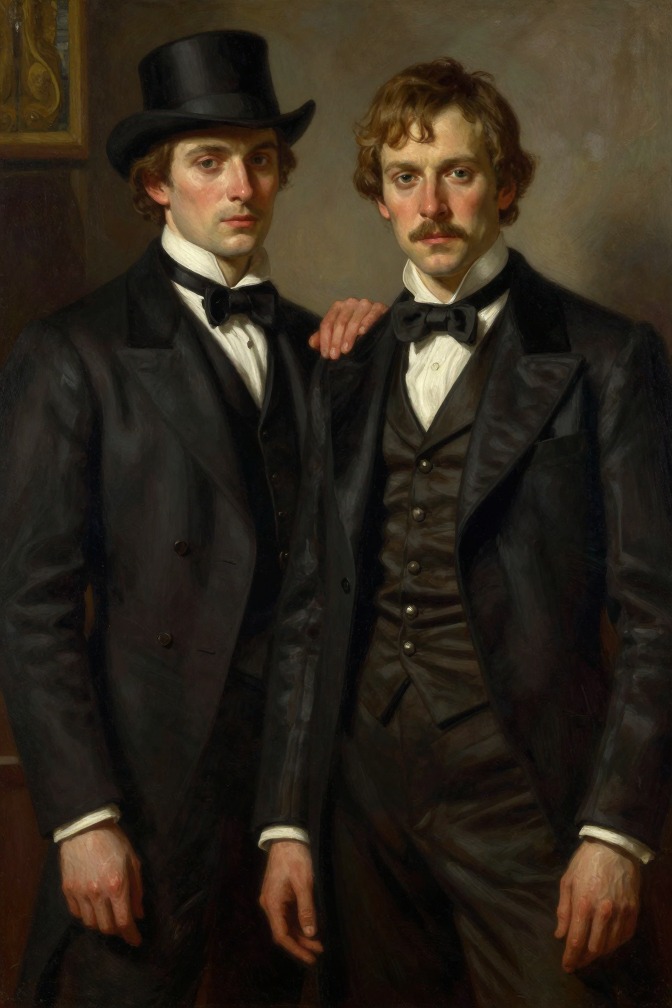
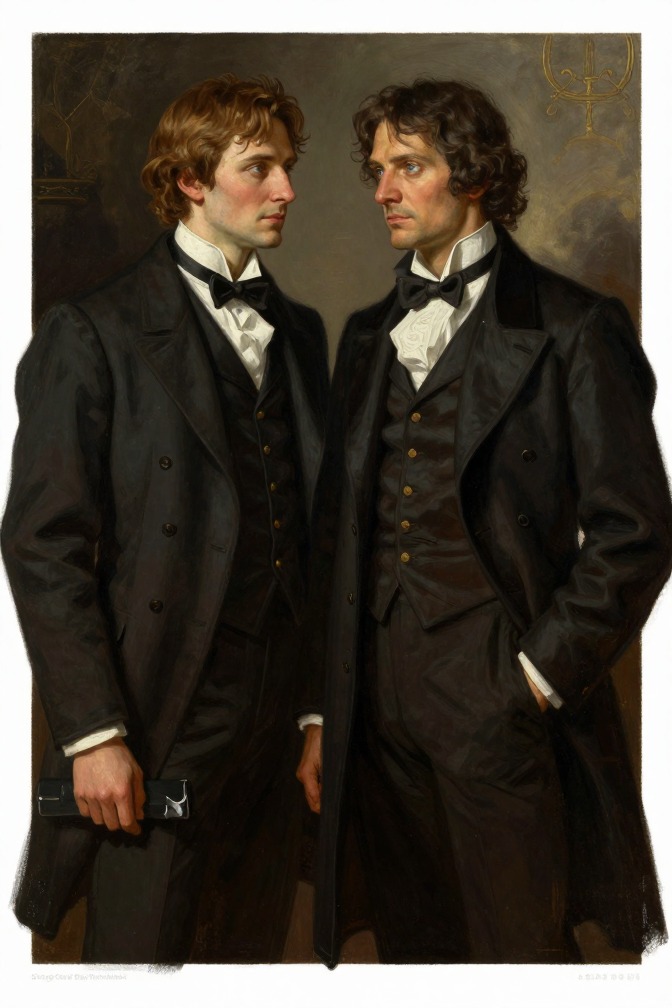
The Jekyll–Hyde relationship is the central, paradoxical bond of Robert Louis Stevenson's novella, in which the respected Dr. Henry Jekyll and the depraved Edward Hyde are revealed to be the same person, with Hyde as the physical embodiment of Jekyll's repressed evil. This relationship drives the plot's mystery and horror, embodying the story's exploration of human duality, the consequences of unchecked scientific ambition, and the impossibility of separating good from evil within a single soul.
The Utterson–Poole relationship is a crucial alliance of trust and decisive action in the final crisis of the novel, transforming the lawyer's cautious observation into a forceful intervention that uncovers the truth of Henry Jekyll's fate.
Enfield's rule is a personal principle of discretion articulated by Mr. Richard Enfield during his Sunday walk with Mr. Utterson, stating that the more a matter resembles Queer Street, the less one should inquire about it.
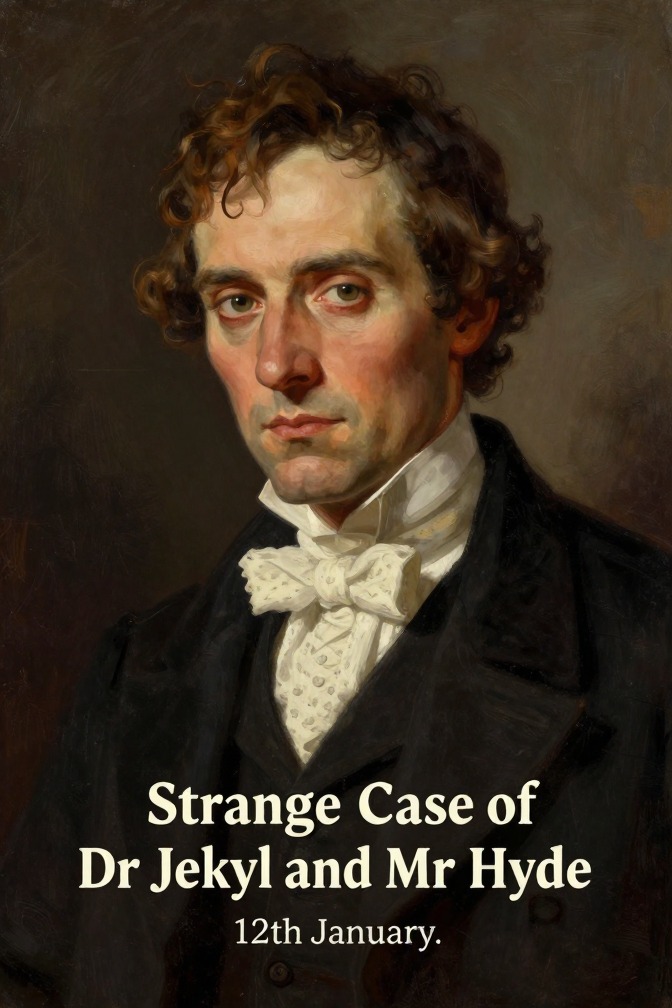
The 12th January marks a pivotal moment in the narrative, as it is the date on which Dr. Henry Jekyll, after a period of apparent reformation, experiences an involuntary transformation into Edward Hyde while sitting in Regent's Park, an event that signals the irreversible collapse of his dual existence and the final victory of his evil side.
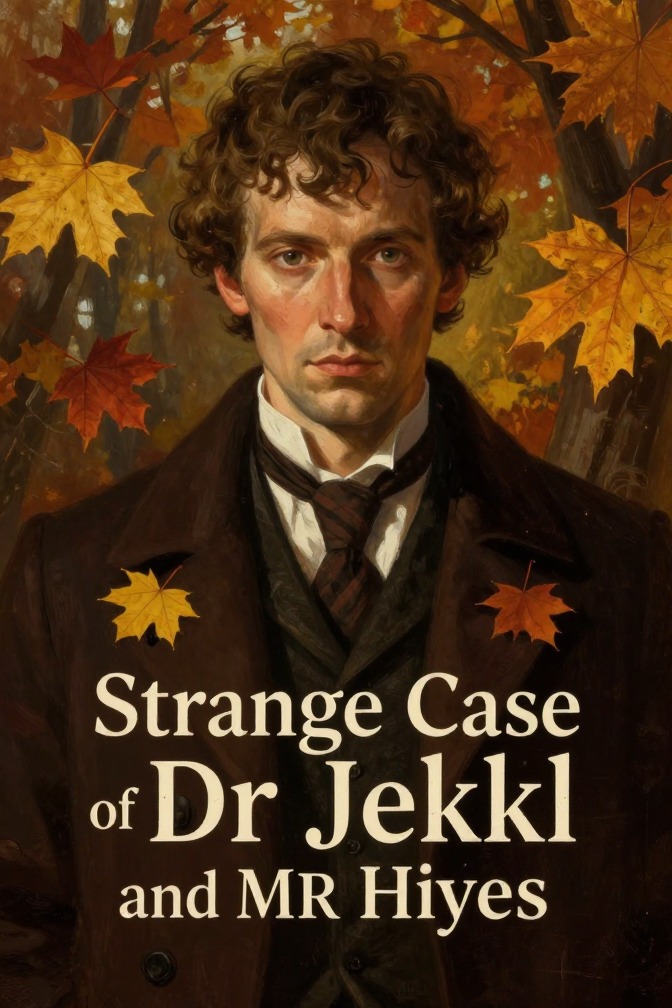
Autumn in *The Strange Case of Dr Jekyll and Mr Hyde* is the season of the Carew murder case, a time of violent crime and moral decay that marks the beginning of the end for Henry Jekyll.
Charley Bates, a young member of Fagin's gang, is introduced as a lively, laughter-prone accomplice to the Artful Dodger, whose comic energy and eventual moral awakening trace a trajectory from thoughtless criminality to genuine reform.
Mr. Sowerberry is the parochial undertaker who takes Oliver Twist as an apprentice, a gaunt, threadbare man whose professional jocosity and deference to his wife mask a business built on the parish's new feeding system, which produces narrower coffins and more frequent deaths.
The merry old gentleman is the ironic, affectionate epithet by which the narrator of Oliver Twist repeatedly refers to the villainous fence and criminal mastermind Fagin, a figure who presides over a den of child thieves in London and whose outwardly jovial demeanor masks a ruthless, manipulative, and predatory nature.
Cattle appear in Oliver Twist as a recurring element of the urban and rural landscape, often associated with the brutal commerce of Smithfield Market and the harsh conditions of the poor. They serve as a symbol of the raw, indifferent forces of the marketplace and the physical suffering that pervades the lives of the lower classes.
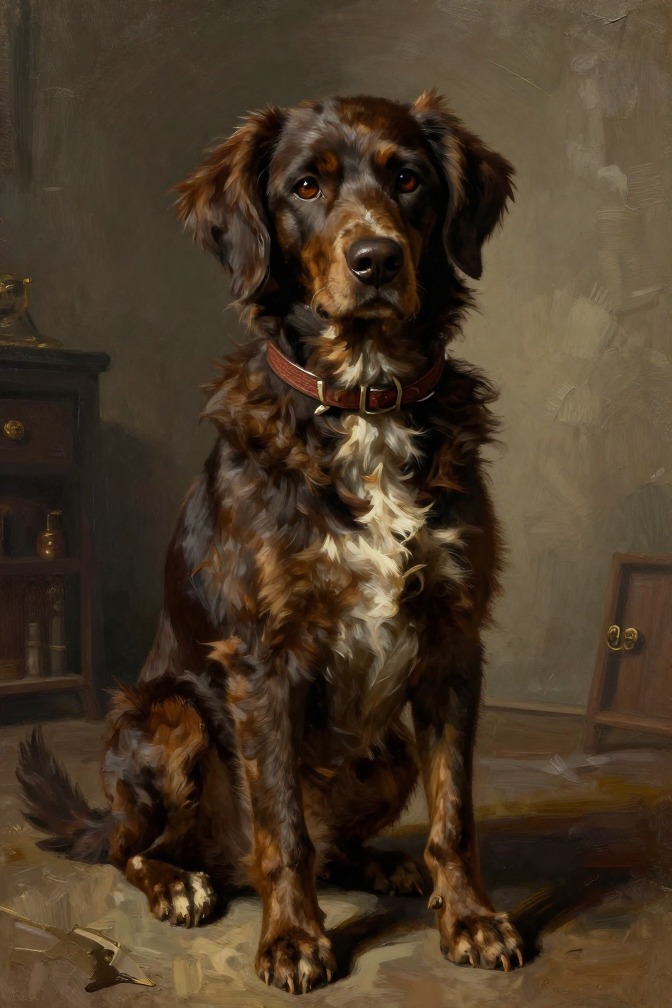
The dog in Oliver Twist, most notably Bull's-eye, Bill Sikes's animal companion, functions as a complex symbol of brutality, loyalty, and the inescapable consequences of a criminal life. More than a mere pet, the dog mirrors Sikes's own violent nature, serves as an extension of his threatening presence, and ultimately becomes a witness to his master's moral and physical collapse, meeting its own death in a final, grim echo of Sikes's demise.
Horses appear in Oliver Twist as part of the novel's detailed depiction of 19th-century London's transportation and labor systems, serving as both practical vehicles for travel and symbolic markers of social class and economic activity.