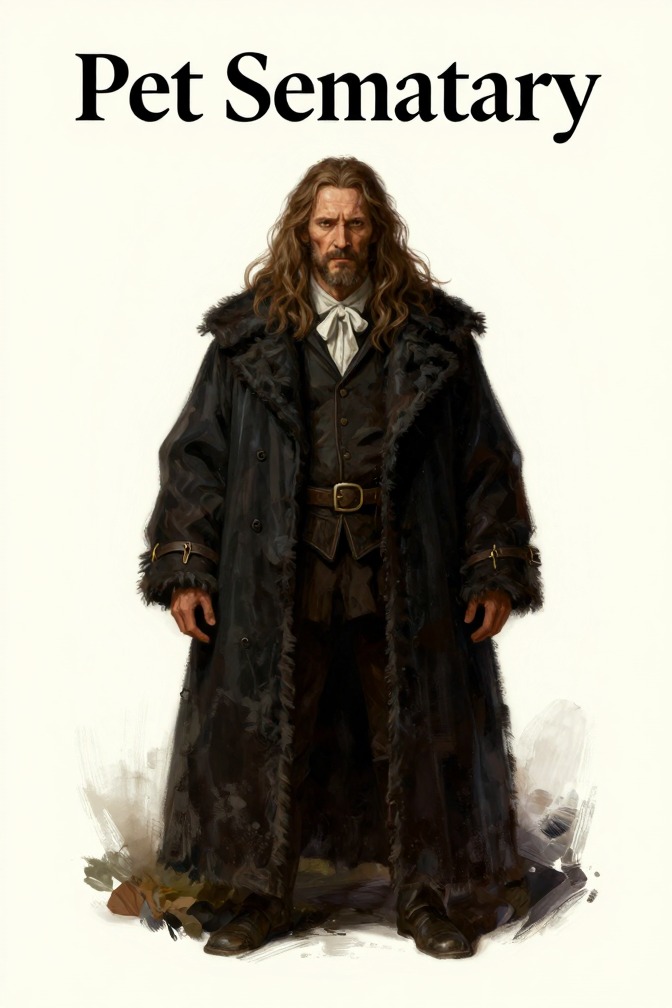
Aroostook County is a remote, heavily forested region in northern Maine that serves as the setting for the most extreme and dangerous part of the wilderness beyond the Pet Sematary. It is the place where the Micmac burying ground's power is strongest, and it is associated with the Wendigo, a malevolent spirit of the north country. The county is mentioned in the context of a gruesome story about a corpse that was mishandled during transport, and it represents the ultimate, untamed frontier of the novel's supernatural geography.
St. Louis is the Midwestern city to which Steve Masterton relocates in the aftermath of the Ludlow catastrophe, a geographical displacement that marks his permanent flight from the horror he witnessed and his inability to integrate that experience into conscious memory.
Brewer is a small city in Maine, located across the Penobscot River from Bangor, that serves as a site of mundane errands and practical preparations in the novel, including Louis Creed's purchase of grave-robbing tools at a hardware store.
Orono is the Maine college town where Louis Creed takes up his post as director of University Medical Services, and where the first catastrophic event of the novel—the death of student Victor Pascow—occurs on his very first day of work, setting in motion the supernatural chain that will eventually destroy his family.
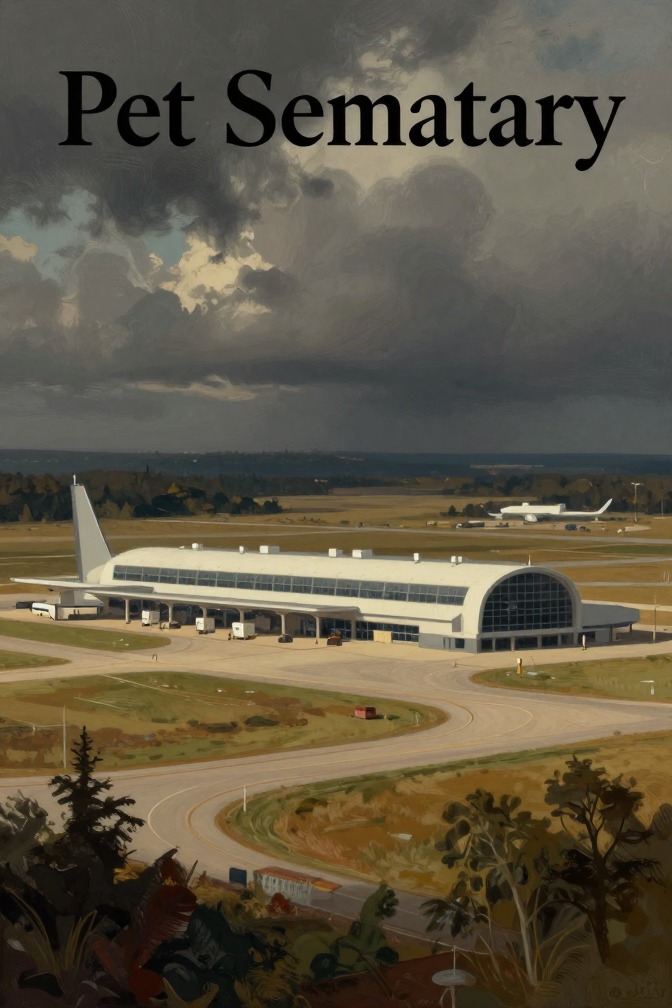
O'Hare Airport is the Chicago airport where Rachel Creed and her daughter Ellie arrive after flying from Bangor, Maine, following the funeral of Gage Creed. It is the setting where Ellie's psychological distress manifests most acutely, as she experiences a nightmare on the plane and then suffers a breakdown in the terminal, revealing her precognitive fears about her father Louis and the supernatural forces gathering in Ludlow.
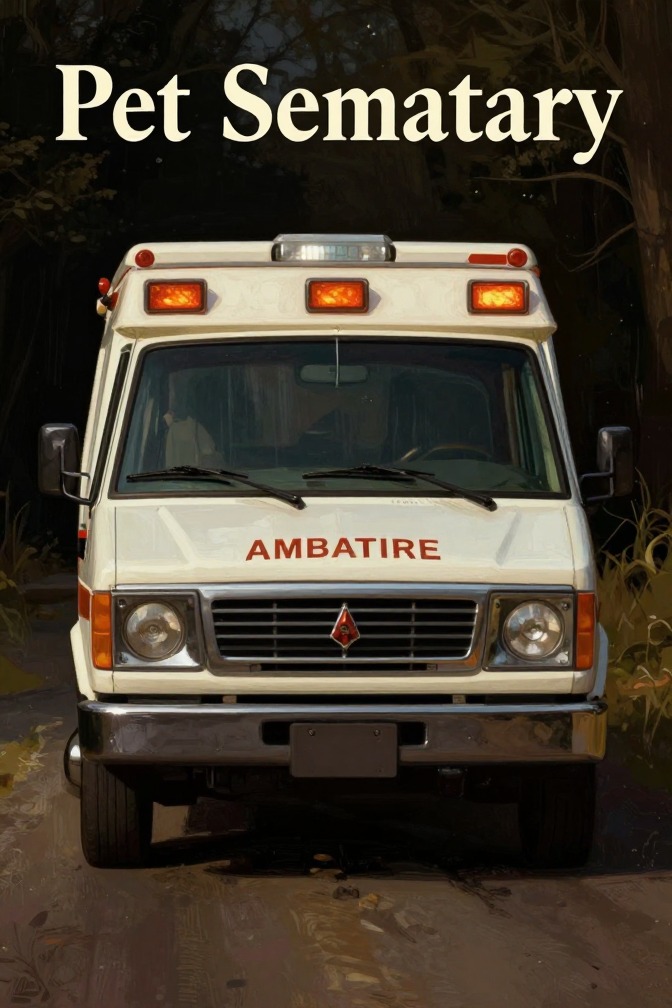
The ambulance at the University of Maine's Student Medical Center is a critical piece of infrastructure that fails at a crucial moment, symbolizing the inadequacy of institutional systems in the face of sudden, catastrophic death and foreshadowing the novel's central theme of helplessness against mortality.
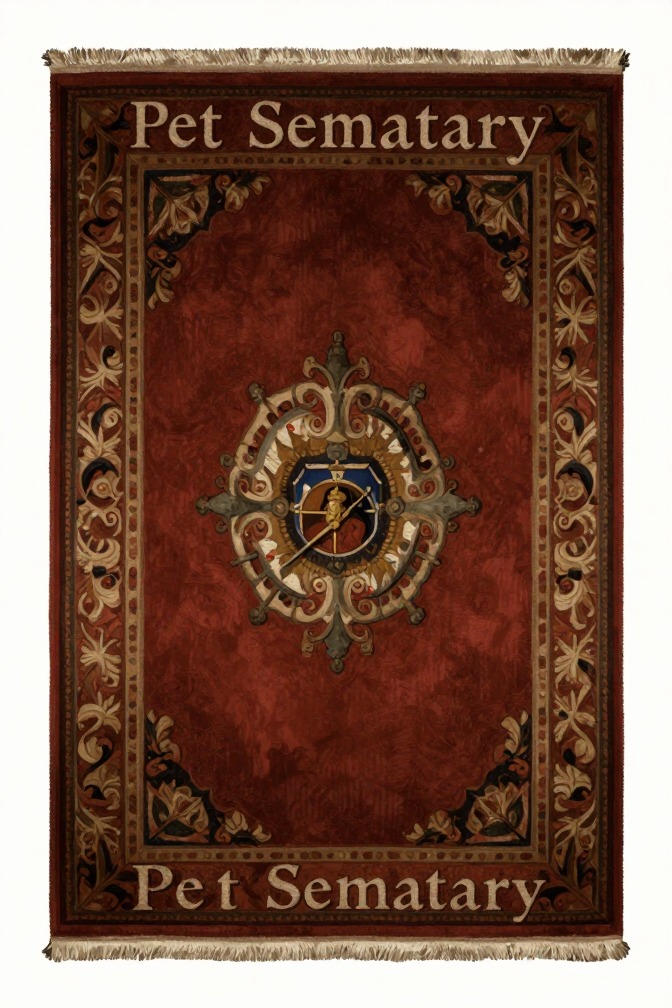
The blood-soaked carpet in the Student Medical Center waiting room is the first material trace of Victor Pascow's violent death, and its replacement becomes a bureaucratic footnote that forces Louis Creed to confront the irreducible physical reality of the catastrophe that opens the novel's supernatural plot.
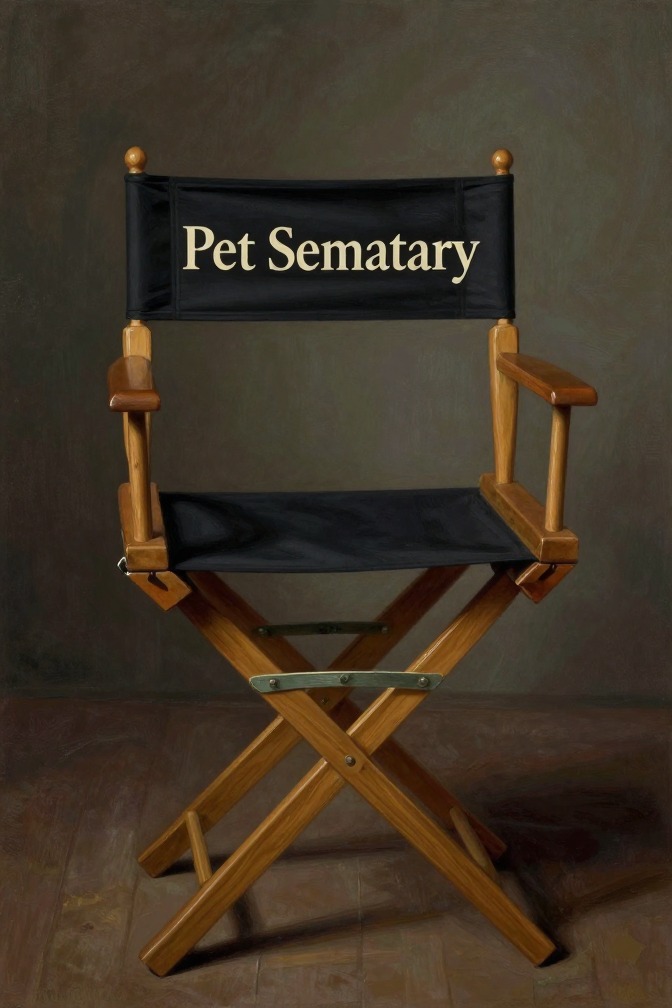
Gage Creed's director's chair, a small canvas-and-wood seat with his name stenciled across the back, becomes a charged relic after his death, embodying his sister Ellie's refusal to let him recede into memory. She sits in it, though she has outgrown it, and carries it into her room as a physical anchor for her hope that he might return.
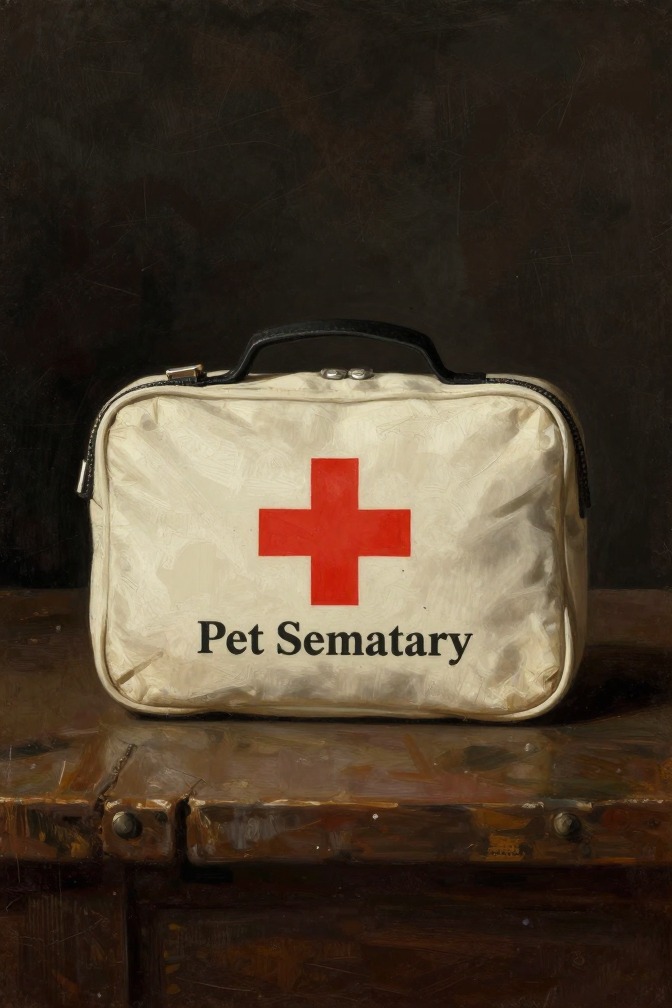
The first-aid kit is a mundane medical object that, through its repeated appearances at moments of crisis, becomes a symbol of Louis Creed's professional competence and his ultimate helplessness against forces beyond medicine.
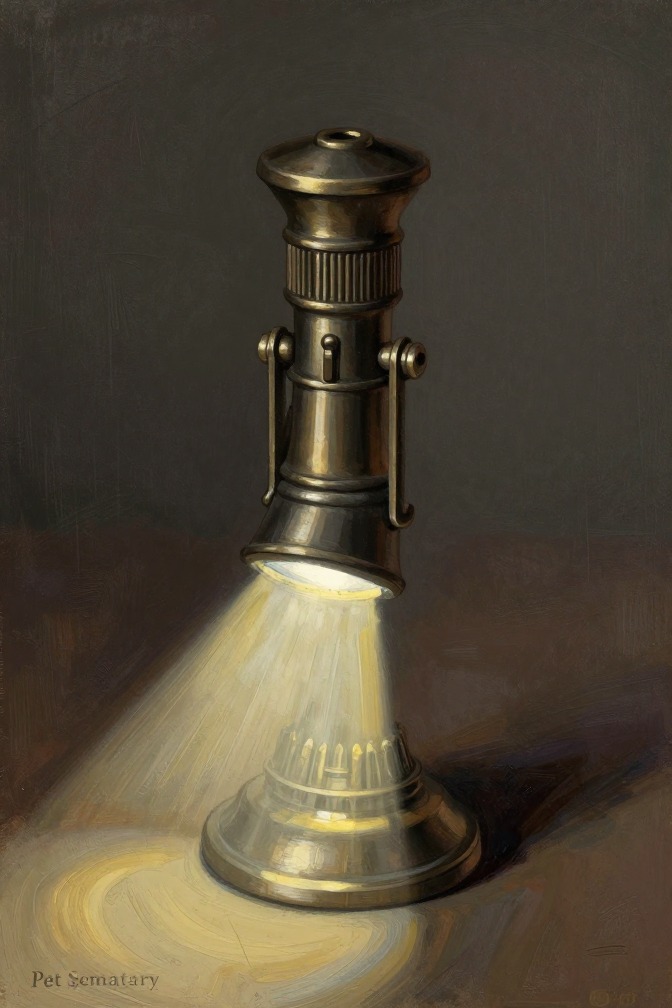
The flashlight is a crucial tool in Louis Creed's grave-robbing expedition, serving both as a practical instrument for navigating the dark and as a symbol of his descent into madness and the unnatural.
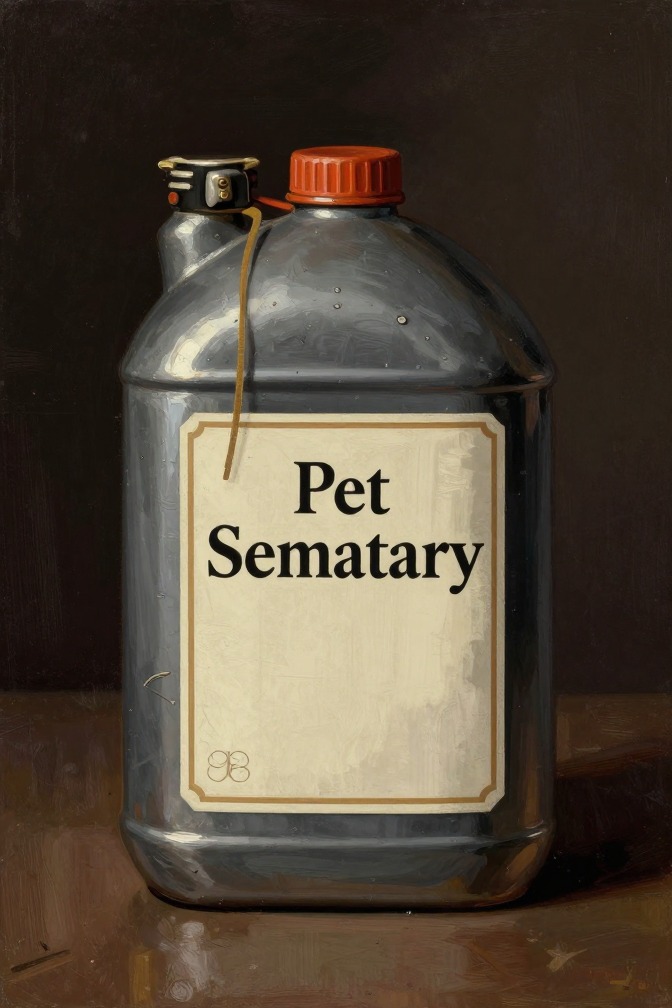
The gasoline can is a mundane household object that becomes a tool of destruction when Louis Creed uses it to set fire to Jud Crandall's house, marking the culmination of his descent into madness and his attempt to erase the evidence of the horrors that have consumed his family.
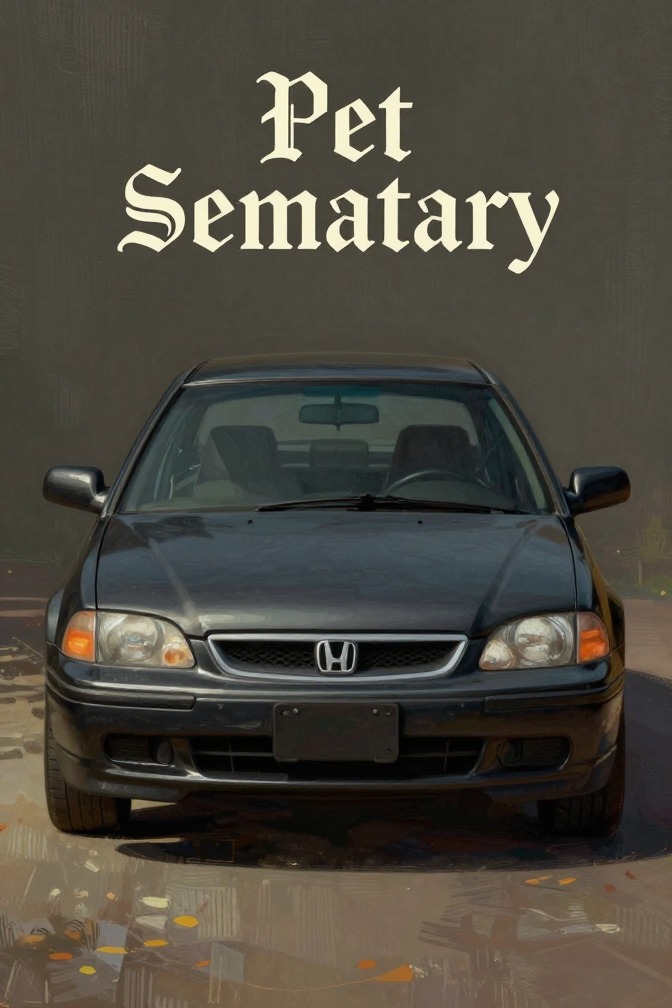
The Honda Civic is the Creed family's second car, a compact vehicle that Louis Creed uses for his daily commute to the University of Maine and, crucially, for the nocturnal grave-robbing expedition in which he exhumes his son Gage's body and transports it to the Micmac burying ground.
The keys to the Creed family's new house in Ludlow, Maine, are a recurring object that marks the transition from chaos to belonging, from outsider to insider, and from the rational world to the supernatural. They first appear as a source of frustration on moving day, then as a symbol of welcome and trust when Jud Crandall offers his own set, and finally as a tool of self-destruction when Louis Creed uses them to lock his family out of their home and into a nightmare.
Marbles are small, colorful glass spheres that serve as children's toys in the Creed household. They become a recurring symbol of childhood danger and parental anxiety, first when Louis discovers one of Ellie's marbles in Gage's diaper—a near-choking incident—and later when Louis warns Ellie to keep them away from her brother, a warning that proves tragically prophetic as Gage's death is ultimately caused not by a marble but by the road Jud Crandall had warned about from the start.
The matches that Jud Crandall kept by his chair in the living room become the instrument by which Louis Creed sets fire to Jud's house after the murders of Jud and Rachel, serving as the final, deliberate act of destruction that closes the cycle of violence unleashed by the Micmac burying ground.
Louis Creed's model cars are a recurring motif that reveals his psychological state, his need for control, and his retreat into a world of meticulous order in the face of life's chaos and mortality.
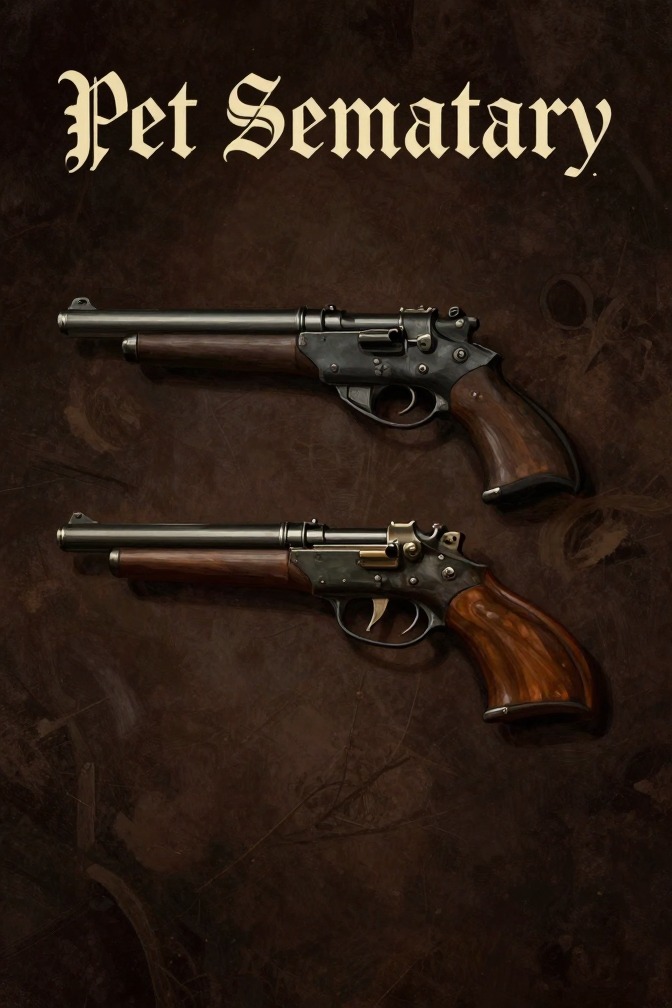
The model guns represent a phase in Louis Creed's lifelong hobby of building detailed scale models, a pastime that provides him with a structured, solitary escape from the pressures of his medical career and family life. This phase, like his earlier interests in airplanes, ships, and later classic cars, illustrates his methodical nature and his need for controlled, predictable worlds—a stark contrast to the chaos and mortality he confronts as a doctor and, ultimately, the supernatural horror that engulfs his family.
The Model Spad is a World War I airplane model that Louis Creed builds as a child, marking the beginning of his lifelong hobby of constructing detailed plastic models, a pastime that serves as a retreat from the pressures of his adult life and a source of quiet, methodical satisfaction.
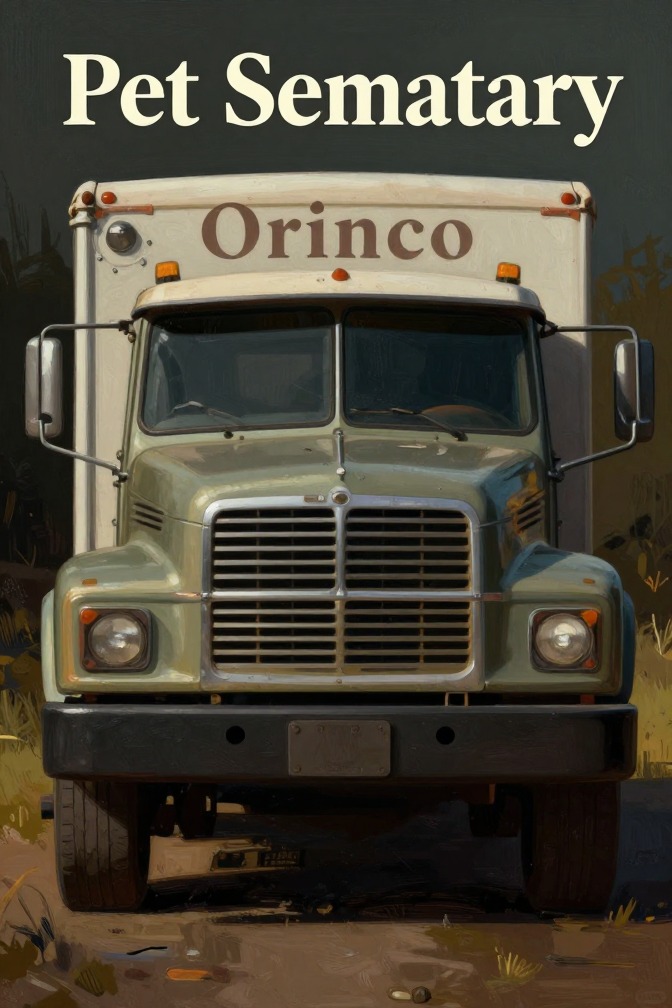
The Orinco truck is a recurring industrial vehicle in Stephen King's Pet Sematary, serving as the primary instrument of death for both the Creed family cat, Church, and later for Louis and Rachel Creed's son, Gage. Its repeated, seemingly random appearances on Route 15 in Ludlow, Maine, transform it from a mundane piece of chemical-fertilizer transport into a symbol of the arbitrary, violent power of the road and, ultimately, of the malevolent influence of the Micmac burying ground that seems to orchestrate tragedy.
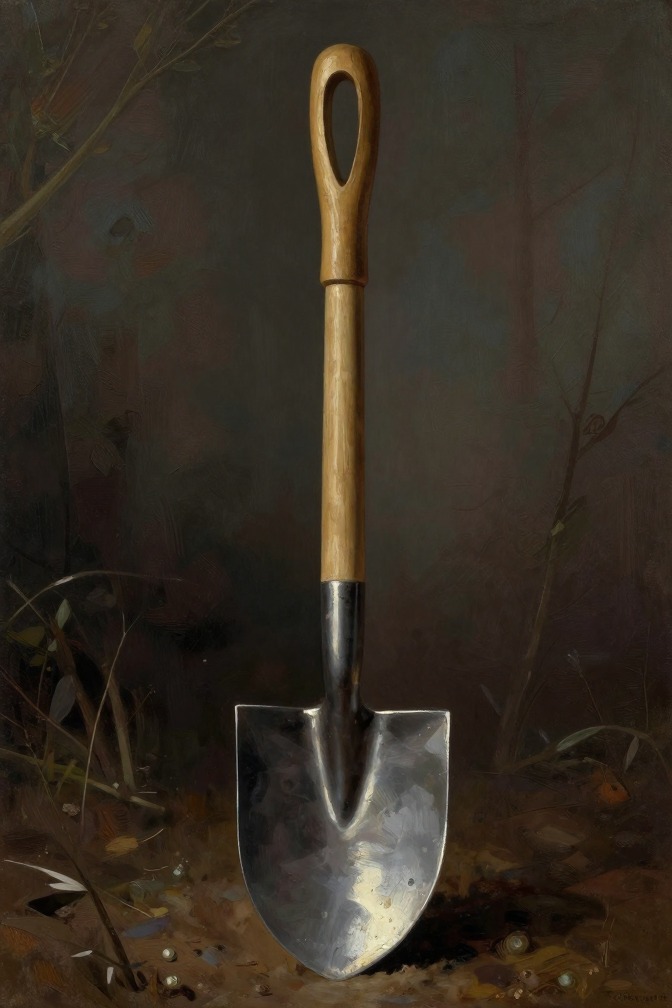
The pick and shovel are the primary tools Louis Creed uses to exhume his son Gage's body from Pleasantview Cemetery and then to dig a new grave in the Micmac burying ground beyond the Pet Sematary, marking the physical enactment of his descent into madness and his attempt to reverse death.
The Sampler is an embroidered piece Norma Crandall works on in the Creed living room on the evening of November 30, 1984, depicting a sun setting behind a small county meeting house with a cross silhouetted against it. It is intended for sale at the church sale before Christmas, and its creation marks one of the last peaceful evenings before Norma's death from a cerebral accident less than ten weeks later.
The sheet is a recurring object in Stephen King's *Pet Sematary* that marks the boundary between life and death, sanity and madness. It first appears as a protective covering for a mirror during Jewish mourning rituals, then becomes a shroud for Rachel Creed's murdered body, and finally serves as the wrapping in which Louis Creed carries his wife to the Micmac burying ground for a desperate, doomed resurrection attempt.
The tarpaulin is a functional object in Stephen King's Pet Sematary that Louis Creed uses to wrap, transport, and conceal the bodies of his son Gage and later his wife Rachel, serving as a grim shroud that marks the boundary between the living and the dead.
The Thanksgiving tablecloth is a white lawn cloth that Norma Crandall uses for a festive dinner shortly before her death, and which Louis Creed later uses to cover her husband Jud's corpse after the resurrected Gage murders him, marking the transition from domestic comfort to horror.
The Vulture kite is a large, black plastic kite shaped like a vulture, purchased by Louis Creed on a whim in mid-February 1984. It becomes the centerpiece of the last truly happy day of his life—March 24, 1984—when he flies it with his son Gage in Mrs. Vinton's field, a moment of pure, uncomplicated joy that stands in stark contrast to the tragedy that follows.
Campus Security at the University of Maine at Orono is the campus police force that responds to emergencies, investigates incidents, and coordinates with local authorities. It first appears when Victor Pascow is brought to the infirmary dying, and its officers handle the immediate aftermath of the accident. The force later manages the press conference about Pascow's death and is involved in the legal proceedings against the driver. Its presence underscores the institutional response to sudden death on a university campus and the limits of medical authority in the face of fatal trauma.
The State of Maine, as a governmental entity, plays a crucial role in the novel as the legal and political backdrop against which the supernatural events of the Micmac burying ground unfold, its laws and courts entangled with the ancient, contested land that holds the power of resurrection.
Jud and Norma Crandall's marriage, spanning nearly sixty years until Norma's death from a cerebral accident in February 1984, is portrayed as a relationship of deep, unspoken affection and mutual support, tested by Norma's crippling rheumatoid arthritis and her eventual heart attack, and ultimately defined by Jud's profound grief and the quiet, enduring love that sustained them through a lifetime in Ludlow.
Irwin Goldman and Louis Creed's antagonistic relationship is a central source of tension in the novel, rooted in class prejudice, a failed bribe, and mutual contempt that erupts into violence at their son's funeral, ultimately reflecting the novel's themes of grief, guilt, and the impossibility of reconciliation.
Louis and Rachel Creed's marriage is the emotional core of Pet Sematary, a relationship tested by grief, trauma, and the supernatural. Their bond, initially strong and loving, is strained by Rachel's deep-seated fear of death stemming from her sister Zelda's agonizing demise, and by Louis's secret, desperate actions following the death of their son, Gage. The marriage ultimately shatters under the weight of these forces, culminating in tragedy.