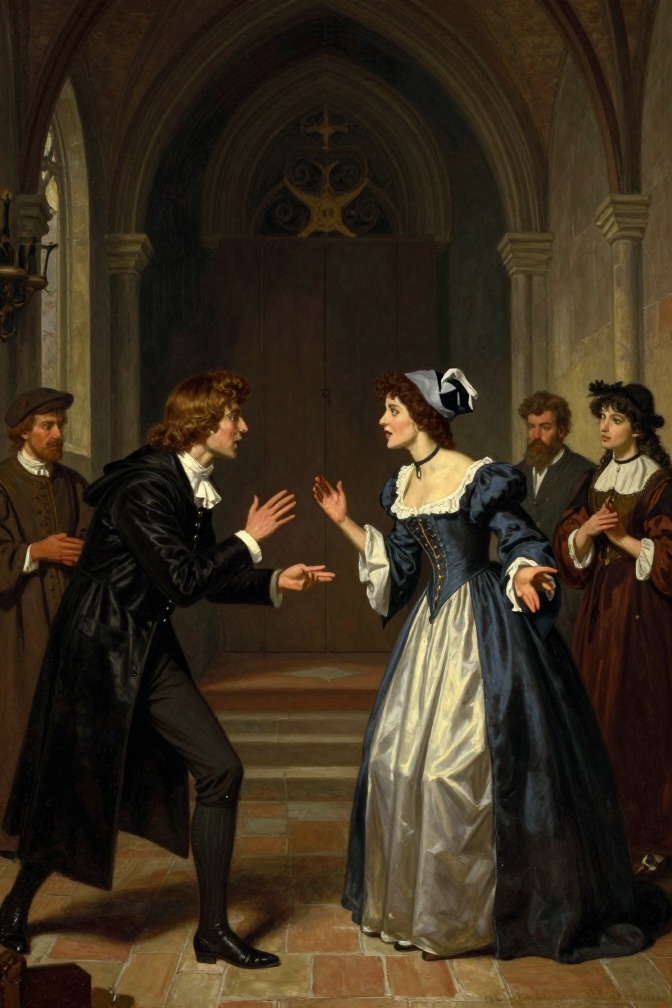
The relationship between Lady Catherine de Bourgh and Fitzwilliam Darcy is defined by her domineering attempts to control his marriage and his ultimate assertion of independence, a dynamic that serves as a final crucible for Elizabeth Bennet and Darcy's union.
The entailment of the Longbourn estate is the legal mechanism that ties Mr. Bennet and Mr. Collins together as the current owner and the heir presumptive, respectively, and it functions as a central economic and social pressure that drives the marriage plot of the novel.
The marriage of Mr. Bennet and Mrs. Bennet is a foundational mismatch of intellect and temperament that shapes the entire Bennet family's domestic life, social standing, and the romantic prospects of their five daughters, serving as a cautionary example of imprudent matrimony within the novel's exploration of marriage as both an emotional and economic institution.
The relationship between Mr. Collins and Lady Catherine de Bourgh is a defining instance of clerical patronage in the novel, shaping Collins's character, his marriage, and his social conduct, while also serving as a vehicle for Austen's critique of inherited power and sycophancy.
The marriage of Mr. Gardiner and Mrs. Gardiner is a model of companionate partnership in Pride and Prejudice, distinguished by mutual respect, intelligence, and emotional steadiness. As the uncle and aunt of the Bennet sisters, they provide a stable, affectionate counterpoint to the Bennet parents' dysfunctional union, and their practical wisdom and generous intervention prove decisive in resolving the crisis of Lydia's elopement and in facilitating Elizabeth's eventual happiness with Darcy.
Christmas in Pride and Prejudice functions as a temporal marker of social and familial rhythms, a period of gathering and exchange that punctuates the novel's major developments and underscores the cyclical, domestic nature of the world the characters inhabit.
The first of September is a date that recurs in Pride and Prejudice as a marker of the sporting calendar, the social rhythms of the English gentry, and the narrative's ironic commentary on marriage, class, and masculine pursuits. It appears most prominently in Lydia Bennet's boast about her new husband George Wickham's shooting prowess, but it also connects to the novel's broader themes of hunting, leisure, and the economic realities that shape the characters' lives.
Carmilla's disappearance is a pivotal event in the narrative, marking the first time the household is forced to confront the supernatural nature of the guest who has been draining Laura's life. The episode begins with a terrifying dream in which Laura sees Carmilla bathed in blood, leading to a frantic search that reveals Carmilla has vanished from a locked room, only to reappear the next day with an implausible story of sleepwalking.
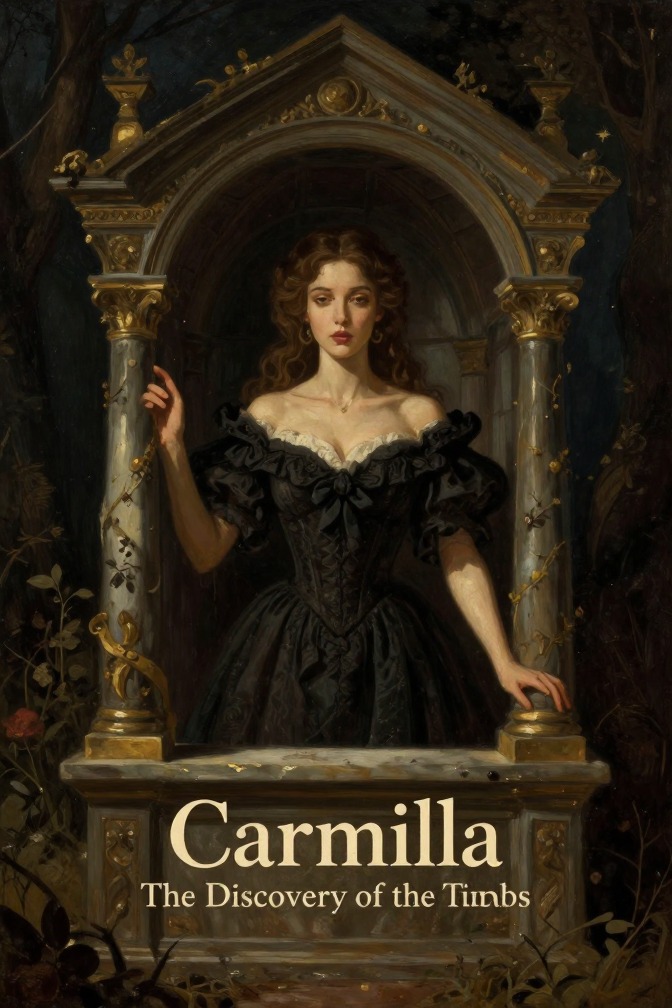
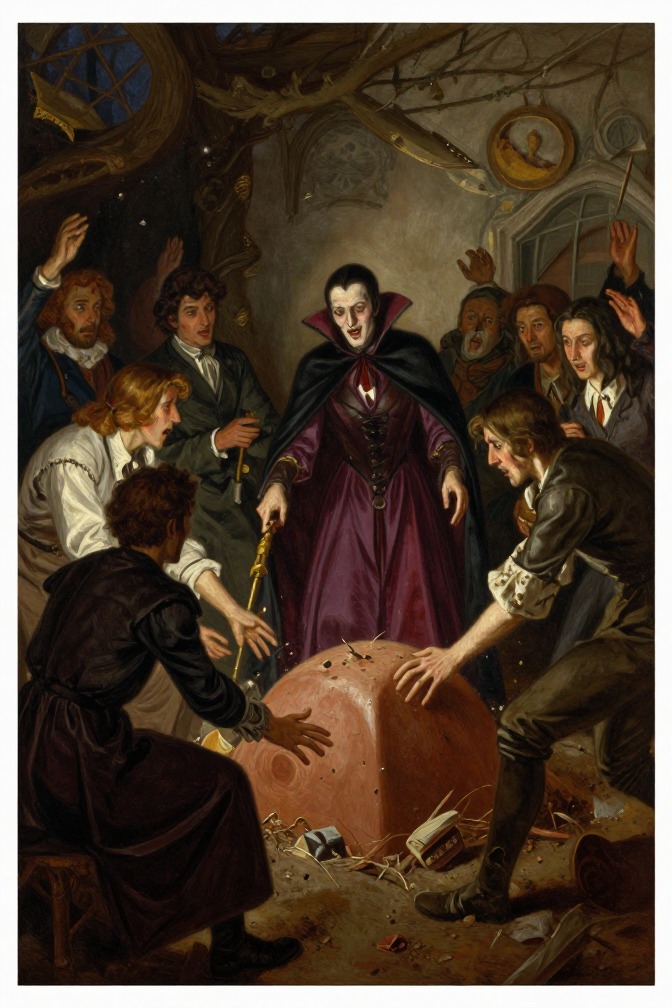
The discovery of the long-lost tomb of Mircalla, Countess Karnstein, in the ruined chapel of Karnstein, is the decisive turning point that transforms the hunt for the vampire from a desperate personal quest into a legally sanctioned, methodical execution, and it is accomplished through the esoteric knowledge of Baron Vordenburg, whose ancestor had deliberately concealed the grave a century and a half earlier.
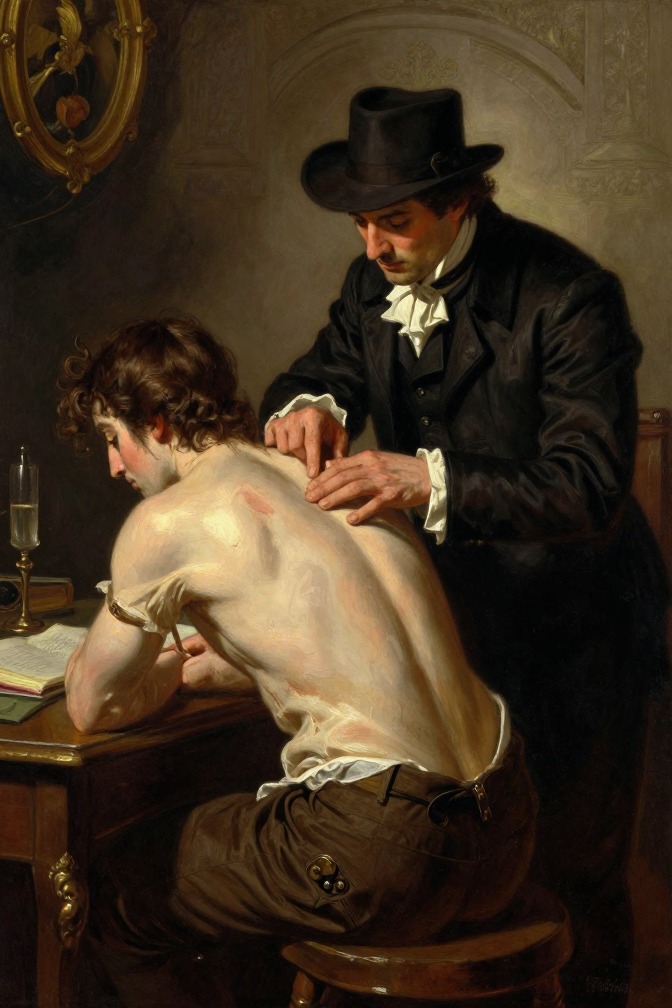
The Doctor's Examination is the pivotal medical scene in Sheridan Le Fanu's Carmilla, where Doctor Spielsberg discovers the telltale puncture marks on Laura's throat, confirming the vampire's attack and setting the stage for the novel's supernatural resolution.
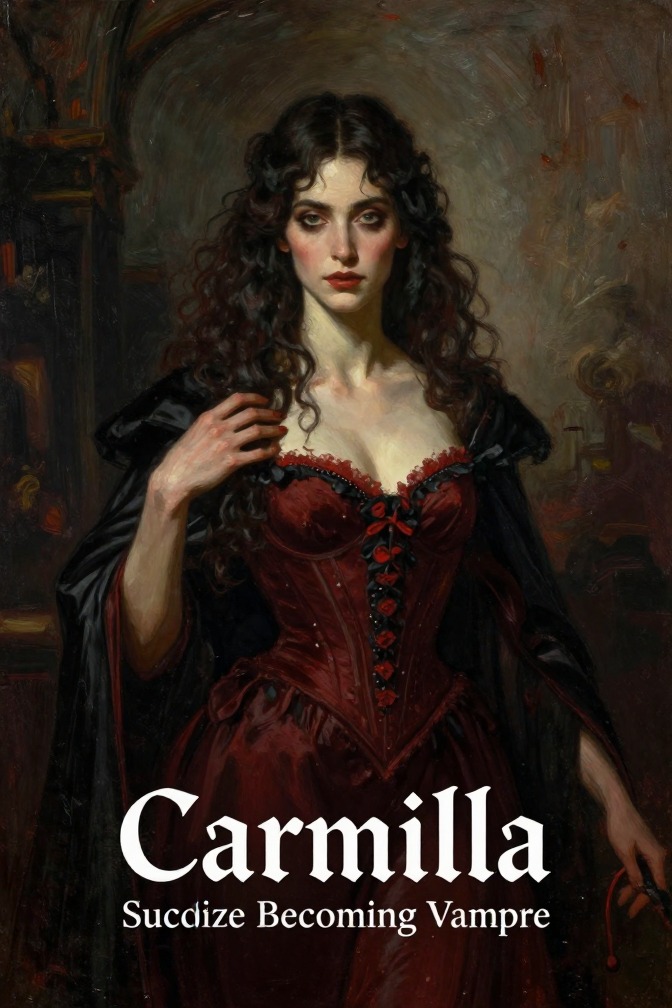
The concept of Suicide Becoming Vampire is a specific origin mechanism within the vampire mythology of the novel, articulated by Baron Vordenburg. It posits that a person who commits suicide under certain circumstances can transform into a vampire, a fate that befell the beautiful Mircalla, Countess Karnstein, after she was haunted by a demon. This principle explains the genesis of the central vampire threat and connects the narrative's supernatural horror to a tragic, human act of despair.
Carmilla's reappearance in her room, after a night of frantic searching, resolves the immediate mystery of her disappearance but deepens the enigma surrounding her nature, as she offers an implausible sleepwalking explanation that Laura's father accepts while Laura herself remains unsettled.
Doctor Spielsberg's examination of Laura reveals the physical evidence of a vampire attack—two small puncture marks on her neck—confirming the supernatural nature of her illness and prompting urgent protective measures.
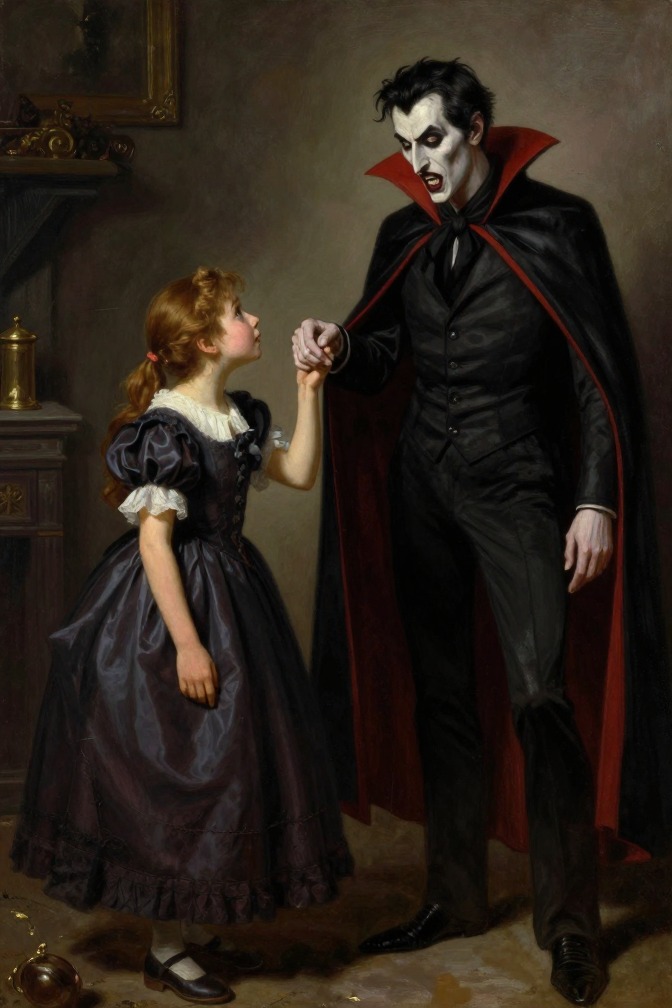
Laura's childhood encounter with a vampire is the foundational traumatic event of the narrative, a nocturnal visitation that imprints upon her memory the face of Carmilla and establishes the pattern of supernatural predation that will recur years later.
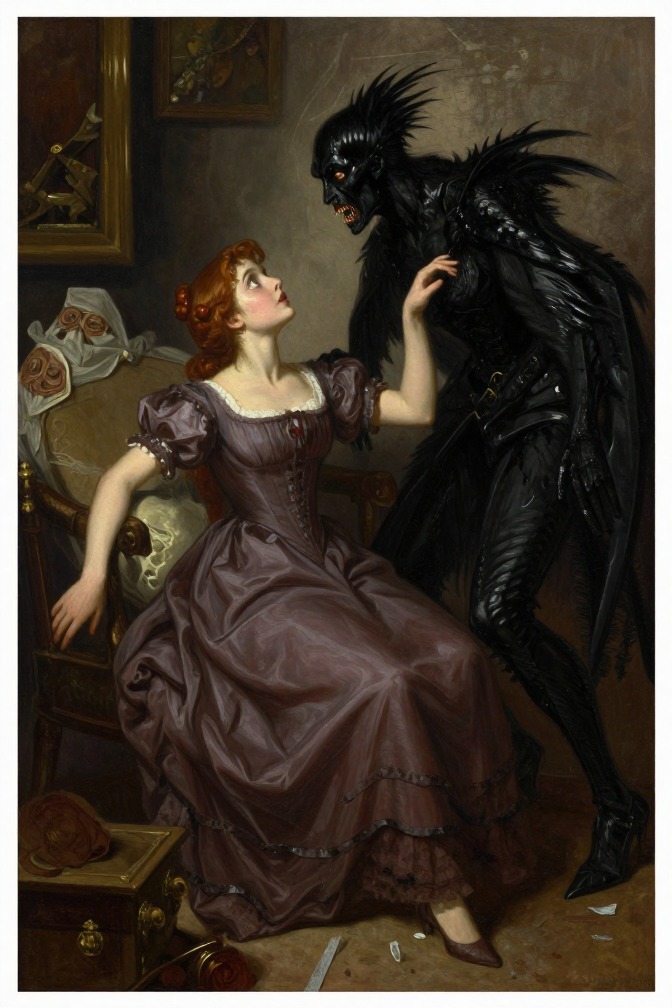
Laura's first dream-attack is the pivotal event in which the vampire Carmilla, appearing as a sooty-black animal, invades Laura's bedroom and inflicts the characteristic puncture wounds on her breast, initiating the physical and psychological ordeal that defines the central horror of the narrative.
The confrontation at the chapel is the pivotal scene in Sheridan Le Fanu's Carmilla where General Spielsdorf, driven by grief and vengeance, attacks Carmilla with a woodman's hatchet, revealing her supernatural nature and forcing her to flee. This event confirms the vampire's identity, shatters Laura's innocence, and sets the stage for the vampire's eventual destruction.
The exhumation and destruction of the vampire is the climactic ritual execution of Carmilla, revealed as the centuries-old vampire Mircalla, Countess Karnstein, whose body is found preserved in a leaden coffin filled with blood, then staked, decapitated, and burned, ending the plague of vampirism in the region.
The phrase "pious sacrilege" is General Spielsdorf's term for his intended desecration of the Karnstein tomb, a paradoxical act of religious violence meant to destroy the vampire Mircalla and end her murderous reign.
Count Carlsfeld's schloss is the magnificent estate where General Spielsdorf and his ward Bertha Rheinfeldt attended a series of fetes in honor of the Grand Duke Charles, culminating in a masked ball that proved fateful when the vampire Carmilla, under the alias Millarca, first approached Bertha and began her predatory seduction.
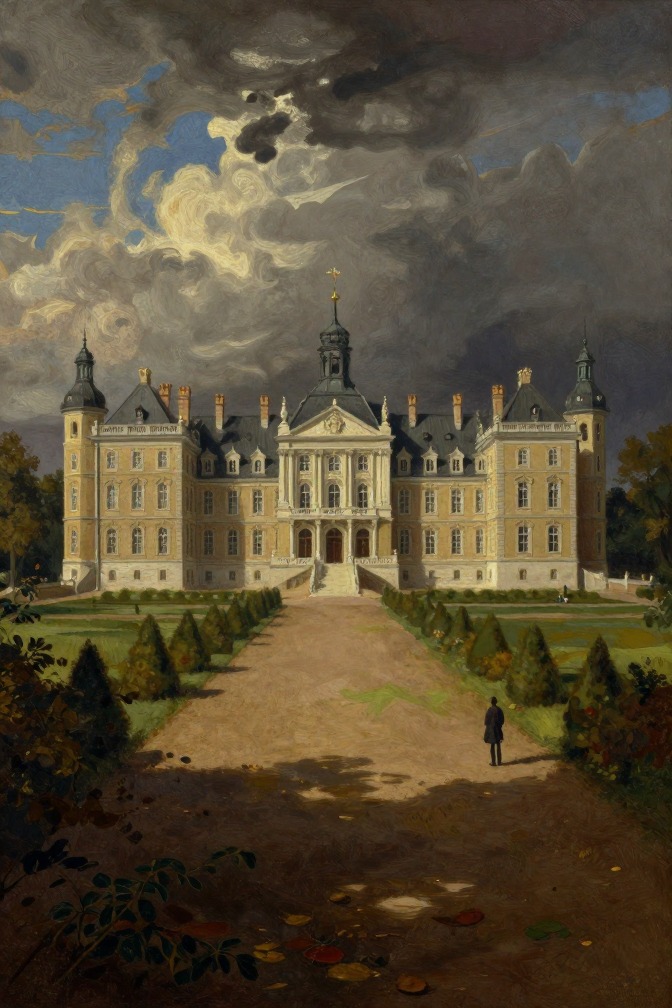
Styria is the remote Austrian province where Laura and her father live in a lonely schloss, and where the vampire Carmilla preys upon the region's inhabitants. The setting's isolation, superstitious traditions, and Gothic landscape create the conditions for the vampire's attacks and the story's atmosphere of dread.
1698 is the year inscribed on the portrait of Mircalla, Countess Karnstein, discovered in Laura's schloss, which reveals Carmilla's true identity as the vampire Mircalla and anchors the novel's central mystery of immortality and recurrence.
Benjamin is the cynical, long-lived donkey on Animal Farm who, through his consistent refusal to engage with the farm's political transformations, serves as a silent witness to the corruption of the revolution's ideals. His unchanging pessimism and his devotion to Boxer provide a stark contrast to the pigs' propaganda and the other animals' naive hope, making him the story's most perceptive yet passive observer of the descent into tyranny.
Mollie is a foolish, pretty white mare who draws Mr. Jones's trap and represents the individual who prioritizes personal comfort and vanity over the collective ideals of the Rebellion, ultimately abandoning Animal Farm for a life of luxury with humans.
Moses is a tame raven who serves as Mr. Jones's pet and later returns to Animal Farm, where he is tolerated by the pigs despite his idleness and his preaching of Sugarcandy Mountain, a paradise for animals after death.
Old Major is the prize Middle White boar whose visionary speech and song, 'Beasts of England', ignite the Rebellion on Manor Farm, establishing the ideological foundation of Animalism before his death early in the story.
Pincher is one of the three dogs on Animal Farm, first seen attending Old Major's speech and later remembered as deceased by the time of the final chapter, representing the ordinary, loyal animals who are present at the founding of the Rebellion but do not survive to see its ultimate corruption.
The Whiter Wool Movement was one of several Animal Committees established by Snowball in the early days of Animal Farm, intended to improve the quality of the sheep's wool through organized effort. Like most of Snowball's idealistic projects, it ultimately failed to achieve its goals, but it stands as a characteristic example of the revolutionary enthusiasm and bureaucratic proliferation that marked the first months after the Rebellion.
The relationship between Mr. Jones and the animals of Manor Farm is one of exploitative mastery and servitude, defined by theft of labor, physical cruelty, and neglect, which ultimately provokes the Rebellion that expels him and establishes Animal Farm.
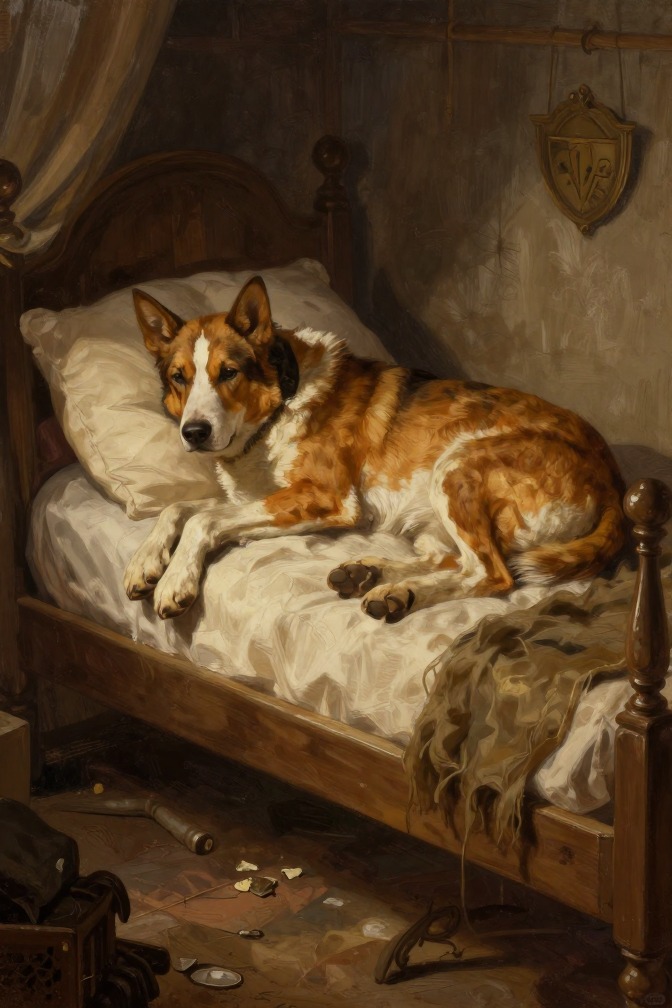
The Fourth Commandment, originally inscribed as "No animal shall sleep in a bed," is one of the Seven Commandments of Animalism, established after the Rebellion to prohibit the pigs from adopting human habits. Over time, it is quietly amended to "No animal shall sleep in a bed with sheets," allowing the pigs to occupy the farmhouse beds while maintaining the appearance of adherence to the law, illustrating the erosion of revolutionary principles.
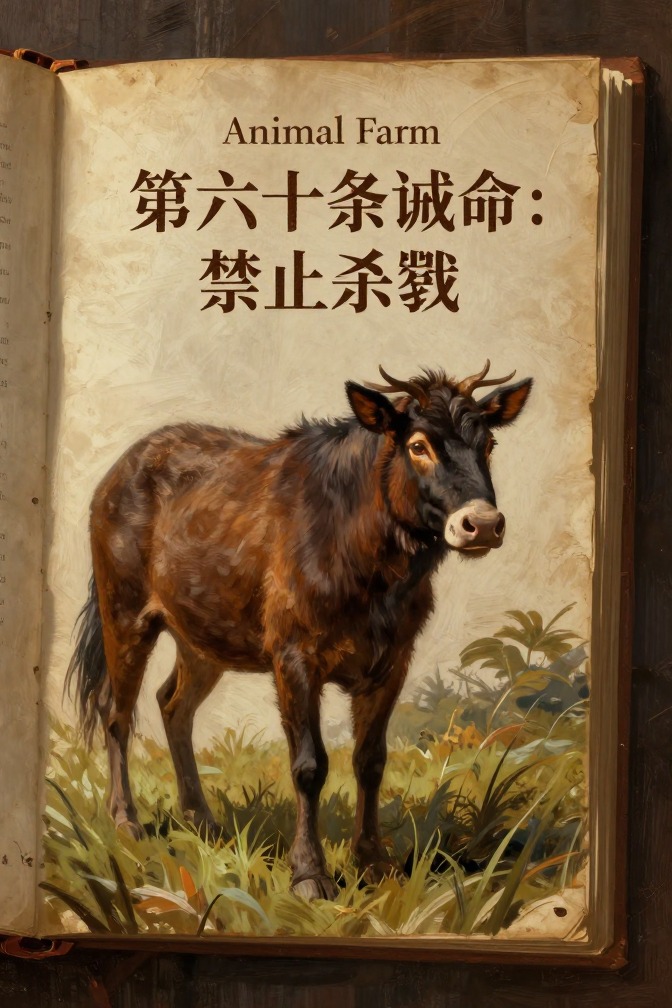
The Sixth Commandment, originally inscribed as "No animal shall kill any other animal," is one of the Seven Commandments that form the unalterable law of Animal Farm. It undergoes a crucial textual alteration after the executions of animals accused of treason, becoming "No animal shall kill any other animal WITHOUT CAUSE," a change that retroactively legitimizes the regime's violence and reveals the pigs' manipulation of the farm's founding principles.