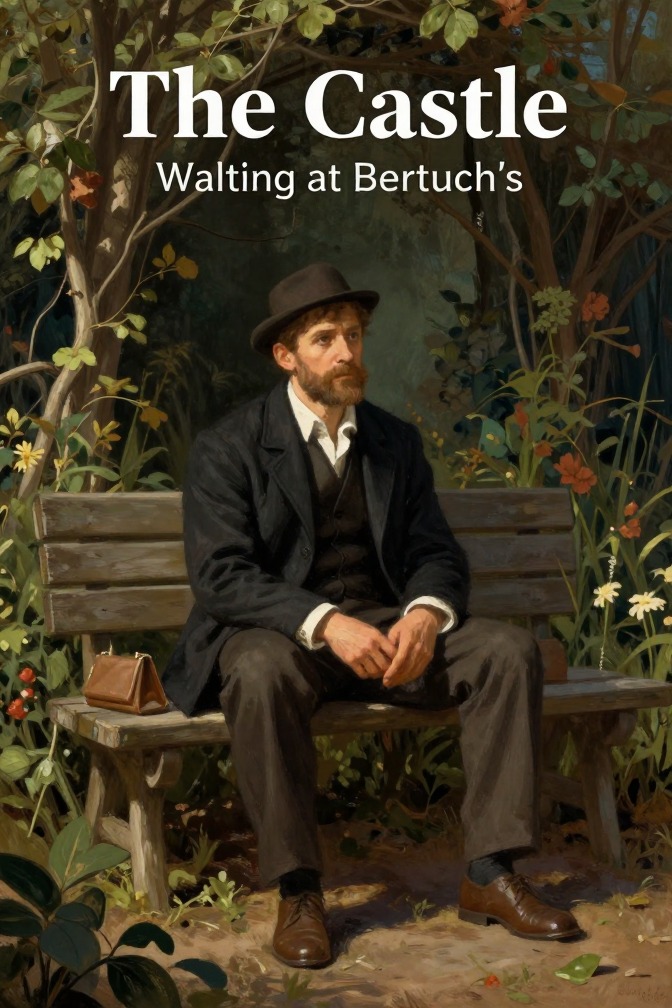
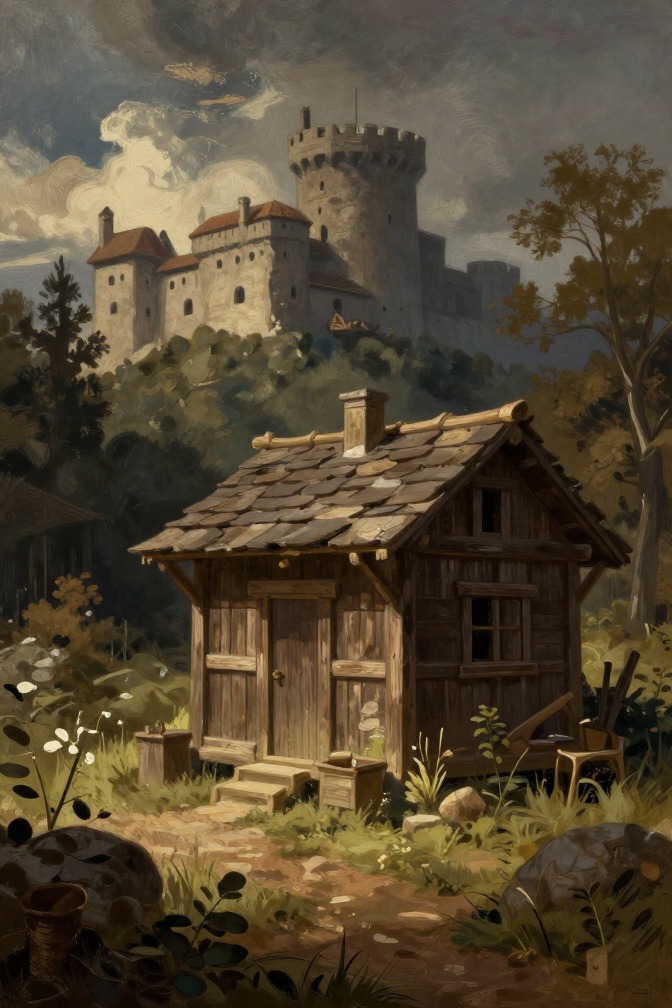
Waiting at Bertuch's garden is the father of Barnabas's family's daily vigil on the stone base of a market gardener's fence near the castle, where he hoped to present a petition for forgiveness to passing officials. This futile ritual, born of the family's ostracism after Amalia's rejection of Sortini, became a symbol of their despair and the castle's inaccessibility, ultimately breaking the father's health and mind.
Barnabas's house is the modest, dimly lit home of the Barnabas family in the village, a place that becomes a focal point of K.'s hopes and disappointments in his struggle to reach the castle. It is here that K. first realizes the messenger Barnabas is not the castle official he imagined, and where he later learns the tragic story of the family's ostracism, centered on Amalia's defiance of the official Sortini. The house embodies the family's social exclusion and their desperate, ambiguous connection to the castle, serving as a counterpoint to the official spaces K. tries to navigate.
Lasemann's house, the home of the master tanner Lasemann, is a pivotal location in Franz Kafka's The Castle, serving as the site of K.'s first involuntary encounter with the village's social dynamics and his initial, humiliating rejection. It is here that K. first meets the enigmatic woman from the castle, witnesses the family's domestic life, and is forcibly expelled, an event that underscores his status as an outsider and foreshadows his ongoing struggle for acceptance.
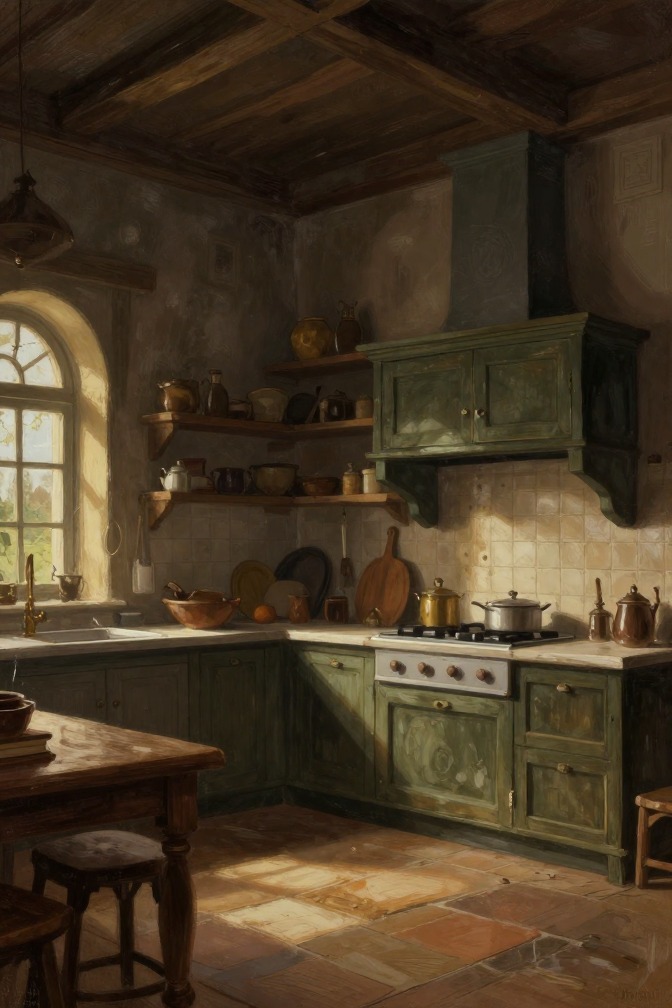
The kitchen is a central, contested space in the Castle Inn, serving as a site of labor, domestic power, and social exclusion. It is the domain of the landlady, who rules it with a fierce, possessive authority, and it is the place where K. is both fed and rejected, where the maids work and gossip, and where the boundaries between the inn's public and private functions blur. The kitchen's physical layout—a thin wooden partition separating it from the landlady's sickroom, a hatch for serving the bar, and a window onto the yard—makes it a threshold space where the village's hierarchies and the castle's invisible influence are felt most acutely.
The woodshed at the school is a small, locked outbuilding that becomes a flashpoint of conflict between K. and the teacher, symbolizing the petty authority and material deprivation that define K.'s life as school janitor. Its forced entry by K. and Frieda, and the subsequent confrontation, reveal the precariousness of their position and the constant struggle for basic necessities in the village.
The Letter from Klamm is the first written communication K. receives from the castle, delivered by the messenger Barnabas. It formally accepts K. into the count's service, names the village mayor as his immediate superior, and introduces the ambiguous, contradictory tone that defines K.'s entire relationship with the castle. The letter's private, non-official nature—as later interpreted by the village mayor—becomes a central point of contention, shaping K.'s strategies and hopes throughout the novel.
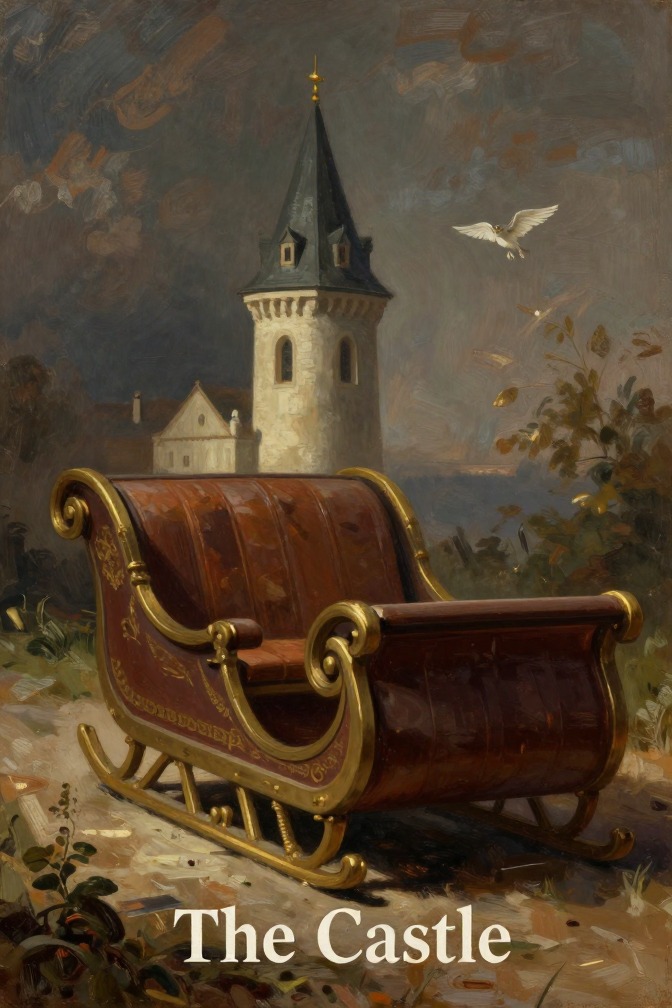
The sleigh in Franz Kafka's The Castle is a recurring object that embodies the village's paradoxical relationship with the castle: it is both a practical means of transport and a symbol of the unattainable authority that governs the villagers' lives. From Gerstäcker's offer to carry K. to the castle, to Klamm's waiting sleigh in the yard of the Castle Inn, the sleigh marks moments of hope, intrusion, and the stark limits of K.'s agency.
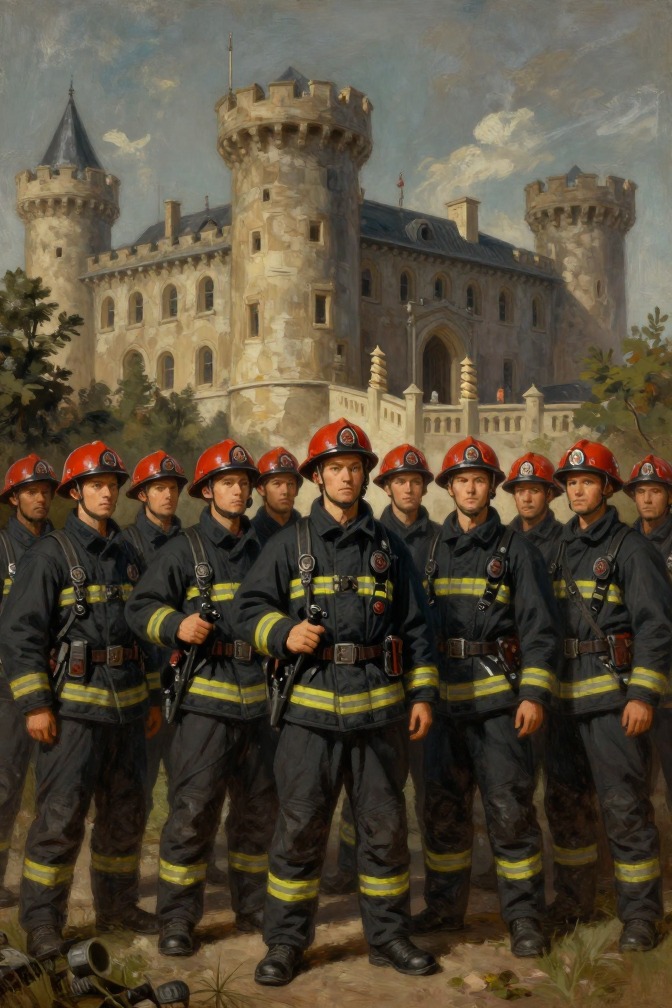
The Fire Brigade is a village institution in Franz Kafka's The Castle that embodies the community's relationship with the castle authorities, its social hierarchies, and the devastating consequences of falling from official favor. Its pivotal role emerges in the story of the Barnabas family, whose father's dismissal from the brigade after Amalia's rejection of the official Sortini marks the beginning of their social ostracism and ruin.
The authority infallibility principle is a foundational tenet of the castle's bureaucratic system in Kafka's novel, asserting that the authorities never make mistakes and that any apparent error is merely a misunderstanding or a necessary part of a larger, inscrutable design. This principle is articulated by the village mayor during his conversation with K., and it shapes the entire power dynamic between the individual and the castle, rendering K.'s attempts to assert his rights futile.
Exhaustion is a pervasive and defining state in Franz Kafka's *The Castle*, shaping K.'s perception, actions, and ultimate failure. From his arrival, K. is overwhelmed by physical and mental fatigue, which intensifies as he navigates the village's bureaucratic labyrinth. This exhaustion is not merely personal but reflects a systemic condition, contrasting with the officials' serene, purposeful tiredness. It leads to critical missteps—his inability to seize opportunities, his neglect of Frieda, and his final collapse—underscoring the novel's themes of alienation and the futility of striving against an incomprehensible authority.
Waiting is a pervasive and defining state in Franz Kafka's The Castle, shaping K.'s experience from his arrival to his final scenes. It is both a literal activity—K. waits for Klamm, for Barnabas, for permits, for decisions—and a metaphysical condition that reflects the novel's themes of inaccessibility, bureaucratic absurdity, and the elusive nature of authority. Waiting exposes the power dynamics between the individual and the castle, revealing how the system controls through delay and uncertainty, and how hope and despair are intertwined in the act of waiting.
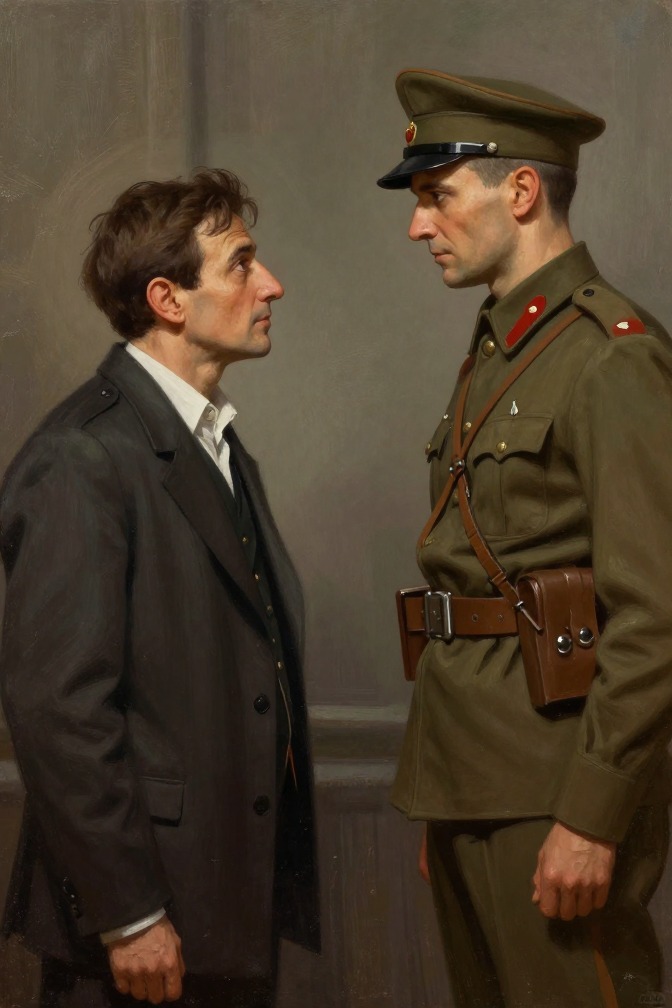
Baba confronts a Russian soldier at a checkpoint during the family's escape from Kabul in March 1981, risking his life to defend the honor of a fellow refugee and demonstrating the uncompromising moral code that defines his character.
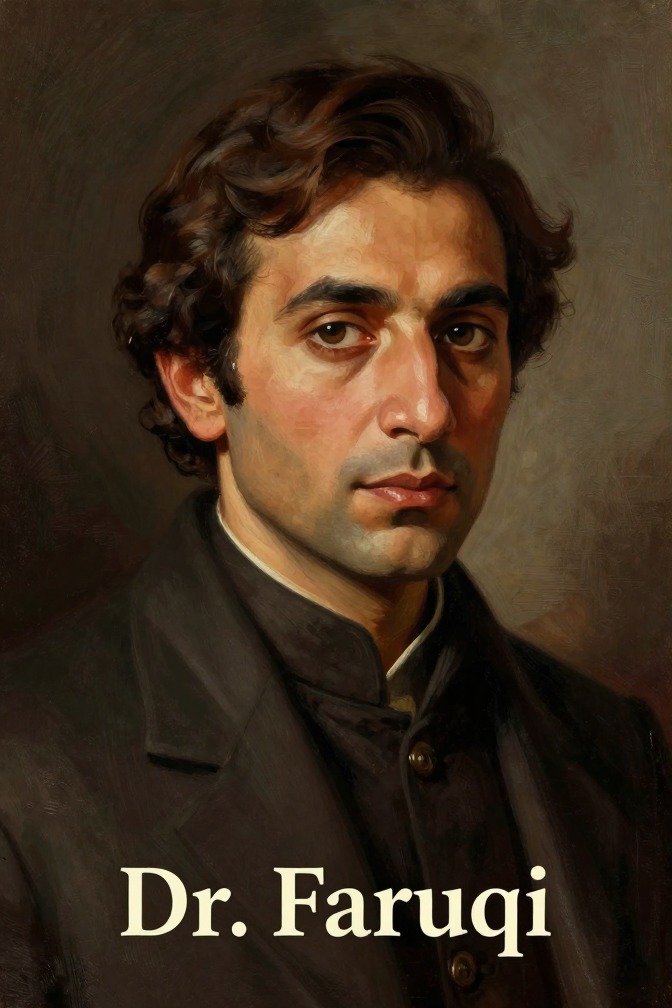
Dr. Faruqi, the head-and-neck surgeon who treated Amir after his near-fatal fight with Assef in Kabul, is a minor but symbolically resonant figure whose medical work and personal manner both mirror and invert the novel's central themes of wounding, healing, and scarred identity.
Rahim Khan is Baba's closest friend and business partner, Amir's lifelong mentor and surrogate father figure, and the keeper of the family's deepest secrets. As the only adult who consistently nurtures Amir's writing talent and emotional life, he becomes the catalyst for Amir's redemption by revealing that Hassan was Baba's son and by sending Amir to rescue Hassan's orphaned child, Sohrab.
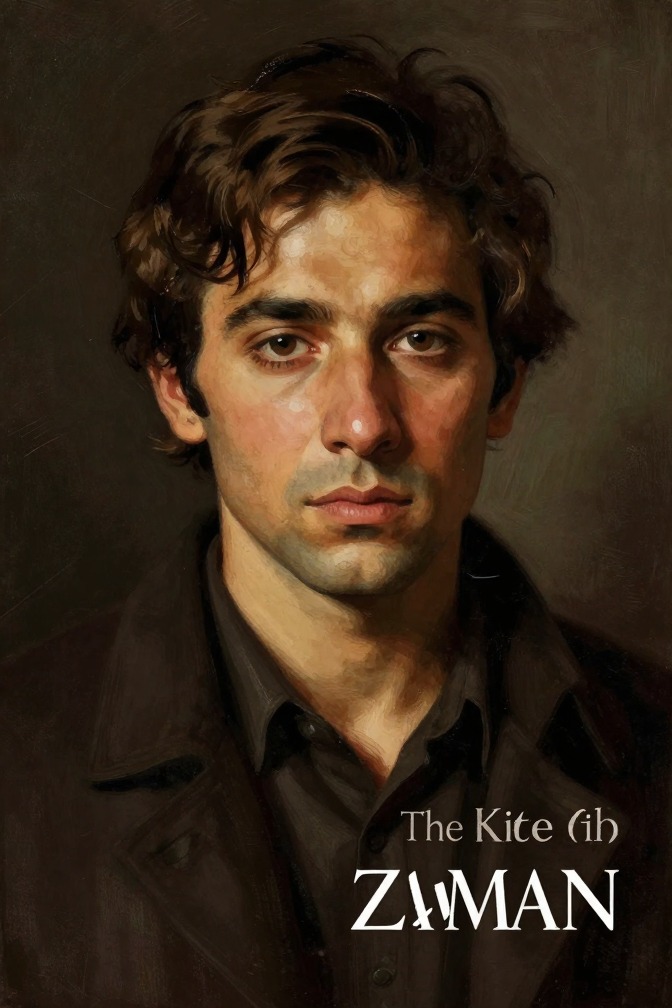
Zaman is the director of an orphanage in Karteh-Seh, Kabul, who reluctantly allows a Taliban official to take children in exchange for money to keep the orphanage running. He is the one who reveals Sohrab's whereabouts to Amir.
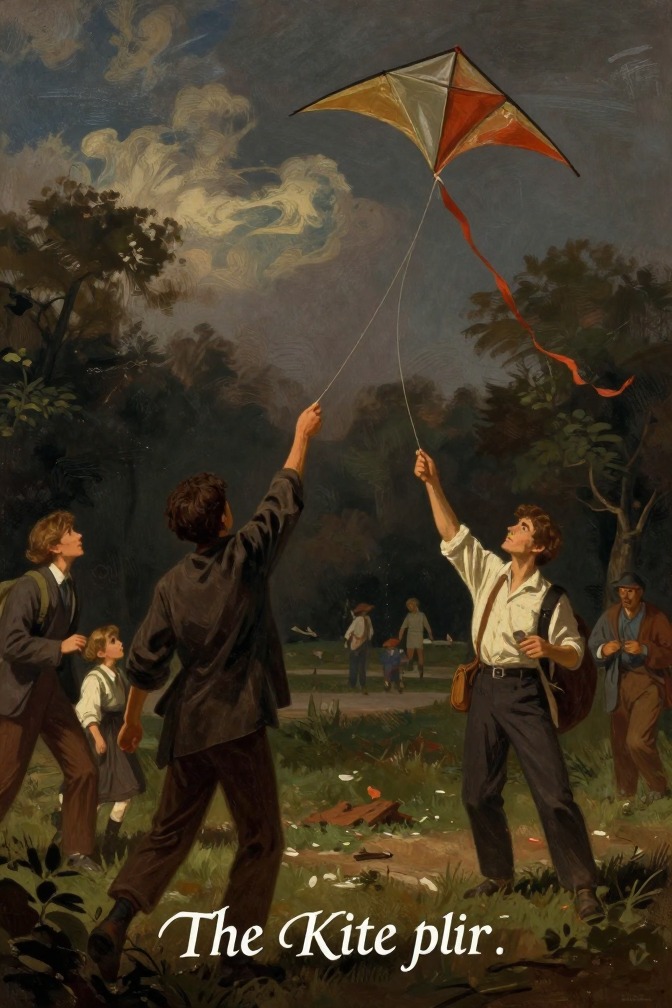
In March 2002, at a Nowruz gathering in Fremont's Lake Elizabeth Park, Amir buys a yellow kite and, after a quarter-century, flies it again. He teaches Sohrab the old lift-and-dive trick Hassan used, cuts down a green kite, and sees the first flicker of a smile on Sohrab's face since his suicide attempt. Amir then runs the fallen kite for Sohrab, whispering Hassan's old promise, "For you, a thousand times over."
Bamiyan is a historic city in central Afghanistan, the capital of the Hazara region of Hazarajat, and the site of the giant Buddha statues. In the novel, it serves as the ancestral homeland of the Hazara characters Ali, Hassan, and Sohrab, a place of refuge after their expulsion from Kabul, and a symbol of the ethnic and cultural identity that the Pashtun-dominated society has persecuted and the Taliban later destroyed.
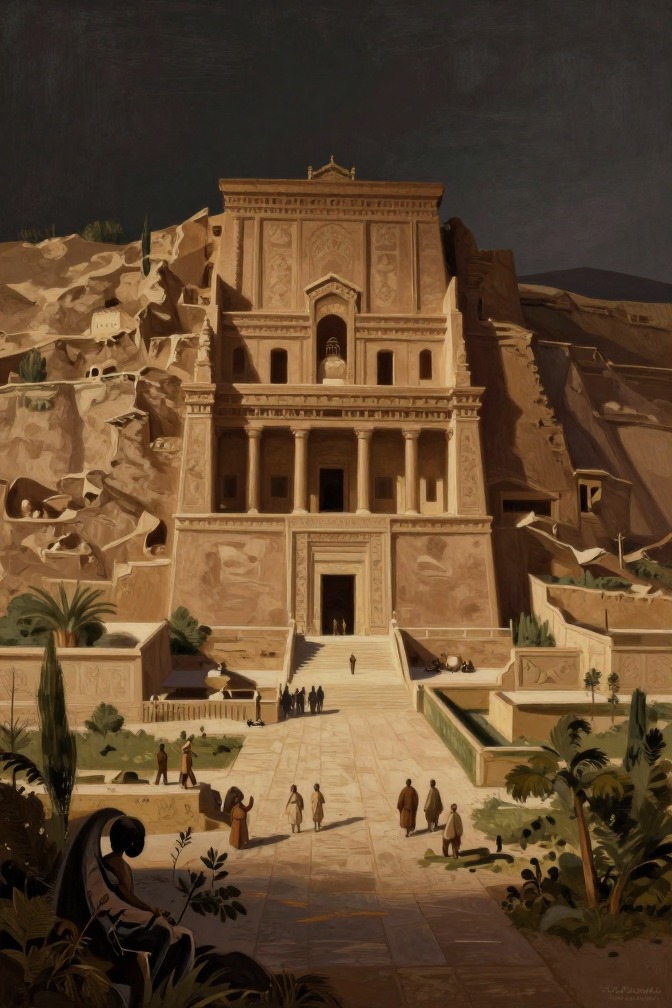
Baba's Orphanage is a two-story building in Kabul's old city, designed and funded entirely by Baba as a personal act of charity, which becomes a symbol of his public redemption and later a site of wartime destruction.
1995 is a year of deepening tragedy and resilience within the walls of Baba's house in Wazir Akbar Khan, Kabul. It marks the final year of Sanaubar's life, the continued growth of Sohrab under the care of Hassan and Rahim Khan, and the intensification of the Afghan civil war that surrounds their fragile haven. The year encapsulates the coexistence of domestic tenderness and the brutal reality of a city under siege, setting the stage for the Taliban's rise and the ultimate destruction of this family.
December 2001 is the narrative present from which Amir, now a successful novelist living in San Francisco, receives a phone call from Rahim Khan that forces him to confront the past he has spent twenty-six years trying to bury. This temporal frame establishes the novel's central structure of memory and redemption, as Amir's recollection of the winter of 1975 and his subsequent journey to Afghanistan are all filtered through this moment of reckoning.
July 17, 1973, is the date of the bloodless coup in Kabul that ended King Zahir Shah's forty-year reign and brought his cousin Daoud Khan to power, marking the beginning of the end of the Afghanistan Amir and Hassan knew as children. The coup's gunfire and explosions terrified the boys, and the political shift emboldened the racist bully Assef, who confronted them the next day with a vision of ethnic cleansing. This single night set in motion the unraveling of the old order, foreshadowing the Soviet invasion, the civil wars, and the Taliban regime that would eventually destroy their world.
March 2002 is the month in which the novel's final, redemptive scene takes place: at a Nowruz gathering in Fremont's Lake Elizabeth Park, Amir flies a kite with Sohrab and, for the first time since his suicide attempt, sees the boy smile.
Spring of 1983 marks a pivotal period of adjustment for Baba and Amir in Fremont, California, as they grapple with the aftermath of fleeing war-torn Afghanistan and the profound cultural and economic dislocation of exile. This season encapsulates Baba's struggle to reconcile his former identity as a wealthy, respected Kabul merchant with his new life as a gas station attendant, while Amir begins to bury his traumatic past in the promise of America. The events of this spring—Baba's confrontation with the Nguyens, his refusal of food stamps, and Amir's high school graduation—reveal the deep fissures in their relationship and the painful process of forging a new life in a foreign land.
The summer of 1983 marks a pivotal transition in Amir's life: he graduates from high school at age twenty, the oldest in his class, and receives Baba's pride and a Ford Torino as a gift. This season crystallizes the central tensions of his American exile—Baba's struggle to adapt, Amir's attempt to bury his past, and the haunting absence of Hassan, whose name Baba utters in a moment of shared happiness, reopening Amir's wound of guilt.
The winter of 1975 is the pivotal season in Amir's childhood, during which he wins the annual kite-fighting tournament in Kabul but then witnesses and fails to stop the rape of his friend Hassan, an act of cowardice that shapes his identity and drives the novel's central conflict of guilt and redemption.
Coyotito's hanging box is the woven container suspended from the roof of Kino's brush house where his infant son sleeps. It is the first object the narrative draws attention to in Kino's home, and its presence anchors the family's daily rituals of care and vulnerability. The box becomes a focal point of danger when a scorpion descends its rope toward the baby, triggering the crisis that drives the entire plot. Later, during the family's flight, the box is torn open and its contents scattered by the unknown assailants who burn Kino's house, marking the destruction of the family's domestic sanctuary. As a material object, the hanging box embodies the fragile security of Kino's world and the first breach through which evil enters.
The Rifle is the most potent symbol of power and violence in John Steinbeck's The Pearl, representing both Kino's ultimate aspiration and the lethal force that destroys his family. It first appears as the wildest of Kino's daydreams for the future, then materializes as the weapon of his pursuers, and finally becomes the instrument of his son's death and his own violent retribution.
The Church in La Paz is a central institution that reinforces the colonial social hierarchy, sanctifies poverty, and offers spiritual consolation while tacitly supporting the economic exploitation of the indigenous fishing community. Its priest visits Kino after the discovery of the great pearl to remind him of gratitude and to secure contributions for church repairs, and his annual sermon on staying in one's station serves as a key ideological tool for maintaining the status quo.
The eternal refuge is the final destination granted to the master and Margarita by Woland on behalf of Yeshua Ha-Nozri, a state of peace and seclusion rather than the light of salvation, reflecting the novel's complex moral vision.
The housing problem has corrupted them is a recurring phrase in Mikhail Bulgakov's The Master and Margarita, spoken by Woland during the black magic seance at the Variety Theatre. It encapsulates the novel's satirical critique of Soviet society, where material deprivation and the desperate scramble for living space have eroded human integrity, compassion, and spiritual values. The phrase serves as a key thematic lens, linking the mundane corruption of everyday life to the broader moral and spiritual decay that Woland's visit exposes.