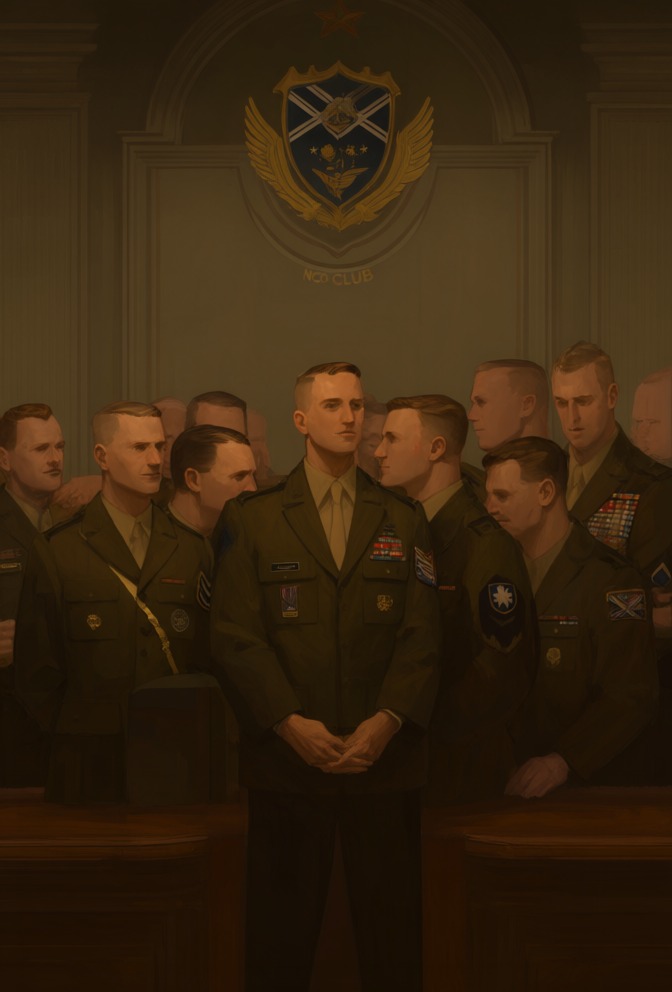
The NCO Club was a segregated recreational facility for white non-commissioned officers at the Derry Army Air Corps Base in the late 1920s and early 1930s. Its existence and the exclusion of black soldiers from Company E from using it directly led to the creation of the Black Spot, a makeshift club for the black enlisted men. The NCO Club's role in enforcing racial segregation on the base was a key factor in the social tensions that culminated in the 1930 fire at the Black Spot, a mass-casualty event that ended a cycle of violence in Derry.
The Neibolt Street Church School is a fundamentalist Christian school in Derry, Maine, attended by Mike Hanlon during the summer of 1958. Located on the corner of Route 2 and Neibolt Street, it stands near the abandoned house at 29 Neibolt Street, a key site of the Losers' Club's confrontations with It. The school's proximity to the trainyards and the house on Neibolt Street makes it a significant landmark in the geography of the children's summer, representing the intersection of religious education, the town's violent history, and the supernatural threat lurking beneath Derry.
The Rotary Club is a civic organization in Derry, Maine, whose sign appears on the town's border alongside those of the Elks and the Lions Club, marking Derry as a place of conventional community institutions. Its presence underscores the stark contrast between the town's ordinary public face and the extraordinary evil that lurks beneath it.
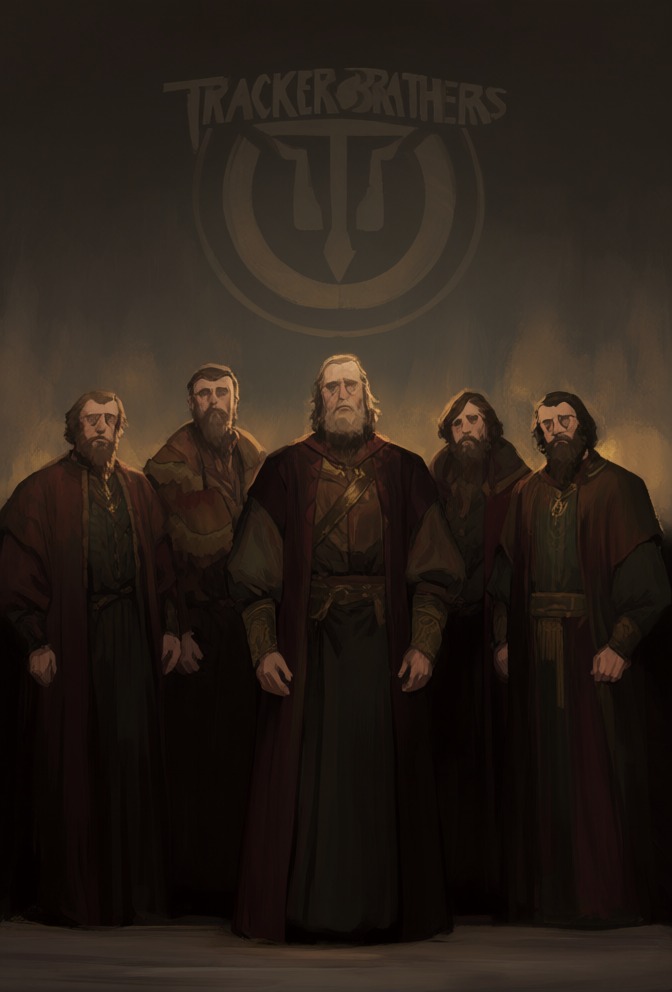
Tracker Brothers is a trucking depot in Derry, Maine, that serves as a key setting for the Losers' Club's childhood activities, particularly baseball games and the site of Eddie Kaspbrak's traumatic encounter with the leper. The depot's decline and eventual closure mirror the town's decay and the passage of time.
Ben's Mother's Supper Rule was a strict curfew imposed by Arlene Hanscom on her son Ben during the summer of 1958, requiring him to be home by six o'clock each evening or face the immediate threat of a police report. This rule was a direct response to the series of child murders terrorizing Derry, and it functioned as both a protective measure and a symbol of the town's pervasive fear.
Ben's Rock-Throwing Rule is a personal moral principle that Ben Hanscom, a member of the Losers' Club, articulates and enforces during the apocalyptic rockfight in the Barrens in July 1958. The rule, which states that one should not throw rocks at girls, emerges from Ben's outrage when Henry Bowers targets Beverly Marsh with a rock, and it marks a decisive moment in the conflict, reinforcing the Losers' solidarity and their rejection of the bullies' indiscriminate cruelty.
Mandy Fazio's Dump Rule is the unwritten but strictly enforced prohibition against children playing in the Derry town dump, enforced by the dump's keeper, Mandy Fazio. The rule reflects the broader adult anxiety about the dangers lurking in Derry's marginal spaces during the summer of 1958, a period marked by a series of child murders. It also serves as a narrative device that channels the Losers' Club's activities away from the dump and deeper into the Barrens, where their crucial confrontations with the town's evil take place.
Mr. Nell's Barrens Rule was an informal but binding directive issued by Derry beat officer Aloysius Nell to the Losers' Club in June 1958, after he discovered the dam they had built in the Barrens had backed up the city's gray-water drains. The rule required that whenever the children played in the Barrens, they must do so together as a gang, never split up or play hide-and-seek alone. It was a practical safety measure born of the child-murders then terrorizing Derry, but it also became the foundational code that welded the seven friends into a single unit and shaped every subsequent confrontation with the evil beneath the town.
The Derry Police Department's Stranger Danger Rules, prominently publicized during the 1958 child-murder crisis, instruct children never to talk to strangers or accept rides from anyone they do not know well. These rules are enforced through school assemblies, a citywide 7 P.M. curfew, and parental warnings, yet they prove tragically insufficient against the shape-shifting entity Pennywise, which easily circumvents them by adopting familiar or non-threatening forms.
The Shoplifting Prohibition is a rule prominently displayed in the Center Street Drug Store in Derry, warning customers that shoplifting is a crime and will be prosecuted. For Eddie Kaspbrak, this sign becomes a source of anxiety, making him feel guilty even when he has done nothing wrong, and it reflects the broader atmosphere of surveillance and control in Derry.
The Standpipe Lockdown Policy was a municipal regulation enacted in Derry, Maine, following a series of tragic drownings and a fatal infant accident within the Standpipe, a historic water tower and public observation tower. The policy permanently closed the Standpipe to the general public, locking both the ground-level door and the interior door leading to the platform over the water, effectively ending the decades-old tradition of family picnics and sightseeing at the tower. This rule transformed the Standpipe from a beloved community landmark into a forbidden, haunted space, and its enforcement created a site of profound terror for the Losers' Club, particularly Stanley Uris, who encountered the dead boys there.
Will Hanlon's Ironworks Prohibition is a rule established by Mike Hanlon's father, Will, forbidding Mike from exploring the ruins of the Kitchener Ironworks, a site of a catastrophic 1906 explosion that killed over a hundred people, mostly children. The prohibition, issued in the spring of 1958, was a direct response to the escalating child murders in Derry, but it also reflected Will's deeper, unspoken awareness that the place was dangerous in ways beyond the physical, as Mike's subsequent encounter with a monstrous giant bird there would prove.
Bill Denbrough's stutter is a speech impediment that defines his childhood and becomes a central motif in Stephen King's *It*. Triggered or severely worsened by the traumatic murder of his younger brother, George, the stutter shapes Bill's social isolation, his relationship with his parents, and his role as the reluctant leader of the Losers' Club. The impediment is not merely a character trait but a narrative device that reflects trauma, the struggle for self-expression, and the power of belief. Its eventual disappearance, first during moments of extreme stress and finally after the final confrontation with It, marks Bill's psychological healing and the end of the cycle of terror.
The Losers' Club's blood oath is a solemn promise made by seven children in the summer of 1958 to return to Derry and destroy the entity known as It if it ever resumed its cycle of murder. Sealed by cutting their palms with a shard of glass and clasping hands in a circle, the oath bound them together across twenty-seven years, serving as the narrative and moral foundation for their adult reunion and final confrontation.
The Turtle's death is a pivotal event in the macroverse, revealed during the final confrontation with It. The Turtle, a vast cosmic entity that created the universe, is said to have died, a fact that It uses to demoralize Bill Denbrough and signal that the protective force which once aided the Losers is gone.
1957 is the year that marks the beginning of the central horror in Stephen King's *It*, serving as the catalyst for the entire narrative. In the fall of that year, six-year-old George Denbrough is murdered by the entity known as Pennywise the Dancing Clown, an event that shatters his family, triggers the stutter of his brother Bill, and sets the stage for the Losers' Club's first confrontation with the ancient evil lurking beneath Derry, Maine. The year also establishes the town's cyclical pattern of violence, with the flood of 1957 preceding George's death and the subsequent murders of Betty Ripsom, Cheryl Lamonica, and others, all of which are part of a recurring 27-year cycle of terror.
1985 is the year of the reunion, when the adult members of the Losers' Club return to Derry, Maine, after receiving phone calls from Mike Hanlon, who has summoned them to fulfill a blood oath made in 1958 to confront the ancient, shape-shifting entity known as It. The year marks the climax of a new cycle of violence and the final, decisive battle against It, which results in the deaths of Eddie Kaspbrak and Stanley Uris, the destruction of much of downtown Derry, and the permanent end of the entity's reign of terror.
The fall of 1957 in Derry, Maine, marks the beginning of the terror that defines the novel, initiating the cycle of violence that culminates in the summer of 1958 and again in 1985. It is the season of George Denbrough's murder by Pennywise the Dancing Clown, an event that shatters the Denbrough family, triggers Bill Denbrough's severe stutter, and sets the Losers' Club on their path to confront the ancient evil lurking beneath their town.
July of 1958 is the pivotal summer month in which the seven members of the Losers' Club—Bill Denbrough, Beverly Marsh, Ben Hanscom, Richie Tozier, Eddie Kaspbrak, Stanley Uris, and Mike Hanlon—fully converge, confront the shape-shifting entity known as It, and forge the blood oath that binds them for twenty-seven years. During this single month, the children build a dam in the Barrens, survive an apocalyptic rockfight, construct an underground clubhouse, perform a smoke-hole ceremony that yields a vision of It's arrival on Earth, and make their first armed assault on the creature at 29 Neibolt Street. The month also sees Eddie Kaspbrak's arm broken by Henry Bowers, Beverly Marsh's violent flight from her father, and the deaths of Patrick Hockstetter and Eddie Corcoran. By the end of July, the Losers have created silver slugs, tested Beverly's marksmanship with Bill's slingshot, and committed themselves to a final confrontation in the sewers beneath Derry.
The disappearance of the original settlers of Derry in 1741 is a foundational mystery of the town, an event in which all three hundred and forty inhabitants vanished without a trace, leaving their village deserted and one house burned. This unexplained mass disappearance is the earliest recorded instance of the town's pattern of cyclical, catastrophic violence and erasure, and it establishes a template for the periodic horrors that follow, including the explosion at the Kitchener Ironworks, the fire at the Black Spot, and the murders committed by It. The event is a key piece of evidence in Mike Hanlon's investigation into Derry's haunted history, and its obscurity—unknown even to local schoolchildren—demonstrates the town's peculiar ability to forget its own darkest moments.
The spring of 1958 in Derry, Maine, is the season of awakening that precedes the summer of horror. It is a time of lingering winter cold, the first thaw, and the slow return of life to the Barrens. For the Losers' Club, it is the season when each member first encounters the entity that will define their summer—Ben sees the mummy on the frozen Canal, Eddie meets the leper under the Neibolt Street porch, Stan confronts the dead boys in the Standpipe, and Mike is attacked by the giant bird at the Kitchener Ironworks. It is also the season of the first murders of the new cycle, beginning with George Denbrough's death the previous autumn and continuing through the winter and spring. The spring of 1958 is the threshold between ordinary childhood and the extraordinary terror that will bind seven children together.
The winter of 1957-58 in Derry, Maine, was the season in which the cycle of terror that would culminate in the summer of 1958 began. It was marked by the murder of George Denbrough in October 1957, the first of a series of child killings that terrorized the town, and by the initial, isolated encounters of the future Losers' Club members with the entity that would later be known as It. This period established the atmosphere of fear, the curfew, and the psychological groundwork for the children's eventual confrontation.
Samuel Hamilton confronts Adam Trask in a violent, transformative intervention that shakes Adam out of a year-long catatonic grief after Cathy's abandonment, forcing him to acknowledge and name his twin sons, Caleb and Aaron, and thereby re-enter the world of the living.
The coyote is a recurring wild creature in the Salinas Valley landscape of John Steinbeck's East of Eden, appearing as a symbol of the region's harsh, untamed nature and as a figure of cunning survival. It is associated with the marginal lands where the poor and desperate live, and its howl is described as a blend of sorrow and laughter, reflecting the novel's themes of loneliness, predation, and the thin line between human and animal existence.
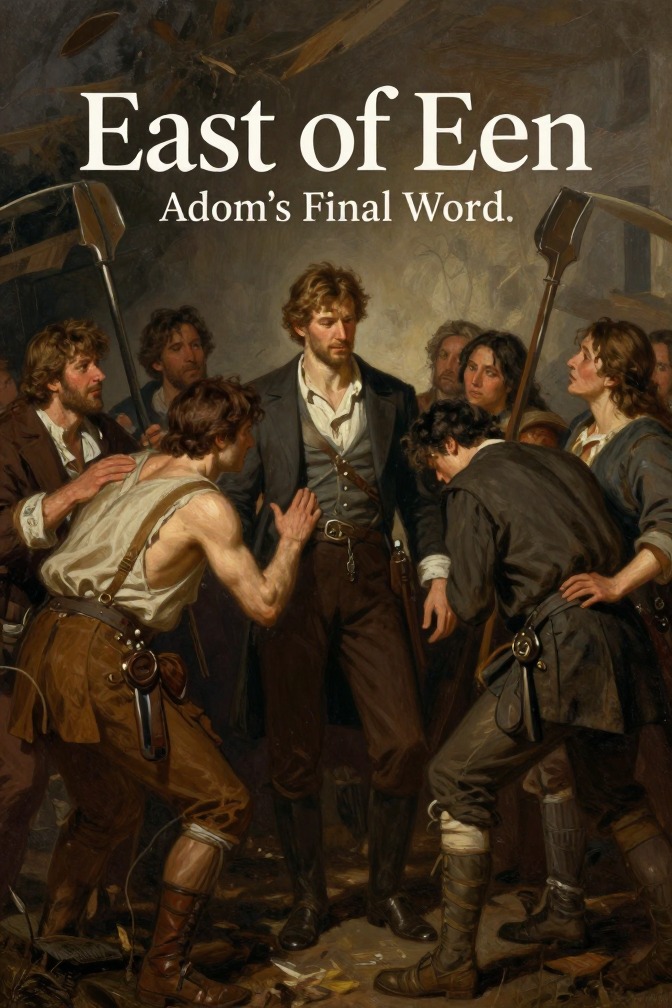
Adam Trask's final word, whispered as he lies paralyzed and dying, is "Timshel"—the Hebrew word meaning "thou mayest" that Lee had discovered through years of study with Chinese scholars. This single utterance, the last sound he makes before slipping into sleep, completes the novel's central theological argument about free will and human choice, transforming Adam from a passive victim of his wife's cruelty into an active agent who grants his son Caleb the blessing of moral freedom.
Aron Trask, the golden-haired twin who had been groomed for college and the ministry, secretly enlisted in the United States Army in the winter of 1917–1918, lying about his age to escape the unbearable knowledge of his mother's identity and the shame he felt in Salinas.
Joe Valery's death is the violent culmination of his blackmail scheme against Kate, a moment in which the novel's moral economy reasserts itself through the accidental agency of Sheriff Quinn's investigation. The fleeing pimp is shot dead by Deputy Oscar Noble while trying to escape a routine check that would have exposed his criminal record, and his corpse is found carrying the incriminating photographs and the will that together seal Kate's legacy and the fate of her surviving son.
Kate's suicide is the final, self-willed act of a woman who, after a lifetime of manipulating and destroying others, confronts the possibility that she has missed something essential in human goodness and, unable to bear the weight of that realization, chooses to erase herself entirely.
The G.A.R. headquarters in Washington, D.C., served as the institutional base from which Cyrus Trask, a one-legged private who never saw combat, rose to become a powerful figure in national military politics, leveraging his fabricated war record and genuine organizational talent to influence army policy and accumulate a secret fortune of over $100,000.
Fallow man is a metaphor developed by Samuel Hamilton in John Steinbeck's East of Eden to describe Adam Trask's willful emotional and spiritual stagnation after his wife Cathy abandons him. Samuel uses the image of fallow land—fertile soil deliberately left unplanted—to accuse Adam of letting his life, his talents, and his capacity for love lie waste out of a self-indulgent attachment to his own hurt. The concept crystallizes the novel's central tension between passive suffering and the active choice to engage with life, and it becomes a key turning point in Adam's slow journey back toward human connection.