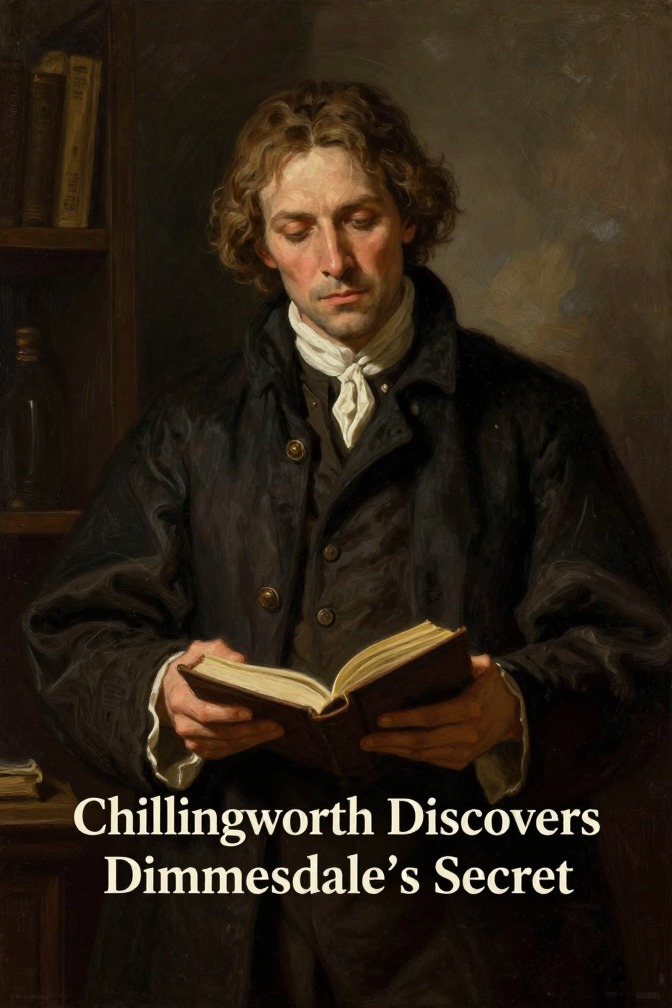
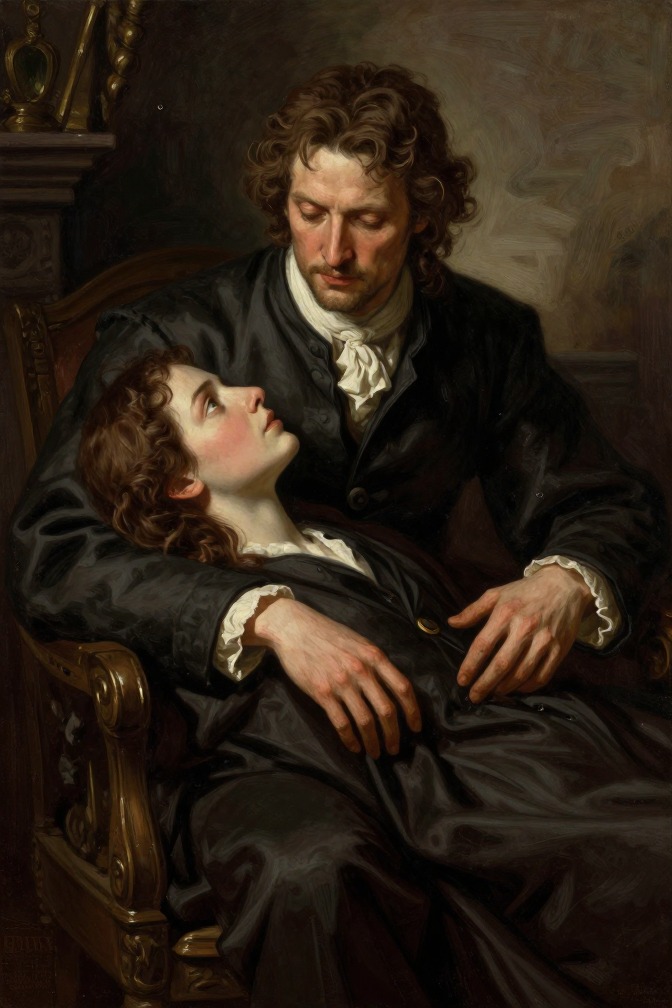
Chillingworth Discovers Dimmesdale's Secret is the pivotal moment when Roger Chillingworth, having long suspected Arthur Dimmesdale of being Hester Prynne's secret lover, finally confirms his suspicion by seeing a mark on the minister's chest while Dimmesdale sleeps, transforming the physician's quest for truth into a diabolical campaign of psychological torture.
Roger Chillingworth's death and bequest mark the final dissolution of his vengeful purpose and the material liberation of Pearl, transforming the demon-child into the richest heiress in New England and severing the last legal tie binding Hester to her past.
Hester Prynne returns to her cottage by the sea-shore after many years abroad, resumes the scarlet letter of her own free will, and lives out her remaining days in New England as a counselor to troubled women, dying and being buried near Arthur Dimmesdale under a shared tombstone bearing the scarlet letter.
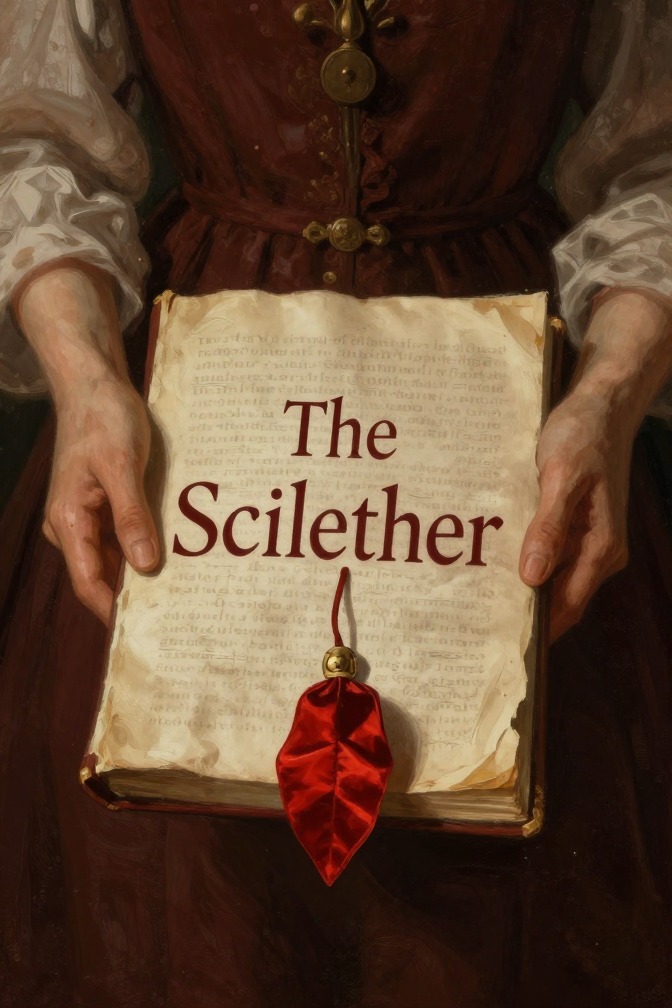
The Scarlet Letter Punishment is the sentence imposed on Hester Prynne by the Puritan magistrates of Boston, requiring her to stand on the scaffold for three hours and thereafter to wear a scarlet letter 'A' on her bosom for the remainder of her natural life. This punishment, which combines public humiliation with a permanent mark of shame, becomes the central symbol of the novel and the defining condition of Hester's existence, shaping her identity, her relationships, and her eventual transformation from an outcast into a figure of communal reverence.
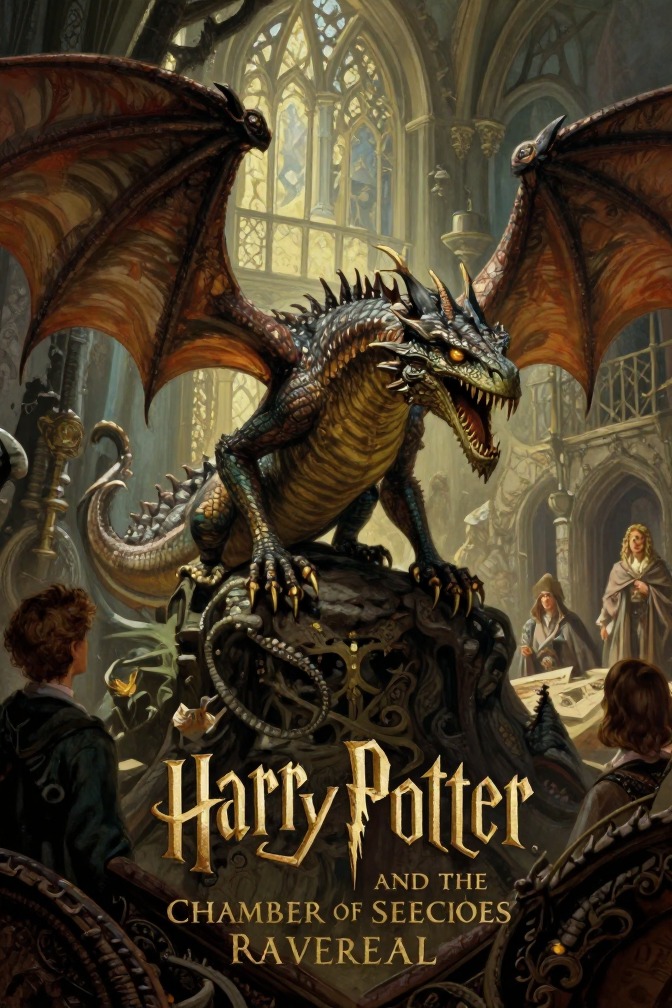
The Basilisk Revelation is the pivotal moment in Harry Potter and the Chamber of Secrets when Harry, Ron, and Hermione finally identify the monster of the Chamber of Secrets as a Basilisk, a giant serpent whose deadly gaze and venomous fangs have been petrifying victims. The revelation, triggered by a page torn from an old library book clutched in Hermione's petrified hand, explains the mysterious voice only Harry can hear, the spiders fleeing the castle, and the deaths of the roosters, and it sets the trio on the path to the Chamber's entrance.
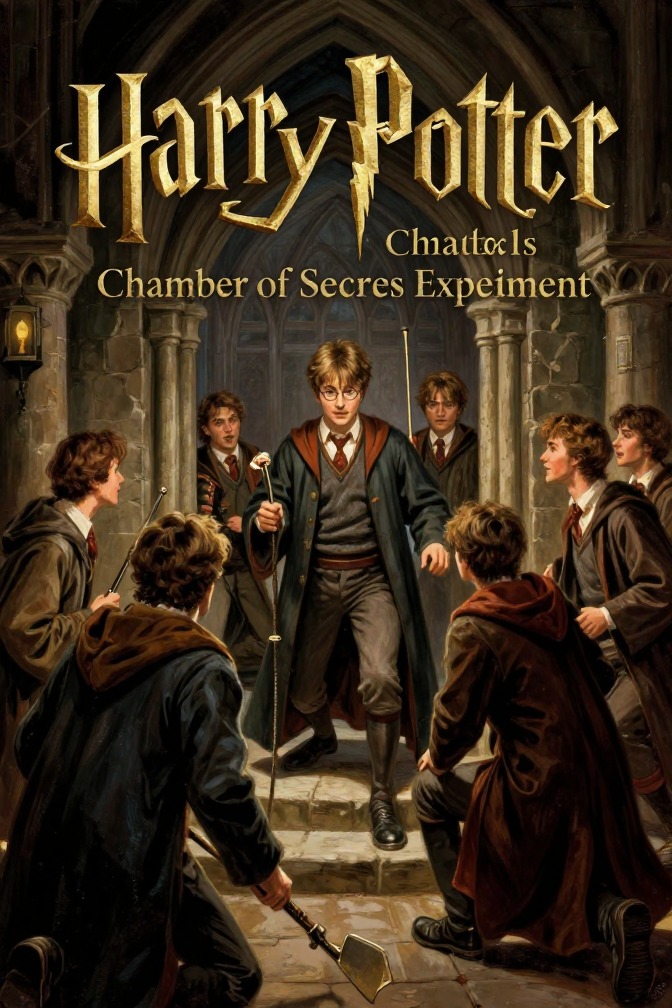
The Chamber of Secrets Expedition is the climactic descent into the hidden dungeon beneath Hogwarts, where Harry Potter, Ron Weasley, and a reluctant Gilderoy Lockhart enter the legendary Chamber to rescue Ginny Weasley and confront the basilisk and the memory of Tom Riddle.
Mrs. Medlock is the housekeeper at Misselthwaite Manor, a stout, sharp-eyed woman in a purple dress who is sent by Archibald Craven to fetch Mary Lennox from London and bring her to Yorkshire. She is a practical, no-nonsense servant who obeys her master's orders without question, but she also reveals key information about the manor's tragic history and the locked garden, and she becomes an unwitting enabler of the children's secret activities.
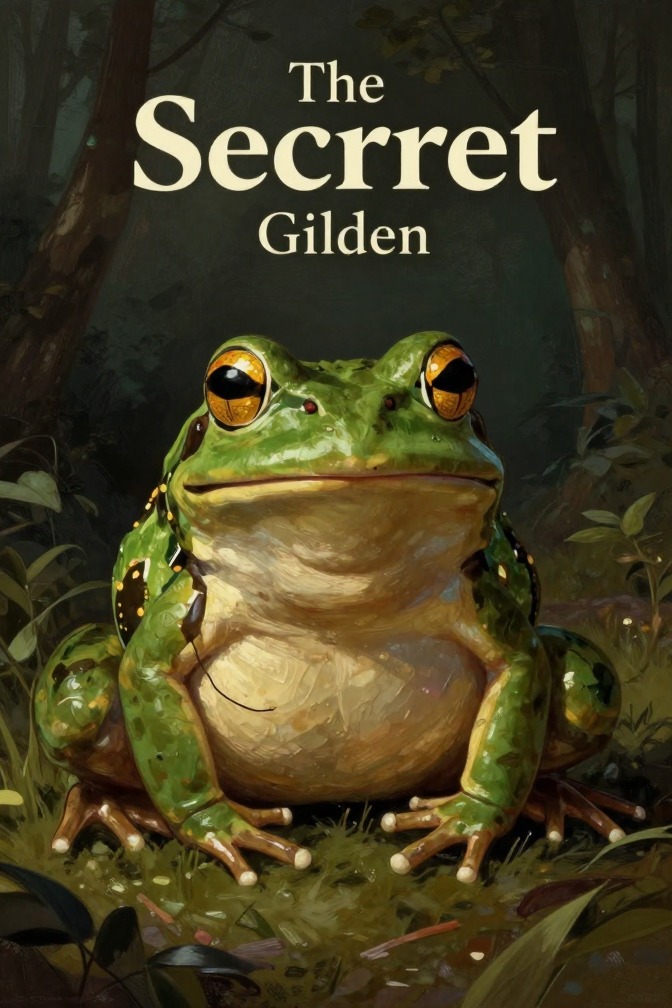
The frog is a minor creature in The Secret Garden, appearing briefly as part of the rich ecosystem of the secret garden that Colin Craven discovers and explores during his recovery.
The rabbit is a wild creature of the moor that appears in the secret garden as part of the animal community drawn to Dickon Sowerby's gentle presence, illustrating the harmony between humans and nature that the garden fosters.
Colin Craven's first visit to the secret garden marks the climax of his physical and psychological transformation, as the hidden, overgrown garden he has only imagined becomes a tangible reality that awakens him to the possibility of life and health.
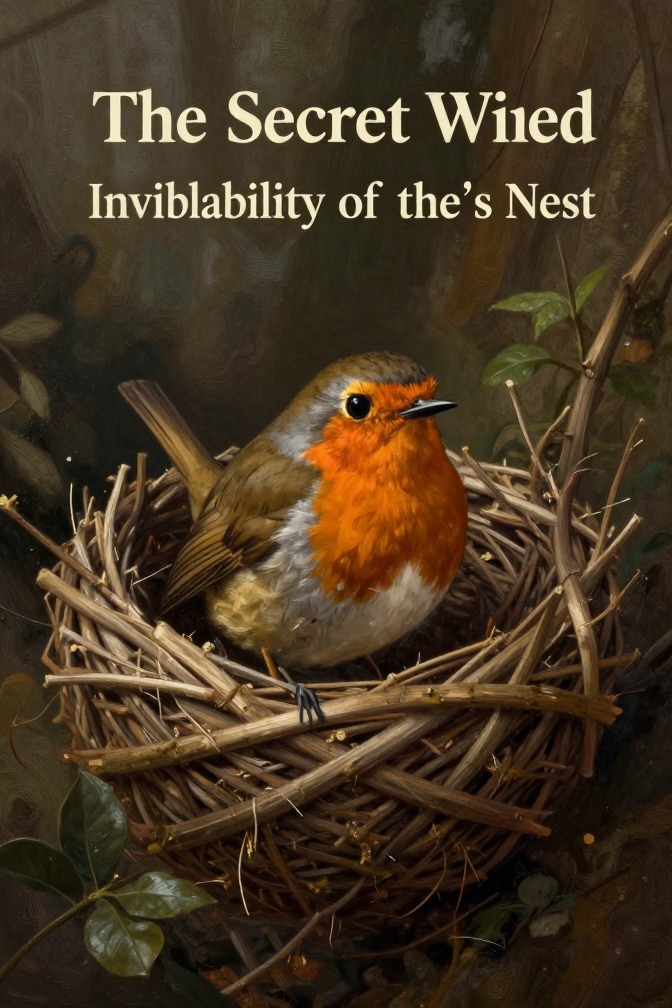
The Inviolability of the Robin's Nest is an unwritten but absolute rule that governs the behavior of everyone who enters the secret garden, establishing that the robin's nest and its eggs must never be disturbed, touched, or even approached too closely, and that any violation of this principle would destroy the happiness and harmony of the entire garden.
In the final scene of A Clockwork Orange, Alex, now eighteen and leading a new gang of droogs—Len, Rick, and Bully—finds himself bored, restless, and increasingly detached from the ultra-violence that once defined him. After a desultory evening of petty assault and drinking at the Duke of New York, he sends his droogs away and wanders alone through the winter streets, haunted by a vision of himself as an old man and by a newspaper clipping of a baby he cannot explain. A chance encounter with his former droog Pete, now married and settled, crystallizes a profound internal shift: Alex realizes he is growing up, that youth is a mechanical, clockwork phase, and that he must now seek a mate and a son. The scene ends with Alex walking off alone into the future, bidding farewell to the reader and to his own violent past.
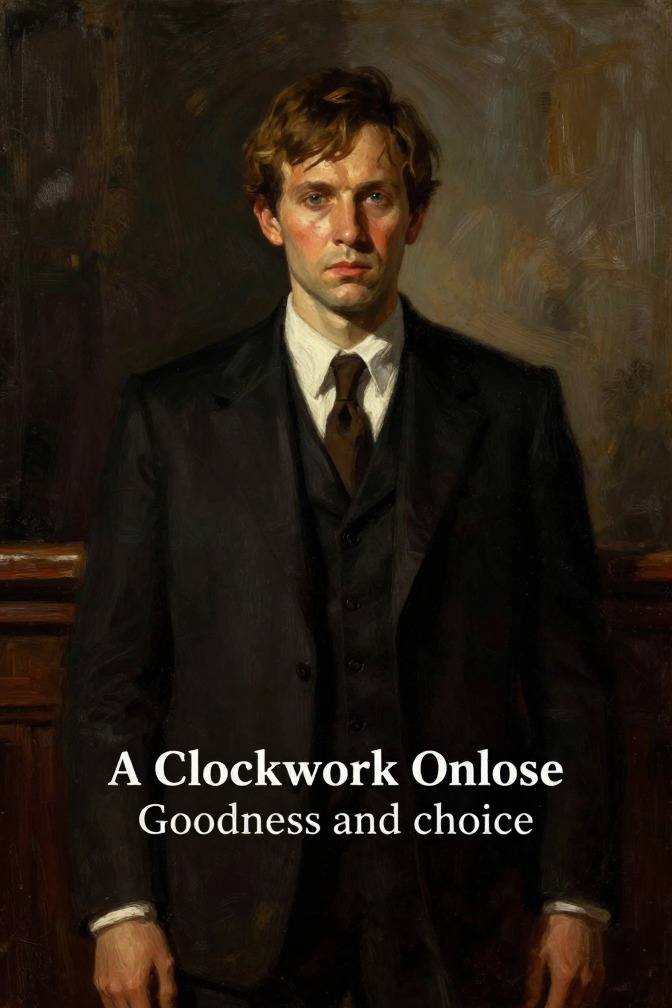
Goodness and choice is the central philosophical concept of Anthony Burgess's A Clockwork Orange, explored through the novel's dramatization of whether a morally significant good can exist without the freedom to choose evil. The concept is tested by the Ludovico Technique, a conditioning treatment that forcibly suppresses violent impulses, and is debated by the prison chaplain, Alex himself, and the writer F. Alexander, each offering a different understanding of what it means to be good.
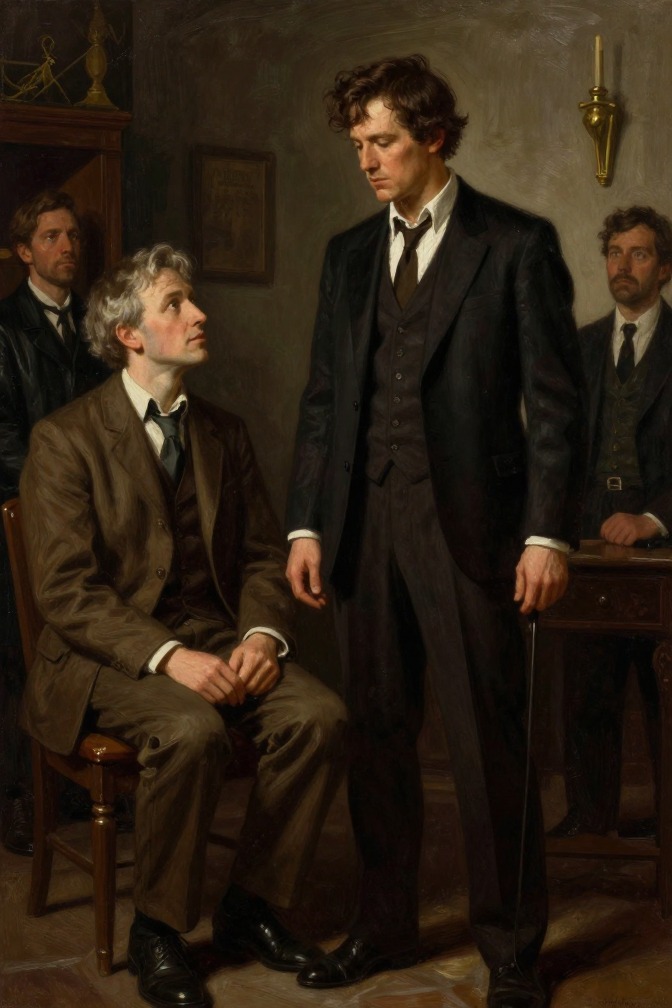
The Ludovico Technique Conditioning is the central event of Part Two of A Clockwork Orange, in which the teenage protagonist Alex is subjected to a state-sponsored aversion therapy designed to eliminate his capacity for violence and criminal behavior. Over a fortnight of forced film-viewing sessions, Alex is injected with a nausea-inducing drug and strapped into a chair with his eyes clamped open, forced to watch graphic depictions of violence, rape, and war while his body learns to associate those images with extreme physical sickness. The procedure succeeds in suppressing his violent impulses but also destroys his ability to enjoy music and sex, raising profound questions about free will, moral choice, and the nature of goodness.
Ultra-violence is the term used throughout Anthony Burgess's *A Clockwork Orange* to denote the extreme, gratuitous physical brutality that Alex and his droogs inflict for pleasure, power, and existential assertion. It is the central action of the novel's first part and the very behavior that the Ludovico Technique is designed to eradicate, making it the axis around which the story's moral and political questions turn.
The Hospital is the medical facility where Alex is treated after his suicide attempt, and it becomes the site of his physical recovery and the reversal of the Ludovico conditioning, culminating in his reconciliation with the government and the restoration of his capacity for violence.
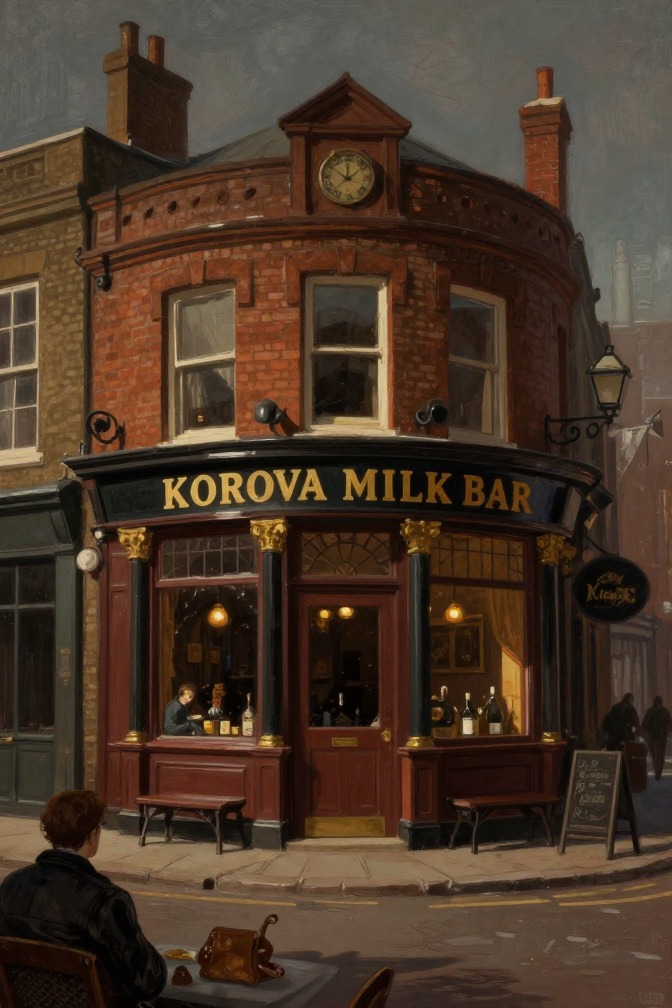
The Korova Milkbar is the novel's central teenage hangout, a milk-plus bar where Alex and his droogs gather to plan their evenings of ultra-violence, and it recurs throughout the story as a symbol of youth, freedom, and the drug-laced consumer culture of the dystopian state.
State Marine Insurance is the company where Pete, Alex's former droog, works after leaving his criminal youth behind, a detail that surfaces during their chance reunion in a coffee shop and underscores Pete's transition into conventional adult life.
Wilsonsway is a street in the unnamed city where Alex lives, mentioned as the location of Municipal Flatblock 18A, the apartment building where Alex resides with his parents.
The Opera Ghost's memorandum-book is the contractual instrument through which Erik, the Phantom of the Opera, formalized his secret dominion over the Paris Opera House. Inserted into the official conditions of the National Academy of Music in red ink, it demanded a monthly allowance of twenty thousand francs and the exclusive reservation of Box Five, establishing the ghost's demands as binding terms that successive managers were forced to honor or defy.
Alexander Kintner, a six-year-old boy, is the second victim of the great white shark that terrorizes Amity, Long Island. His death on June 20, while he was floating on a rubber raft just offshore, is the pivotal event that exposes the town's cover-up of the first attack and forces Police Chief Martin Brody to confront his own guilt and the town's economic desperation.
Bill Whitman is a reporter for the New York Times who covers the shark attacks in Amity, representing the national media's intrusion into the local crisis and serving as a persistent, often adversarial, presence for Chief Brody.
Len Hendricks is a young Amity police officer whose professional and personal trajectory mirrors the town's escalating crisis. Initially a night-shift patrolman reading detective novels and dreaming of advancement, he is thrust into the heart of the shark attacks, first discovering Christine Watkins's mutilated body, then witnessing Morris Cater's death and attempting a rescue. His experiences transform him from a detached, procedural cop into a traumatized but reliable witness and a key figure in the beach closures, embodying the shift from routine police work to a struggle for survival.
Tarpon are large, powerful game fish that appear in the novel as a symbol of Quint's past as a charter fisherman in Florida, representing both his professional expertise and his utilitarian, unsentimental approach to marine life.
WNBC-TV News, a New York City television station, played a pivotal role in the Fourth of July weekend beach opening incident, its news crew capturing the near-fatal shark attack on a teenage swimmer and broadcasting the event, which forced the immediate re-closure of Amity's beaches and exposed the town's crisis to a national audience.
Quint's cash-in-advance charter rule is a strict, non-negotiable business practice that defines his professional conduct and reflects his cynical, self-reliant worldview. He demands payment in cash, every day, before the boat leaves the dock, a policy he enforces with absolute rigidity even when the town of Amity is desperate for his help to kill the man-eating shark. This rule is not merely a financial preference but a declaration of independence and a tool of power, allowing him to dictate terms and assert his superiority over clients he regards as desperate and ignorant.
Gallant is a key concept in The Outsiders, representing a code of honorable, self-sacrificing courage that Johnny Cade redefines through his final actions, contrasting with the gang's usual toughness and providing a moral framework for Ponyboy's understanding of heroism.
Tim Shepard's gang is a rival greaser outfit from the East Side, organized under the strict leadership of Tim Shepard, that operates alongside Ponyboy Curtis's group in the Greaser-Soc rivalry of S. E. Hinton's The Outsiders.
The relationship between Darry and Ponyboy Curtis is the central emotional conflict of The Outsiders, a strained bond between two brothers who, after the death of their parents, struggle to understand each other across a gulf of age, responsibility, and temperament. Darry, the eldest, has sacrificed his future to keep the family together, and his intense pressure on Ponyboy is born of fear and love, while Ponyboy perceives it as coldness and rejection. Their journey from open conflict to a hard-won, tearful reconciliation forms the novel's emotional core, teaching Ponyboy that love can wear a stern face.
The friendship between Johnny Cade and Dallas Winston is a central, tragic relationship in The Outsiders, defined by Johnny's intense hero-worship of the hardened, violent Dally and Dally's protective, almost paternal love for the vulnerable Johnny. Their bond reveals the emotional depths beneath the greasers' tough exteriors and ultimately drives both characters to their deaths.