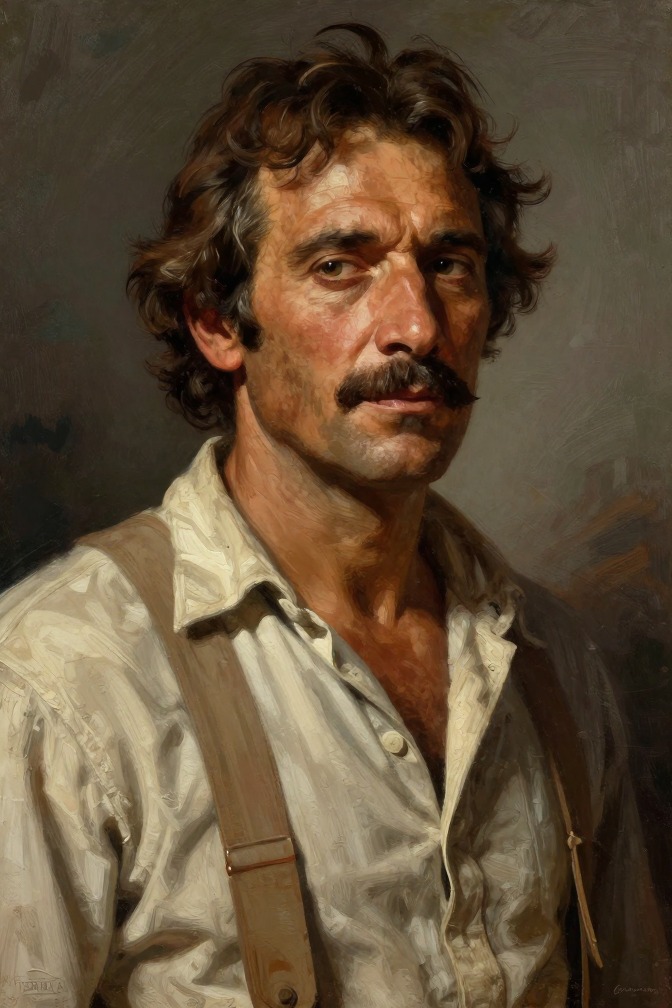
Charlie Sloane is a minor but recurring character in Anne of Green Gables, a boy in Anne Shirley's class at Avonlea school who develops an unrequited romantic infatuation with her. His persistent, awkward admiration—expressed through gifts, boasts, and a willingness to defend her honor—serves as a foil to the more complex rivalry and eventual friendship between Anne and Gilbert Blythe, and highlights Anne's own growth in social awareness and her firm rejection of his advances.
Brunswick is a master shoemaker in the village who becomes a pivotal, antagonistic figure in K.'s struggle with the castle authorities. Initially appearing as a hostile villager who expels K. from Lasemann's house, Brunswick is later revealed to have been the leader of the faction that once agitated for a land surveyor's appointment, making him a complex figure whose political ambitions and personal grievances shape K.'s fate. His role as Hans's father and his connection to the Barnabas family's downfall further entangle him in the novel's web of bureaucratic confusion and social exclusion.
Hans Brunswick is a twelve-year-old schoolboy in the village who, moved by compassion for K.'s bleeding hand, deserts his classroom to offer help, becoming a brief but significant ally. His conversations with K. reveal the deep entanglement of family loyalty, the village's social hierarchies, and the desperate hopes placed on the land surveyor as a potential savior.
Jeremias is one of the two assistants assigned to K., the land surveyor, by the castle authorities. He is a former childhood playmate of Frieda and, after being dismissed by K., becomes the instrument of Frieda's departure, ultimately taking her as his own. His role in the novel is to embody the castle's intrusive, ambiguous control over K.'s life and to catalyze the collapse of K.'s relationship with Frieda.
The relationship between Amalia and Sortini is a pivotal, tragic episode in Franz Kafka's The Castle, recounted by Olga to K. It begins at a fire-brigade festival when Sortini, a reclusive castle official, becomes fixated on Amalia and sends her a crude, commanding letter. Amalia's defiant refusal to obey, tearing up the letter and throwing it at the messenger, triggers the social ostracism and ruin of her entire family, marking a turning point that contrasts sharply with Frieda's compliant relationship with Klamm.
The relationship between Frieda and Klamm is a central and ambiguous bond in Kafka's The Castle, defining Frieda's social status, her power over K., and the novel's exploration of intimacy with an inaccessible authority. Their connection—simultaneously intimate and distant, real and rumored—shapes Frieda's identity as Klamm's former lover, her departure from the Castle Inn, and her eventual separation from K., while also illuminating the castle's pervasive influence over village life.
K. and Frieda's relationship is the emotional and strategic core of Kafka's The Castle, a rapid, passionate union that lifts K. from utter isolation into the village's social fabric, only to collapse under the weight of bureaucratic entanglement, jealousy, and the inescapable shadow of Klamm. Their bond—forged in a single night under the bar of the Castle Inn—becomes both K.'s only foothold in the community and the source of his deepest vulnerability, ultimately dissolving when Frieda, swayed by the assistants and the landlady's suspicions, abandons him for Jeremias, leaving K. more isolated than before.
The relationship between K. and Klamm is the central, unresolved axis of Kafka's The Castle, defined by K.'s relentless pursuit of a personal interview with the elusive chief executive and Klamm's absolute, silent inaccessibility. From the moment of K.'s arrival, Klamm functions as the ultimate authority whose recognition K. seeks, yet every attempt at direct contact is deflected through intermediaries, bureaucratic channels, and the castle's own paradoxical logic. The relationship evolves from K.'s initial hope of a straightforward audience to a complex, almost theological struggle, where Klamm's remoteness becomes both the obstacle and the very substance of K.'s quest, ultimately leaving K. exhausted and no closer to his goal.
K. and the castle is the central, defining relationship of Franz Kafka's unfinished novel, tracing the land surveyor's relentless, frustrated quest for official recognition and access to the mysterious castle that dominates the village. From his first night, when he is challenged for lacking a permit, to his final summons by the secretary Erlanger, K.'s interactions with the castle's authorities—through letters, telephone calls, and intermediaries—reveal a bureaucracy that is at once omnipotent and elusive, shaping his every move and ultimately leaving him exhausted and isolated.
The kite runner is the person who chases and retrieves fallen kites during the winter kite-fighting tournaments in Kabul, a role that carries deep cultural significance and personal meaning within the novel. Hassan is the most celebrated kite runner in the story, and his identity as a kite runner becomes intertwined with themes of loyalty, sacrifice, and redemption.
Rahim Khan's remark that 'children aren't coloring books' is a pivotal statement of parental philosophy in The Kite Runner, encapsulating the novel's central tension between a father's desire to mold his son and the son's need to develop his own identity. Spoken in a private conversation with Baba, the line directly challenges Baba's frustration with Amir's perceived lack of masculinity and sets the stage for the novel's exploration of guilt, redemption, and the painful gap between expectation and reality.
The Rahim Khan-Amir Relationship is a foundational bond in The Kite Runner, defined by Rahim Khan's role as Amir's mentor, confidant, and the catalyst for his redemption. Unlike Baba's critical distance, Rahim Khan offers unconditional support, recognizing Amir's literary talent and later revealing the truth about Hassan's parentage, which compels Amir to confront his past and seek atonement.
The Soviet occupation of Afghanistan (1979–1989) was a decade-long military intervention that devastated the country, destroyed its social fabric, and triggered a cycle of war, displacement, and radicalization that continued long after the last Soviet troops withdrew. For the characters of The Kite Runner, the occupation marks the definitive end of the peaceful, prosperous Afghanistan of their childhood and the beginning of an era of violence, exile, and loss that shapes every subsequent event in the novel.
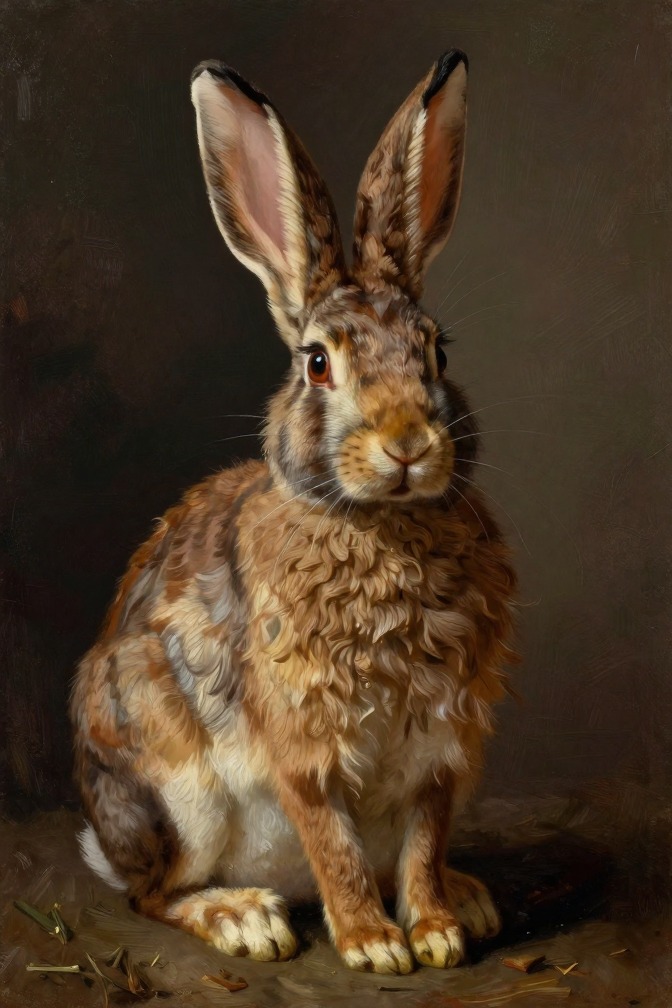
The jackrabbit appears in John Steinbeck's The Pearl as a minor but significant creature of the desert landscape, encountered by Kino and Juana during their desperate flight into the mountains after the pearl has brought violence and pursuit upon their family.
The Song of Evil is a recurring musical motif in John Steinbeck's novella The Pearl that represents the presence of danger, hostility, and moral corruption. It first appears when a scorpion threatens Kino's infant son Coyotito and grows in intensity as the great pearl draws greed, violence, and tragedy into the family's life, eventually becoming indistinguishable from the pearl's own music.
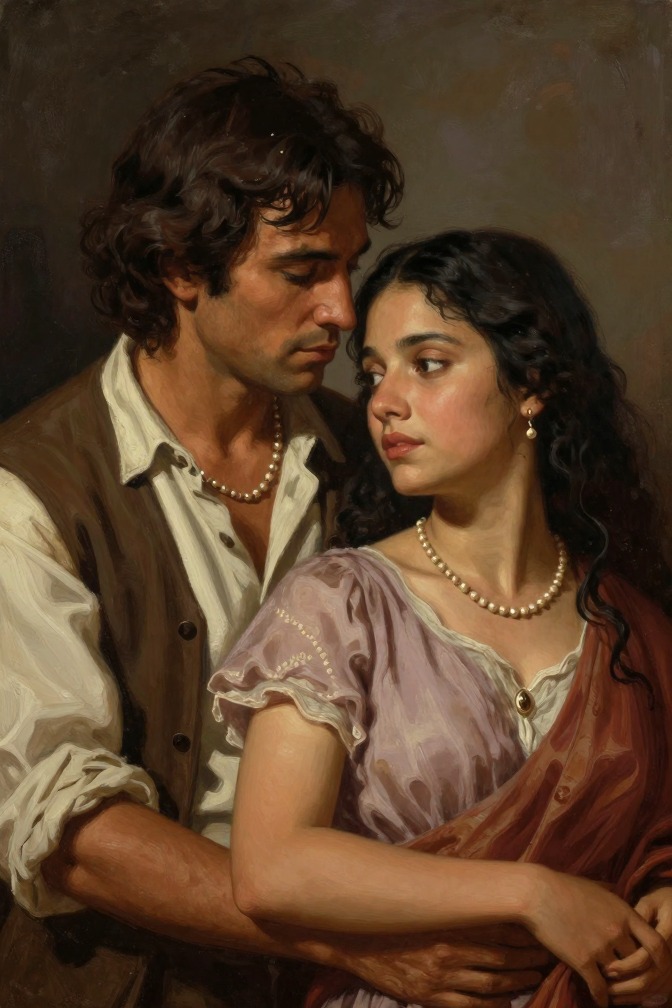
Kino and Juana's marital relationship is the emotional and moral core of The Pearl, a bond that begins in silent, harmonious unity and is tested to its breaking point by the greed and violence unleashed by the discovery of the great pearl, ultimately surviving through shared tragedy and a final act of mutual redemption.
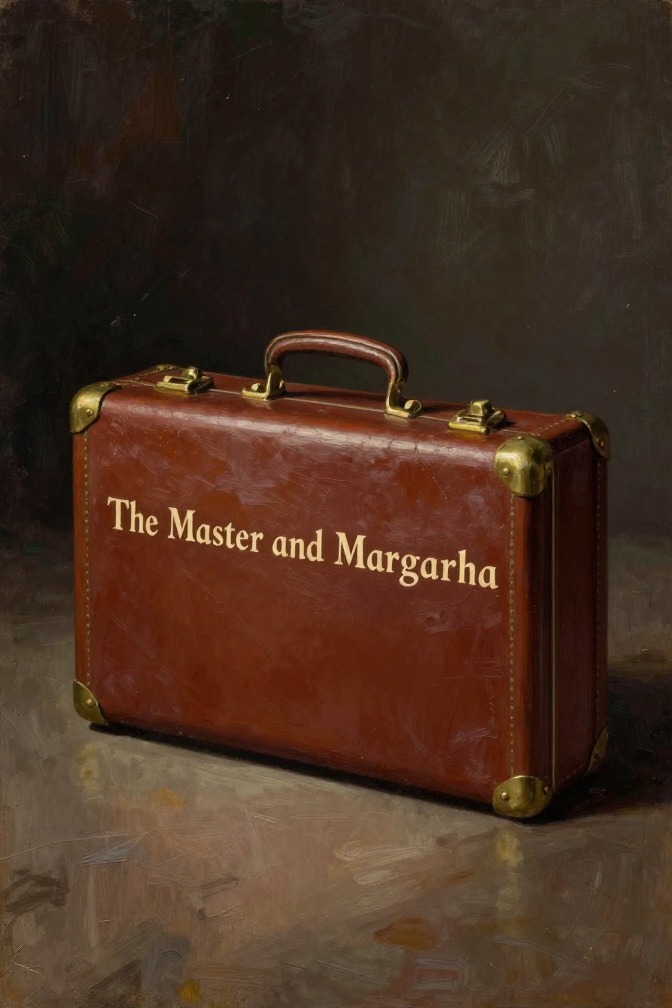
Annushka is a minor but pivotal character in Mikhail Bulgakov's *The Master and Margarita*, a seemingly ordinary Moscow woman whose accidental spilling of sunflower oil at a tram turnstile directly causes the death of the literary editor Mikhail Alexandrovich Berlioz, thereby setting the entire supernatural plot of the novel in motion. Her single, mundane action, foretold by the devil Woland, transforms her into an unwitting agent of fate, demonstrating how the most trivial events can have catastrophic consequences in a world where the ordinary and the extraordinary collide.
Ivan Savelyevich Varenukha is the administrator of the Variety Theatre in Moscow, a diligent but easily intimidated official whose routine life is shattered when he becomes entangled with Woland's demonic retinue. After attempting to deliver incriminating telegrams about the vanished director Styopa Likhodeev, Varenukha is ambushed, beaten, and forcibly transformed into a vampire, serving as a key instrument of terror against his colleague Rimsky before being restored to human form by the crowing of a rooster at dawn.
Yeshua Ha-Nozri is the wandering philosopher whose trial and execution form the moral and narrative center of Bulgakov's novel, embodying the themes of truth, cowardice, and the possibility of redemption across two thousand years.
The eagle appears in The Master and Margarita as a recurring symbol of imperial power, predatory indifference, and the natural order that remains untouched by human suffering. It is most prominently associated with the Roman procurator Pontius Pilate, whose emblematic eagle standards and the living birds that circle over the crucifixion site reinforce the novel's themes of authority, cowardice, and the vast, unfeeling cosmos.
The Magic Money is a central prop in the black magic seance at the Variety Theatre, where Woland's assistant Fagott conjures a rain of genuine ten-rouble bills that later transform into worthless objects, exposing the greed and credulity of the Moscow public and serving as a carnivalesque critique of Soviet materialism.
Varenukha's Briefcase is the object that carries the incriminating telegrams from Yalta and becomes the focal point of the vampire attack on the administrator Ivan Savelyevich Varenukha, marking the point at which the supernatural forces of Woland's retinue directly seize control of the Variety Theatre's administrative apparatus.
Massolit is the official Moscow literary association in Bulgakov's novel, a bureaucratic and privileged organization that controls literary production, access to resources, and social status, serving as a primary target of the novel's satire.
Rose of Sharon's final act, in which she breastfeeds a starving stranger in a flooded barn, is the novel's culminating and most controversial image—a gesture of radical, selfless communion that transcends family boundaries and embodies the novel's central theme of collective survival through shared sacrifice.
Al Joad is the second son of the Joad family, a mechanically gifted teenager whose practical skills with automobiles become indispensable to the family's migration from Oklahoma to California, and whose personal journey from a cocky, girl-chasing adolescent to a responsible young man engaged to be married marks a key subplot of the novel.
Floyd Knowles is a young migrant worker whom the Joads meet in a Hooverville near Bakersfield, California. A sharp-eyed, disillusioned veteran of the California labor market, he becomes a crucial source of information about the realities of migrant work—the wage-cutting system, the blacklist, and the futility of handbills—and his brief, violent encounter with a labor contractor and a deputy sheriff precipitates Jim Casy's arrest and Tom Joad's deepening involvement in the struggle for workers' rights.
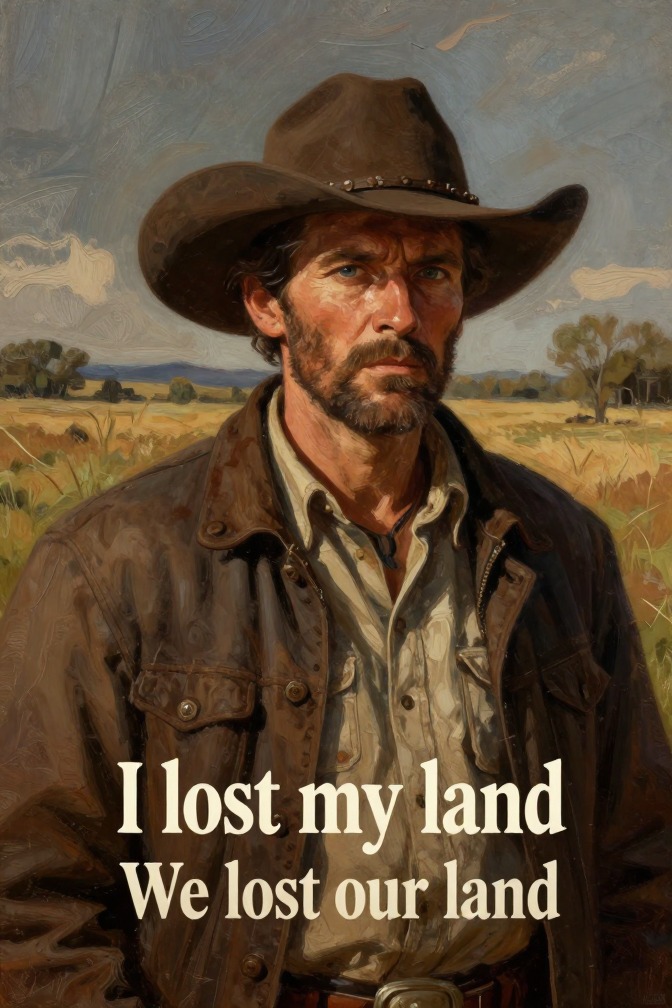
The expression 'I lost my land / We lost our land' marks the pivotal shift from individual dispossession to collective consciousness in John Steinbeck's The Grapes of Wrath, encapsulating the transformation of isolated tenant farmers into a unified migrant class. This linguistic turn, occurring in the novel's intercalary chapter 14, crystallizes the moment when personal tragedy becomes shared experience, laying the ideological groundwork for collective action against the economic forces that have uprooted them.
The grapes of wrath are filling is the culminating metaphor of John Steinbeck's novel, appearing in the final sentence of Chapter 25. It transforms the biblical image of divine judgment from the "Battle Hymn of the Republic" into a secular, political warning: the accumulated suffering, hunger, and anger of the dispossessed migrant people are ripening into an inevitable, explosive force that will demand justice.
The pick handle is a mundane farm tool that becomes the instrument of lethal violence in John Steinbeck's The Grapes of Wrath, marking the novel's most decisive turn from passive suffering to active, retaliatory force. In the hands of Tom Joad, the same object that had been used to kill once before is swung again in a spontaneous, brutal act of vengeance after the murder of Jim Casy, transforming the pick handle from a symbol of labor into a weapon of class war and sealing Tom's fate as a fugitive.
Santiago is the aging Cuban fisherman at the heart of Ernest Hemingway's The Old Man and the Sea, a man whose epic three-day battle with a giant marlin becomes a profound test of endurance, pride, and the human spirit. His story is a meditation on struggle, brotherhood with the natural world, and the dignity found in striving against overwhelming odds.