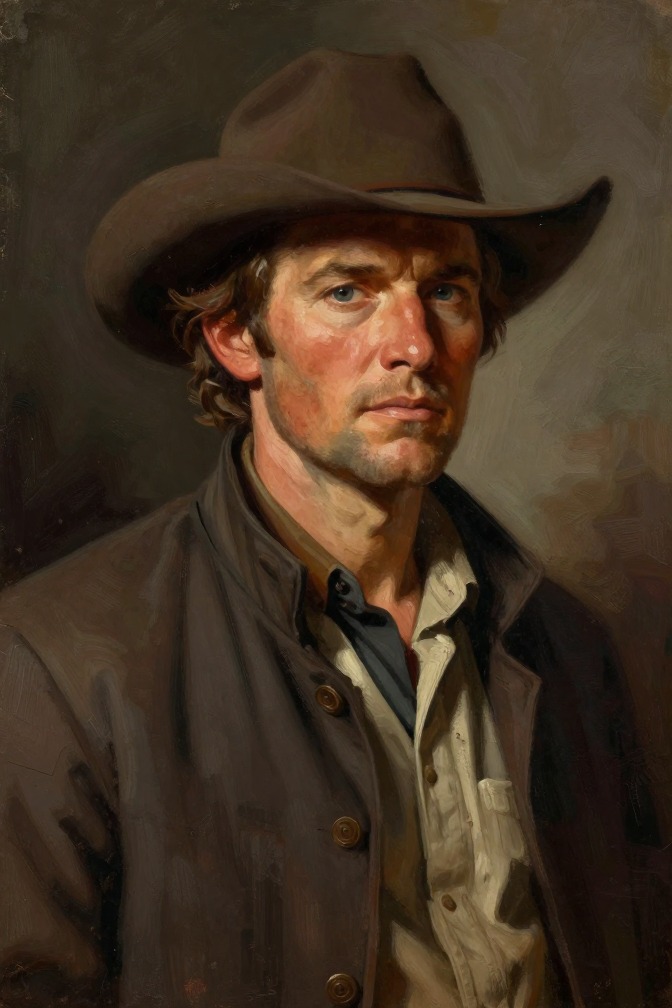
Rose of Sharon's final act, in which she breastfeeds a starving stranger in a flooded barn, is the novel's culminating and most controversial image—a gesture of radical, selfless communion that transcends family boundaries and embodies the novel's central theme of collective survival through shared sacrifice.
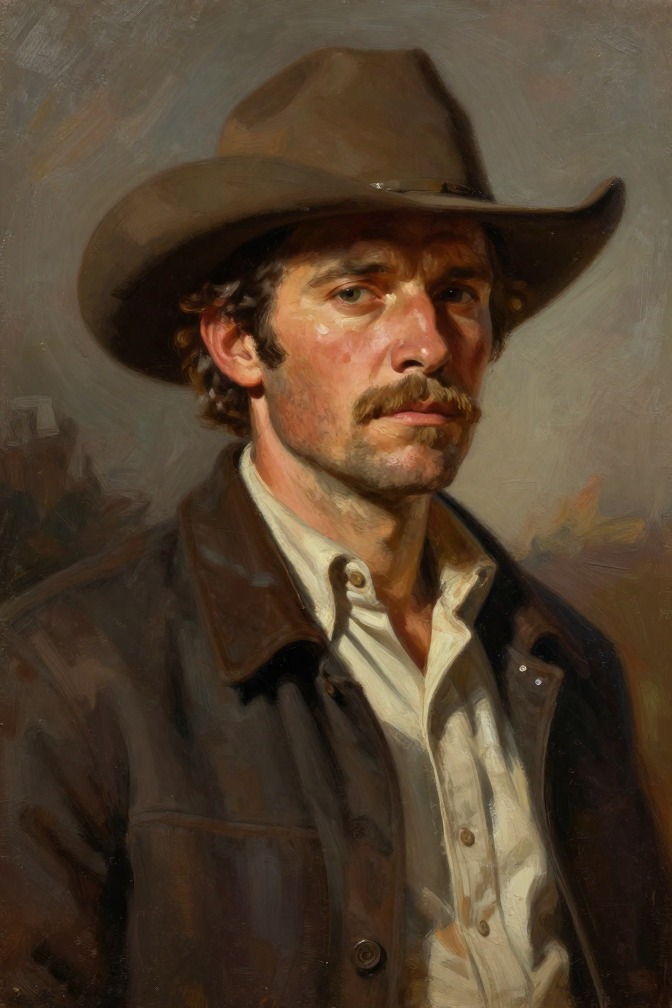
Al Joad is the second son of the Joad family, a mechanically gifted teenager whose practical skills with automobiles become indispensable to the family's migration from Oklahoma to California, and whose personal journey from a cocky, girl-chasing adolescent to a responsible young man engaged to be married marks a key subplot of the novel.
Floyd Knowles is a young migrant worker whom the Joads meet in a Hooverville near Bakersfield, California. A sharp-eyed, disillusioned veteran of the California labor market, he becomes a crucial source of information about the realities of migrant work—the wage-cutting system, the blacklist, and the futility of handbills—and his brief, violent encounter with a labor contractor and a deputy sheriff precipitates Jim Casy's arrest and Tom Joad's deepening involvement in the struggle for workers' rights.
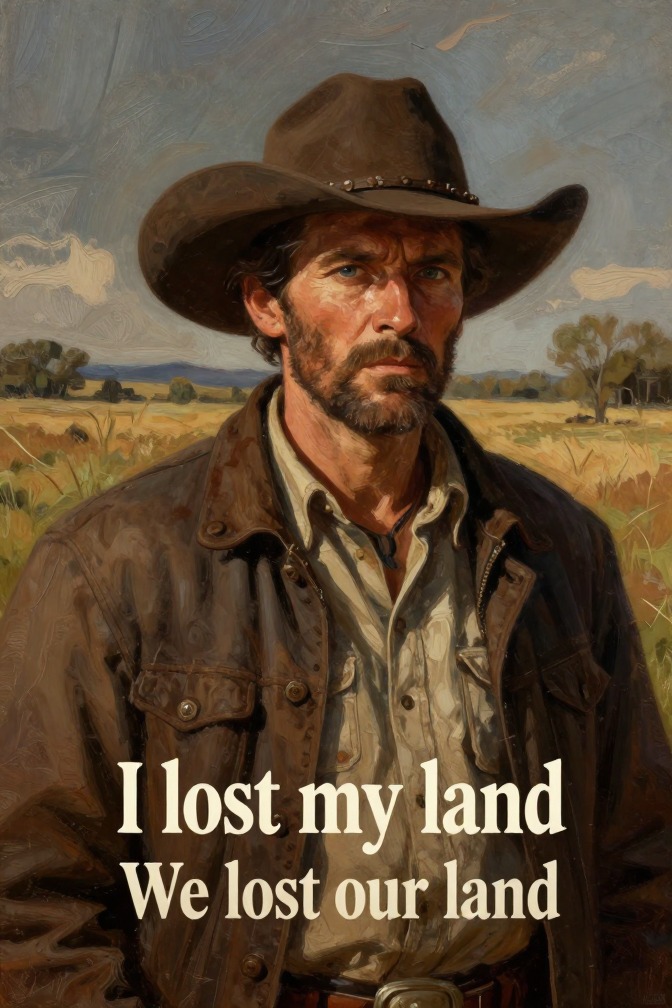
The expression 'I lost my land / We lost our land' marks the pivotal shift from individual dispossession to collective consciousness in John Steinbeck's The Grapes of Wrath, encapsulating the transformation of isolated tenant farmers into a unified migrant class. This linguistic turn, occurring in the novel's intercalary chapter 14, crystallizes the moment when personal tragedy becomes shared experience, laying the ideological groundwork for collective action against the economic forces that have uprooted them.
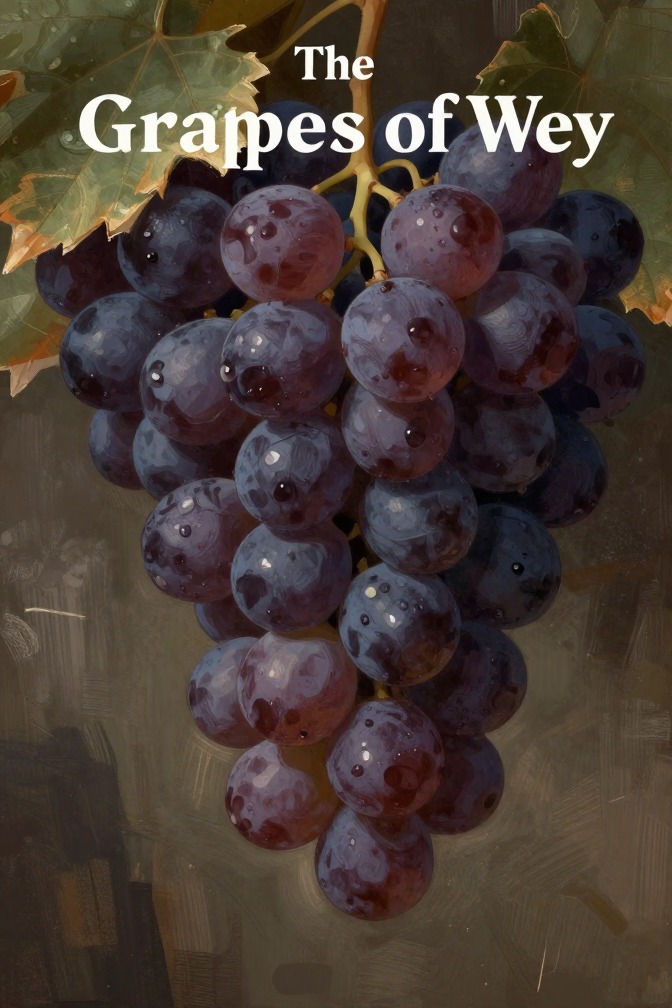
The grapes of wrath are filling is the culminating metaphor of John Steinbeck's novel, appearing in the final sentence of Chapter 25. It transforms the biblical image of divine judgment from the "Battle Hymn of the Republic" into a secular, political warning: the accumulated suffering, hunger, and anger of the dispossessed migrant people are ripening into an inevitable, explosive force that will demand justice.
The pick handle is a mundane farm tool that becomes the instrument of lethal violence in John Steinbeck's The Grapes of Wrath, marking the novel's most decisive turn from passive suffering to active, retaliatory force. In the hands of Tom Joad, the same object that had been used to kill once before is swung again in a spontaneous, brutal act of vengeance after the murder of Jim Casy, transforming the pick handle from a symbol of labor into a weapon of class war and sealing Tom's fate as a fugitive.
Santiago is the aging Cuban fisherman at the heart of Ernest Hemingway's The Old Man and the Sea, a man whose epic three-day battle with a giant marlin becomes a profound test of endurance, pride, and the human spirit. His story is a meditation on struggle, brotherhood with the natural world, and the dignity found in striving against overwhelming odds.
The mother's ring is a small but pivotal object in E. T. A. Hoffmann's 'The Sandman,' serving as Nathaniel's intended token of betrothal to Olympia and, through its retrieval, triggering the final collapse of his sanity when Olympia is revealed to be an automaton.
Ernesto Russo is a security guard at the Pitti Palace whose encounter with Sienna Brooks and Robert Langdon inadvertently opens the Vasari Corridor, a secret passage that enables their escape from the Boboli Gardens.
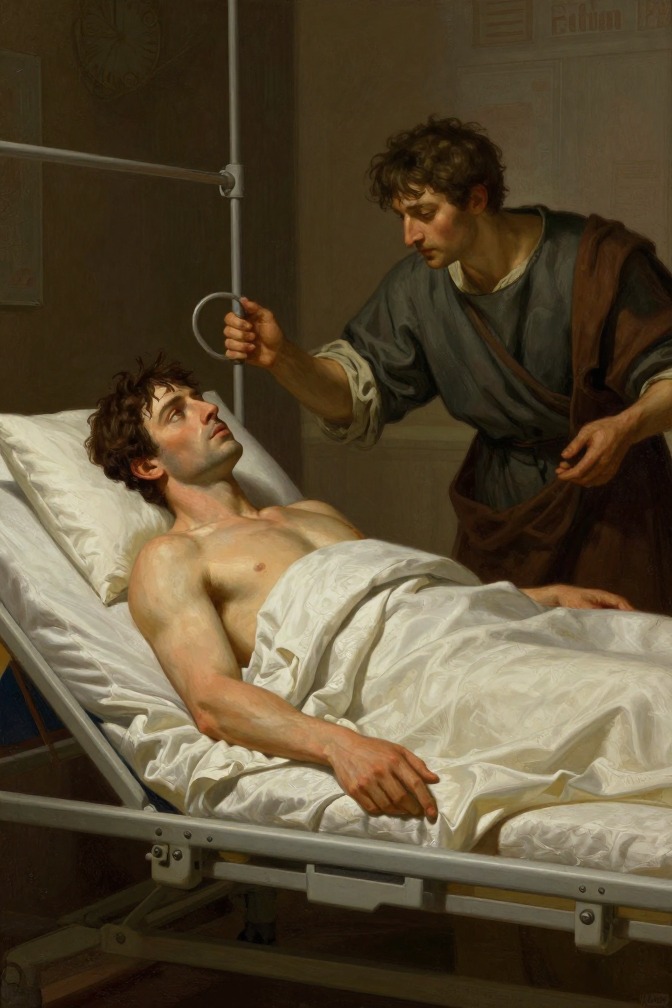
Robert Langdon awakens in a Florence hospital with retrograde amnesia, a bullet graze to his head, and no memory of how he arrived. He is attended by Dr. Sienna Brooks, who reveals that he was found muttering the phrase "very sorry" and that his wound was not accidental. The event establishes the novel's central mystery: Langdon's lost memories, the threat against his life, and the cryptic clues that will drive the plot.
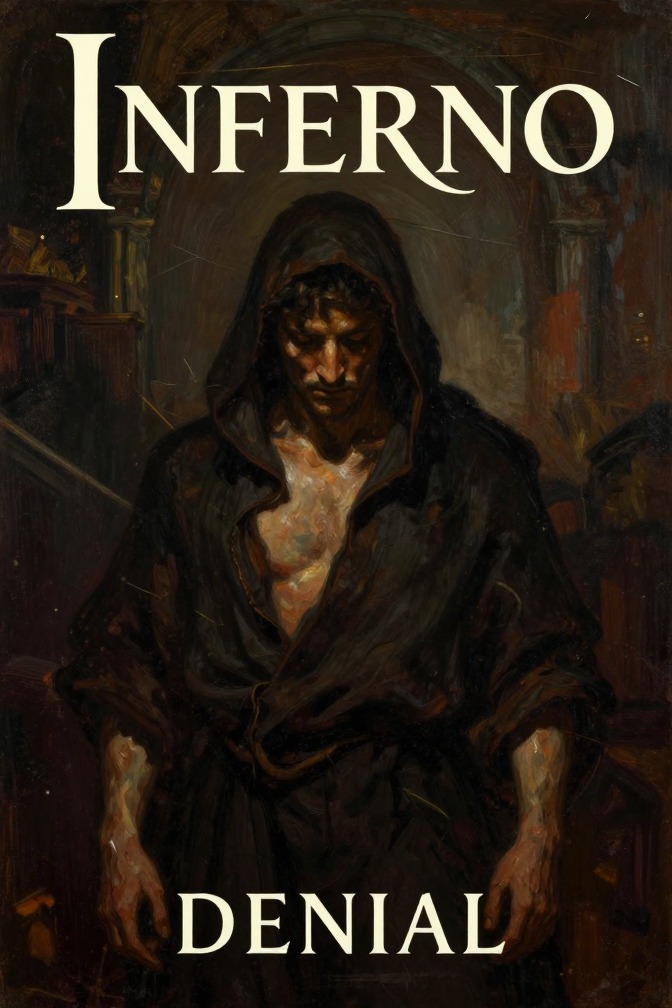
Denial is a central psychological and thematic concept in Inferno, explored as a collective and individual failure to confront the existential threat of overpopulation. The novel presents denial as a primitive ego defense mechanism that allows humanity to ignore overwhelming evidence of impending collapse, a condition that Bertrand Zobrist sought to shatter through his catastrophic intervention.
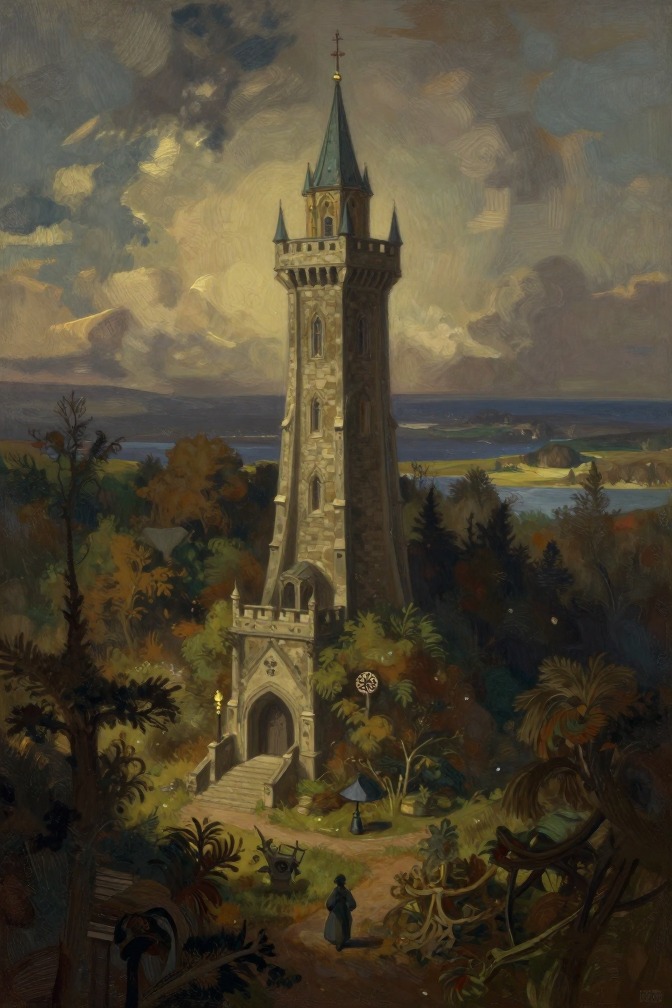
The Chanter's Tower is a prominent architectural feature of the Great House on Roke Island, serving as the domain of the Master Chanter and the location from which iron bells tolled the death of Archmage Nemmerle, marking a pivotal moment of transition in the school's history.
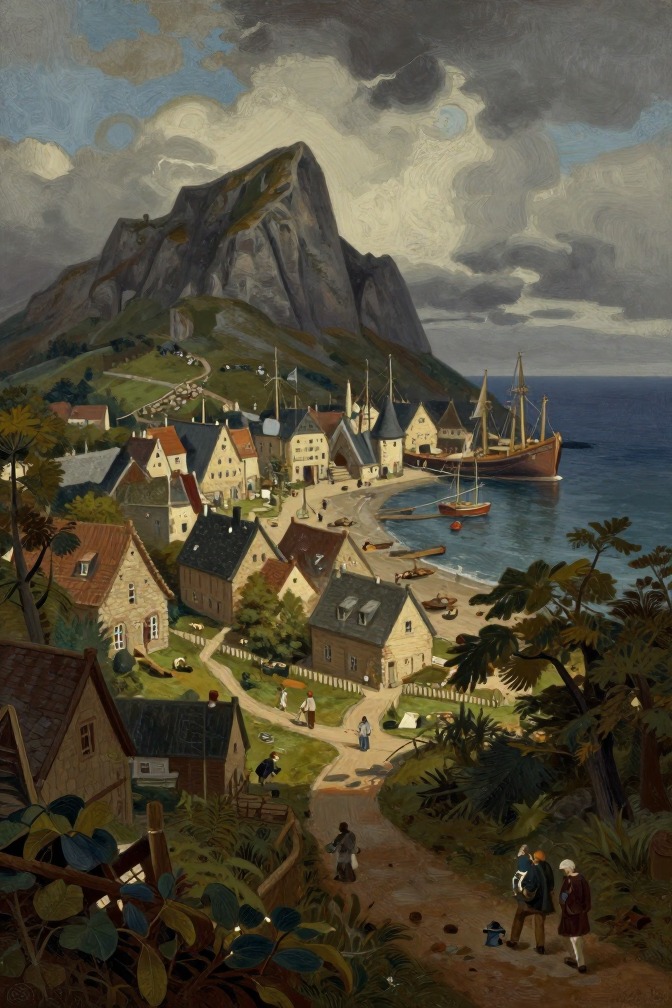
Havnor Great Port, the heart of the Archipelago and the center of the world in Earthsea, is a city of white towers and immense significance that Ged glimpses from afar but does not set foot in for many years, serving as a symbol of the fame and civilization he both seeks and ultimately turns away from.
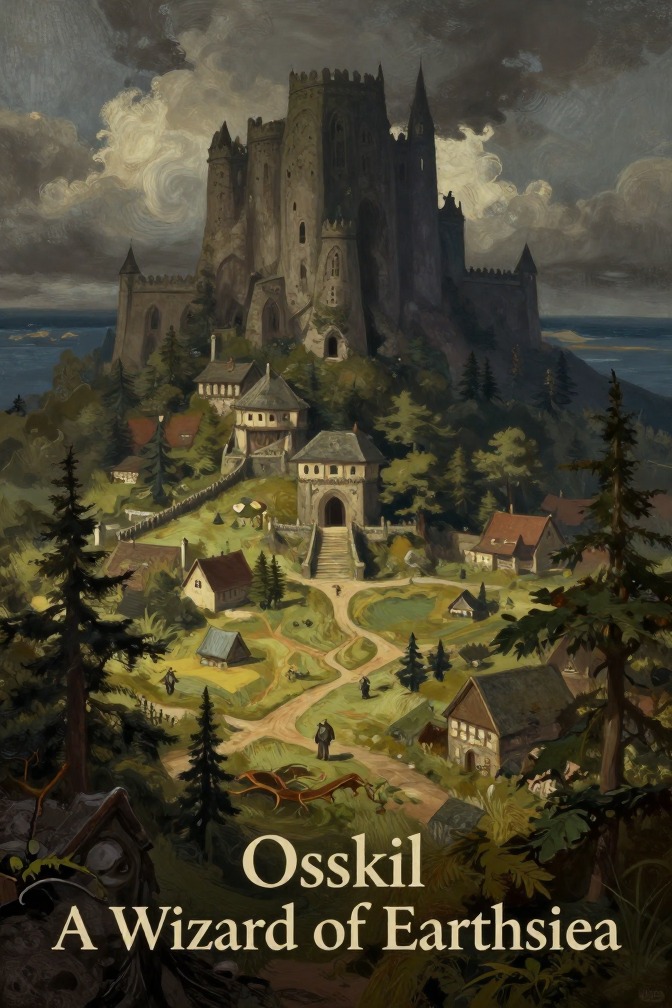
Osskil is a cold, northern island nation in the Kargad Empire, known for its harsh landscape, dour people, and the dark sorcery of the Court of the Terrenon, where Ged is lured and nearly enslaved by an Old Power of the earth.
The Sea-House of Serd is a travelers' hostel on the island of Serd in the Ninety Isles, where Ged stays during his flight from the shadow, experiencing a night of profound dread and isolation that reveals the shadow's proximity and his own paralysis.
Colonel Cathcart, the commanding officer of the 256th Squadron's bomb group, is a slick, ambitious, and deeply insecure man whose overriding desire to become a general drives him to constantly raise the number of combat missions his men must fly, making him the primary antagonist in Yossarian's struggle for survival. His character embodies the absurd, self-serving logic of the military bureaucracy, where personal advancement is pursued at the direct expense of the lives of the men under his command.
The Bloated Colonel with Mustache is a minor but symbolically potent figure in Catch-22, serving as the chairman of the Action Board that prosecutes Clevinger and as a judge of the Sunday parades. He embodies the arbitrary, sadistic, and intellectually bankrupt military authority that Yossarian and his friends must navigate, using his position to terrorize subordinates with threats of violence and nonsensical legal proceedings.
The Countess and Daughter-in-Law are two wealthy, aristocratic Italian women who live in the apartment above the officers' rest-leave quarters in Rome. They are objects of intense sexual fantasy for Yossarian, yet they remain utterly inaccessible to him, reserving their favor for Nately and Aarfy. Their presence in the novel crystallizes the intersection of class, desire, and the unattainable, serving as a recurring symbol of the eroticized privilege that Yossarian can observe but never possess.
The Scheming Ten-Year-Old Pimp is a minor but memorable figure in Joseph Heller's *Catch-22*, a precocious and exploitative child who orchestrates sexual encounters for profit in the wartime black-market economies of Sicily and Rome. He embodies the novel's theme of rampant, amoral capitalism, where even childhood innocence is commodified and every human transaction is reduced to a business deal.
The Soldier in White is a nameless, entirely bandaged patient in the Pianosa hospital who embodies the dehumanization and absurdity of war. Encased from head to toe in plaster and gauze, with only a black hole for a mouth and a zinc pipe for waste, he is less a person than a medical apparatus—a silent, passive object of clinical routine. His presence triggers existential dread among the other patients, and his sudden, unnoticed death exposes the hollow rituals of care and the arbitrary line between life and non-life in a system governed by Catch-22.
Yossarian is stabbed by Nately's whore immediately after accepting a deal from Colonel Cathcart and Colonel Korn that would send him home a hero in exchange for his silence and public approval. The attack occurs on the balcony outside their office, where she lunges at him with a bone-handled kitchen knife, catching him in the side below his upraised arm. He sinks to the floor unconscious, and the two colonels save his life by frightening her away. The stabbing, born of her grief and rage over Nately's death, becomes the catalyst for Yossarian's final break with the corrupt bargain, as he later refuses the deal, rejects the official story that she was a Nazi assassin, and ultimately decides to desert and flee to Sweden.
Clevinger and Yossarian embody the novel's central ideological conflict: Clevinger, a brilliant but dogmatic Harvard intellectual, believes in the rational justice of institutions and the necessity of sacrifice for the greater good, while Yossarian, driven by a primal will to survive, sees the war as a conspiracy of powerful men to kill him. Their repeated, heated arguments—over patriotism, duty, and the nature of the enemy—define the moral battleground of the novel, until Clevinger's mysterious disappearance into a cloud vindicates Yossarian's paranoid worldview and leaves him haunted by the loss of a friend he could never convince.
Major Major and Yossarian's relationship is a brief, frustrated encounter that crystallizes the novel's central conflict between individual survival and institutional absurdity. Major Major, the squadron commander who has become a recluse, is physically tackled by Yossarian, who demands to be grounded from combat missions. Their conversation reveals the Catch-22 logic that traps Yossarian: Major Major admits he could ground him but refuses, citing Colonel Korn's policy, and ultimately tells Yossarian there is nothing he can do. The encounter underscores Major Major's complete abdication of authority and Yossarian's desperate, futile search for any official who will help him.
The relationship between Yossarian and the chaplain begins with Yossarian's instant, inexplicable affection in the hospital and deepens into a rare, mutually supportive friendship that becomes a moral anchor for both men amid the absurdities and horrors of war. The chaplain, isolated and timid, finds in Yossarian a protector and a catalyst for his own faltering faith and courage; Yossarian, increasingly desperate and alone, finds in the chaplain a listener who never judges and a conscience who, by the novel's end, helps him choose escape over a corrupt bargain.
Bassey Park is a public park in Derry, Maine, situated along the Kenduskeag Canal. It serves as a central location for community events, such as the Canal Days Festival, and is the site of the fatal assault on Adrian Mellon in 1984. The park is also a recurring location in the childhood experiences of the Losers' Club, where they gather, play, and confront the town's underlying horror.
Bowers Farm is the dilapidated, isolated property on the outskirts of Derry, Maine, where Henry Bowers lives with his abusive, mentally unstable father, Butch Bowers. The farm is a site of poverty, violence, and the breeding ground for Henry's hatred, particularly against the Hanlon family, and serves as a base from which Henry and his gang launch their attacks on the Losers' Club.
Costello Avenue is a residential and commercial street in Derry, Maine, that serves as a key route for several members of the Losers' Club during their childhood. It connects the Derry Public Library to the Costello Avenue Market and the Kleen-Kloze Washateria, and its geography—including the steep drop into the Barrens—makes it a site of both mundane errands and violent encounters with the town's bullies.
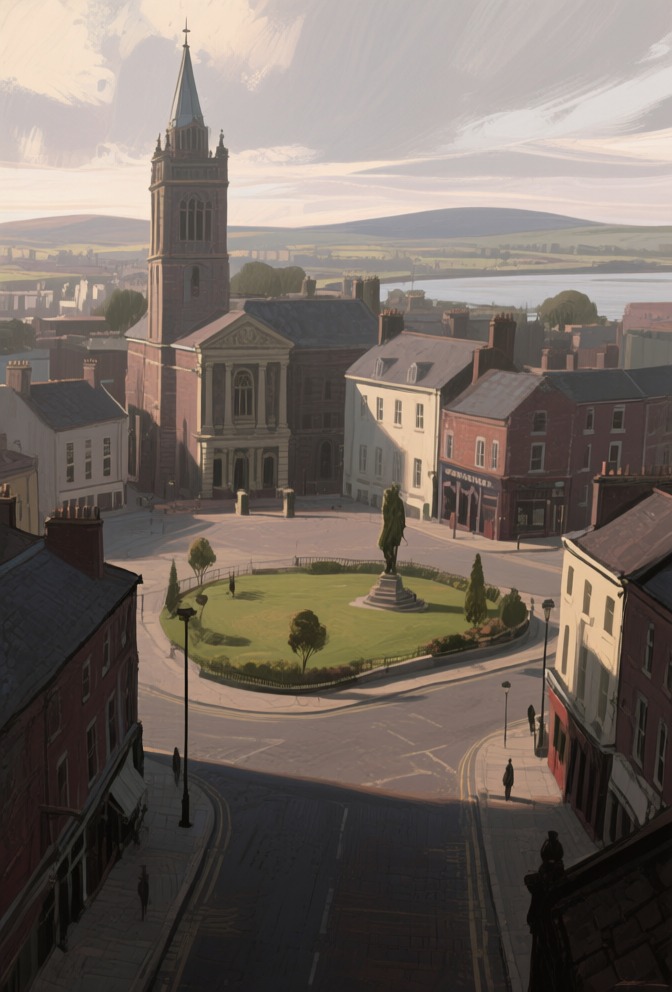
Derry, Maine, is the central setting of Stephen King's novel *It*, a small city with a dark and violent history that serves as the hunting ground for a malevolent, shape-shifting entity. The town's seemingly ordinary facade conceals a cycle of horrific events, including child murders and unexplained disasters, that recur approximately every twenty-seven years. Derry is both a character and a crucible, shaping the lives of its inhabitants and ultimately becoming the site of a final confrontation between the Losers' Club and the ancient evil that dwells beneath its streets.
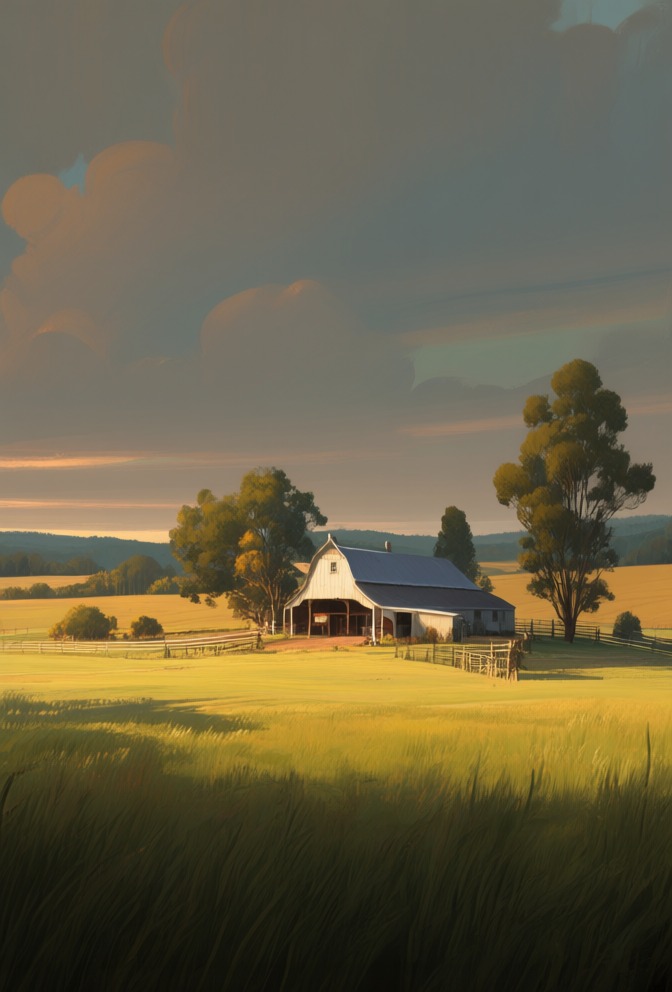
The Hanlon Farm is the rural home of Mike Hanlon and his parents, Will and Jessica Hanlon, located on Witcham Road near the Derry town line. It is a working farm that anchors Mike's childhood and provides the setting for his father's stories about Derry's violent history, including the fire at the Black Spot and the family's struggles with the racist Bowers family. The farm represents a place of hard work, family love, and a deep, uneasy connection to the town's dark past.
The Kissing Bridge is a covered wooden footbridge over the Canal in Derry, Maine, connecting Bassey Park to Derry High School. It is a site of both adolescent romance and grotesque horror, serving as the location where Adrian Mellon was thrown to his death and where the town's deep-seated homophobia and violence converge. The bridge's surfaces are covered with graffiti, including declarations of love and hate, and it is here that the clown Pennywise appears to Don Hagarty after the murder, offering balloons and uttering the phrase "They float." The bridge is also a place where Eddie Corcoran once sat, contemplating his abusive stepfather, and where the Losers' Club later encounters the decaying web of It. Its destruction during the 1985 storm, when a piece of the Paul Bunyan statue shears through its roof, marks the end of an era for Derry.