Tau is the Fremen concept of communal oneness, a shared psychic and emotional unity within a sietch community, intensified by the spice diet and most fully realized in the tau orgy induced by drinking the Water of Life. It represents the collective identity and mutual awareness that bind the Fremen together, distinguishing them from isolated individuals and serving as a foundation for their society and, ultimately, for Muad'Dib's rise to power.
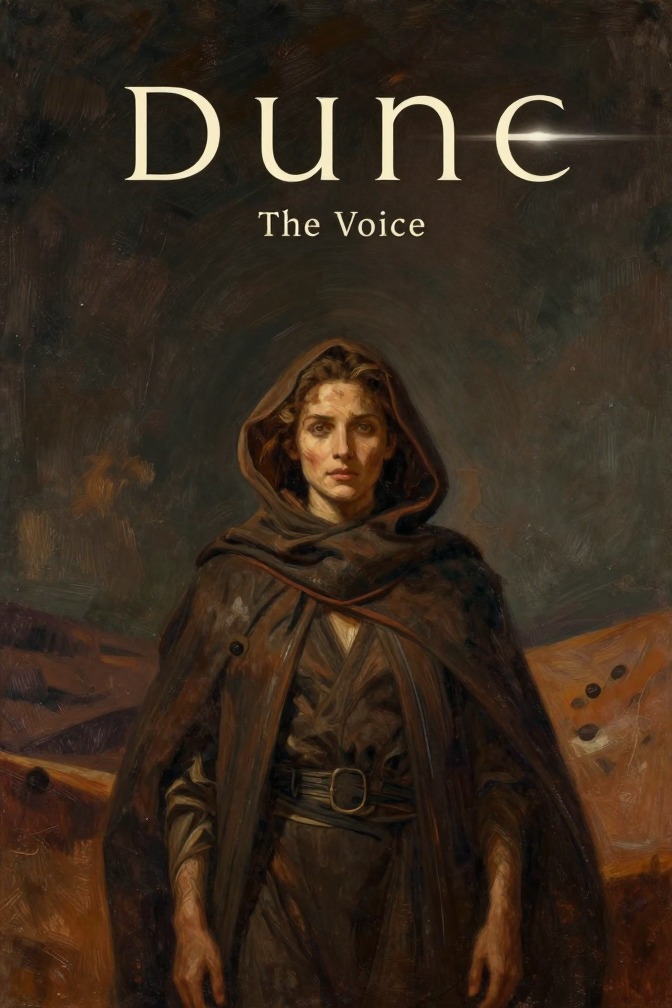
The Voice is a Bene Gesserit technique of vocal control that allows an adept to command others through selected tone shadings, making the spoken word itself an instrument of power. It is first demonstrated on Paul Atreides by the Reverend Mother Gaius Helen Mohiam, who uses it to compel his obedience during the gom jabbar test, and later becomes a crucial tool for Paul and his mother, Lady Jessica, as they navigate the dangers of Arrakis. The Voice represents the Bene Gesserit's ability to exert influence through subtle, almost supernatural means, and its use and limitations are central to the novel's exploration of power, control, and the nature of command.
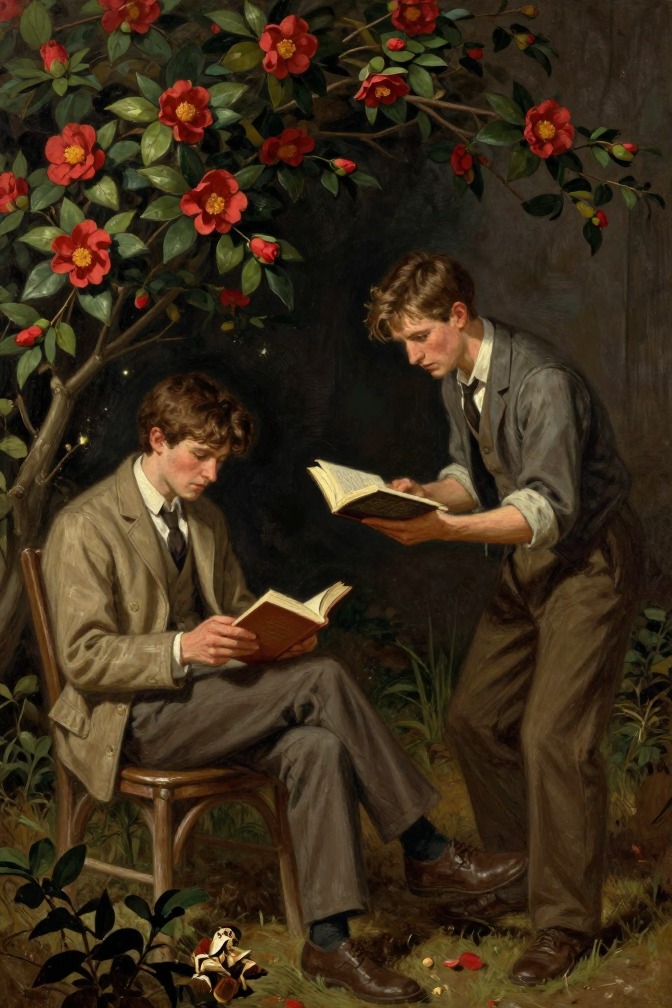
Jem Finch's destruction of Mrs. Henry Lafayette Dubose's camellias and his subsequent punishment of reading to her for a month is a pivotal event that forces him to confront the nature of real courage, as Mrs. Dubose battles her morphine addiction and dies free.
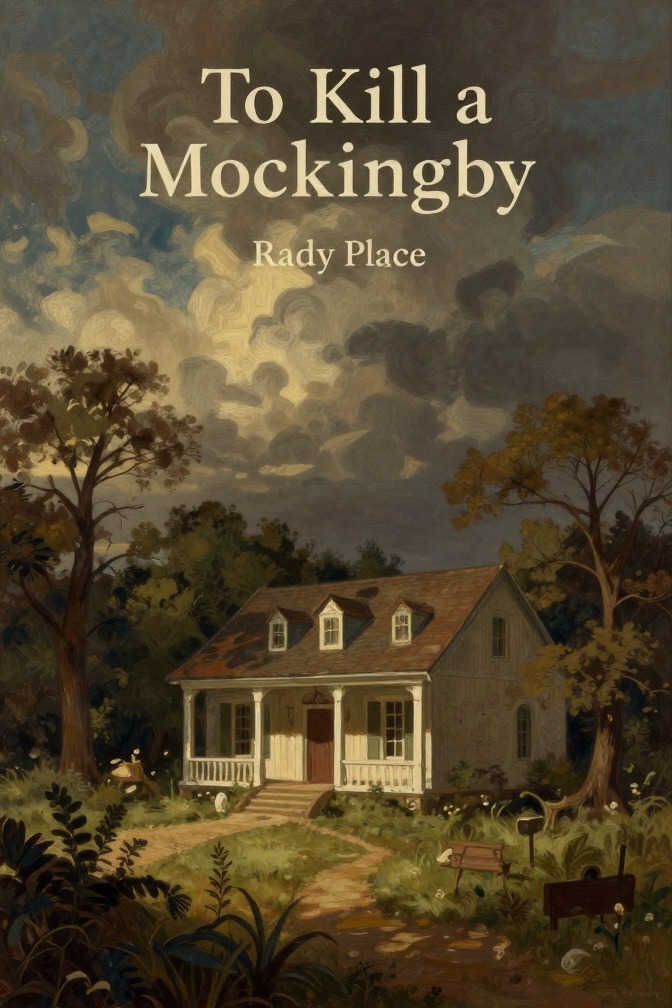
The Radley Place is the decaying, shuttered house on the corner of the Finch family's street in Maycomb, Alabama, whose reclusive occupant, Boo Radley, becomes the central object of the children's fascination and, ultimately, their secret protector. The house functions as the novel's primary Gothic space, a site of neighborhood legend, childhood terror, and hidden kindness that forces the Finch children to confront the gap between public rumor and private reality.
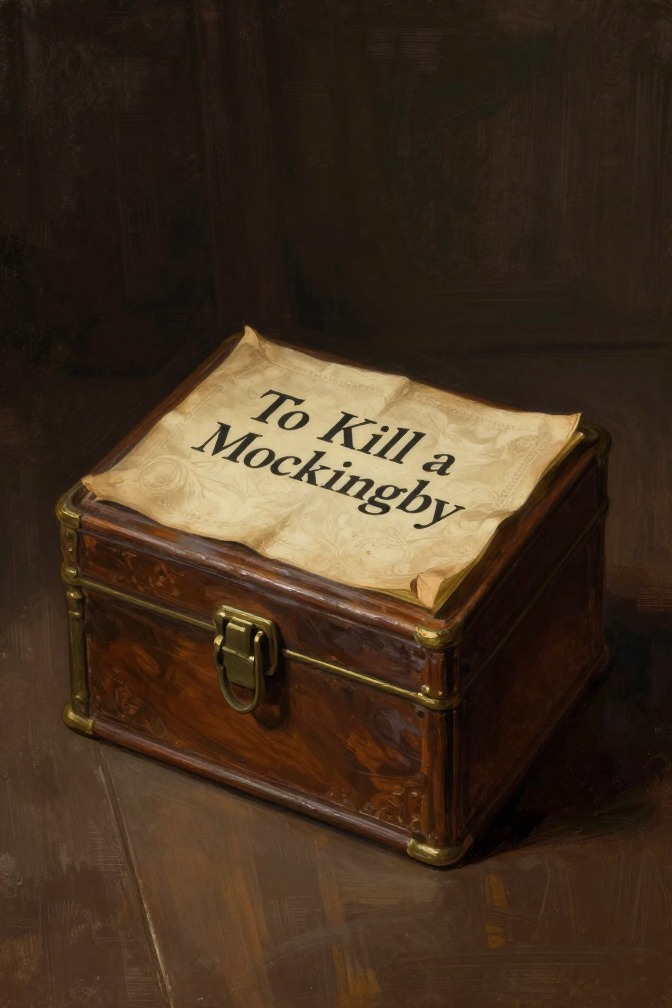
The candy box is a small, seemingly ordinary object that becomes the final, powerful symbol of Mrs. Henry Lafayette Dubose's moral victory and her complex, posthumous relationship with Jem Finch. Delivered by Atticus Finch on the night of her death, the box contains a perfect white Snow-on-the-Mountain camellia, a gift that transforms Jem's understanding of courage and redefines the legacy of a woman he had only known as a vicious neighbor.
Calpurnia and Zeebo are mother and son, a relationship that reveals Calpurnia's hidden life as a literate woman who taught her son to read using Blackstone's Commentaries, and that anchors the Finch children's first direct encounter with the segregated Black community of Maycomb.
Miss Rachel and Dill Harris (caretaker and child) is a relationship of informal, seasonal guardianship that provides Dill with a stable summer home in Maycomb while his own family passes him between relatives, and that gives Scout and Jem a crucial playmate and co-conspirator in their childhood adventures.
Miss Rachel and the Finch family are next-door neighbors in Maycomb, a relationship defined by proximity, routine, and the shared life of the street. Miss Rachel is the guardian of Dill Harris, Scout's childhood friend and fiancé, and her house serves as a familiar landmark and a boundary for the Finch children's adventures. The relationship is cordial but not intimate, marked by neighborly exchanges, mutual observation, and the quiet interdependence of a small Southern town.
Atticus Finch's old age appearance is a defining feature of his character in the eyes of his children, Scout and Jem, who initially perceive his advanced age and physical limitations as a source of embarrassment and a marker of his perceived feebleness, a perception that is gradually challenged and reshaped by his actions and the revelations of his hidden talents.
Scout's Tomboyhood is a defining trait of Jean Louise Finch in To Kill a Mockingbird, marking her resistance to the rigid gender expectations of 1930s Maycomb and serving as a central axis of conflict between her own nature and the social pressures, especially from Aunt Alexandra, to conform to ladylike behavior.
Tom Robinson's imprisonment is the central legal and moral crisis of the novel, a state that exposes the deep-seated racial injustice of Maycomb and sets the stage for Atticus Finch's defining act of conscience. The accusation, arrest, and jailing of Tom Robinson, a Black man falsely charged with raping a white woman, transforms the Finch family's summer and forces the town to confront its own prejudices.
The Eyes are the secret police of the Republic of Gilead, an omnipresent intelligence and enforcement apparatus that operates through surveillance, informants, and sudden, brutal abductions. They embody the regime's totalitarian reach, turning every citizen into a potential suspect and every interaction into a test of loyalty.
The Handmaids are the central female figures in the Republic of Gilead, a class of women reduced to their reproductive function and subjected to a regime of total control over their bodies, movements, and identities. They are defined by their red dress and white wings, which mark them as vessels for procreation and simultaneously render them anonymous and invisible. Their collective experience, from the indoctrination at the Rachel and Leah Re-education Center to the daily rituals of shopping, the Ceremony, and the Salvagings, forms the core of the novel's exploration of systemic oppression, survival, and the fragile persistence of individual will.
The Marthas are the class of domestic servants in Gilead, identified by their dull green dresses and assigned to the households of Commanders to perform cooking, cleaning, and other menial labor. They occupy a liminal position in the social hierarchy: neither as privileged as the Wives nor as sexually exploited as the Handmaids, yet subject to the same strictures of surveillance and deprivation. Through their gossip, their grudging cooperation, and their small acts of defiance, the Marthas form a vital but often invisible network of information and resistance within the regime's domestic spaces.
The Salvaging is a public execution ceremony in Gilead, held for women only, in which condemned prisoners are hanged on a stage before an audience of Handmaids, Wives, Marthas, and Econowives. It functions as a tool of state terror and social control, forcing the female population to witness and participate in the regime's violence, and it culminates in a Particicution, a ritualized mob killing that channels collective rage into sanctioned brutality.
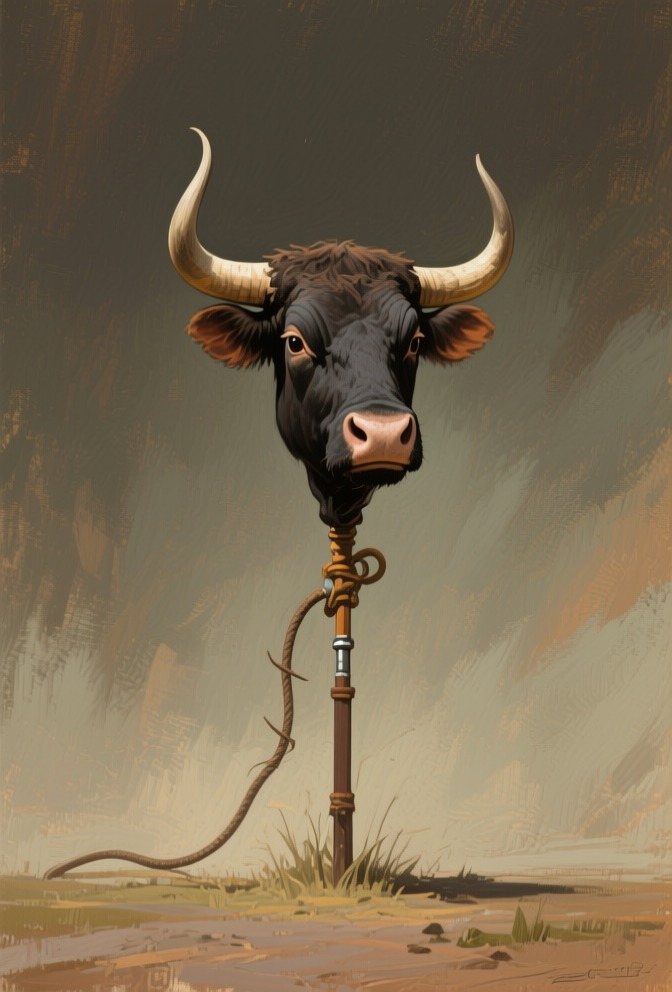
The Cattle Prod is the primary instrument of physical coercion used by the Aunts at the Rachel and Leah Re-education Center to enforce discipline, control, and obedience among the Handmaids, symbolizing the regime's reliance on immediate, painful violence to maintain order.
The Rope at Salvaging is a thick, tarred rope that physically connects the Handmaids to the execution of condemned women during the district Salvaging, transforming them from passive spectators into ritual participants who touch the rope and place a hand over their hearts to signify consent and complicity.
The Commanders of the Faithful are the ruling elite of the Republic of Gilead, a class of men who hold absolute political, religious, and domestic authority. They are the architects and enforcers of the regime's patriarchal order, and their power is exercised through a combination of public ritual, private coercion, and the systematic control of women's bodies. The narrative reveals them not as monolithic monsters but as individuals whose authority is sustained by a network of rules, privileges, and personal weaknesses, making them both the most feared and the most vulnerable figures in the society they created.
The Republic of Gilead is the totalitarian theocratic state that serves as the setting of The Handmaid's Tale, a regime that violently enforces a rigid social hierarchy based on a distorted interpretation of Biblical law, controlling every aspect of life, especially women's bodies and reproductive functions.
The pass system for Handmaids is a core mechanism of surveillance and control in Gilead, requiring every Handmaid to carry a personal pass at all times and present it at checkpoints for inspection and electronic verification. It transforms the body into a documented object, linking identity to reproductive function and ensuring that movement is never free but always authorized, recorded, and reversible.
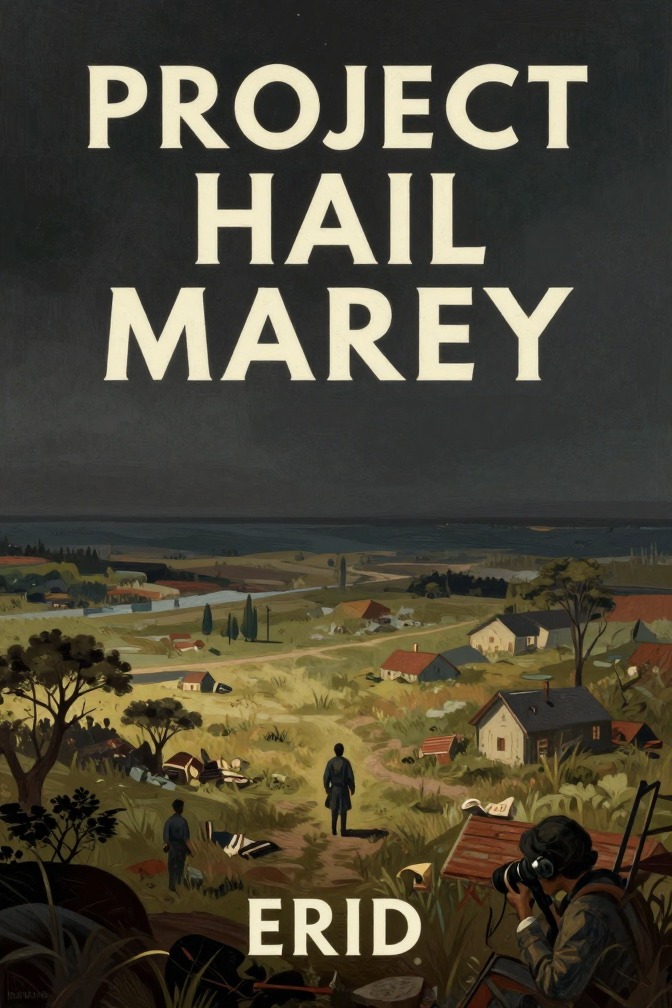
Erid is the homeworld of the Eridian species, a super-Earth planet orbiting the star 40 Eridani at an extremely close distance, with a mass eight and a half times that of Earth, a diameter roughly double Earth's, and a surface gravity more than twice Earth's. Its unique physical characteristics—an exceptionally strong magnetic field, a crushing atmosphere twenty-nine times as thick as Earth's, and a surface in perpetual darkness—shaped the evolution of a blind, radiation-vulnerable civilization that developed interstellar travel without ever discovering the existence of cosmic radiation.
Grace and Stratt's relationship is the central conflict of Project Hail Mary's Earth-bound narrative, defined by Stratt's absolute authority and Grace's reluctant conscription into a suicide mission. Their dynamic evolves from professional recruitment to a coercive, morally fraught partnership, culminating in Stratt's decision to drug and forcibly send Grace to space against his will.
Taumoeba and Astrophage's predator-prey relationship is the central biological discovery of the Hail Mary mission: Taumoeba, a microbe from the planet Adrian in the Tau Ceti system, naturally preys on Astrophage, the alien organism that is consuming the Sun's energy and threatening Earth with extinction. This discovery transforms the mission from a desperate search for an unknown solution into a concrete plan to deploy a natural predator against the Astrophage infestation, first on Venus and then on Threeworld, the breeding ground in the 40 Eridani system. The relationship is not merely a biological curiosity but the key to saving two civilizations, and its manipulation through directed evolution—breeding nitrogen-resistant Taumoeba—becomes the core scientific and engineering challenge of the second half of the novel.
The engineered relationship between Taumoeba and the planets Venus and Threeworld is the central scientific solution of Project Hail Mary: a predator microbe, native to the Tau Ceti system, is artificially evolved to tolerate the nitrogen concentrations in the atmospheres of Venus and Threeworld so that it can be deployed to consume the Astrophage that is dimming Earth's sun and threatening Erid's star.
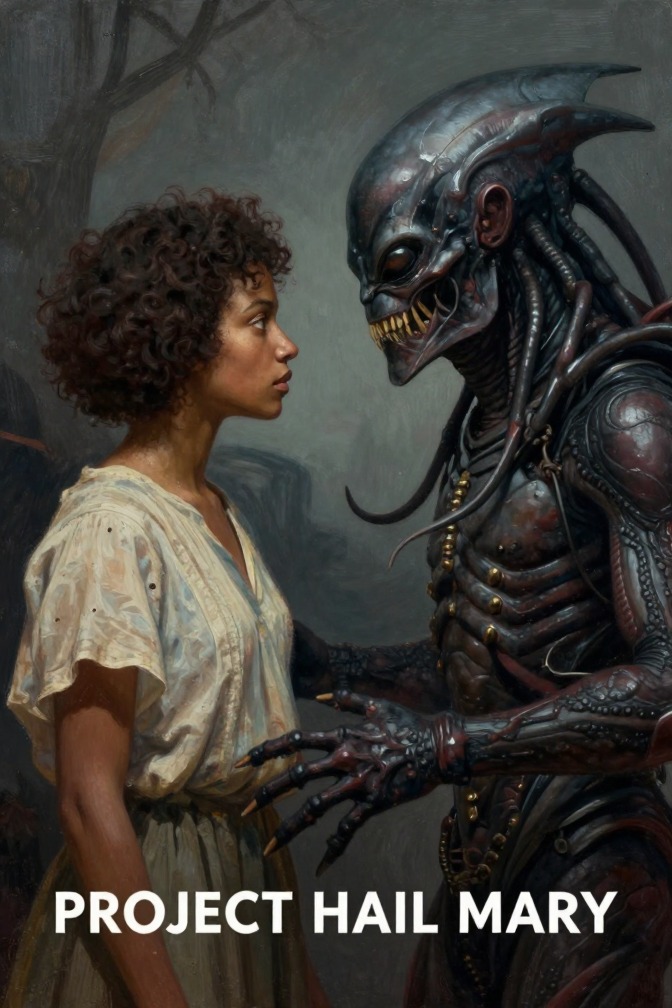
The Eridian day is the fundamental unit of time on the Eridian homeworld, Erid, defined as the period it takes for the planet to complete one full rotation on its axis. It is a critical piece of shared knowledge that Ryland Grace and Rocky establish early in their communication, allowing them to synchronize their activities and build a common scientific vocabulary. The Eridian day is precisely 7,776 Eridian seconds long, a number that is six to the fifth power, reflecting the Eridians' base-six numerical system. This unit is not merely a measure of time but a cultural and scientific bridge between two alien species, enabling them to coordinate their efforts to save their respective worlds.
Miss Strong is a minor but pivotal character in Stephen King's *The Shining*, a French teacher at Stovington Preparatory Academy whose intervention during Jack Torrance's violent assault on student George Hatfield marks the decisive moment that ends Jack's teaching career and sets the Torrance family on the path to the Overlook Hotel.
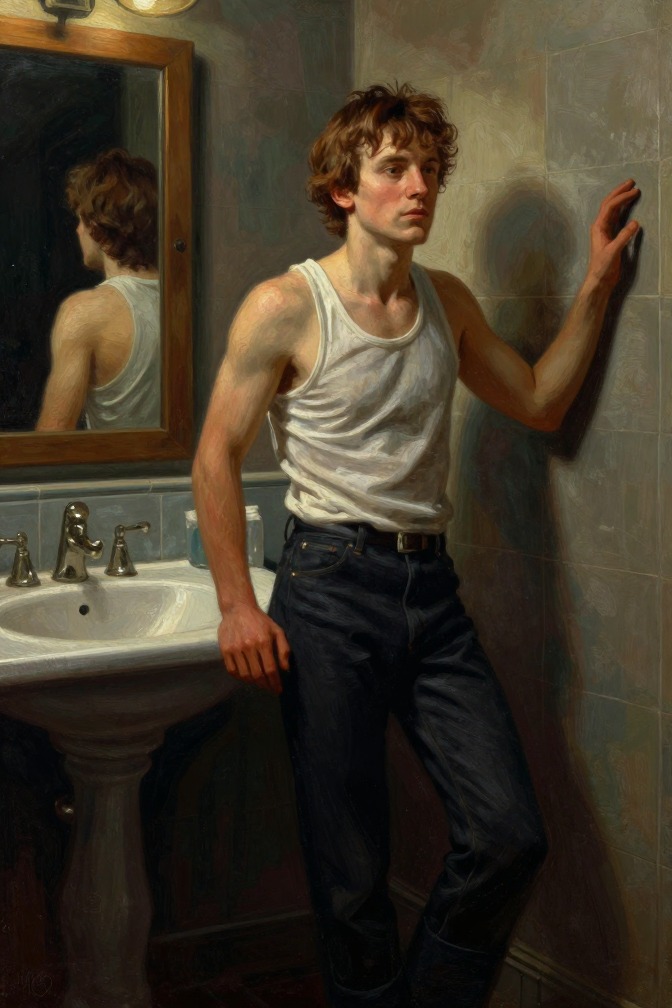
Danny Torrance's bathroom trance is a pivotal event in which his psychic ability, called the shining, manifests as a terrifying vision of the Overlook Hotel's malevolent power, revealing the word REDRUM and a monstrous figure wielding a roque mallet, and it marks a critical escalation in the hotel's assault on the Torrance family.
The gangland murder at the Overlook Hotel, occurring in June 1966, was a triple shotgun slaying of mob figure Vittorio "The Chopper" Gienelli and his two bodyguards in the Presidential Suite, an event that exposed the hotel's secret history as a Mafia key club and left a permanent stain of violence on the building's psychic fabric.
One night in late November, a drunk Jack Torrance and his friend Al Shockley, driving Al's Jaguar on a Vermont road, hit a child's bicycle left in the middle of the highway. They search frantically for a body but find none, and Al arranges for a friend to bring replacement tires to cover up the accident. The incident becomes a turning point: Al Shockley stops drinking that night, and Jack, though he does not yet quit, is haunted by the crash and the image of the bicycle's crushed wheel. The event deepens Jack's self-loathing and his secret conviction that he is a destructive force, and it provides the hidden trauma that, weeks later, helps him find the resolve to stop drinking—though the guilt never leaves him.
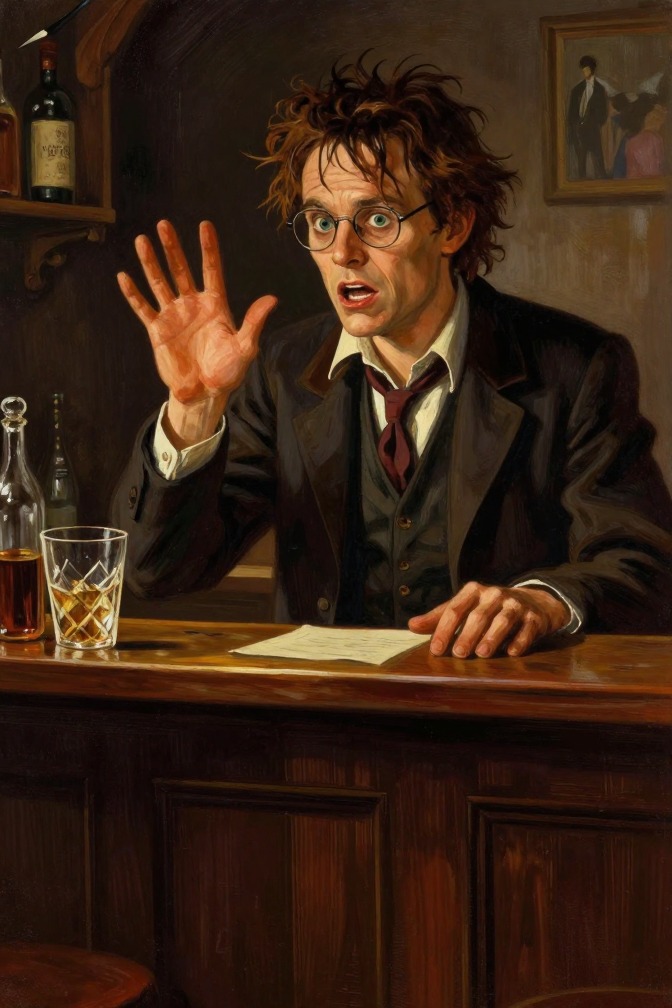
Jack Torrance, isolated in the Overlook Hotel and struggling with his sobriety, hallucinates an elaborate encounter with a bartender named Lloyd in the empty Colorado Lounge, where he drinks imaginary martinis and delivers a bitter monologue about the nature of the 'wagon' of sobriety, marking a decisive psychological break as the hotel's influence begins to fully possess him.