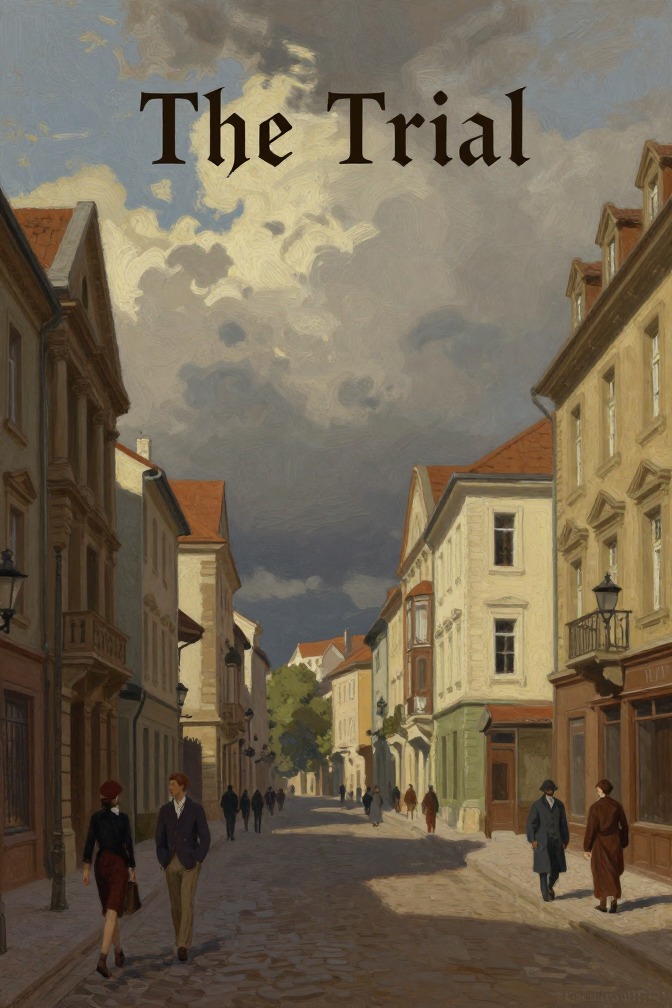
Juliusstrasse is the street in a poor suburb where Josef K. must report for his first cross-examination, and its bleak, crowded tenement buildings house the court's interrogation room and attic offices, embodying the squalid, labyrinthine nature of the judicial system that ensnares him.
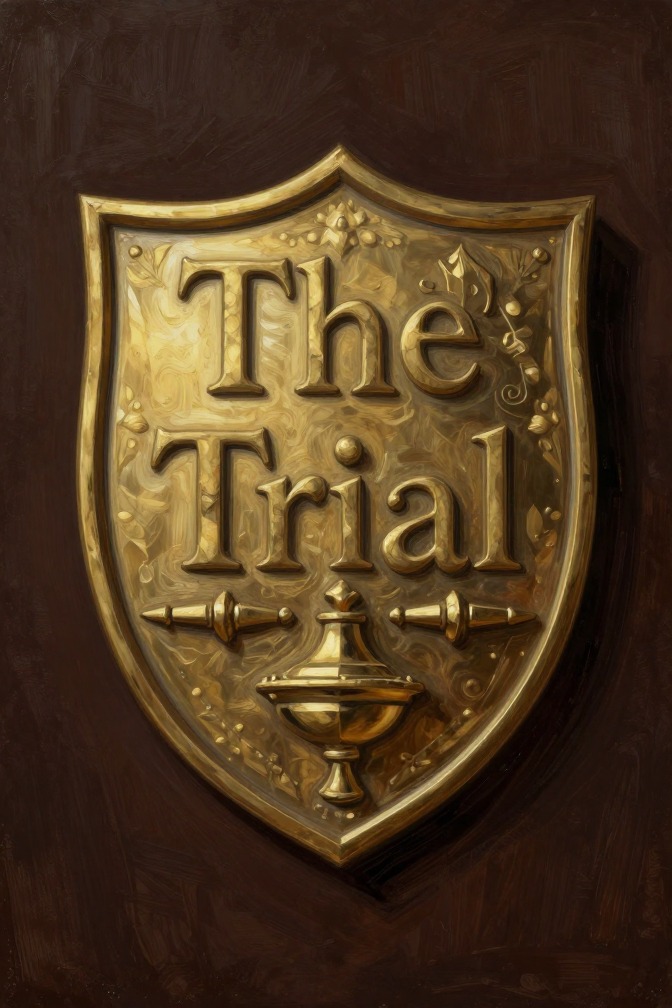
The Court badges are small, colored emblems worn on the collars of coats by officials and participants within the Court's proceedings, serving as a visible marker of membership in the organization that prosecutes Josef K. and revealing the hidden unity of the supposedly divided factions in the interrogation room.
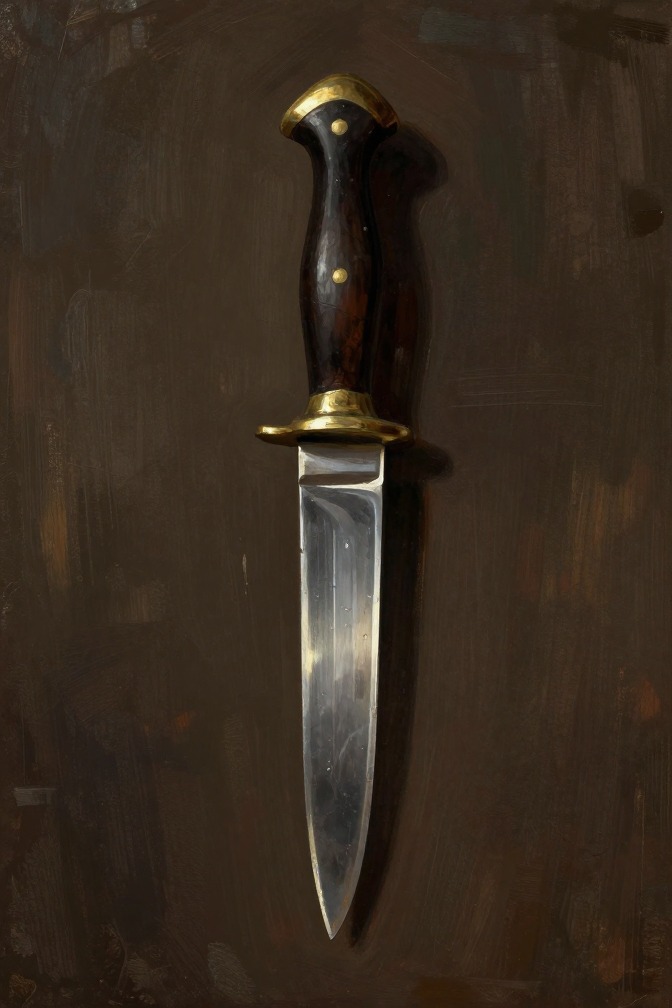
The execution knife is the double-edged butcher's blade used to kill Josef K. in the final chapter, a weapon that embodies the court's impersonal, ritualized violence and the protagonist's ultimate failure to take his fate into his own hands.
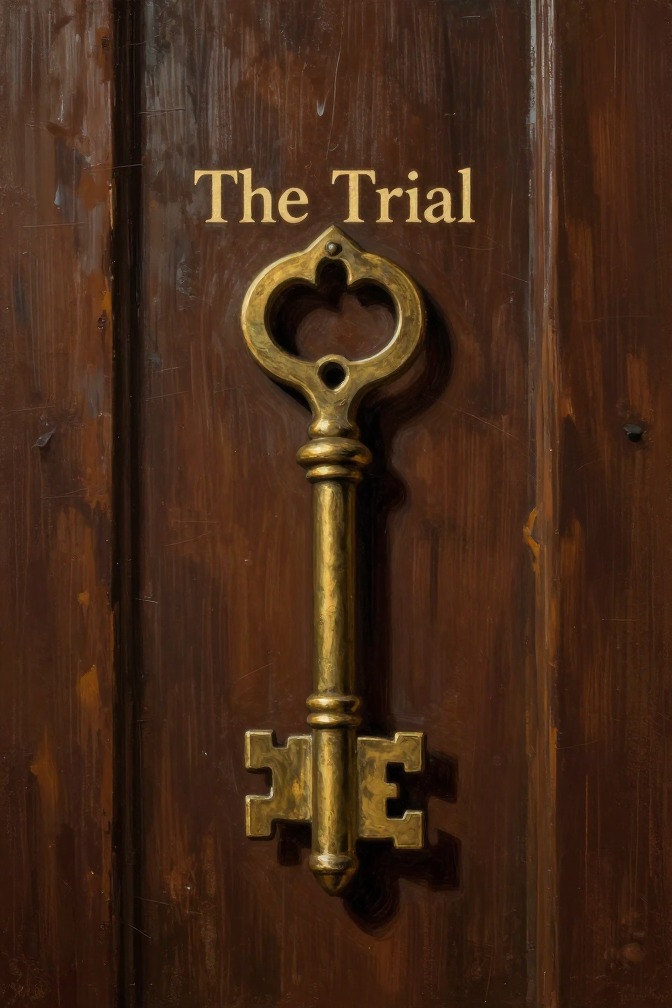
The Key to the lawyer's door is a small but symbolically charged object in Franz Kafka's The Trial, given by Leni to Josef K. as an open invitation to visit Dr. Huld's apartment at any time. It represents the promise of secret access, intimacy, and behind-the-scenes influence within the court's opaque system, yet it ultimately proves to be a token of a compromised and illusory form of help, binding K. more tightly to the very apparatus he seeks to escape.
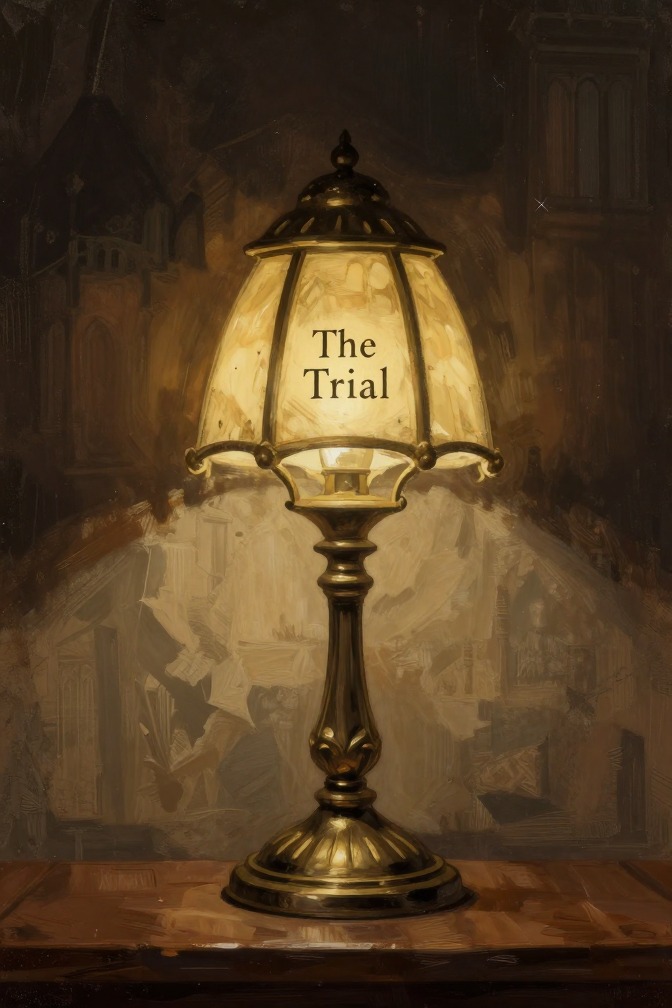
The lamp in the cathedral is a small, portable light source that the prison chaplain uses during his encounter with Josef K., serving as a crucial instrument of illumination, guidance, and symbolic weight in the novel's climactic chapter.
Amber is a minor character in the novel, a wealthy and popular student at Theo's Las Vegas high school who becomes involved in Boris's drug-dealing circle. She is the sister of Jordan, a college student, and part of a group of affluent girls, including KT Bearman, who provide Boris with a lucrative customer base for cocaine. Amber's brief appearance highlights the stark contrast between the privileged, carefree world of Las Vegas's elite youth and Theo's and Boris's precarious, drug-fueled existence.
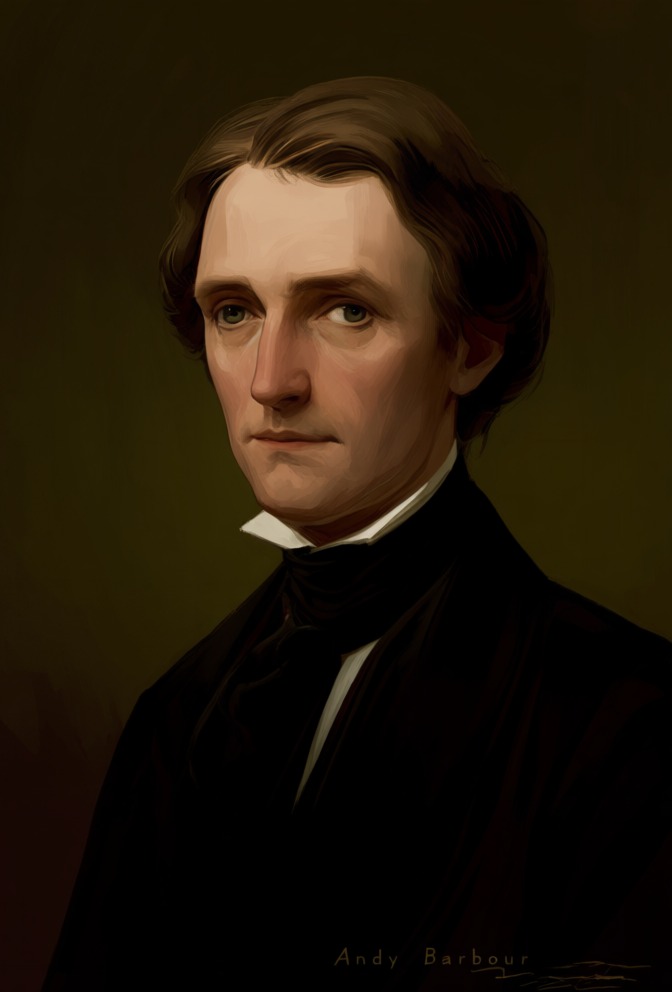
Andy Barbour is Theo Decker's childhood best friend, a brilliant but socially isolated boy from a wealthy Park Avenue family, whose quiet loyalty and tragic death by drowning form a poignant counterpoint to Theo's own life of loss and survival.
Cinzia is the Decker family's housekeeper, a loyal and affectionate presence in Theo's childhood who is let go after Larry Decker abandons the family, but who remains emotionally connected to Theo and his mother long after she stops working for them.
Daisy Horsley, a fashion intern and one of Theo Decker's casual sexual partners during his early twenties in New York, is a minor character who embodies the hollow, drug-fueled relationships that fill Theo's life before his engagement to Kitsey Barbour. She is notable for being a fellow drug user whom Theo meets in a dog park, and for her brief, transactional affair with him that ends when she marries her fiancé and moves to Washington, D.C.
Forrest Longstreet is a minor character from Theo Decker's childhood school, a dull-witted but wealthy student who later reappears in Theo's adult social circle as a friend of the Barbour family, hosting a dinner party that Theo and Kitsey attend during their engagement.
George Bracegirdle is the New York lawyer who administers the educational trust fund Audrey Decker set up for her son Theodore before her death, and who becomes a crucial gatekeeper preventing Theodore's father from accessing the money. He first appears in the novel when he visits the grieving Theo at the Barbour apartment shortly after the museum bombing, and later becomes a key figure in Theo's legal and financial life, helping to secure his guardianship with James Hobart and advising him on his future.
Kenneth is the night doorman at the Barbours' Park Avenue building, a recurring minor character whose presence spans Theo Decker's childhood and adulthood, marking the continuity and decay of the old New York world Theo briefly inhabited.
Martina Lichtblau is a minor character from Theo Decker's childhood at his Upper West Side school, remembered primarily for her brief, unsatisfying affair with him years later, and for being a source of gossip that exposed his drug use to his fiancée Kitsey Barbour.
Mr. Pavlikovsky is Boris's father, a Ukrainian mining engineer and a violent alcoholic whose erratic presence and brutal beatings shape Boris's childhood and his own volatile, survivalist worldview.
Mrs. Spear is the Honors English teacher at Theo Decker's Las Vegas high school, a limp, long-boned woman in earthtone clothing who appears to suffer from major depression. She presides over a contentious classroom where students rail against Thoreau's Walden, and she is the teacher who first introduces Boris Pavlikovsky to Theo as a fellow outsider.
Mrs. Swanson is the school counselor at Theo's Upper West Side school who, after his mother's death in the museum bombing, attempts to guide him through grief with a series of well-meaning but often ineffective therapeutic interventions, including breathing exercises, mandala drawing, and the suggestion that he throw ice cubes against a tree to discharge his emotions.
Popchik (also called Popper) is Xandra Terrell's Maltese dog, won in a raffle, who becomes a loyal companion to Theo Decker and Boris Pavlikovsky during their time in Las Vegas and later accompanies Theo to New York, where he lives out his old age with Theo and James Hobart.
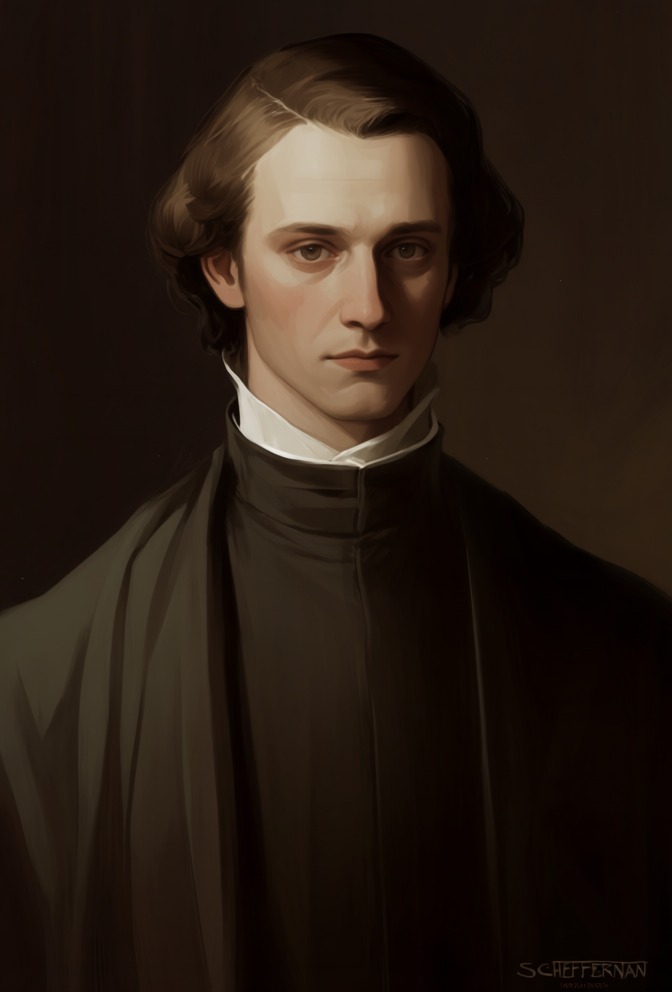
Scheffernan is a minor antagonist from Theodore Decker's childhood at his Upper West Side school, remembered for his role in orchestrating a violent locker-room assault on Andy Barbour and for his mother's social-climbing pressure that forced him to include Andy in birthday parties he resented.
Thad Randolph is a minor antagonist at Theo Decker's Upper West Side school who, after Theo's mother dies, becomes part of Tom Cable's new social circle, embodying the casual cruelty and social exclusion that compound Theo's grief.
Tom Cable is a childhood friend of Theo Decker's whose casual betrayal sets off the chain of events leading to Theo's mother's death, and who later resurfaces as Kitsey Barbour's secret lover, embodying the theme of betrayal and the destructive pull of the past.
The chest-on-chest is a heavily altered piece of furniture created by James Hobart and sold as an authentic antique by Theodore Decker, which becomes the focal point of a blackmail scheme by Lucius Reeve that threatens to expose Decker's fraud and ultimately reveals the deeper secret of the stolen Fabritius painting.
Welty's ring is the carved gold signet ring that Welton Blackwell pressed into Theo Decker's hand as he lay dying in the museum rubble, instructing him to take it to Hobart and Blackwell and ring the green bell. The ring serves as the physical token that connects Theo to Welty, guides him to Hobie's doorstep, and becomes the secret link that later threatens to expose Theo's possession of The Goldfinch.
Boris Pavlikovsky's relationship with his father, Mr. Pavlikovsky, is a volatile and abusive bond defined by neglect, violence, and a twisted form of loyalty. Mr. Pavlikovsky, a Ukrainian mining engineer and a severe alcoholic, subjects Boris to brutal beatings, yet Boris both fears him and feels a deep, complicated attachment, often excusing his father's behavior and even attempting to kill him once. This relationship profoundly shapes Boris's own reckless, self-destructive, and fiercely independent character.
Theo Decker's working relationship with Grisha, a Russian-Jewish mover and furniture handler for Hobart and Blackwell, evolves from casual acquaintance to a bond of mutual trust and practical reliance. Grisha, a blunt and experienced figure in the antiques trade, serves as a crucial link between the shop's workshop and the outside world of storage and logistics. He is the first to alert Theo to the presence of suspicious men watching the shop, and his loyalty is tested when Theo asks him to pay the storage unit rent in cash, a request Grisha handles without question. Their connection is grounded in shared work, Grisha's candid assessments of Hobie's business, and a mutual understanding of the darker edges of their respective worlds.
Theo Decker's relationship with his paternal grandparents, Bob and Dorothy Decker, is characterized by profound emotional distance, mutual disinterest, and a complete absence of care or responsibility, culminating in their refusal to take him in after his mother's death and their cold indifference following his father's fatal accident.
Theo Decker and Lucius Reeve are locked in a hostile, extortionate relationship that begins when Reeve purchases a heavily altered chest-on-chest from Theo and later discovers the fraud. Rather than accept Theo's offer to buy the piece back at a premium, Reeve escalates the conflict by threatening to expose Theo's broader pattern of selling fake antiques and, more dangerously, by claiming to know that Theo stole Carel Fabritius's The Goldfinch from the Metropolitan Museum of Art during the bombing that killed his mother. Reeve's campaign of harassment—through letters, phone calls, and a proxy named Havistock Irving—forces Theo into a desperate corner where his engagement, his partnership with Hobie, and his freedom are all at risk.
Theo Decker and Mr. Barbour (Chance) share a relationship defined by the latter's role as a temporary, well-meaning but ultimately unstable guardian in the immediate aftermath of Theo's mother's death. Mr. Barbour offers Theo shelter and a semblance of normalcy, but his own struggles with bipolar disorder and his family's complex dynamics create a bond that is both deeply formative and tragically severed by his death.
The execution of Andrea Cavalcanti, also known as Benedetto, is a public spectacle in the Piazza del Popolo during the Roman Carnival, where the condemned man's furious refusal to die alone reveals the depths of human depravity and serves as a dark lesson for the Count of Monte Cristo's philosophy of vengeance.
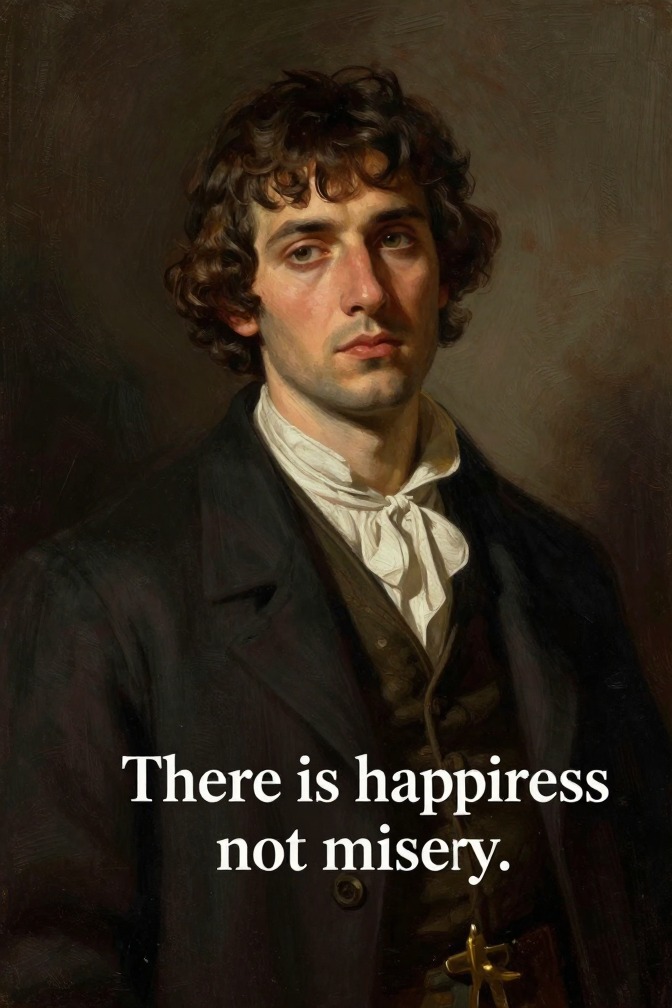
The maxim "There is neither happiness nor misery in the world; there is only the comparison of one state with another, nothing more" is the culminating philosophical statement of Edmond Dantes, the Count of Monte Cristo, delivered in his final letter to Maximilian Morrel. It encapsulates the novel's central argument that human experience is defined not by absolute conditions but by the contrast between them, and that the deepest grief is the prerequisite for the highest joy. This principle, which the Count has lived through fourteen years of imprisonment and his subsequent elaborate revenge, becomes the final lesson he bequeaths to the next generation, summed up in the novel's closing words: "Wait and hope."
The Chateau d'If is the notorious island fortress off the coast of Marseilles where Edmond Dantes is illegally imprisoned for fourteen years, and from which he stages his spectacular escape, an event that transforms him from a naive sailor into the calculating Count of Monte Cristo.