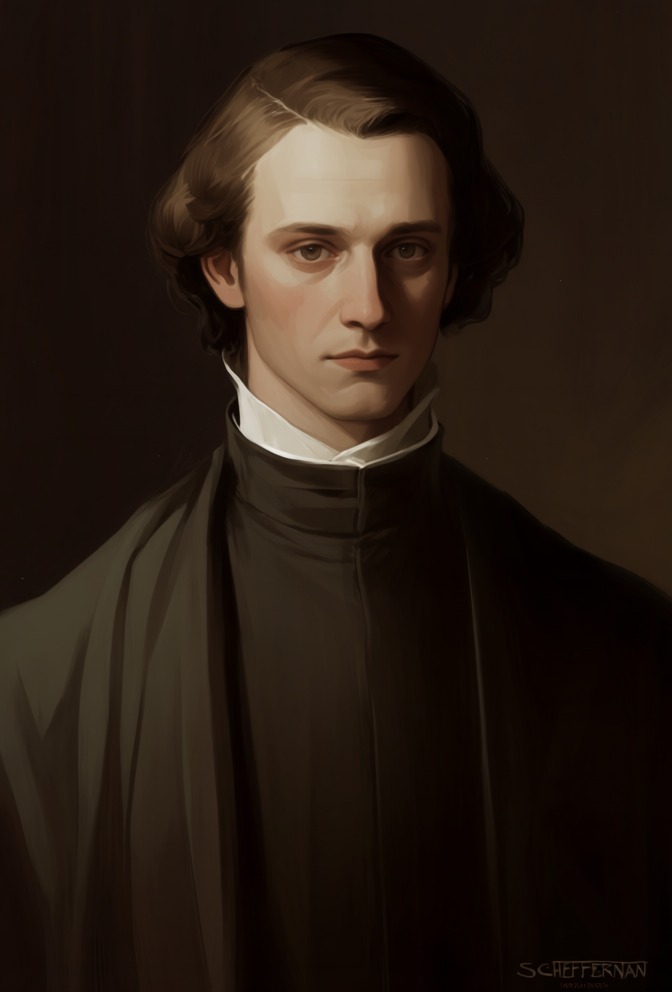
Scheffernan is a minor antagonist from Theodore Decker's childhood at his Upper West Side school, remembered for his role in orchestrating a violent locker-room assault on Andy Barbour and for his mother's social-climbing pressure that forced him to include Andy in birthday parties he resented.
Thad Randolph is a minor antagonist at Theo Decker's Upper West Side school who, after Theo's mother dies, becomes part of Tom Cable's new social circle, embodying the casual cruelty and social exclusion that compound Theo's grief.
Tom Cable is a childhood friend of Theo Decker's whose casual betrayal sets off the chain of events leading to Theo's mother's death, and who later resurfaces as Kitsey Barbour's secret lover, embodying the theme of betrayal and the destructive pull of the past.
The chest-on-chest is a heavily altered piece of furniture created by James Hobart and sold as an authentic antique by Theodore Decker, which becomes the focal point of a blackmail scheme by Lucius Reeve that threatens to expose Decker's fraud and ultimately reveals the deeper secret of the stolen Fabritius painting.
Welty's ring is the carved gold signet ring that Welton Blackwell pressed into Theo Decker's hand as he lay dying in the museum rubble, instructing him to take it to Hobart and Blackwell and ring the green bell. The ring serves as the physical token that connects Theo to Welty, guides him to Hobie's doorstep, and becomes the secret link that later threatens to expose Theo's possession of The Goldfinch.
Boris Pavlikovsky's relationship with his father, Mr. Pavlikovsky, is a volatile and abusive bond defined by neglect, violence, and a twisted form of loyalty. Mr. Pavlikovsky, a Ukrainian mining engineer and a severe alcoholic, subjects Boris to brutal beatings, yet Boris both fears him and feels a deep, complicated attachment, often excusing his father's behavior and even attempting to kill him once. This relationship profoundly shapes Boris's own reckless, self-destructive, and fiercely independent character.
Theo Decker's working relationship with Grisha, a Russian-Jewish mover and furniture handler for Hobart and Blackwell, evolves from casual acquaintance to a bond of mutual trust and practical reliance. Grisha, a blunt and experienced figure in the antiques trade, serves as a crucial link between the shop's workshop and the outside world of storage and logistics. He is the first to alert Theo to the presence of suspicious men watching the shop, and his loyalty is tested when Theo asks him to pay the storage unit rent in cash, a request Grisha handles without question. Their connection is grounded in shared work, Grisha's candid assessments of Hobie's business, and a mutual understanding of the darker edges of their respective worlds.
Theo Decker's relationship with his paternal grandparents, Bob and Dorothy Decker, is characterized by profound emotional distance, mutual disinterest, and a complete absence of care or responsibility, culminating in their refusal to take him in after his mother's death and their cold indifference following his father's fatal accident.
Theo Decker and Lucius Reeve are locked in a hostile, extortionate relationship that begins when Reeve purchases a heavily altered chest-on-chest from Theo and later discovers the fraud. Rather than accept Theo's offer to buy the piece back at a premium, Reeve escalates the conflict by threatening to expose Theo's broader pattern of selling fake antiques and, more dangerously, by claiming to know that Theo stole Carel Fabritius's The Goldfinch from the Metropolitan Museum of Art during the bombing that killed his mother. Reeve's campaign of harassment—through letters, phone calls, and a proxy named Havistock Irving—forces Theo into a desperate corner where his engagement, his partnership with Hobie, and his freedom are all at risk.
Theo Decker and Mr. Barbour (Chance) share a relationship defined by the latter's role as a temporary, well-meaning but ultimately unstable guardian in the immediate aftermath of Theo's mother's death. Mr. Barbour offers Theo shelter and a semblance of normalcy, but his own struggles with bipolar disorder and his family's complex dynamics create a bond that is both deeply formative and tragically severed by his death.
The execution of Andrea Cavalcanti, also known as Benedetto, is a public spectacle in the Piazza del Popolo during the Roman Carnival, where the condemned man's furious refusal to die alone reveals the depths of human depravity and serves as a dark lesson for the Count of Monte Cristo's philosophy of vengeance.
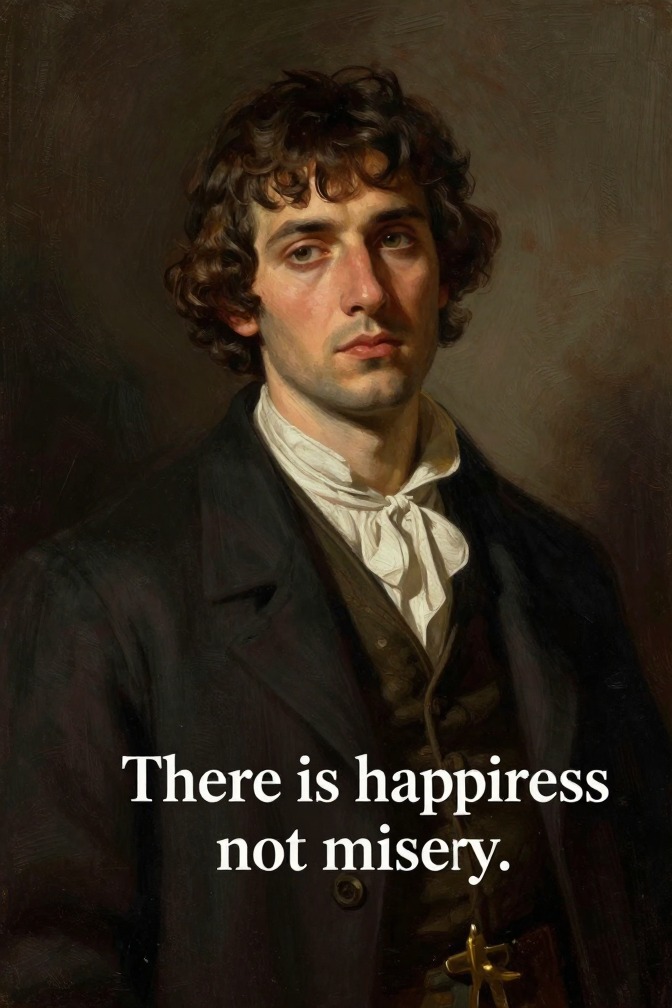
The maxim "There is neither happiness nor misery in the world; there is only the comparison of one state with another, nothing more" is the culminating philosophical statement of Edmond Dantes, the Count of Monte Cristo, delivered in his final letter to Maximilian Morrel. It encapsulates the novel's central argument that human experience is defined not by absolute conditions but by the contrast between them, and that the deepest grief is the prerequisite for the highest joy. This principle, which the Count has lived through fourteen years of imprisonment and his subsequent elaborate revenge, becomes the final lesson he bequeaths to the next generation, summed up in the novel's closing words: "Wait and hope."
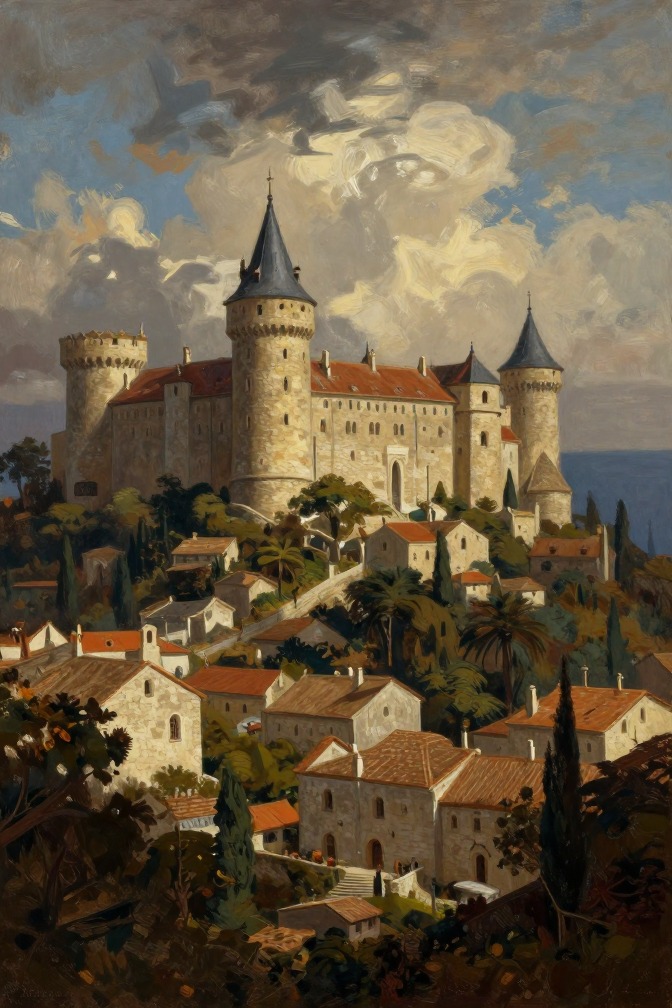
The Chateau d'If is the notorious island fortress off the coast of Marseilles where Edmond Dantes is illegally imprisoned for fourteen years, and from which he stages his spectacular escape, an event that transforms him from a naive sailor into the calculating Count of Monte Cristo.
The Conciergerie is a historic prison in Paris, central to the novel's themes of justice and punishment. It is where Andrea Cavalcanti (Benedetto) is held after his arrest, and where Villefort threatens to send his wife, Heloise, after her crimes are revealed. The prison symbolizes the inescapable reach of the law and the consequences of villainy.
Normandy is a recurring region in The Count of Monte Cristo, serving as a place of retreat, concealment, and strategic planning for the Count of Monte Cristo. It is where he takes Albert de Morcerf to escape the impending scandal in Paris, and where he instructs his steward to purchase a coastal estate with a harbor for his vessels. The region functions as a counterpoint to the intrigue of Paris, offering a space for both respite and the quiet execution of the count's long-term plans.
Brucine is a toxic alkaloid that functions as a central plot device in The Count of Monte Cristo, serving as both the poison used in the Villefort household murders and the paradoxical antidote by which Noirtier gradually immunizes Valentine against the very substance meant to kill her.
Hashish, a potent greenish paste made from hemp resin, appears in the novel as a central element of the mysterious and luxurious hospitality offered by the Count of Monte Cristo to his guest Franz d'Epinay during their encounter on the Island of Monte Cristo. The count, under the alias Sinbad the Sailor, presents the substance not merely as a drug but as a key to unlocking transcendent experiences, offering Franz a taste of the hashish that he claims can transport the user to a state of boundless imagination and power. This episode serves as a crucial moment of character revelation, showcasing the count's exotic wealth, his philosophical detachment, and his role as a manipulator of perception, while also providing a vivid, almost hallucinatory interlude that deepens the novel's atmosphere of mystery and enchantment.
The Bourse (Paris Stock Exchange) is the central financial institution in *The Count of Monte Cristo*, where fortunes are made and lost through speculation, telegraphic manipulation, and the machinations of characters like Danglars and Monte Cristo. It serves as a barometer of social status and a battlefield for economic revenge, reflecting the novel's critique of the volatile, amoral world of high finance during the Restoration and July Monarchy.
The Order of Jesus Christ is a papal knighthood conferred upon the Count of Monte Cristo by Pope Gregory XVI in recognition of his services to Christians in the East, serving as a tangible emblem of his self-fashioned identity as an agent of divine providence and a counterweight to his darker impulses.
The Order of Malta, also known as the Knights of Malta or the Sovereign Military Order of Malta, is a chivalric and religious order that appears in Alexandre Dumas's The Count of Monte Cristo as a marker of aristocratic prestige and a symbol of the highest social honor. Its mention in the novel serves to underscore the Count of Monte Cristo's extraordinary social standing and the immense respect he commands, as well as to highlight the contrast between his own self-made, mysterious nobility and the more traditional, hereditary titles of the Parisian aristocracy.
The Despair of Mercedes is a persistent emotional state of profound grief, guilt, and resignation experienced by Mercedes (the Countess of Morcerf) following the revelation of her husband Fernand Mondego's treachery, the collapse of her family's honor, and her son Albert's departure for Africa. This state is characterized by her self-blame for past cowardice, her recognition of the irreparable loss of her former love Edmond Dantes, and her final withdrawal into a life of solitary prayer in Marseilles, where she accepts her suffering as a deserved punishment.
The wealth of the Count of Monte Cristo is the immense fortune that Edmond Dantes acquires after escaping from the Chateau d'If, which he uses as the primary instrument of his elaborate revenge against those who wronged him. Originating from the legendary treasure of Cardinal Spada, hidden on the island of Monte Cristo, this virtually limitless wealth allows Dantes to reinvent himself as the mysterious and powerful count, manipulating Parisian society, rewarding his friends, and systematically ruining his enemies.
Catherine Bennet, called Kitty, is the fourth of the five Bennet sisters, a weak-willed and impressionable young woman who, throughout the novel, is dominated by her younger sister Lydia and gradually matures after Lydia's marriage removes her harmful influence.
Charles Bingley is a wealthy, good-natured young gentleman whose arrival at Netherfield Park sets the novel's marriage plot in motion; his easy temper, genuine affection for Jane Bennet, and susceptibility to the influence of his friend Fitzwilliam Darcy make him a pivotal figure in both the romance and the social dynamics of the story.
Georgiana Darcy, the younger sister of Fitzwilliam Darcy, is a shy, gentle, and accomplished young woman whose near-elopement with George Wickham forms a crucial secret in the novel, and whose eventual warm sisterly bond with Elizabeth Bennet symbolizes the full integration of Darcy's world with Elizabeth's.
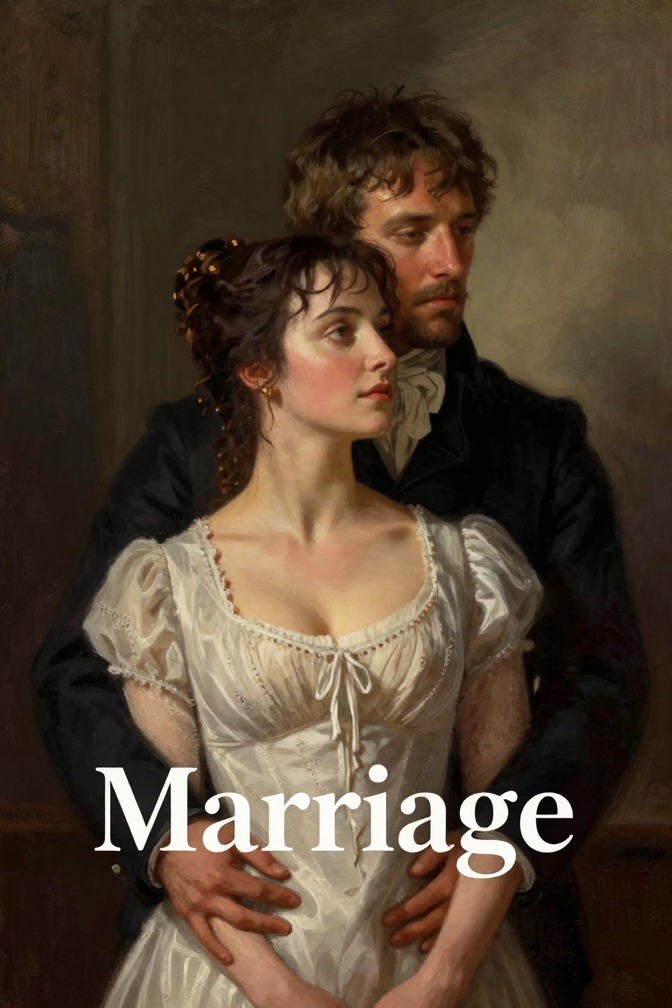
Marriage is the central social institution and narrative engine of Pride and Prejudice, functioning simultaneously as an economic necessity for women, a site of personal fulfillment, and a mechanism of class mobility. The novel systematically examines marriage through a spectrum of unions—from the prudent compromise of Charlotte Lucas and Mr. Collins to the passionate imprudence of Lydia Bennet and George Wickham, and finally to the ideal balance of affection and respect achieved by Elizabeth Bennet and Fitzwilliam Darcy—revealing the complex interplay of love, money, family, and social standing that governed matrimonial choice in Regency England.
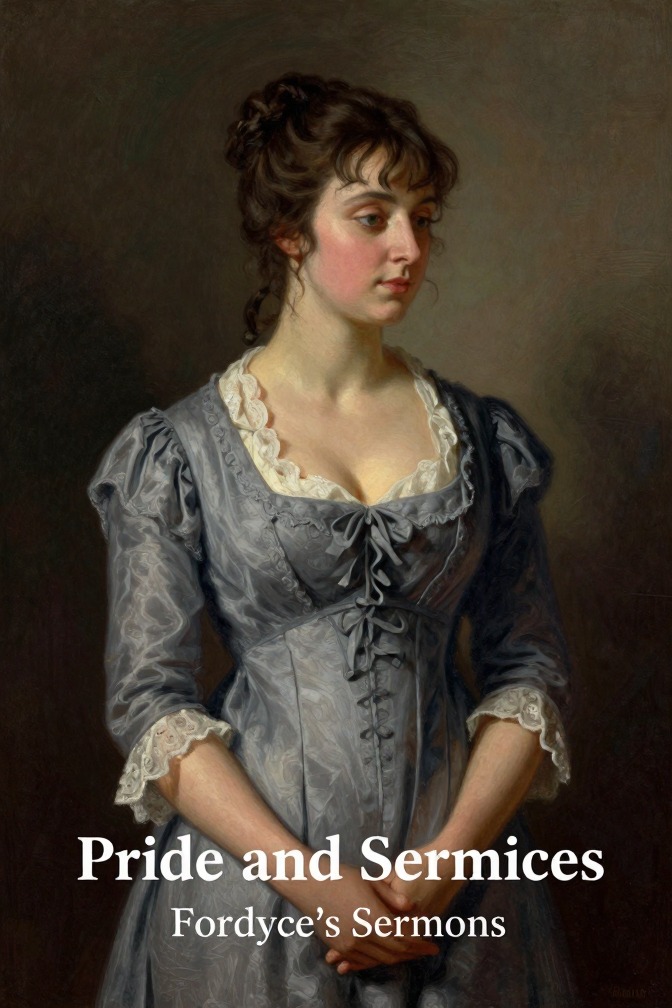
Fordyce's Sermons is a volume of moral and religious instruction that Mr. Collins attempts to read aloud to the Bennet family during his first visit to Longbourn, only to be interrupted by Lydia Bennet, an incident that exposes the absurdity of his character and the family's disregard for solemn didacticism.
Baron Vordenburg is the eccentric scholar whose arcane knowledge of vampirism leads directly to the discovery of Mircalla Countess Karnstein's long-concealed tomb and the final destruction of the vampire Carmilla. A descendant of the nobleman who originally hid the grave out of love, the Baron embodies the fusion of obsessive antiquarian research and personal ancestral guilt that resolves the novel's central mystery.
The vampire in Sheridan Le Fanu's *Carmilla* is a supernatural predator that sustains its existence by draining the blood of living victims, combining an alluring, passionate demeanor with a monstrous, parasitic nature. The narrative presents the vampire as a real, physically embodied entity, supported by legal testimony and scientific observation, while also exploring its seductive and psychological hold over its prey.
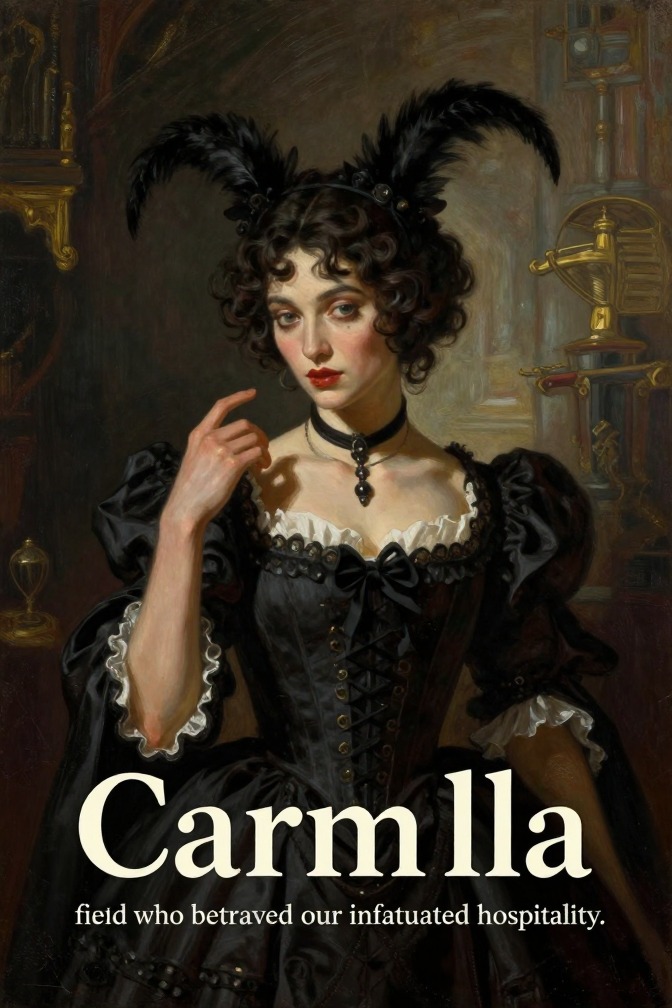
In Sheridan Le Fanu's Carmilla, the phrase 'the fiend who betrayed our infatuated hospitality' is General Spielsdorf's anguished accusation in his letter to Laura's father, condemning the vampire Carmilla (under the alias Millarca) for exploiting his trust and killing his ward Bertha Rheinfeldt. The expression crystallizes the story's central horror: a predatory monster who enters the home as a welcome guest and destroys the family from within, using the very bonds of hospitality as her weapon.