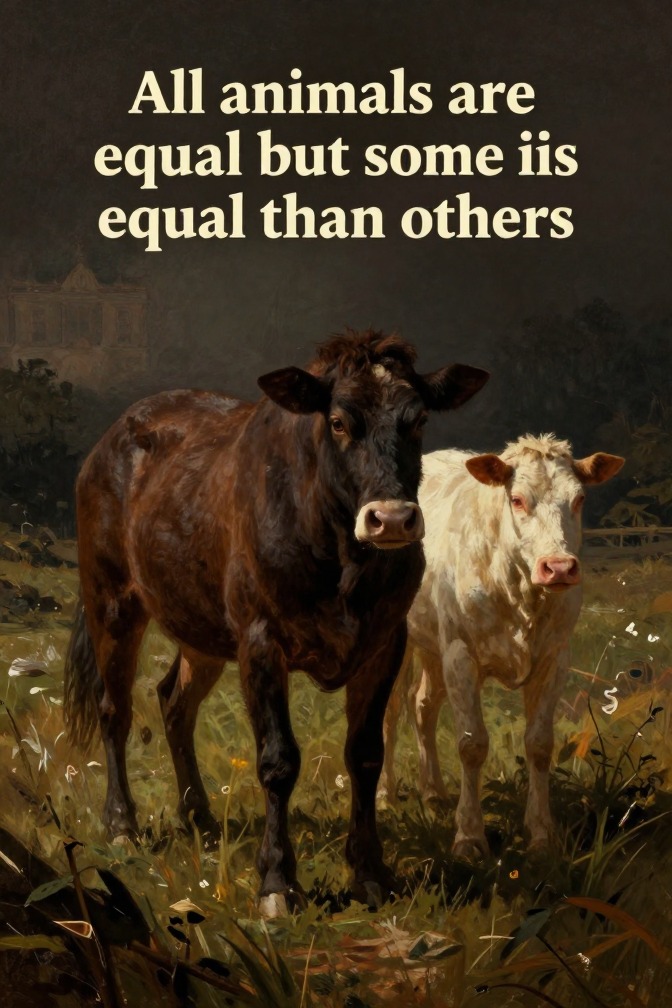
The final, transformed version of the Seventh Commandment, 'All animals are equal but some are more equal than others,' is the culminating ideological statement of Animal Farm, openly codifying the pigs' absolute privilege and the complete betrayal of the original revolutionary ideal of equality.
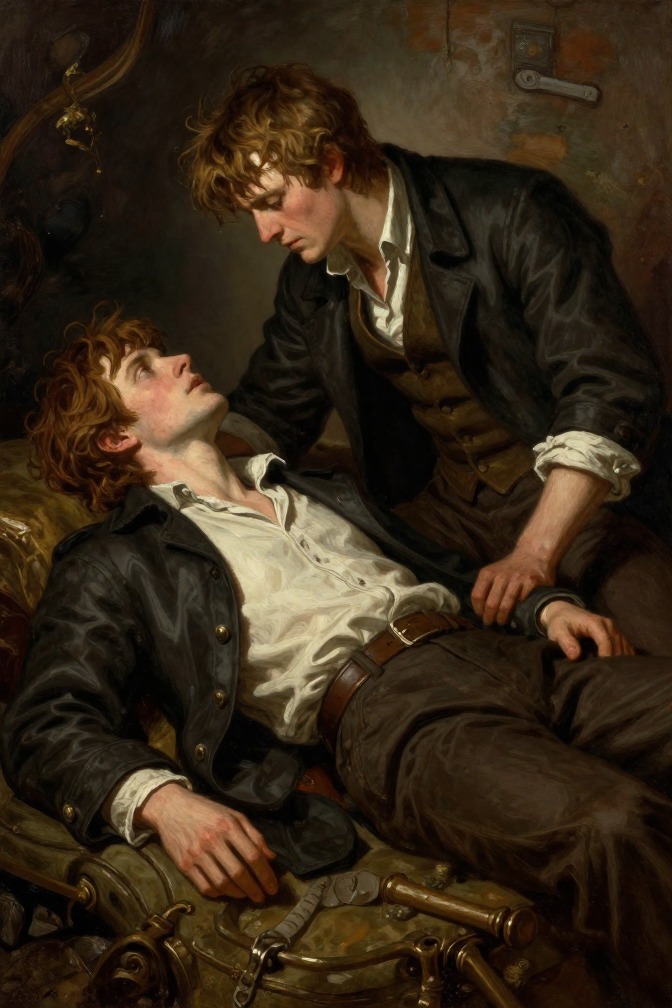
Gatsby rows out to Dan Cody's yacht, the moment that marks the birth of Jay Gatsby and the beginning of his career, as the seventeen-year-old James Gatz transforms himself into the figure who will pursue Daisy Buchanan.
After Daisy Buchanan fatally strikes Myrtle Wilson with Gatsby's car, Gatsby immediately decides to take the blame, telling Nick Carraway that he will say he was driving, a decision that seals his fate and reveals the depth of his devotion to Daisy.
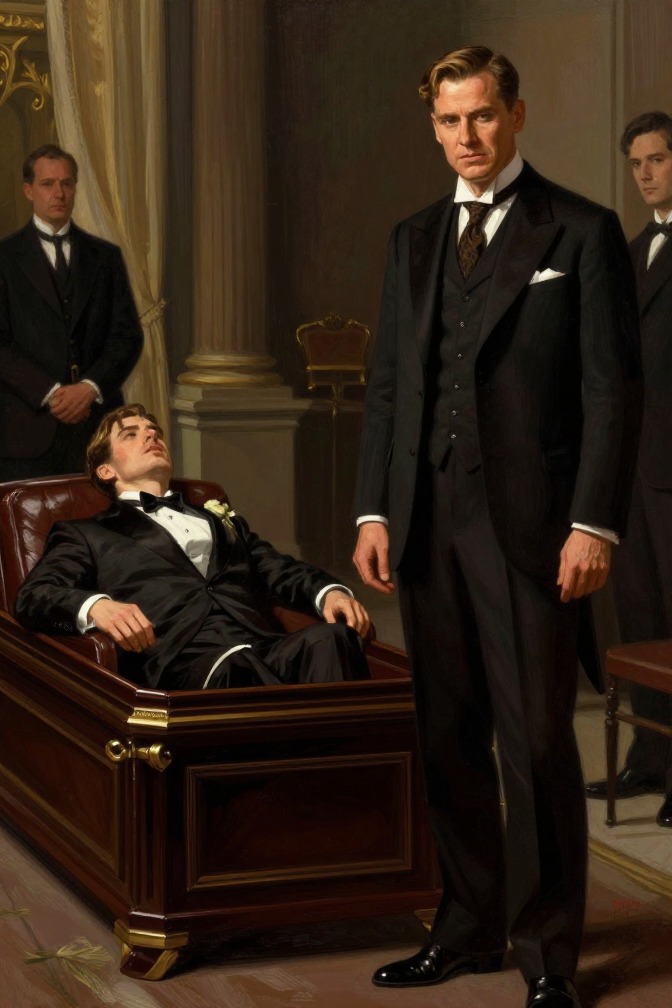
Meyer Wolfsheim, Gatsby's business partner and the man who fixed the 1919 World Series, refuses to attend Gatsby's funeral, a decision that exposes the hollowness of his professed friendship and the moral isolation of Gatsby in death.
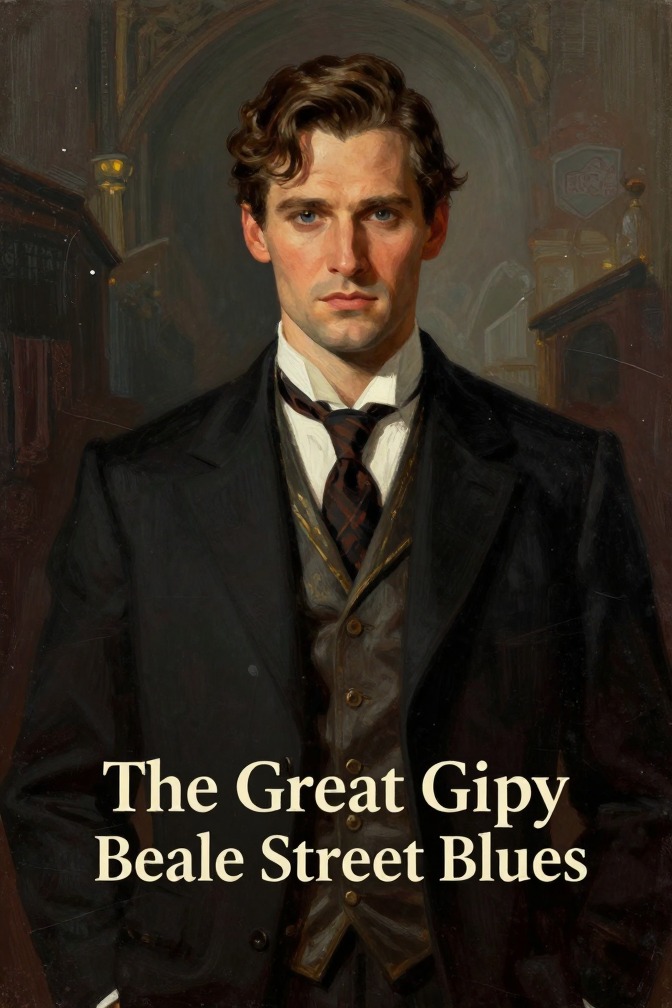
Beale Street Blues is a jazz composition that serves as a recurring musical motif in The Great Gatsby, symbolizing the melancholy, longing, and the social atmosphere of the Jazz Age, particularly in the context of Daisy Buchanan's world and her relationship with Jay Gatsby.
In F. Scott Fitzgerald's *The Great Gatsby*, the phrase "her voice is full of money" is Nick Carraway's sudden, revelatory insight into the nature of Daisy Buchanan's allure, crystallizing the novel's central theme of the inseparability of wealth, class, and desire. Uttered during the tense drive to New York City on the hottest day of the summer, the observation decodes Daisy's thrilling, musical voice not as a personal quality but as the very sound of material privilege—a jingling, cymbal-like song that marks her as an unattainable "golden girl" and exposes the economic foundation of Gatsby's romantic dream.
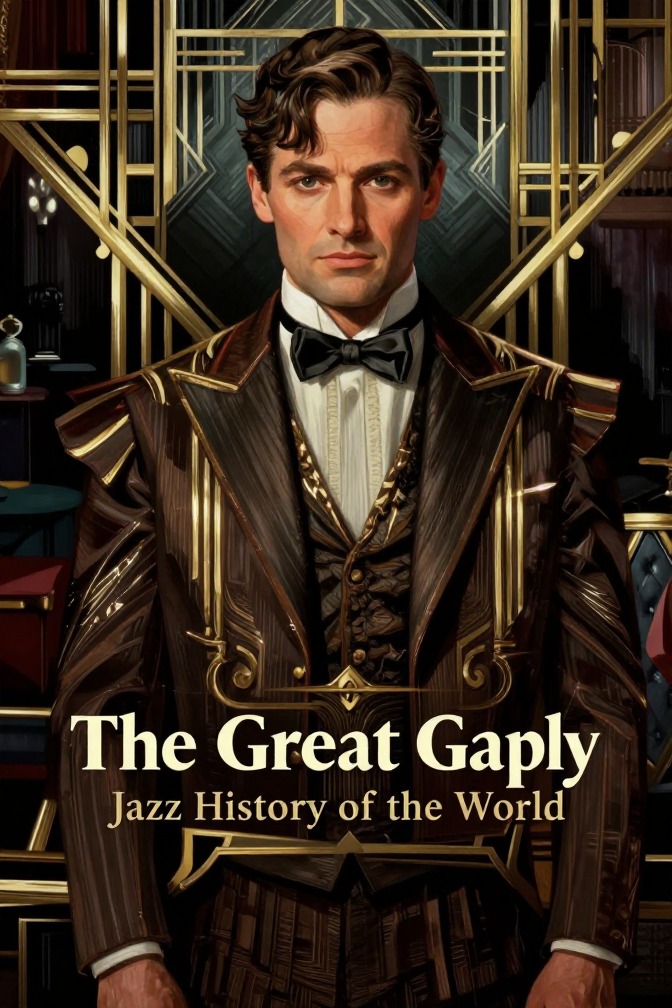
The Jazz History of the World is a fictional orchestral composition by Vladimir Tostoff that is performed at one of Jay Gatsby's parties, serving as a symbol of the era's cultural ferment and the artificial, mass-produced nature of Gatsby's world.
The Rosary is a Catholic devotional song that appears as a brief but telling detail in Meyer Wolfsheim's office, where someone whistles it tunelessly behind a partition while Nick Carraway is being denied entry. The song's presence in the Swastika Holding Company, a front for Wolfsheim's gambling operations, underscores the ironic juxtaposition of religious piety and criminal enterprise that characterizes the underworld of the novel.
The Plaza Hotel in New York City serves as the setting for the climactic confrontation between Jay Gatsby and Tom Buchanan, where the novel's central romantic and class conflicts reach their breaking point.
Town Tattle is a scandal magazine that appears in the novel as a marker of the shallow, gossip-driven culture of the Jazz Age, consumed by characters like Myrtle Wilson and associated with the sordid details of her affair with Tom Buchanan.
The Yale Club serves as Nick Carraway's regular dining venue in New York City, a place of solitary routine and gloomy contrast to the glittering parties of West Egg, and a site where the novel's social and intellectual tensions are quietly registered.
Thresh is the male tribute from District 11 in the Seventy-fourth Hunger Games, a formidable and solitary competitor whose physical strength and silent demeanor mark him as one of the most dangerous players in the arena. His actions are defined by a strict code of debt and loyalty, most notably sparing Katniss Everdeen's life in repayment for her kindness to his fellow district tribute, Rue, and his death at Cato's hands removes a major obstacle from the final contest.
District 7 is one of the twelve districts of Panem, known for its lumber industry, and is the home district of Johanna Mason, a victor who famously feigned weakness in the Hunger Games before revealing her deadly combat skills.
Panem is the totalitarian nation that rose from the ashes of North America, ruled by the Capitol and comprising twelve subjugated districts. It is the setting of the Hunger Games, an annual televised death match that serves as both punishment for a past rebellion and a tool of political control.
The Meadow is the scruffy field separating the Seam of District 12 from the forbidden woods, a liminal space that serves as Katniss Everdeen's primary point of departure for illegal hunting and gathering, and a symbol of both the district's poverty and the fragile hope of survival.
The Hunger Games Rules are the legal and ritualistic framework established by the Capitol of Panem to govern the annual Hunger Games, a brutal competition in which twenty-four tributes, one boy and one girl from each of the twelve districts, are forced to fight to the death in a vast outdoor arena until only one remains alive. These rules are designed not only as a punishment for a past rebellion but as a continuous, televised demonstration of the Capitol's absolute power, serving to remind the districts of their total subjugation and to prevent future uprisings through terror and spectacle.
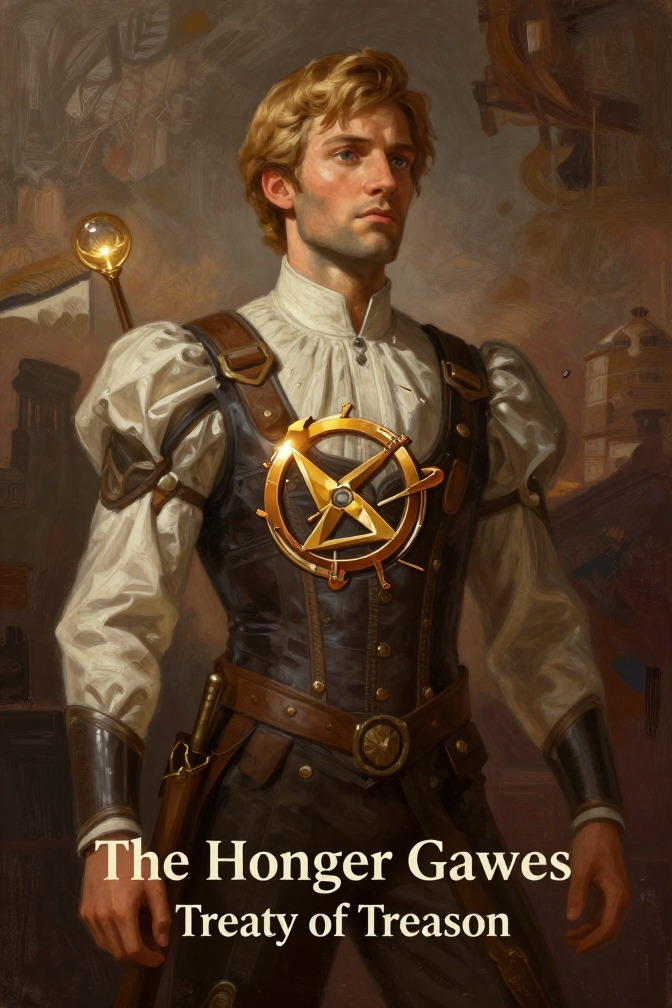
The Treaty of Treason is the foundational legal document of Panem that established the Hunger Games as an annual punishment for the districts' failed rebellion, codifying the Capitol's absolute power through a system of ritualized violence, forced tribute, and public spectacle.
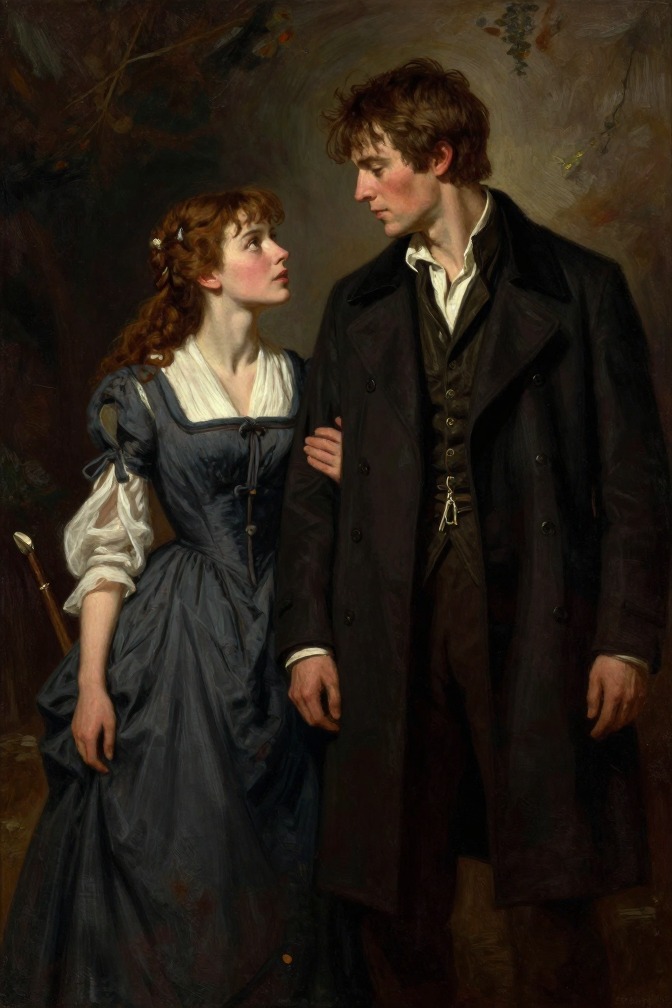
Catherine's mad fit is the climactic psychological collapse that follows her confrontation with Edgar Linton over Heathcliff, revealing the irreparable fracture between her social identity as Mrs. Linton and her elemental bond with Heathcliff, and it precipitates her final illness and death.
Hareton Earnshaw is the last of the Earnshaw line, a rough, uneducated youth who is systematically degraded by Heathcliff but ultimately redeemed through his relationship with Catherine Linton, embodying the novel's themes of inheritance, nurture, and the possibility of breaking cycles of cruelty.
The lapwing, a moorland bird, appears in Catherine Earnshaw's feverish ramblings as a symbol of lost freedom, childhood innocence, and her bond with Heathcliff, contrasting with the confinement of her life at Thrushcross Grange.
Heathcliff traps Catherine Linton and Nelly Dean at Wuthering Heights, forces Catherine to marry his dying son Linton Heathcliff, and detains them until the marriage is completed, an act that completes his revenge on Edgar Linton and seals Catherine's misery.
Heathcliff's return to the neighborhood after a three-year absence, appearing at Thrushcross Grange one September evening in 1778, is the pivotal event that reopens the central wound of the novel and sets in motion the final phase of his revenge against Hindley Earnshaw and Edgar Linton.
Isabella Linton's elopement with Heathcliff is a pivotal event that transforms her from a sheltered gentlewoman into a captive in a brutal marriage, exposing Heathcliff's calculated cruelty and deepening the novel's central conflicts.
Linton Heathcliff's death is the final collapse of Heathcliff's dynastic revenge, a drawn-out, miserable end that leaves Catherine Linton a widow and frees her for the eventual reconciliation with Hareton Earnshaw.
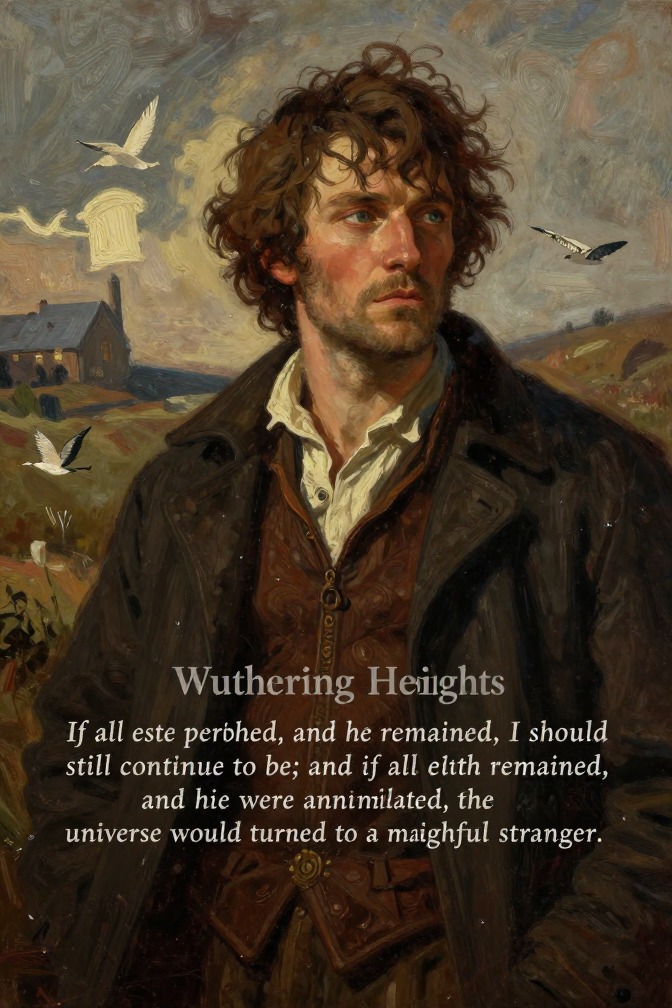
Catherine Earnshaw's declaration that her identity is inseparable from Heathcliff, uttered to Nelly Dean in Chapter IX, is the novel's most radical statement of metaphysical union, defining love not as emotion but as ontological necessity.
The marriage of Catherine Linton and Linton Heathcliff is a forced union orchestrated by Heathcliff as the final stroke of his revenge, trapping the young Catherine in a loveless, abusive household and securing his legal claim to Thrushcross Grange.
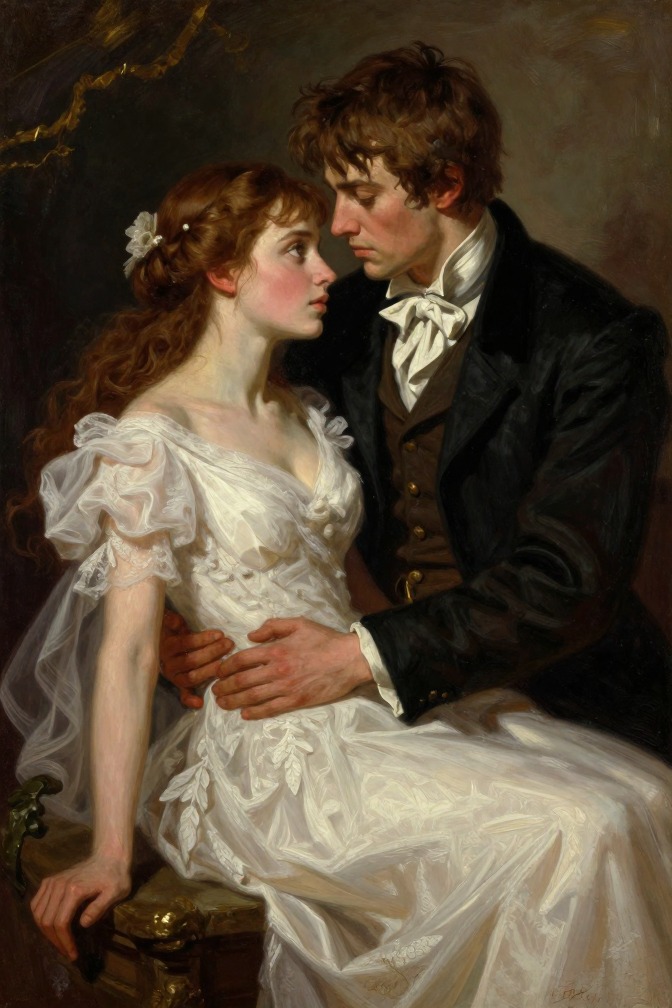
Heathcliff and Isabella Linton's marriage is a catastrophic union driven not by love but by Heathcliff's calculated revenge against Edgar Linton and the entire Linton family. The marriage, which begins with Isabella's infatuated elopement, quickly devolves into a nightmare of psychological and physical abuse, revealing Heathcliff's capacity for cruelty and Isabella's tragic naivety. It serves as a pivotal event that deepens the novel's central conflicts, isolates Isabella, and ultimately produces the frail Linton Heathcliff, who becomes another instrument in Heathcliff's ongoing scheme.
Mr. Earnshaw's adoption of Heathcliff is the foundational event of Wuthering Heights, introducing a dark, orphaned child into the Earnshaw family whose presence disrupts the existing bonds and sets in motion a cycle of favoritism, resentment, and ultimately, devastating revenge.
The relationship between Mr. Earnshaw and his son Hindley is a foundational conflict in Wuthering Heights, marked by the father's growing preference for the foundling Heathcliff, which breeds in Hindley a bitter resentment that warps his character and sets the cycle of revenge in motion.
Edgar Linton's rule of banishment of Heathcliff is a decisive act of domestic sovereignty that, after years of tolerated intrusion, finally expels Heathcliff from Thrushcross Grange and sets in motion the final, catastrophic phase of their rivalry. Issued in the wake of a violent confrontation and Catherine's open defiance, the decree is both a moral ultimatum and a practical failure, for it cannot prevent the deeper bond between Catherine and Heathcliff from shattering the household's peace.