Right of burial
AeneidRight of burial is the epic’s principle that the dead must receive funeral rites and proper interment before the moral and cosmic order can be restored. It is not presented as a private courtesy בלבד, but as a binding obligation whose violation leaves the dead excluded from the normal community of souls, burdens the living with pollution, and can interrupt the progress of the living toward their destined future.
Definition and Sacred Force
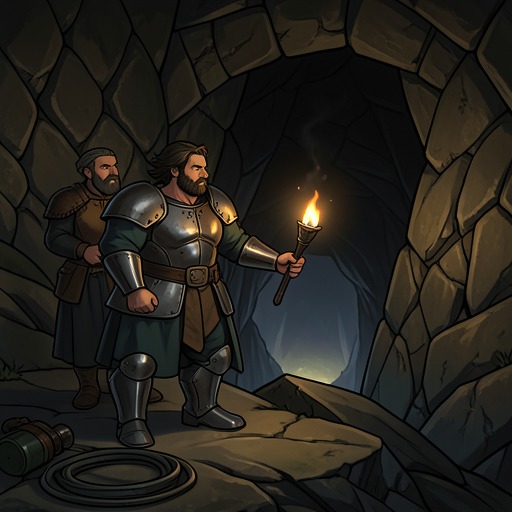
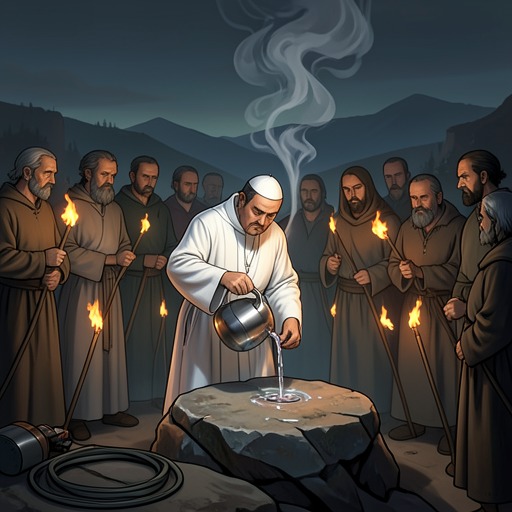
The rule appears most explicitly when the Sibyl warns Aeneas that an unnamed companion lies breathless and without funeral rites. The neglected corpse, she explains, pollutes the Trojan host; therefore Aeneas must first pay the dead man’s pious dues, lead two black sheep around the hearse, and cover the body with living turf before he can safely continue toward the regions without daylight. Burial is thus a ritual threshold. Until the body is properly treated, the journey cannot proceed securely, because the company remains entangled in an unfinished obligation to the dead.
The prescribed action joins religious observance to physical care. The two sheep, the circling movement around the hearse, and the covering of the corpse with living turf make burial a performed act rather than an abstract belief. The ritual both honors the dead and removes the danger that their uncompleted passage will contaminate the living. Aeneas’s obedience shows that even a hero charged with a vast destiny must pause before the immediate demand of funeral duty.
Burial and Passage to the Underworld
The rule governs not only the earth but also the geography of the Underworld. Charon refuses the unhappy ghosts who have been deprived of sepulchers and funeral dues. Because their bones have not been composed in graves, his vessel cannot carry them across the sacred stream whose authority is affirmed by heavenly oaths. These unburied souls wander along the shore for a hundred years; only after that period of penance are they carried over.
This arrangement makes burial a condition of social and cosmic legibility. Death alone does not admit a person into the ordered realm of the dead. The body must first be acknowledged, prepared, and placed in a grave. The dead who lack that recognition are suspended between worlds, neither living members of a community nor settled inhabitants of the Underworld. Their prolonged wandering gives ritual neglect a temporal consequence: the failure to bury becomes an extended sentence imposed upon the dead and a lasting sign of disorder among the living.
Palinurus embodies this danger in a particularly immediate form. He appears among the spirits as a new arrival, still fresh from life, after storms overturned the ship while he was steering by the stars on the Tyrrhenian seas. His presence among the dead recalls the suddenness of his loss, but his status also places him within the larger problem of passage and burial. A death at sea does not automatically resolve the obligations owed to the body; the relation between the living, the corpse, and the rites required for admission remains active.
Bodies, Mourning, and Political Order
The rule also shapes the treatment of bodies in the world of war. The Sibyl’s revelation forces Aeneas to discover Misenus lying extended upon the shore, the renowned son of the God of Winds. The discovery transforms an unseen impediment into a visible body requiring action. Aeneas must interrupt his movement toward the Underworld and attend to the corpse before pursuing the divine instruction. Funeral care therefore gives narrative priority to a vulnerable body, even when a larger heroic mission appears to demand haste.
The same principle appears in scenes of public grief. After Pallas dies, the Arcadians carry his breathless body back from the unhappy field on a shield, and his mourners bring him to the place where his corpse lies newly dead. The body’s transport, watching, and lamentation preserve the young warrior’s place within the community after battle has removed him from it. The funeral process does not undo the death, but it prevents the dead from being reduced to an anonymous casualty. Mourning restores relation: Pallas remains the son whose loss is witnessed, carried, and grieved.
The epic contrasts this ordered care with violent and dishonoring acts. Pyrrhus drags Priam through clotted blood and holy mire after killing his son, turning the old king’s body into part of the battlefield’s sacrilegious residue. Elsewhere, a woman strikes herself with a sword, leaving the cruel weapon lodged in her wound; such scenes show bodies caught in violent endings before ritual can give them a settled place. The right of burial stands against this treatment by insisting that death must not be allowed to remain merely an extension of violence.
Truce, Clemency, and the Law of the Dead
Because burial is a shared obligation, it can also become the basis of political negotiation. After the dead are brought from the field, suppliants sent from Laurentum approach Aeneas with olive branches and request a truce. They appeal to his clemency, and he grants a pause that their just petition makes impossible to deny. The truce converts funeral necessity into a temporary suspension of warfare: enemies who cannot yet reconcile their political claims can nevertheless acknowledge the dead.
Aeneas’s response frames the conflict as a causeless quarrel that has armed the Latian princes against an unoffending man. His language places war under moral scrutiny rather than treating victory as its only standard. The burial interval creates a space in which grief, justice, and public speech can interrupt the momentum of arms. Funeral duty consequently becomes a restraint upon sovereignty: even the victorious hero must recognize obligations that exceed the immediate logic of conquest.
The importance of this principle is confirmed when divine promises and the fates are explained, and Aeneas sends to the Latian king to cease the rage of arms and ratify peace. When peace is publicly tied with solemn vows sworn on both sides, with all dues performed that holy rites require, the political settlement echoes the funeral order. Both burial and peace depend upon formal acts that transform violence into a recognized relation. The dead receive their due, and the living bind themselves through vows; ritual is what makes the transition durable rather than merely emotional.
Significance
Right of burial links bodily care, religious purity, memory, and public law. It explains why an unburied companion can pollute a host, why a ghost can be barred from Charon’s boat, why Misenus’s corpse interrupts Aeneas’s journey, and why grief for Pallas opens the way to a truce. The rule is therefore both compassionate and structural: it answers the dead person’s claim to recognition while protecting the living from a world in which violence has erased every boundary.
The epic’s treatment of burial also tests the meaning of civilization. A community is not defined only by its armies, settlements, or treaties, but by the way it receives its dead. Funeral rites restore the distinction between battlefield and grave, enemy and supplicant, living traveler and departed soul. Where those distinctions are violated, bodies remain exposed to continuing violence and ghosts remain without passage. Where they are observed, mourning can become justice, and justice can become the foundation of peace.