the night Troy falls
Hector's Warning
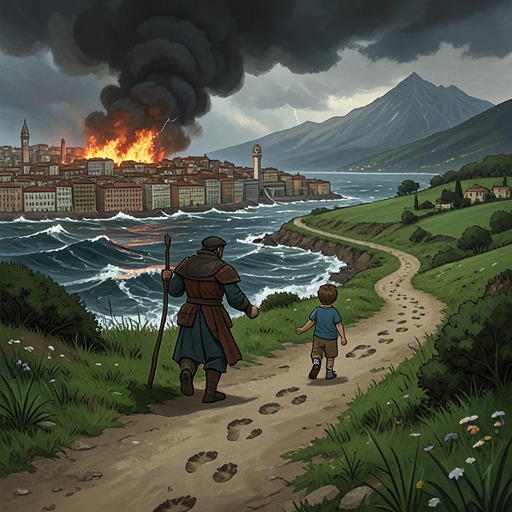
[Aeneas](entity:character-recall-character-aeneas-9200cab36668) dreams of [Hector](entity:character-recall-character-hector-45b791ca99c8), whose battered ghost warns that [Troy](entity:location-recall-location-troy-3f2543b3876b) has already been taken and that the Trojan future now depends on escape. Hector entrusts him with the household gods and directs him toward a new city beyond the sea.
The vision transforms Aeneas from a defender of the doomed city into the bearer of its surviving sacred continuity. The principle of [Fatum](entity:concept-recall-concept-fatum-e7424ed92f09) begins to override the immediate claims of battlefield honor.
the same night
The Fall of Troy
Awakened by cries and fire, [Aeneas](entity:character-recall-character-aeneas-9200cab36668) surveys the burning city and learns from [Pantheus](entity:character-recall-character-pantheus-37fdbef41ca7) that [The Trojan Horse](entity:expression-recall-expression-the-trojan-horse-a06ed869fdd6) has disgorged armed [Greeks](entity:organization-recall-organization-greeks-72173728c240) inside the walls. He gathers a small band, including [Coroebus](entity:character-recall-character-coroebus-375070834b03), and fights through the streets amid confusion, disguise, and slaughter.
The attempt to save [Troy](entity:location-recall-location-troy-3f2543b3876b) fails when the [Trojans](entity:organization-recall-organization-trojans-bed1dda1166c) are mistaken for Greeks and attacked by their own countrymen. Coroebus, Ripheus, Dymas, Hypanis, and Pantheus die, proving that courage cannot reverse a destruction decreed by the gods.
before dawn on Troy's final night
Death of Priam
[Aeneas](entity:character-recall-character-aeneas-9200cab36668) witnesses [Pyrrhus](entity:character-recall-character-pyrrhus-e1b85a43be0a) break into [Priam](entity:character-recall-character-priam-f8ec1d78a5a2)'s palace, pursue [Polites](entity:character-recall-character-polites-bfeaa0f892c6), and kill him before his father. The aged Priam throws a useless spear in rage, but Pyrrhus drags him to the altar and kills him there.
Priam's death makes the collapse of [Troy](entity:location-recall-location-troy-3f2543b3876b) personal and dynastic: the last king of Asia becomes a headless corpse. Aeneas, seeing the murder, turns from futile combat toward the rescue of his own family.
during the final night of Troy
Venus Reveals the Gods
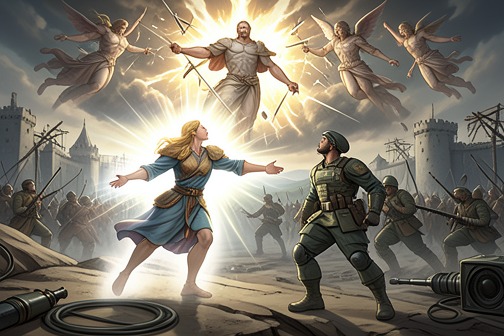
[Aeneas](entity:character-recall-character-aeneas-9200cab36668) nearly attacks [Helen](entity:character-recall-character-helen-25ca9ab47439), blaming her for the ruin, when [Venus](entity:character-recall-character-venus-c3ad2d1b04e1) appears and restrains him. She clears his mortal sight and shows [Neptune](entity:character-recall-character-neptune-006f5db74c38) tearing down the walls, [Juno](entity:character-recall-character-juno-6875ac1ce190) urging the [Greeks](entity:organization-recall-organization-greeks-72173728c240), and [Pallas](entity:character-recall-character-pallas-75328c9f1677) occupying the towers.
The revelation relocates responsibility from Helen and [Paris](entity:character-recall-character-paris-757aeede3473) to the divine powers. Venus commands Aeneas to abandon the city and save [Anchises](entity:character-recall-character-anchises-b4c1f869bd69), [Creusa](entity:character-recall-character-creusa-bff0d2578b64), and [Ascanius](entity:character-recall-character-ascanius-0eaff2760518), redefining [Pietas](entity:concept-recall-concept-pietas-8d8c6f0e7ab4) as the proper response to catastrophe.
before dawn
Aeneas Escapes Troy
[Aeneas](entity:character-recall-character-aeneas-9200cab36668) returns to his home and persuades [Anchises](entity:character-recall-character-anchises-b4c1f869bd69) to flee after a celestial omen confirms the journey. He carries his father on his back, leads [Ascanius](entity:character-recall-character-ascanius-0eaff2760518) by the hand, and follows [Creusa](entity:character-recall-character-creusa-bff0d2578b64) through the dark streets while bearing the household gods.
The image of the son carrying the father and protecting the child becomes the defining emblem of Aeneas's character. The escape preserves a family, a ritual inheritance, and the future line of [Rome](entity:location-recall-location-f3877a21016f), though it cannot preserve everyone.
after the escape from Troy
Creusa's Death
At the rendezvous outside the city, [Aeneas](entity:character-recall-character-aeneas-9200cab36668) discovers that [Creusa](entity:character-recall-character-creusa-bff0d2578b64) is missing. He returns through the burning streets and finally encounters her ghost, who tells him that the gods have assigned him long wanderings and a future marriage in Italy.
Creusa releases him from the marriage he cannot carry forward and entrusts their son and Trojan future to him. Her disappearance becomes the first great personal sacrifice demanded by Aeneas's destiny.
immediately after Troy's destruction
The Trojan Exile Begins
At dawn [Aeneas](entity:character-recall-character-aeneas-9200cab36668) returns to the refugees gathered under his command and leads them away from [Troy](entity:location-recall-location-troy-3f2543b3876b). The group consists of men, women, children, elders, arms, treasure, and the rescued sacred objects.
The survivors become a wandering people rather than a defeated remnant. Their exile is not aimless: it is the first movement toward the settlement promised by [Hector](entity:character-recall-character-hector-45b791ca99c8) and the gods.
early in the exile, at Thrace
Murder of Polydorus
The [Trojans](entity:organization-recall-organization-trojans-bed1dda1166c) land in [Thrace](entity:location-recall-location-dd3ac221a713) and begin building a city. When [Aeneas](entity:character-recall-character-aeneas-9200cab36668) tears branches from a nearby myrtle, blood flows from the roots and the buried voice of [Polydorus](entity:character-recall-character-polydorus-34347d80400c) reveals that he was murdered by the Thracian ruler for the gold entrusted to him by [Priam](entity:character-recall-character-priam-f8ec1d78a5a2).
The apparition exposes the collapse of loyalty after [Troy](entity:location-recall-location-troy-3f2543b3876b)'s fall and condemns greed as a force that destroys kinship and hospitality. Aeneas abandons the settlement, performs burial rites, and refuses to build on polluted ground.
after leaving Thrace
The Delian Oracle
The [Trojans](entity:organization-recall-organization-trojans-bed1dda1166c) sail to [Delos](entity:location-recall-location-f2fa5809a2bd), where [Anius](entity:character-recall-character-anius-b6d17a0bc2f1) welcomes [Anchises](entity:character-recall-character-anchises-b4c1f869bd69) and [Aeneas](entity:character-recall-character-aeneas-9200cab36668) consults [Apollo](entity:character-recall-character-apollo-1cf2b99589fd). The oracle commands them to seek the ancient motherland from which their ancestors came and promises a future empire.
Anchises interprets the answer as [Crete](entity:location-recall-location-9620d5e088e2), because the Trojans remember an ancestral Ida and traditions linking Teucer with the island. Their first reading of the oracle sends the fleet toward the wrong destination.
soon after the Delian oracle
Settlement on Crete
The [Trojans](entity:organization-recall-organization-trojans-bed1dda1166c) reach [Crete](entity:location-recall-location-9620d5e088e2), name their settlement [Pergamus](entity:location-recall-location-a8be79c1fe03), divide land, make laws, and begin cultivating the soil. Almost immediately a pestilence corrupts the air, ruins the crops, and kills many of the settlers.
The disease reveals that human interpretation has outrun divine intention. The failed colony leaves the Trojans weakened and forces them to seek a truer reading of their mandate.
during the plague on Crete
The Household Gods Correct the Oracle
In a dream, the household gods tell [Aeneas](entity:character-recall-character-aeneas-9200cab36668) that [Crete](entity:location-recall-location-9620d5e088e2) is not the promised home. They identify Italy as Hesperia, the true ancestral land of Dardanus and Jasius, and command him to return with the sacred relics.
The dream corrects [Anchises](entity:character-recall-character-anchises-b4c1f869bd69)'s mistake and restores direction to the voyage. Divine guidance now operates through the very gods Aeneas carried from [Troy](entity:location-recall-location-troy-3f2543b3876b), making their preservation a continuing source of knowledge.
after leaving Crete
Harpies' Attack
A storm drives the fleet to the [Strophades](entity:location-recall-location-3db83a504198), where the [Trojans](entity:organization-recall-organization-trojans-bed1dda1166c) find herds and attempt a communal meal. The Harpies descend, foul the food, and repeatedly destroy every attempt to eat.
When the Trojans attack, [Celaeno](entity:character-recall-character-celaeno-3ebbc3d2dbb0) alone remains and prophesies that they will reach Italy only after suffering a famine so severe that they will consume the tables on which they eat. The curse becomes a cryptic confirmation of the future settlement rather than a mere threat.
after the Harpies' curse, at Buthrotum
Helenus's Italian Prophecy
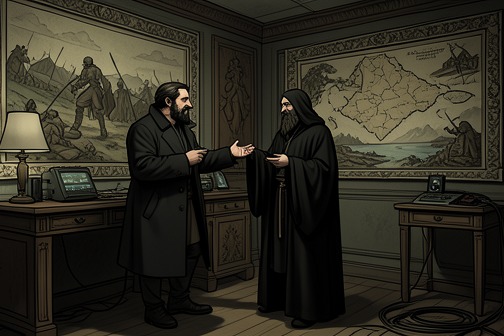
The [Trojans](entity:organization-recall-organization-trojans-bed1dda1166c) reach [Buthrotum](entity:location-recall-location-17a04c04fdf1) and find [Andromache](entity:character-recall-character-andromache-587f1c3f4b87) married to [Helenus](entity:character-recall-character-helenus-c28f8177769b), who rules a small imitation of [Troy](entity:location-recall-location-troy-3f2543b3876b). Andromache mourns [Hector](entity:character-recall-character-hector-45b791ca99c8) and asks after [Ascanius](entity:character-recall-character-ascanius-0eaff2760518); [Aeneas](entity:character-recall-character-aeneas-9200cab36668) recounts his losses, while Helenus provides gifts and prophetic guidance.
Helenus warns that Italy lies farther away than expected and instructs Aeneas how to navigate the [Strait of Messina](entity:location-recall-location-708a94e7ef06), avoid [Scylla](entity:creature-recall-creature-scylla-9bbfd338fa4f) and [Charybdis](entity:creature-recall-creature-charybdis-cac3514bd019), honor [Juno](entity:character-recall-character-juno-6875ac1ce190), and seek the Sibyl at [Cumae](entity:location-recall-location-73cc0c42bb6b). The prophecy turns a vague destination into a ritual and geographic itinerary.
later in the Sicilian voyage
Escape from Polyphemus
Near [Mount Etna](entity:location-recall-location-6e0ef04738cf), the [Trojans](entity:organization-recall-organization-trojans-bed1dda1166c) meet [Achaemenides](entity:character-recall-character-achaemenides-ad02586dd438), a Greek abandoned by Ulysses among the Cyclopes. He describes [Polyphemus](entity:character-recall-character-polyphemus-9c6883b3308d)'s brutality and begs the enemies of Greece to rescue him.
Polyphemus soon appears, blinded and enormous, while the other Cyclopes gather at his cries. The Trojans cut their cables and flee with Achaemenides, passing between the dangers [Helenus](entity:character-recall-character-helenus-c28f8177769b) had foretold.
at Drepanum, before Carthage
Death of Anchises
After further sailing along [Sicily](entity:location-recall-location-7a28aa658ada), the [Trojans](entity:organization-recall-organization-trojans-bed1dda1166c) reach [Drepanum](entity:location-recall-location-c006f977a14e), where [Anchises](entity:character-recall-character-anchises-b4c1f869bd69) dies after years of hardship. [Aeneas](entity:character-recall-character-aeneas-9200cab36668) identifies the loss as the greatest suffering omitted by the prophecies.
Anchises had been the physical and moral center of the exile. His death leaves Aeneas without the father whose counsel interpreted omens, but it also prepares the hero for a later encounter with Anchises as a prophetic spirit.
after Anchises's death
Arrival at Carthage
A storm drives [Aeneas](entity:character-recall-character-aeneas-9200cab36668) and the surviving [Trojans](entity:organization-recall-organization-trojans-bed1dda1166c) to the African coast, where [Dido](entity:character-recall-character-dido-10b4292744c2) receives them at [Carthage](entity:location-recall-location-22cc3e31edc5). [Venus](entity:character-recall-character-venus-c3ad2d1b04e1) protects Aeneas, and the queen invites him to recount the fall of [Troy](entity:location-recall-location-troy-3f2543b3876b) and his wanderings.
The city offers safety, wealth, and a plausible alternative to the destiny of Italy. The hospitality that begins as political welcome soon becomes the setting for a conflict between personal love and divine obligation.
during Aeneas's first nights in Carthage
Dido Falls in Love
[Dido](entity:character-recall-character-dido-10b4292744c2) confesses to [Anna](entity:character-recall-character-anna-ea2421a71401) that [Aeneas](entity:character-recall-character-aeneas-9200cab36668) has revived the passion she had sworn never to feel after Sichaeus's murder. Anna urges her to accept love, arguing that an alliance with the Trojan leader would strengthen [Carthage](entity:location-recall-location-22cc3e31edc5) against its enemies.
Dido's private hesitation yields to desire, and the queen begins structuring the city around the presence of her guest. Public building stops while the personal flame consumes political duty.
during a stormy hunt
Dido and Aeneas's Cave Union
[Juno](entity:character-recall-character-juno-6875ac1ce190) proposes to [Venus](entity:character-recall-character-venus-c3ad2d1b04e1) that [Dido](entity:character-recall-character-dido-10b4292744c2) and [Aeneas](entity:character-recall-character-aeneas-9200cab36668) be joined, while secretly hoping to divert the Trojan mission toward [Carthage](entity:location-recall-location-22cc3e31edc5). During a hunt, a storm scatters the party and drives the queen and Aeneas into the same cave.
Thunder, lightning, and divine witnesses surround their union. Dido calls it marriage, but the poem presents it as an ambiguous bond whose private meaning cannot override the public demands of [Fatum](entity:concept-recall-concept-fatum-e7424ed92f09).
immediately after the cave union
Fama Spreads the Affair
Rumor races through [Libya](entity:location-recall-location-6073c45834cc), magnifying [Dido](entity:character-recall-character-dido-10b4292744c2)'s relationship with the Trojan guest into a scandal. [Fama](entity:concept-recall-concept-fama-07c1f6aac04e) reports that the queen has abandoned her city, her reputation, and her royal responsibilities for a foreign lover.
The report reaches King Iarbas, whose rejected desire turns into outrage. What began as a private refuge becomes an international political crisis, giving the gods a human grievance through which to force the next stage of [Aeneas](entity:character-recall-character-aeneas-9200cab36668)'s journey.
after the affair becomes public
Mercury Commands Departure
[Jupiter](entity:character-recall-character-jupiter-ad236da3be58) sends [Mercury](entity:character-recall-character-mercury-dc08adc34fea) to remind [Aeneas](entity:character-recall-character-aeneas-9200cab36668) that he was destined to found a martial people in Italy, not to waste his days in Carthaginian pleasure. Mercury rebukes him for neglecting [Ascanius](entity:character-recall-character-ascanius-0eaff2760518) and the promised Roman future.
Aeneas accepts the command despite his love and orders the fleet secretly prepared. The divine message converts hesitation into action, though it leaves the emotional cost to [Dido](entity:character-recall-character-dido-10b4292744c2) rather than resolving it.
before dawn after Mercury's warning
Aeneas Abandons Carthage
[Dido](entity:character-recall-character-dido-10b4292744c2) discovers the preparations and confronts [Aeneas](entity:character-recall-character-aeneas-9200cab36668) with accusations of ingratitude and betrayal. He answers that he never lawfully married her and that the gods have commanded him to seek Italy.
Dido pleads for delay, a child, or any pledge of the relationship, but Aeneas remains immovable. His choice establishes the central moral tension of the epic: [Pietas](entity:concept-recall-concept-pietas-8d8c6f0e7ab4) toward destiny is purchased through a devastating failure of intimate compassion.
the night after Aeneas sails
Dido's Suicide
[Dido](entity:character-recall-character-dido-10b4292744c2) deceives [Anna](entity:character-recall-character-anna-ea2421a71401) into helping construct a pyre containing [Aeneas](entity:character-recall-character-aeneas-9200cab36668)'s clothing, weapons, and the bed they shared. When the Trojan fleet disappears, she curses Aeneas and his descendants, invokes eternal hostility between [Carthage](entity:location-recall-location-22cc3e31edc5) and his people, and wounds herself with his sword.
[Juno](entity:character-recall-character-juno-6875ac1ce190) sends [Iris](entity:character-recall-character-iris-fda56f093853) to release the soul because Dido's death was driven by mortal passion rather than a predetermined divine sentence. Her curse becomes the mythic prehistory of the later wars between Carthage and [Rome](entity:location-recall-location-f3877a21016f).
immediately after leaving Carthage
Storm toward Sicily
[Aeneas](entity:character-recall-character-aeneas-9200cab36668) sees the blaze from [Carthage](entity:location-recall-location-22cc3e31edc5) but does not know its cause. A storm then scatters the fleet, and [Palinurus](entity:character-recall-character-palinurus-3935f8cfe817) advises turning toward [Sicily](entity:location-recall-location-7a28aa658ada), where [Anchises](entity:character-recall-character-anchises-b4c1f869bd69)'s tomb and [Acestes](entity:character-recall-character-acestes-677f85641968)'s friendship offer refuge.
The fleet returns to a place already marked by grief, but the detour creates the circumstances for commemorating Anchises and deciding which members of the exile can continue the dangerous journey.
one year after Anchises's death
Funeral Games for Anchises
[Aeneas](entity:character-recall-character-aeneas-9200cab36668) holds annual rites at [Anchises](entity:character-recall-character-anchises-b4c1f869bd69)'s tomb and announces games for the Trojan and Sicilian communities. The contests include a ship race, footrace, boxing match, archery, and the equestrian display led by [Ascanius](entity:character-recall-character-ascanius-0eaff2760518).
The games convert mourning into communal order. Competition recalls the Trojan past while also rehearsing the civic institutions, martial discipline, and inherited memory needed for the future people.
during the funeral games
The Ship Burning
[Juno](entity:character-recall-character-juno-6875ac1ce190) sends [Iris](entity:character-recall-character-iris-fda56f093853) to the Trojan women, who are exhausted by exile and persuaded to burn the fleet. They set fire to the ships, believing that destroying the vessels will force the community to settle in [Sicily](entity:location-recall-location-7a28aa658ada).
[Jupiter](entity:character-recall-character-jupiter-ad236da3be58) answers [Aeneas](entity:character-recall-character-aeneas-9200cab36668)'s prayer with a sudden storm that extinguishes the flames, though four ships are lost. The catastrophe exposes a division between those still capable of war and those who need a permanent refuge.
after the ship burning
Founding of Acesta
Nautes advises [Aeneas](entity:character-recall-character-aeneas-9200cab36668) to leave the aged, women, and weary behind with [Acestes](entity:character-recall-character-acestes-677f85641968), while the chosen warriors continue toward Italy. [Anchises](entity:character-recall-character-anchises-b4c1f869bd69)'s ghost confirms the plan and directs Aeneas to seek him later in the [Underworld](entity:location-recall-location-387d635bdc5b).
Aeneas establishes Acesta, assigns land, appoints a senate, and honors Anchises with a temple and priesthood. The settlement becomes a legitimate branch of the Trojan diaspora rather than a failed remnant.
the following voyage from Sicily
Death of Palinurus
[Neptune](entity:character-recall-character-neptune-006f5db74c38) promises [Venus](entity:character-recall-character-venus-c3ad2d1b04e1) that the fleet will reach Italy safely, with one destined life as the price. During the night, Sleep approaches [Palinurus](entity:character-recall-character-palinurus-3935f8cfe817) in the guise of Phorbas, drugs him, and pushes him from the helm into the sea.
[Aeneas](entity:character-recall-character-aeneas-9200cab36668) takes control and mourns the pilot, whose sacrifice preserves the rest of the fleet. Palinurus's death also establishes the burial and recognition problem that Aeneas will confront in the [Underworld](entity:location-recall-location-387d635bdc5b).
after Palinurus's death
Arrival at Cumae
The fleet reaches [Cumae](entity:location-recall-location-73cc0c42bb6b), where [Aeneas](entity:character-recall-character-aeneas-9200cab36668) visits [Apollo](entity:character-recall-character-apollo-1cf2b99589fd)'s temple and meets the Sibyl [Deiphobe](entity:character-recall-character-deiphobe-9060723eb10e). She prophesies wars in Italy and warns that a greater struggle awaits after the voyage.
Aeneas asks not merely for prophecy but for access to the [Underworld](entity:location-recall-location-387d635bdc5b), hoping to see [Anchises](entity:character-recall-character-anchises-b4c1f869bd69). The request begins the epic's formal [Katabasis](entity:concept-recall-concept-katabasis-8d97d85b0e01) and links personal grief with a revelation about historical destiny.
before entering the Underworld
The Golden Bough
The Sibyl explains that [Aeneas](entity:character-recall-character-aeneas-9200cab36668) can enter the [Underworld](entity:location-recall-location-387d635bdc5b) only with [The Golden Bough](entity:expression-recall-expression-the-golden-bough-1f89782308d8), a sacred offering for Proserpina, and after performing burial rites for an unburied companion. [Venus](entity:character-recall-character-venus-c3ad2d1b04e1) sends two doves to guide him through the forest.
Aeneas finds and plucks the self-renewing golden branch, while the [Trojans](entity:organization-recall-organization-trojans-bed1dda1166c) discover [Misenus](entity:character-recall-character-misenus-3cb0778b8974) dead and bury him with full military honors. [Ritual purity](entity:rule-recall-rule-ritual-purity-b54dc19a8d34) and proper burial become the conditions for crossing between the living and the dead.
after Misenus's burial
Aeneas Enters the Underworld
After sacrifices at [Lake Avernus](entity:location-recall-location-f35433c4def5), [Aeneas](entity:character-recall-character-aeneas-9200cab36668) and [Deiphobe](entity:character-recall-character-deiphobe-9060723eb10e) descend through the cave into the [Underworld](entity:location-recall-location-387d635bdc5b). They pass the phantoms at the gates, cross [Acheron](entity:location-recall-location-227705d99a08) with [Charon](entity:character-recall-character-charon-d0e6e0f1f9e3), and pacify [Cerberus](entity:creature-recall-creature-cerberus-9d616024ea88) with a drugged cake.
The descent makes visible the moral architecture of the epic world: the unburied wait, the guilty are judged, lovers mourn, and the heroic dead occupy distinct realms. Aeneas's journey is both pilgrimage and education.
during Aeneas's Underworld journey
Dido in the Underworld
Among the Mourning Fields, [Aeneas](entity:character-recall-character-aeneas-9200cab36668) encounters [Dido](entity:character-recall-character-dido-10b4292744c2), still marked by the wound that killed her. He explains that the gods compelled his departure and begs her to stop, but she refuses to answer and returns to the shade of Sichaeus.
Her silence is more final than her earthly curse. The meeting reveals that Aeneas's obedience to destiny has not erased guilt, while Dido's refusal denies him the consolation of mutual recognition.
later in the Underworld
The Punishments of Tartarus
The Sibyl shows [Aeneas](entity:character-recall-character-aeneas-9200cab36668) [Tartarus](entity:location-recall-location-113deddce769), where tyrants, traitors, impious children, corrupt judges, and other offenders endure punishments proportionate to their crimes. Deiphobus is also encountered, mutilated after [Helen](entity:character-recall-character-helen-25ca9ab47439)'s betrayal opened his chamber to the [Greeks](entity:organization-recall-organization-greeks-72173728c240).
The scene supplies a moral counterworld to heroic fame. Political violence, sacrilege, and betrayal are not erased by power; they remain subject to judgment after death.
in the Elysian Fields
Anchises Reveals the Soul
In the [Elysian Fields](entity:location-recall-location-30d9d8bcadd0), [Aeneas](entity:character-recall-character-aeneas-9200cab36668) embraces [Anchises](entity:character-recall-character-anchises-b4c1f869bd69), though the shade slips through his arms. Anchises explains that a single world-soul animates heaven, earth, sea, animals, and human beings, while mortal bodies cloud the spirit with desire, fear, grief, and sin.
He describes purification through time, fire, and water, followed by [Lethe](entity:location-recall-location-32ed994ce871)'s forgetfulness before souls return to new bodies. The doctrine provides a cosmic explanation for continuity across generations.
at the end of the Underworld vision
Anchises Shows Rome's Future
[Anchises](entity:character-recall-character-anchises-b4c1f869bd69) leads [Aeneas](entity:character-recall-character-aeneas-9200cab36668) past the unborn souls of the future Italian and Roman line, naming Silvius, [Romulus](entity:character-recall-character-romulus-1894353b81a7), [Brutus](entity:character-recall-character-brutus-598ebd42678c), [Augustus](entity:character-recall-character-augustus-079acb85b564), [Marcellus](entity:character-recall-character-marcellus-fac1b313da7a), and other figures. He presents [Rome](entity:location-recall-location-f3877a21016f) as a destined power whose special art is to rule, impose peace, spare the conquered, and free the bound.
The vision turns the refugee's voyage into Roman imperial history. Aeneas leaves with a future larger than his own life, while the premature death of Marcellus introduces a note of grief into the promised glory.
immediately after Anchises's prophecy
The Ivory Gate
[Anchises](entity:character-recall-character-anchises-b4c1f869bd69) dismisses [Aeneas](entity:character-recall-character-aeneas-9200cab36668) and the Sibyl through the ivory gate, one of the [Gates of Sleep](entity:object-recall-object-gates-of-sleep-f35e1abac6fc) associated with deceptive visions. Aeneas returns to the fleet, sails onward, and reaches Cajeta's bay after honoring the dead nurse who gives the place its name.
The departure closes the sacred vision without dissolving its ambiguity. Aeneas now carries knowledge of [Rome](entity:location-recall-location-f3877a21016f)'s future, but must still enter the mortal conflicts through which that future will be made.
after the Underworld journey
Arrival at Latium
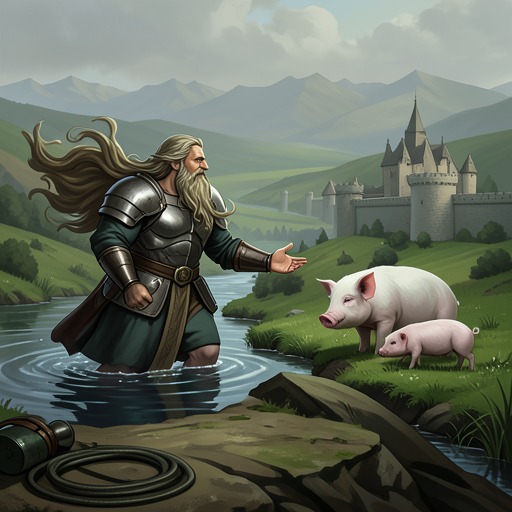
[Aeneas](entity:character-recall-character-aeneas-9200cab36668) sails along the Italian coast and enters the mouth of the [Tiber](entity:location-recall-location-161f672914e7). The river's god welcomes him in a dream, promises that the white sow and thirty piglets will mark the destined site, and offers a safe passage inland.
The Trojan fleet reaches the land of promise, where the refugees discover the omen fulfilled and eat upon bread cakes until [Ascanius](entity:character-recall-character-ascanius-0eaff2760518) jokes that they have consumed their tables. The sign confirms that the long maritime exile has ended.
soon after the Latium landing
Latinus Welcomes Aeneas
[Latinus](entity:character-recall-character-latinus-320dfbabcd93) receives [Aeneas](entity:character-recall-character-aeneas-9200cab36668)'s envoys, hears the history of [Troy](entity:location-recall-location-troy-3f2543b3876b), and recognizes in the foreign leader the son-in-law foretold by Faunus's oracle. He offers land, friendship, horses, and [Lavinia](entity:character-recall-character-lavinia-9f7cea2469db), his only daughter and heir.
The encounter briefly establishes a lawful path to peaceful settlement and marriage. It also places Aeneas and [Turnus](entity:character-recall-character-turnus-2c0996a49934) in direct rivalry, since Turnus had expected to marry Lavinia and enjoys the support of [Amata](entity:character-recall-character-amata-3200365663af) and the [Rutulians](entity:organization-recall-organization-rutulians-d8f9e9c8c2be).
immediately after Latinus's welcome
Juno Sends Alecto
[Juno](entity:character-recall-character-juno-6875ac1ce190) refuses to accept the peace and summons [Alecto](entity:character-recall-character-alecto-d84edc6ac75c) from the [Underworld](entity:location-recall-location-387d635bdc5b). Alecto infects [Amata](entity:character-recall-character-amata-3200365663af) with rage against the Trojan marriage, drives her into Bacchic frenzy, and then inflames [Turnus](entity:character-recall-character-turnus-2c0996a49934) with visions of insult, lost honor, and imminent war.
The divine poison converts political uncertainty into [Furor](entity:concept-recall-concept-furor-ea14fa51e330). The coming conflict is not forced by necessity alone; it is manufactured through wounded pride, sexual jealousy, and the manipulation of human agency.
during the first days of hostility
The Sacred Stag's Death
[Alecto](entity:character-recall-character-alecto-d84edc6ac75c) drives the conflict further by provoking [Ascanius](entity:character-recall-character-ascanius-0eaff2760518) to shoot Silvia's beloved stag. The wounded animal returns home, and the neighboring peasants gather in anger; armed [Trojans](entity:organization-recall-organization-trojans-bed1dda1166c) and [Latins](entity:organization-recall-organization-latins-9216968ede2f) then clash, killing Almon and the peaceful Galesus.
A domestic accident becomes the blood-price of the broken peace. The incident gives [Turnus](entity:character-recall-character-turnus-2c0996a49934) the grievance he needs and makes reconciliation increasingly impossible.
after the stag incident
The Gates of War Open
[Latinus](entity:character-recall-character-latinus-320dfbabcd93) refuses to open the traditional [Gates of War](entity:object-recall-object-gates-of-war-51925d02dbde), but [Juno](entity:character-recall-character-juno-6875ac1ce190) forces them apart herself. The Ausonian cities arm, old agricultural tools become weapons, and a coalition gathers under [Turnus](entity:character-recall-character-turnus-2c0996a49934), [Mezentius](entity:character-recall-character-mezentius-deacfe685a68), [Messapus](entity:character-recall-character-messapus-15db2f39497b), [Camilla](entity:character-recall-character-camilla-73268714737f), and other local commanders.
The refusal of the king is overwhelmed by divine and popular pressure. [Latium](entity:location-recall-location-48bd7f353d4a) enters a formal state of war, even though its ruler still understands that the conflict violates his better judgment.
at the beginning of the Latin war
Aeneas Seeks Allies
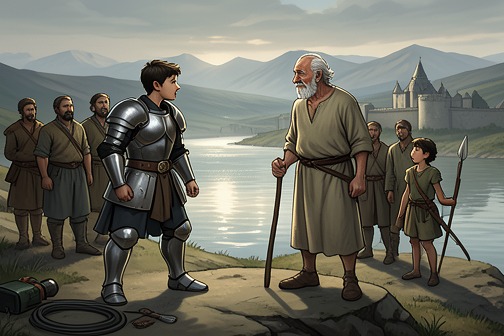
As [Turnus](entity:character-recall-character-turnus-2c0996a49934) gathers forces, [Aeneas](entity:character-recall-character-aeneas-9200cab36668) travels up the [Tiber](entity:location-recall-location-161f672914e7) and meets [Evander](entity:character-recall-character-evander-a419188879b5) at [Pallanteum](entity:location-recall-location-3abc3ab6cec8). Evander recognizes [Anchises](entity:character-recall-character-anchises-b4c1f869bd69) in him, recounts the heroic deeds of [Hercules](entity:character-recall-character-hercules-aa3bc2249363), and agrees to send his son [Pallas](entity:character-recall-character-pallas-75328c9f1677) with Arcadian troops.
Evander also directs Aeneas toward the [Etruscans](entity:organization-recall-organization-etruscans-289f3a91d4cd), who need a foreign commander against [Mezentius](entity:character-recall-character-mezentius-deacfe685a68). The alliance binds personal hospitality to military necessity and places Pallas under Aeneas's command.
during Aeneas's alliance-building
Vulcan Forges Aeneas's Arms
[Venus](entity:character-recall-character-venus-c3ad2d1b04e1) asks [Vulcan](entity:character-recall-character-vulcan-6fec78fb547b) to forge weapons for [Aeneas](entity:character-recall-character-aeneas-9200cab36668), and the god sets the Cyclopes to work. They produce armor, a sword, and the magnificent [Shield of Aeneas](entity:object-recall-object-shield-of-aeneas-fff16aaf5a3c), on which Vulcan depicts the future history of [Rome](entity:location-recall-location-f3877a21016f) from [Romulus](entity:character-recall-character-romulus-1894353b81a7) through [Augustus](entity:character-recall-character-augustus-079acb85b564) and the victory at Actium.
Aeneas cannot read the shield's historical figures, but he carries the burden of their future glory into the present battle. The divine artifact fuses mythic ancestry, Roman history, and imperial destiny.
while Aeneas is away with allies
Turnus Attacks the Camp
[Turnus](entity:character-recall-character-turnus-2c0996a49934) attacks the Trojan camp in [Aeneas](entity:character-recall-character-aeneas-9200cab36668)'s absence and attempts to burn the ships. The fleet, protected by Cybele and [Jupiter](entity:character-recall-character-jupiter-ad236da3be58)'s earlier promise, transforms into sea nymphs and escapes destruction.
The miracle removes the possibility of retreat and confirms that the [Trojans](entity:organization-recall-organization-trojans-bed1dda1166c) are now committed to Italy. Turnus responds by tightening the siege and preparing a direct assault on the camp.
the night of Turnus's siege
Nisus and Euryalus's Night Raid
[Nisus](entity:character-recall-character-nisus-4ff11ee51406) and [Euryalus](entity:character-recall-character-euryalus-00977f82bb8b) volunteer to cross the enemy lines and summon [Aeneas](entity:character-recall-character-aeneas-9200cab36668). They kill sleeping [Rutulians](entity:organization-recall-organization-rutulians-d8f9e9c8c2be), but Euryalus lingers over captured armor; the moonlight on his helmet betrays the pair to Volscens's cavalry.
Nisus tries to save Euryalus with spear throws, but Volscens kills the younger warrior before Nisus can avenge him. Nisus then kills Volscens and dies beside his friend, transforming a failed mission into an enduring emblem of heroic friendship.
the morning after the night raid
The Camp Assault
[Turnus](entity:character-recall-character-turnus-2c0996a49934) displays [Nisus](entity:character-recall-character-nisus-4ff11ee51406) and [Euryalus](entity:character-recall-character-euryalus-00977f82bb8b)'s heads to terrify the [Trojans](entity:organization-recall-organization-trojans-bed1dda1166c) and launches a renewed assault. The defenders resist from the walls, but Turnus penetrates the camp, kills many warriors, and briefly fights alone inside the fortifications.
[Mnestheus](entity:character-recall-character-mnestheus-86360687686e) rallies the Trojans, surrounding Turnus and forcing him toward the river. [Juno](entity:character-recall-character-juno-6875ac1ce190)'s intervention allows Turnus to escape by leaping into the [Tiber](entity:location-recall-location-161f672914e7), preserving the Rutulian champion for the final conflict.
after Aeneas returns with allies
Pallas Challenges Turnus
[Aeneas](entity:character-recall-character-aeneas-9200cab36668) lands with the Arcadian and Etruscan forces, and [Pallas](entity:character-recall-character-pallas-75328c9f1677) leads the young [Arcadians](entity:organization-recall-organization-arcadians-afe6925ba2a9) against the [Latins](entity:organization-recall-organization-latins-9216968ede2f). He fights courageously, invokes [Hercules](entity:character-recall-character-hercules-aa3bc2249363) and the [Tiber](entity:location-recall-location-161f672914e7), and kills several opponents before [Turnus](entity:character-recall-character-turnus-2c0996a49934) comes to meet him.
Turnus kills Pallas with a single spear thrust and strips from him the golden belt depicting murdered bridegrooms. His victory destroys [Evander](entity:character-recall-character-evander-a419188879b5)'s hope and creates the personal obligation that will later determine Turnus's fate.
immediately after Pallas's death
Aeneas's Vengeful Fury
When [Aeneas](entity:character-recall-character-aeneas-9200cab36668) hears that [Pallas](entity:character-recall-character-pallas-75328c9f1677) has fallen, he enters the battle in grief and fury. He kills numerous warriors, rejects ransom from Magus, and treats the death of Pallas as an offense that demands repayment.
The normally restrained champion becomes an instrument of vengeance. His [Furor](entity:concept-recall-concept-furor-ea14fa51e330) is directed by [Pietas](entity:concept-recall-concept-pietas-8d8c6f0e7ab4) toward [Evander](entity:character-recall-character-evander-a419188879b5) and the dead youth, but it also foreshadows the moral ambiguity of the final killing.
during the battle after Pallas's death
Death of Lausus
[Mezentius](entity:character-recall-character-mezentius-deacfe685a68) enters the fight after [Turnus](entity:character-recall-character-turnus-2c0996a49934)'s withdrawal, and [Aeneas](entity:character-recall-character-aeneas-9200cab36668) wounds him. [Lausus](entity:character-recall-character-lausus-ff97f608aa42), his devoted son, places himself between the wounded father and Aeneas, refusing to retreat even when Aeneas warns him.
Aeneas kills Lausus and immediately recognizes in him a reflection of his own filial devotion. He preserves the young man's arms and returns his body to Mezentius, allowing compassion to interrupt the cycle of martial triumph.
immediately after Lausus's death
Death of Mezentius
Grieving [Lausus](entity:character-recall-character-lausus-ff97f608aa42), [Mezentius](entity:character-recall-character-mezentius-deacfe685a68) returns to battle on his horse Rhoebus and challenges [Aeneas](entity:character-recall-character-aeneas-9200cab36668). Aeneas wounds the horse, overturns the rider, and prepares to kill him.
Mezentius refuses to beg for life but asks that his body be buried beside Lausus. Aeneas grants no explicit reconciliation, yet the father's final concern for his son and Aeneas's acceptance of burial restore a measure of human dignity to the enemy.
after the deaths of Pallas, Lausus, and Mezentius
The Burial Truce
[Aeneas](entity:character-recall-character-aeneas-9200cab36668) erects a trophy from [Mezentius](entity:character-recall-character-mezentius-deacfe685a68)'s armor and grants the [Latins](entity:organization-recall-organization-latins-9216968ede2f) a twelve-day truce to collect and burn their dead. [Pallas](entity:character-recall-character-pallas-75328c9f1677)'s body is sent to [Evander](entity:character-recall-character-evander-a419188879b5) with solemn honors, while both peoples build funeral pyres and bury their remains.
The truce briefly replaces war with shared ritual. It confirms the right of burial as a moral boundary even between enemies, while Evander's grief turns the war into a demand that Aeneas personally avenge Pallas.
during the twelve-day truce
Latinus's Peace Council
[Latinus](entity:character-recall-character-latinus-320dfbabcd93) summons the [Latin Senate](entity:organization-recall-organization-latin-senate-39f63fe5a8cd) after Diomedes refuses to help. He proposes land, ships, gifts, and a settlement for the [Trojans](entity:organization-recall-organization-trojans-bed1dda1166c), while [Drances](entity:character-recall-character-drances-474fce4e5f18) openly blames [Turnus](entity:character-recall-character-turnus-2c0996a49934) for the war and urges the king to give [Lavinia](entity:character-recall-character-lavinia-9f7cea2469db) to [Aeneas](entity:character-recall-character-aeneas-9200cab36668).
Turnus answers with a fierce defense of his honor and accepts the challenge to fight Aeneas alone. The council fails to produce peace because political compromise cannot overcome Turnus's pride and the queen's influence.
after the burial truce
Camilla Takes the Field
As the armies prepare to fight again, [Turnus](entity:character-recall-character-turnus-2c0996a49934) assigns [Camilla](entity:character-recall-character-camilla-73268714737f) and the Volscian cavalry to confront the [Etruscans](entity:organization-recall-organization-etruscans-289f3a91d4cd). [Diana](entity:character-recall-character-diana-baf651a1725a) reveals Camilla's upbringing by Metabus, her dedication to the goddess, and her refusal of marriage for a life of arms.
Camilla's history gives the approaching battle a tragic shape: Diana loves her, yet knows that the virgin warrior is destined to die among the [Trojans](entity:organization-recall-organization-trojans-bed1dda1166c). Her exceptional identity is both her glory and the condition of her isolation.
during the renewed cavalry battle
Death of Camilla
[Camilla](entity:character-recall-character-camilla-73268714737f) dominates the battle, killing several Trojan and Etruscan warriors. She becomes fixated on the richly armed priest Chloreus, allowing the hidden Aruns to take aim; his arrow pierces her breast.
Camilla dies entrusting the defense of the city to [Turnus](entity:character-recall-character-turnus-2c0996a49934). [Diana](entity:character-recall-character-diana-baf651a1725a)'s attendant Opis immediately kills Aruns, while the [Volscians](entity:organization-recall-organization-volscians-bdcfb1db7311) collapse and the [Latins](entity:organization-recall-organization-latins-9216968ede2f) retreat, bringing the war to its decisive final phase.
the evening after Camilla's death
The Latin City Besieged
The [Trojans](entity:organization-recall-organization-trojans-bed1dda1166c) pursue the defeated [Latins](entity:organization-recall-organization-latins-9216968ede2f) to their walls, but night interrupts the battle. [Turnus](entity:character-recall-character-turnus-2c0996a49934) abandons his ambush and returns toward the city as [Aeneas](entity:character-recall-character-aeneas-9200cab36668)'s forces extend their lines before it.
The war has narrowed from a regional coalition to a confrontation over the city itself. Both armies now recognize that the next encounter will determine the fate of [Latium](entity:location-recall-location-48bd7f353d4a).
the next morning
The Duel Is Agreed
[Turnus](entity:character-recall-character-turnus-2c0996a49934) demands a single combat with [Aeneas](entity:character-recall-character-aeneas-9200cab36668), offering his life if he loses and the crown and [Lavinia](entity:character-recall-character-lavinia-9f7cea2469db) if he wins. [Latinus](entity:character-recall-character-latinus-320dfbabcd93) warns him against staking the entire state on personal pride, but Turnus refuses to withdraw.
Aeneas agrees to the duel and promises that, if he falls, [Ascanius](entity:character-recall-character-ascanius-0eaff2760518) will abandon the claim to the kingdom; if he wins, [Trojans](entity:organization-recall-organization-trojans-bed1dda1166c) and [Latins](entity:organization-recall-organization-latins-9216968ede2f) will share laws and land while Latinus retains sovereignty.
during the duel's opening rites
The Truce Is Broken
The armies assemble, sacrifices are prepared, and [Aeneas](entity:character-recall-character-aeneas-9200cab36668) and [Latinus](entity:character-recall-character-latinus-320dfbabcd93) swear binding terms before the gods. [Juturna](entity:character-recall-character-juturna-5a8a8e4df683), fearing for [Turnus](entity:character-recall-character-turnus-2c0996a49934), takes the form of Camertus and persuades the [Rutulians](entity:organization-recall-organization-rutulians-d8f9e9c8c2be) that their champion is being unfairly exposed.
Tolumnius interprets an omen as permission to attack, throws the first spear, and kills an Arcadian. The formal peace collapses immediately, proving how fragile agreements become when [Furor](entity:concept-recall-concept-furor-ea14fa51e330) and faction overpower ritual vows.
at the beginning of the renewed battle
Aeneas Is Wounded
[Aeneas](entity:character-recall-character-aeneas-9200cab36668) tries to stop the fighting and calls for [Turnus](entity:character-recall-character-turnus-2c0996a49934) to answer for the violated truce, but an unknown arrow strikes him. Turnus exploits the wound, drives through the battlefield, and kills many [Trojans](entity:organization-recall-organization-trojans-bed1dda1166c) and allies.
The hero is carried back to his camp, where Iapyx cannot remove the arrow. [Venus](entity:character-recall-character-venus-c3ad2d1b04e1) secretly brings healing dittany, and the wound closes while the weapon withdraws by itself.
later the same day
Aeneas Returns to Battle
Restored by [Venus](entity:character-recall-character-venus-c3ad2d1b04e1), [Aeneas](entity:character-recall-character-aeneas-9200cab36668) arms himself and embraces [Ascanius](entity:character-recall-character-ascanius-0eaff2760518), telling him to learn endurance and courage from his father's example. He returns to the field with [Mnestheus](entity:character-recall-character-mnestheus-86360687686e), Achates, and the Trojan army.
[Juturna](entity:character-recall-character-juturna-5a8a8e4df683) continues to keep [Turnus](entity:character-recall-character-turnus-2c0996a49934) away by driving his chariot through the battle, while Aeneas kills opposing champions and refuses to waste time on lesser enemies. His objective becomes the city itself, whose destruction he threatens unless Turnus appears.
during Aeneas's assault on the city
Amata's Suicide
Seeing the Trojan attack and believing [Turnus](entity:character-recall-character-turnus-2c0996a49934) dead, [Amata](entity:character-recall-character-amata-3200365663af) blames herself for the war. She tears her garments, hangs herself from a beam, and dies while [Lavinia](entity:character-recall-character-lavinia-9f7cea2469db) and the palace women mourn.
Her death destroys the emotional foundation of the Latin resistance and leaves [Latinus](entity:character-recall-character-latinus-320dfbabcd93) without his queen, while Lavinia's grief becomes the final domestic cost of the conflict.
immediately after Amata's death
Turnus Accepts Fate
Sages tells [Turnus](entity:character-recall-character-turnus-2c0996a49934) that [Aeneas](entity:character-recall-character-aeneas-9200cab36668) is burning the city and that the queen has killed herself. Turnus abandons the remaining battlefield advantage, dismisses [Juturna](entity:character-recall-character-juturna-5a8a8e4df683)'s attempts to divert him, and returns to the city to face Aeneas.
He chooses death over the shame of allowing others to die for his quarrel. The decision strips away evasions and brings the personal and political conflict into one final contest.
near the end of the war
The Final Duel
[Aeneas](entity:character-recall-character-aeneas-9200cab36668) and [Turnus](entity:character-recall-character-turnus-2c0996a49934) meet in the open space before the city while both armies stand aside. Their combat resembles the clash of rival bulls, and each warrior receives divine attention as [Jupiter](entity:character-recall-character-jupiter-ad236da3be58) weighs their fates.
Turnus's sword breaks because he had mistakenly taken his charioteer's weapon. He flees until [Juturna](entity:character-recall-character-juturna-5a8a8e4df683) can no longer help him and a Fury terrifies her from the field.
moments before the ending
Turnus's Defeat
[Aeneas](entity:character-recall-character-aeneas-9200cab36668) finally throws his spear and wounds [Turnus](entity:character-recall-character-turnus-2c0996a49934) in the thigh. Turnus falls, admits that his death is deserved, and asks Aeneas to spare Daunus and return his body for burial.
Aeneas hesitates, moved by the appeal to father and son, until he sees the [Belt of Pallas](entity:object-recall-object-belt-of-pallas-cae7966a1456) on Turnus's shoulder. The sight restores the memory of [Pallas](entity:character-recall-character-pallas-75328c9f1677)'s murder and converts compassion into judgment.
the final moment
Death of Turnus
[Aeneas](entity:character-recall-character-aeneas-9200cab36668) declares that [Pallas](entity:character-recall-character-pallas-75328c9f1677) himself demands the blow and drives his sword into [Turnus](entity:character-recall-character-turnus-2c0996a49934)'s chest. Turnus's soul rushes through the wound as the poem ends.
The death fulfills the vow made to [Evander](entity:character-recall-character-evander-a419188879b5) and closes the cycle of vengeance begun when Turnus took Pallas's belt. Yet the ending leaves the promised political union implicit: the future of [Latium](entity:location-recall-location-48bd7f353d4a) and [Rome](entity:location-recall-location-f3877a21016f) will be built on the ashes of private grief and public war.