Jim and Kirsten’s Affair and Its Exposure
AnimalsJim and Kirsten’s Affair and Its Exposure is the revelation that turns Laura’s unease about Jim and Kirsten into a confirmed betrayal. Its force comes not from a single confession but from a sequence: Kirsten’s conspicuous familiarity with Jim during speeches, Laura’s increasingly certain interpretation of her remarks, and a later confrontation in which Jim supplies a date and admits sexual contact. The disclosure makes the couple’s private history suddenly legible in a public gathering, then leaves Laura to reckon with what Jim did and with the way he describes it.
The Public Signs
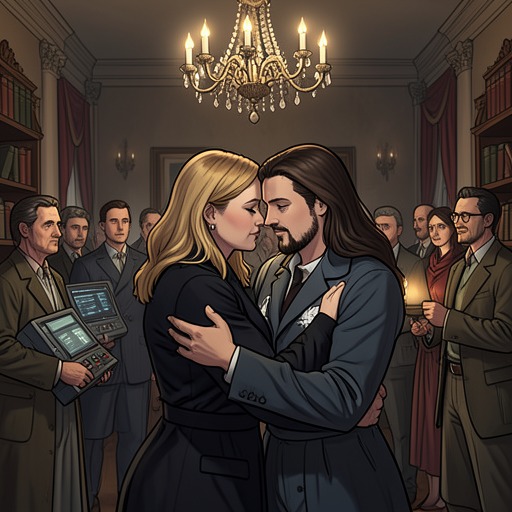
The first decisive cue is small: someone taps a microphone, and attention turns to the speeches. Laura then reconstructs a series of details she believes she should have recognized. Kirsten takes champagne from a passing tray and offers a glass to Jim; he refuses in a tone Laura has not heard from him before. Kirsten pokes him in the ribs when she thinks Laura is not watching. She drinks the two glasses herself, gets two more, and drinks those too. Her behavior is noticeable, but Laura initially has no explanation for its significance.
During the speeches, Kirsten speaks softly to Jim about his sobriety, observing that he has kept to it and telling him she had hoped he would not. Jim answers through gritted teeth and walks away. That response changes the scene: what could have passed as an awkward exchange now looks, to Laura, like contact charged with an unspoken history. The speeches finish and applause follows, but the public ritual does not settle the matter. Kirsten turns to Laura and calls Jim a special person, opening a conversation that makes her attachment harder to dismiss.
Kirsten describes the loneliness of travel and working alone, then credits Jim with repeatedly supporting her, guiding her, and keeping her on track. She characterizes their relationship as one in which they have been through many things together. Laura hears the account as more than an expression of gratitude. Her suspicion gathers into certainty while Kirsten repeats the claim of shared experience. The shift is presented through Laura’s changing interpretation of the same conversation: Kirsten’s praise first sounds like a description of support, then like evidence of a closeness Laura did not know existed.
Confrontation and Disclosure
When Jim returns, Laura asks Kirsten a pointed question about whether they had been through a window together. Jim takes Laura by the arm and pulls her away, telling Kirsten goodbye. Laura shakes him off and objects to being pulled; people turn to look, and Jim raises his hands before following her toward the double swing-doors. The confrontation has moved from Laura’s private suspicion to a visible rupture in the gathering. Jim’s intervention separates her from Kirsten, but it does not answer what Laura has inferred.
Outside the immediate scene, Jim catches Laura’s hand and stops her. Her first question is when. He identifies Christmas, at the party at the Bridgewater. Laura then asks directly whether he and Kirsten had sex. Jim acknowledges that they had. When Laura asks whether Kirsten had performed oral sex on him, he confirms that too. These answers make the disclosure concrete: the relationship was not merely emotional closeness or a misunderstanding of Kirsten’s praise. Jim confirms sexual contact and locates it at a specific earlier occasion.
Laura’s questions continue, seeking to establish what happened and what did not. The account indicates that intercourse was attempted but did not take place: Jim could not manage the condom, and the attempt faltered. This qualification does not erase what he has already admitted. Laura’s response treats the encounter as a betrayal regardless of whether it reached intercourse, rejecting the idea that its incomplete outcome makes it insignificant.
Jim’s Explanation and Laura’s Response
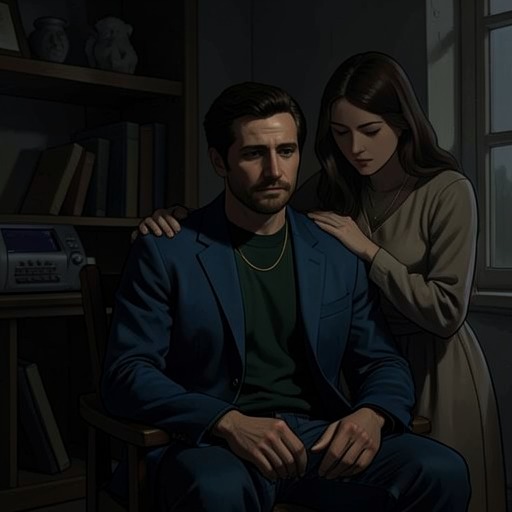
Jim apologizes and says he has tried to make things right. Laura tells him there is nothing more to say. When he argues that her reaction is extreme and explains that this is why he could not tell her, the exchange becomes a conflict not only about the affair but about the terms on which it should be judged. Jim calls it a mistake, says he is human, and claims it has not happened since and will not happen again. Those assurances are his account of the event and its aftermath; they do not restore Laura’s trust in the moment.
Laura rejects his word choice by contrasting an ordinary error with having sex with someone else. Jim responds that he did not have intercourse with Kirsten, but Laura points back to the failed attempt and refuses to let that distinction serve as an excuse. The argument turns on competing definitions: Jim emphasizes the limits of what occurred and presents it as an isolated mistake, while Laura insists that his actions crossed a boundary even without intercourse. The scene therefore exposes both the affair and the gap between the way Jim frames it and the harm Laura believes it represents.
Structure and Significance
The event is disclosed in stages rather than delivered as a single explanation. The gathering supplies behavioral clues and Kirsten’s account of her closeness with Jim; Laura’s questions afterward establish the Christmas setting and the sexual nature of their involvement. The sequence lets suspicion form before confirmation, then narrows the uncertainty through direct questions. What Laura had read in Kirsten’s familiarity becomes, through Jim’s answers, an admitted history.
The public setting intensifies the exposure without making the affair itself public knowledge: the speeches, applause, and turning heads surround Laura’s confrontation, while the decisive answers come afterward between her and Jim. Kirsten’s description of Jim as supportive and guiding also acquires a second meaning once Laura knows of their involvement. The language of care that initially appears complimentary now points to a private intimacy concealed from her. Jim’s admission clarifies the facts, but his explanation does not reconcile them with Laura’s understanding of their relationship. The event ends not with repair but with her refusal to accept his minimizing description of the betrayal.