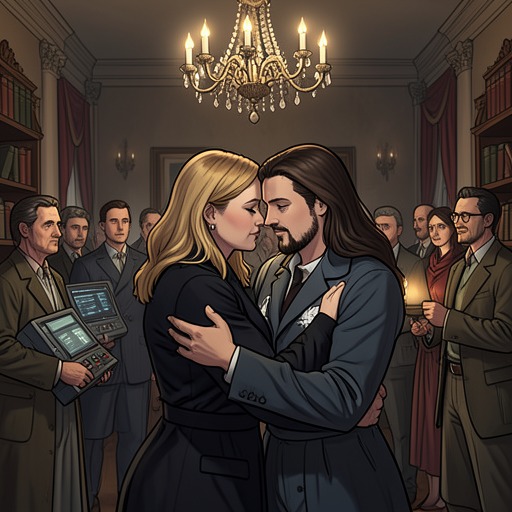
Jim gives up drinking
AnimalsJim gives up drinking as a decision announced to Laura Joyce during a January trip to Scarborough, just before his spring touring begins. The moment comes while the couple are talking about marriage, city life, and the fear that settling down might narrow their future. His choice therefore reaches beyond alcohol: it changes a practice they shared and introduces a new feeling into Laura’s picture of their life together, even as Jim leaves its effect on their relationship open by asking whether she is okay with it.
Background and Setting
The decision emerges during a two-night stay in a wind-blasted bed-and-breakfast in Scarborough. On Saturday afternoon, Laura and Jim spend time at the beach skimming stones, dressed in scarves and hats. Laura gets four bounces from one stone, using a technique her father taught her: keep it flat, guide it with the first finger, and aim for the horizon rather than the water’s surface. The remembered instruction gives the scene a practical, intimate detail before the conversation turns toward the couple’s future.
Jim is looking out to sea when Laura asks whether they can always live in the city after they marry. She says she wants them to keep having adventures rather than put themselves out to pasture. The question surprises her as much as its implied fear does: she cannot explain where the panic came from, only that marriage seems to her like a possible closing down. The setting’s open horizon and their talk of continuing outward movement make that worry part of the decision’s immediate context, rather than a separate concern.
Jim’s Decision
Jim does not turn around when Laura first speaks; she continues talking to his back. He then addresses her by name and says he has made a decision. He tells her he is giving up drinking. His explanation is specific but restrained: he cannot keep drinking alongside his work and what he wants for their future, because it does not agree with those aims. The passage establishes the choice and its stated reasons, but does not describe a treatment process or show how long-term abstinence unfolds.
The announcement changes the terms of a shared routine. Laura recalls that drinking had been part of the fun she and Jim had together; unlike smoking, it was something they did together. Her comparison makes the distinction concrete: Jim sometimes bought a ten-pack of cigarettes while drunk or took hers, but drinking itself belonged to their common social life. Giving it up is thus not presented simply as his private adjustment. It separates a habit that had helped organize their time together from the future they are discussing.
Laura’s Response and Their Relationship
Laura is flabbergasted and cannot immediately say anything. Yet her reaction is not simply opposition. She describes a strange feeling beginning deep inside her: an inner space stretching, unease accompanied by a heart that is perversely rejoicing. The conflicting response matters. Jim’s decision unsettles a familiar source of shared enjoyment, while also making the future feel newly open or newly possible to her. At thirty-two, she recognizes the sensation as a new feeling, rather than treating the announcement as a settled answer to her earlier fear.
Her thoughts briefly turn toward whether there might be a pub nearby and whether they should get a drink. She catches herself at the edge of that familiar expectation. The moment conveys the force of habit without establishing that she objects to Jim’s decision or that she makes a corresponding commitment herself. Jim takes her hand and asks whether it is okay. That gesture and question leave room for her response instead of presenting his decision as something she has already accepted or rejected.
Significance and Immediate Outcome
The exchange links two changes in the couple’s imagined future: marriage, which Laura fears could mean narrowing their lives, and Jim’s choice to stop drinking, which alters an activity they have shared. He frames the choice in terms of work and what he wants for the future; Laura experiences it both as a loss of a common pleasure and as an unexpected opening. Neither reaction resolves the larger question of how the couple will live after marriage. The scene instead makes that uncertainty tangible through a beach conversation, a decision, and a hand taken in response.
Its ending remains deliberately local. Jim asks whether his decision is okay, but the evidence here gives no answer from Laura and does not establish the later course of his sobriety. The decisive change is that drinking can no longer be assumed to belong to their shared life in the same way. Against Laura’s wish to keep having adventures, his announcement creates a new condition for their future—and leaves them, for the moment, to negotiate what it means together.