1983 Yomiyama camping trip
AnotherThe 1983 Yomiyama camping trip was a two-night, three-day expedition by Yomiyama North Middle School Third-Year Class 3 to Sakitani Memorial Hall at the foot of Yomiyama, beginning on August 8. Designed to end the disasters afflicting the class, the trip culminated in a visit to Yomiyama Shrine, a desperate communal ritual that failed immediately and was followed by two fatal accidents. Its importance lies in the unresolved connection between the shrine visit, the deaths, and the sudden cessation of the 1983 disasters after August.
Causes and Background
The expedition was proposed by the class’s head teacher, Mr. Koga, who had apparently thought deeply about the problem and consulted a medium. The surviving account does not establish exactly what advice he received, but the plan was clear: take the class camping and visit the shrine. The decision transformed an atmosphere of rumor and helplessness into organized action. Instead of merely enduring the disasters, the adults and students attempted to confront them through movement into the mountain landscape and through a collective religious observance.
The class traveled to Sakitani Memorial Hall, a school-owned lodge at the foot of Yomiyama. Twenty students participated. Their involvement was qualified rather than devout: none of them completely believed that the trip would accomplish anything, yet the presence of a plan gave the group a temporary sense that the disasters might be governed by a response they could perform together. The later reconstruction of the event therefore presents the camping trip as both a practical school activity and an improvised ritual against an apparently supernatural threat.
The Shrine Visit
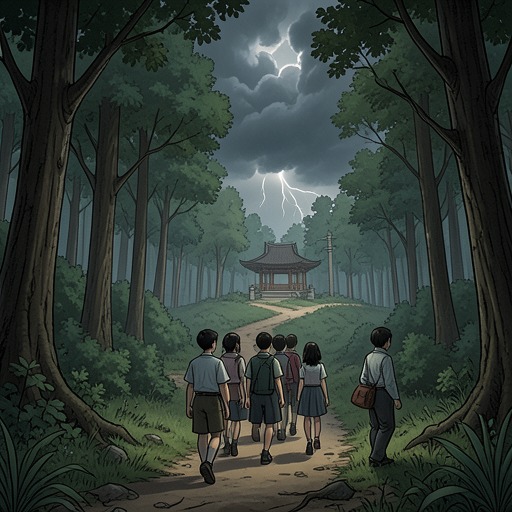
On the second day, August 9, Mr. Koga led the students up the mountain to Yomiyama Shrine. The shrine shared its name with the town but was in extremely poor condition, appearing abandoned and almost entirely neglected. That physical deterioration mattered to the participants: the place did not offer the reassuring appearance of an active religious institution, but it was nevertheless treated as a special site because of its name, its location, and the stories attached to it.
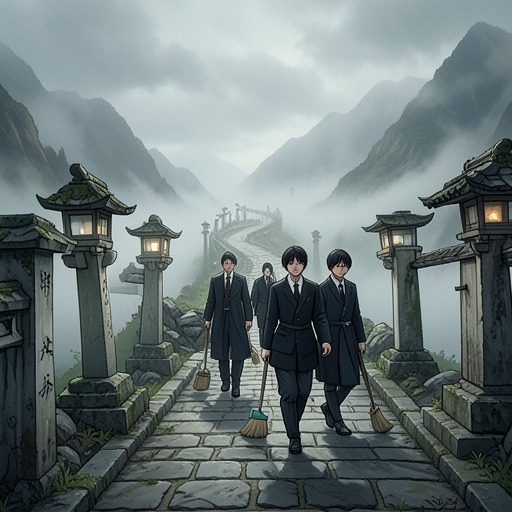
The class helped clean the shrine. During the work, the students became convinced that their effort might actually break the curse, and Mr. Koga expressed confidence that everything would now be all right. The confidence lasted only until they left the shrine. The cleaning did not produce protection or restoration; instead, the expedition moved directly from hopeful ritual into catastrophe. The failed attempt gave the later deaths an especially cruel structure, because the group had briefly believed that collective action had changed its circumstances.
The Two Deaths on August 9
The weather had been clear throughout the morning, but as the group descended, ominous clouds appeared and a severe thunderstorm began suddenly. Mr. Koga and the students panicked and hurried down the mountain path. Their attempt to escape the storm became part of the danger rather than a solution to it.
A boy named Hamaguchi was the first victim. He had brought an umbrella and opened it while on the exposed mountain path, despite the thunder around him; lightning struck him, apparently killing him instantly and leaving his body badly burned. The students abandoned him in the panic and continued trying to get off the mountain.
The second victim was a girl named Hoshikawa. She was not struck by lightning. While running in fear, she left the path and went over a high, sheer cliff. Although a rescue attempt might technically have been possible, the students were too distressed and disorganized to make one, so they left her behind and continued down the mountain to seek help. Hamaguchi and Hoshikawa were never saved. Both deaths were subsequently recorded among the “deaths of August,” and the shrine visit plainly had not stopped the disasters.
Cessation and the Missing Casualty
The class records later showed seven victims in 1983 before accounting for Reiko Mikami’s older sister, Ritsuko Mikami. With Ritsuko’s death in July included, the total became eight: two deaths in April, one in May, one in June, two in July, and the two students who died on August 9. No further deaths occurred after August; the pattern stopped in September.
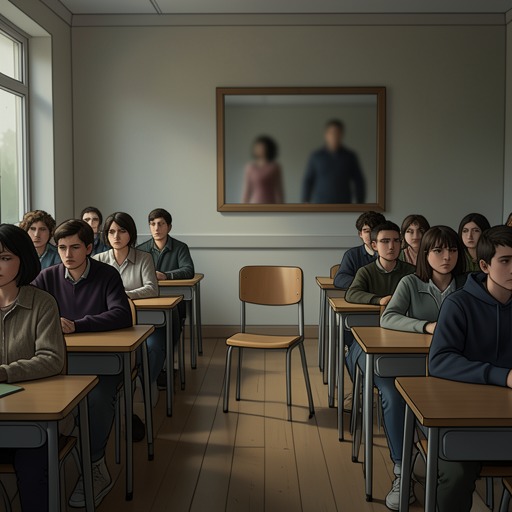
The two August victims were both students in Class 3, died on the same day, and were both classified as having died in accidents. Their shared date and manner of death linked them directly to the camping trip. Yet the class records contained no name for that year’s “extra person,” or casualty. Mr. Chibiki could not determine who that person had been. He considered the possibility that the extra person had disappeared before graduation and that the traces of the person’s presence had vanished at the same time. By the time he investigated, the participants’ memories had already faded, leaving the camping trip as a historical rupture whose most important identity could not be recovered.
The event thus ends in a double uncertainty. The disasters stopped in August, apparently partway through the year, but no confirmed explanation establishes whether the extra person disappeared during the trip or whether the cessation followed from another cause. The two visible deaths are securely documented; the casualty who may have ended the pattern remains absent from the record.
Later Reenactment and Narrative Significance
The 1983 camping trip became a precedent for later efforts to manage the Yomiyama phenomenon. When another ascent of Yomiyama was planned, Mr. Chibiki was to accompany the group and warned everyone to be careful of accidents on the return. The deteriorating weather even raised the possibility that the outing would be canceled, recalling the earlier storm and showing how the 1983 event continued to shape practical decisions in the present.
Its legacy also appears in the class’s attempt to control fear through official reassurance. After a later medical crisis, Mr. Chibiki insisted that the students should not treat the incident as an extraordinary event or freak accident and told them to remain calm, although the narrator recognized that he was lying. That contrast exposes the central lesson of the camping trip: institutional language can deny the pattern, but it cannot erase the material consequences of the deaths.
The trip’s ritual logic is finally inverted by the violence that follows elsewhere in the same cycle. Mr. Kubodera withdraws a sharp-bladed object from a bag during a classroom breakdown; Teshigawara later reports that he attacked Kazami after becoming disturbed by Kazami’s apparent loss of memories; and a fire at Sakitani Memorial Hall ends with six people murdered before the building is burned. The coroner’s findings establish that Mr. Numata was stabbed with metal cooking skewers, four students died from multiple stab wounds, Akazawa died from a fall, and Mieko Numata was conclusively responsible for the six deaths before dying by suicide. These later events do not belong to the 1983 trip itself, but they deepen its significance: once communal rituals fail, spaces associated with protection, memory, and supervision become sites where fear can turn into panic, secrecy, and violence.