Birth of Apollo and Artemis
ArtemisThe birth of Artemis and Apollo on Delos turns Hera’s attempt to punish Leto through childbirth into the beginning of the twins’ divine identities: Artemis arrives first and, while still newly born, helps bring Apollo into the world. The scene joins a struggle over who may control and assist a woman’s labor with an origin story for Artemis’s own later claim to protect women in childbirth.
Causes and Background
Zeus’s relationship with Leto puts her pregnancy under threat. Zeus knows that his presence endangers her because his wife Hera is jealous of women who attract his attention. Hera discovers the pair despite Zeus’s attempt to disguise them as quails and curses Leto to carry a child but give birth nowhere touched by sunlight. The curse makes the circumstances of the birth inseparable from Hera’s efforts to punish Leto for her relationship with Zeus.
Leto eventually finds refuge on Delos, an island buffeted by waves and wind and lacking a fixed place in the sea. When it agrees to receive the pregnant Leto, it becomes firm on the ocean. Yet refuge does not free her from Hera’s influence: the labor begins against a rock, and the goddess of childbirth, Eileithyia, is prevented from helping.
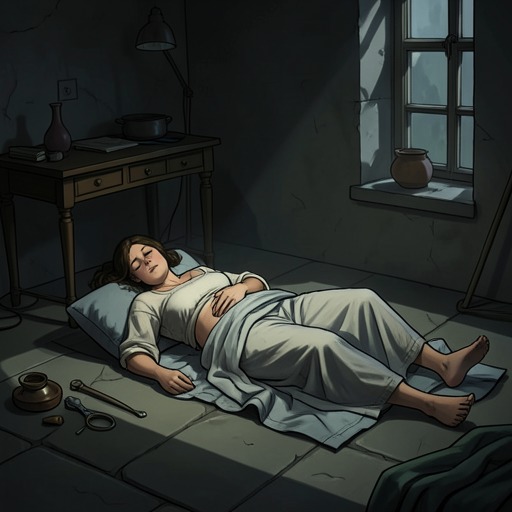
Hera restrains her daughter Eileithyia, whose absence leaves Leto in severe pain without the aid of the goddess specifically associated with childbirth and midwifery. Hera’s opposition is not merely a private quarrel between divine relatives; it makes the laboring mother’s suffering a means of retaliation. Hera declares that she will make Leto suffer even if the pain claims her life, and confines Eileithyia in the palace dungeon for thirty days.
Labor and Refuge
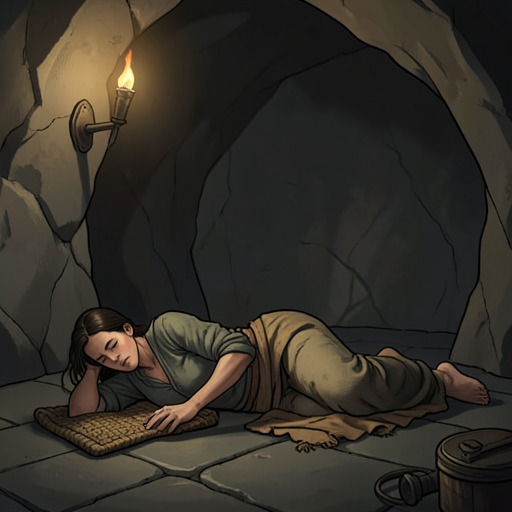
Leto’s ordeal lasts nine days and nine nights. On the tenth day, Rhea and Dione help her into a cave. The cavern, dry and comfortable, offers a sheltered place at the center of Delos, away from Hera’s prying eyes and vengeance. A stream murmurs in the darkness, while Themis holds a torch to light the way.
The aid comes from a small group of immortals acting where Hera has blocked the designated birth attendant. Rhea and Dione bring Leto to the cave; ahead of them, Ichnaea, Themis, and Amphitrite have come to help. Together, the five guide Leto to a place to rest, and Rhea holds and soothes her as labor begins. Their care does not erase the preceding days of pain, but it gives Leto a protected place and companions at the moment of delivery.
The Twins’ Birth
Leto gives birth to Artemis first. The newborn is initially an infant, but, like the gods in the story, grows within moments to the size and age of a mature child. Seeing her mother in pain, Artemis immediately goes to her side and takes her hand. Leto names her firstborn and calls her beautiful, while also describing the future she wants for her: a huntress of the wild, a free spirit whom neither men nor gods can tame.
Artemis then recognizes that another child remains to be born. With Eileithyia absent, she positions herself between Leto’s legs and acts as a midwife. She urges her mother to push, and Leto bears a son. When the pains finally cease, Leto names him Apollo. The newborn twins are described as exceptionally beautiful, and the House of Zeus and Hera will later be struck by their presence.
The birth is witnessed by Rhea, Dione, Themis, Amphitrite, and Ichnaea. Their testimony carries news of Leto and her children to Olympus. Thus the delivery is both a private crisis in a cave and a publicly consequential divine birth: the witnesses make the twins’ arrival known beyond Delos.
Aftermath and Significance
Artemis’s first actions establish a connection between her own beginning and childbirth. Born during her mother’s suffering, she responds immediately to Leto’s pain and takes on the work of a midwife when Eileithyia cannot. Later, when Artemis asks Zeus for her powers and domains, she recalls that Leto suffered no pain in carrying or giving birth to her and says the Fates ordained that she should help women in labor. The birth scene therefore supplies the personal origin for a later divine duty: Artemis’s role as helper in childbirth grows out of the moment when she herself helped her mother.
The narrative sets obstructed care against improvised assistance. Hera uses her authority to imprison Eileithyia and prolong Leto’s agony, while the five immortals and the newly born Artemis provide the aid she has withheld. Delos’s shift from a drifting island to a firm refuge also gives the birth a concrete setting: the threatened mother finds a place to deliver, and the twins’ arrival becomes the event through which their identities and future roles first take shape.