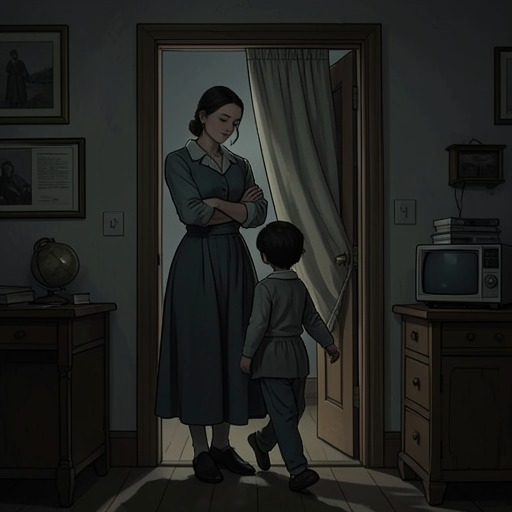
Kelly’s home
BeautifulKelly’s home is a place where familiarity and loss remain inseparable: it offers Ava Spirini a refuge shaped by years of closeness, but it is also the family home transformed by Kelly Waititi’s death. Its rooms hold the funeral vigil and the family’s grief; later, its backyard and bedrooms become private settings for Ava and Lincoln, where comfort, secrecy, and bereavement overlap.
A Familiar Place After Loss
Before Kelly’s death, Ava had been close to the household and especially to Tina, whom she describes as having been almost like a second mother. After the funeral, that familiarity becomes complicated. Ava feels Tina can no longer bear to be around her, and Ava’s father suggests that her presence may remind Tina of Kelly. Ava understands the possible reason but still misses both Kelly and the way their shared life used to feel.
The change affects when Ava can visit: she comes to the house only when Tina is absent, fearing that Tina will react badly if she finds her there. Yet the house remains powerfully familiar. Ava knows where things are kept in the kitchen and which floorboards to avoid so they will not creak. She recognizes the mingled smell of coconut oil, lavender, and dust. These ordinary details make the home a kind of refuge, even while Ava recognizes that the family’s life there is now unsettled. Its comfort does not mean that the grief has passed; rather, familiarity gives Ava somewhere to feel less disoriented while the household itself is in upheaval.
The Funeral Vigil
The house becomes the first setting for Kelly’s funeral rites. Her family holds a traditional Maori funeral as close to tradition as they can manage away from New Zealand, arranging a marae in the lounge room and keeping Kelly’s coffin open there for two days. Visitors come to see her, and she is never left alone. Because so many people are expected, the service on the third day takes place in a large church hall rather than at the house.
Ava is the only student from school to visit the house. She is afraid of seeing Kelly in the coffin and uncertain whether she can manage it, but her father accompanies her. In the lounge room, he sits beside Kelly’s father near the coffin, cries, and kisses Kelly’s forehead. Tina gestures for Ava to come over and puts an arm around her as Ava sits beside her friend. The house gathers different forms of mourning into the same space: the parents’ grief, Tina’s care for Ava, and Ava’s effort to understand that Kelly is gone. During the two days, Kelly’s family sits together, playing guitar, talking, and crying. Ava finds it difficult to speak amid the group, so she takes small moments to hold Kelly’s hand. On the second night she lies awake in the room with the family, holding Lincoln’s hand. The vigil makes the house a place of communal care, but it also confronts Ava with the physical fact of a death she cannot yet comprehend.
A Private Refuge and a Changed Household
Later, the house serves a different, more private purpose. Ava enters through the side gate, passes the bins, and finds Lincoln sitting on the patio. He explains that his mother is upset because his clothes smell of smoke. Their conversation leads indoors: they pass the sliding door and hallway, go by Kelly’s closed bedroom, and enter Lincoln’s room. Ava’s access to the house depends on Tina not being there, and the movement past Kelly’s closed door makes the absence part of the setting rather than something outside it.
Ava and Lincoln’s time together offers a brief easing of distress. Ava reflects that being with him makes the immediate pressures of school and home matter less, and that his company lets her feel something other than misery for a while. She also recognizes the contradiction: this closeness would not have happened if Kelly were alive. The home is therefore not a simple sanctuary. It is familiar and comforting to Ava, but her private visits with Lincoln occur within a family still grieving, and Ava worries that Tina would be hurt if she knew what was happening between them.
The house also becomes the setting for grief shared openly rather than hidden. When Lincoln breaks down, Ava holds him as he cries. Tina enters, takes his weight from Ava, and sits with him as he sobs against her. Lincoln’s father joins them, kneeling beside the family. Tina strokes Lincoln’s head and reassures him; then she looks at Ava, whose grief she recognizes. For a moment, the tension between Tina and Ava gives way to mutual understanding. The home’s private rooms hold not only Ava and Lincoln’s concealed closeness but also a family scene in which care passes between them.
The Home’s Meaning in the Story
Kelly’s home changes from a place of ordinary intimacy into a setting where memory, absence, and ongoing family life occupy the same rooms. The lounge-room vigil makes mourning collective and visible; the closed bedroom door marks a personal absence within the familiar route through the house; the patio and Lincoln’s room offer Ava moments of connection that are both comforting and emotionally complicated. Even after Tina’s distance makes visits conditional, the house remains one of the places where Ava feels connected to the life she shared with Kelly.
The home’s significance rests in that unresolved combination. It cannot restore the earlier closeness or remove the grief, and Ava’s refuge there is never entirely free of tension. But it continues to provide settings for remembrance and care: Ava sits beside Kelly during the vigil, returns to the familiar household, and later witnesses Lincoln and Tina leaning on one another. The house thus reflects a central movement in Ava’s mourning—not leaving Kelly behind, but learning to inhabit places and relationships altered by her absence.