The Climb
BeautifulThe Climb is the Miley Cyrus song performed by the choir at Kelly Waititi’s memorial assembly, where its imagery of climbing a mountain becomes a flashpoint for Ava Spirini’s anger. Ava hears the song not as consolation but as a painful mismatch with Kelly’s death and the grief still overwhelming her; her rejection of it turns a school ceremony into a public refusal of easy uplift.
Appearance at the Memorial
The song is heard during a school assembly held in Kelly’s memory. When Ava addresses the auditorium, she singles out the choir’s choice as the most insulting part of the ceremony, arguing that the mountain-climbing image is especially cruel in light of Kelly’s death by suicide. The objection is not simply to a familiar pop song: in this setting, its reassuring symbolism seems to Ava to impose a hopeful shape on an experience that has not become hopeful.
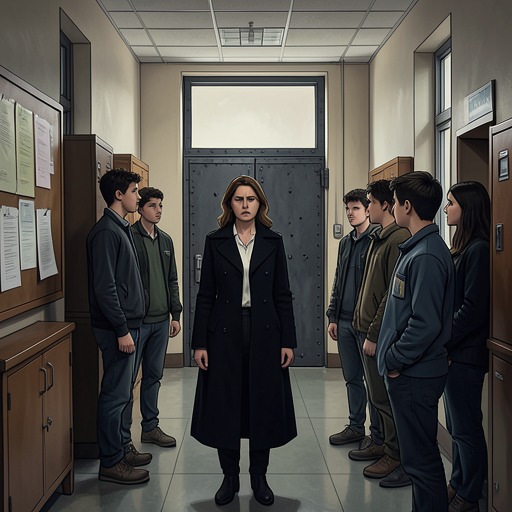
Ava’s protest breaks the assembly’s expected decorum. She laughs despite Mrs Bryan’s hostile stare, speaks to the whole auditorium, gives Mrs Bryan the finger with both hands, and walks out through the double doors. The crowd responds with laughter and cheers. The moment makes The Climb more than background music: its use at the memorial becomes the immediate focus of Ava’s refusal to perform grief in a form acceptable to the school.
Grief and the Song’s Discordance
The assembly takes place after Ava has only recently returned to school full-time, following a period of part-time attendance. She experiences lessons and the passage of time as painfully slowed, resents comparisons between Kelly’s death and other people’s losses, and does not want to explain her feelings. Six months after the death, she believes the grief may last for the rest of her life. Against that context, the song’s image of ascent strikes her not as a description of her reality but as an imposed reassurance.
The novel does not establish that the choir intended to dismiss Kelly’s suffering, nor does it present Ava’s outburst as a considered critique of the song itself. Instead, the scene locates its force in the collision between a public memorial’s chosen performance and Ava’s private, unresolved bereavement. The song’s familiar promise of progress cannot make grief move on schedule; for Ava, hearing it at this particular ceremony intensifies the sense that others are angry with her for still being affected by Kelly’s death.
Contrast with Ava’s Other Forms of Expression
Elsewhere, Ava identifies herself as a writer of slam poems and describes writing as easier than speaking: on the page, she can revise or remove what she has written. The memorial scene reverses that preference. In the auditorium, she speaks impulsively, in front of the people gathered to remember Kelly, and leaves without softening her response. The contrast helps explain why the song’s public placement matters: it is not only a piece of music but part of a ceremony whose language and emotional tone Ava cannot accept.
The novel later shows grief remaining present without always overwhelming Ava. At the first anniversary gathering, she and Kelly’s family share stories, laughter, and tears; later, Ava recognizes that sadness, anger, confusion, grief, and love are still there, even when they are not larger than everything else. That later coexistence of pain and moments of calm sharpens the earlier scene’s significance. The Climb becomes a symbol of the kind of ready-made upward narrative Ava rejects at the memorial, while her longer experience of grieving resists any single, simple account of recovery.