Maritime Code of Conduct, Article Four
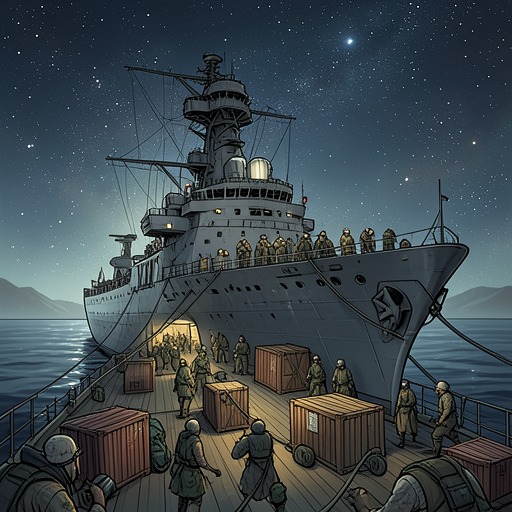
BlackwaterMaritime Code of Conduct, Article Four is the rule Henri Marcell cites when he asks the passenger liner River Jewel to receive evacuees. Its invocation frames the appeal as a matter of maritime duty rather than a voluntary favor, while the surrounding scene places that duty under the pressure of an active military threat.
The Article in Use
After Opera patches Marcell through to River Jewel, he requests that the liner take on evacuees in accordance with Article Four of the Maritime Code of Conduct. He asks whether the liner has any questions, making the article the explicit basis of his request. The passage establishes the rule’s relevant function in this situation: it supports the reception of people fleeing danger.
Humanitarian Duty Amid Threat
The request is made in a tense operational setting. A mischievous grin spreads across an old war roughneck’s face, and within seconds the ship’s starboard batteries have River Jewel lit by targeting sensors. The scene therefore places the appeal to the code beside a display of force, without establishing that the batteries fire on the liner.
The Approaching Assault Ship
While Marcell is dealing with River Jewel, Schuster calls his attention forward. A double-hulled vessel, roughly the mass of a destroyer, is jockeying toward the docks; its joined hulls resemble freight locomotives linked by metal struts. Marcell recognizes it as an assault ship. The approaching Union vessel changes the immediate context of the evacuation request from a procedural appeal into a crisis unfolding alongside military action.
Consequence and Significance
Marcell calls out to Gunny, but commands are already reaching the batteries across the bow. Rapid-fire railguns in double mounts open fire on the Union assault craft before it can react, and thick, Teflon-coated magnetized rounds punch through its thin armor. The excerpt does not state whether River Jewel accepts evacuees or explain any further enforcement or terms of Article Four. What it does show is the rule being asserted at the same moment that protection depends on armed action: the appeal to receive evacuees and the defense against an assault ship occupy the same crowded scene.