2 November 2135, 1000 Colony Time
A Vintage Panzerter Trial
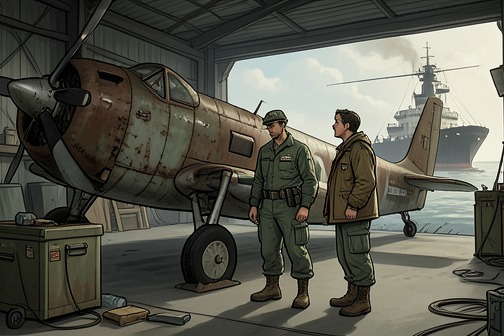
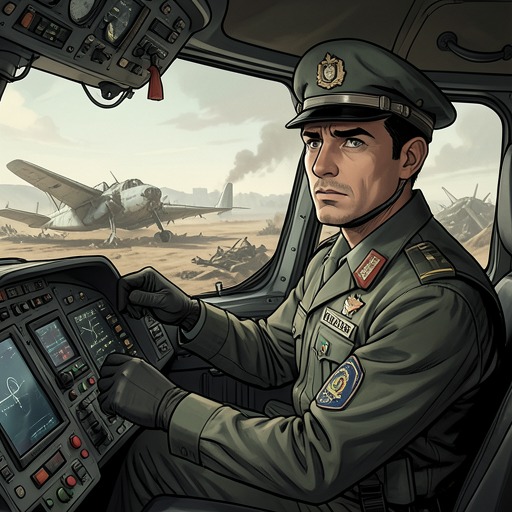
At [Naval Air Station Richtoften](entity:location-recall-location-02d0ab579243) on [Fredrick](entity:location-recall-location-a6eefa56cec3), [Roland Horn](entity:character-recall-character-roland-horn-64cd08d23ff4) tests an old [Panzerter III](entity:object-recall-object-panzerter-iii-660540db8c86) in space with [Novac](entity:character-recall-character-novac-5c9202a9e2e0). He revels in its movement and the freedom of flying, even though the machine has been sitting in a boneyard for years. Their talk of the war’s spread and the refitted [TNV Blackwater](entity:object-recall-object-tnv-blackwater-fb3f4ff77107) turns his attention toward a future beyond routine trials.
A suspicious ice hauler sends a distress call near the shoal zone. Novac recognizes intelligence-recovery signals in the transmission, and the two pilots turn toward it despite his misgivings. The rescue begins as a routine response to a ship in trouble but draws [Roland](entity:character-recall-character-roland-0ceeb2dc978c) into the war’s covert operations.
2 November 2135, 1200 Colony Time
Blackwater’s New Command
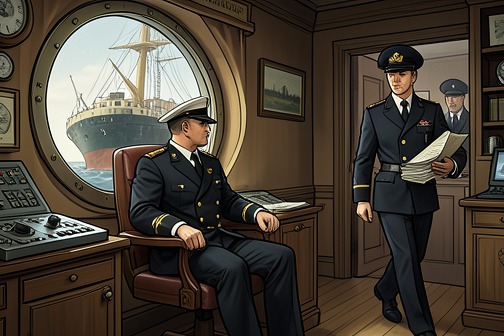
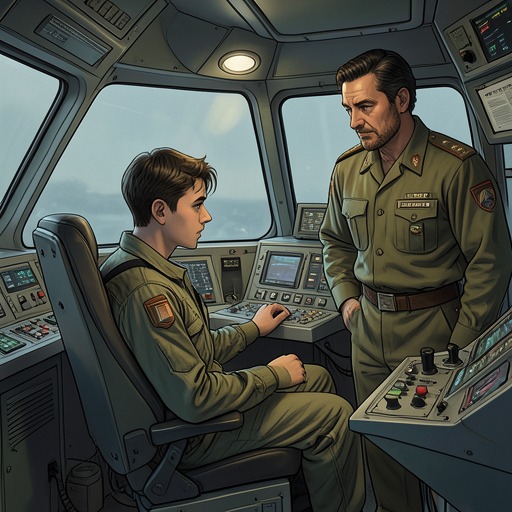
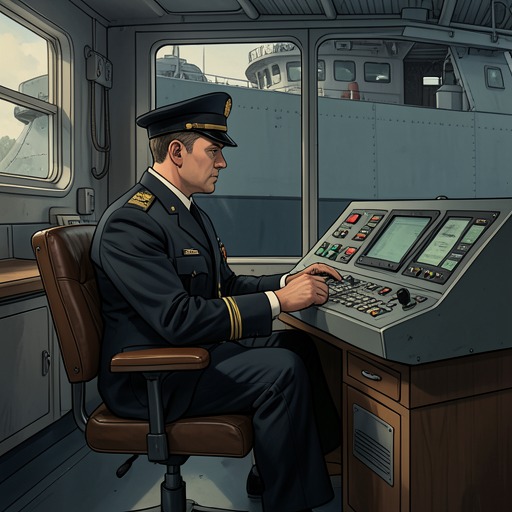
Aboard the refitted [TNV Blackwater](entity:object-recall-object-tnv-blackwater-fb3f4ff77107), [Henri Marcell](entity:character-recall-character-henri-marcell-97889c091240) manages docking formalities, crew leave, and the ship’s complicated new role. Once a light cruiser, it now combines substantial weapons with space for thirty-six Panzerters. Marcell still feels uneasy in the captain’s chair, haunted by the damage the ship suffered at [Vespa](entity:location-recall-location-vespa-12ecbffa9305) and the loss of its former captain.
He learns that the ship’s personnel arrangements are a mess, though he must assemble a combat air wing quickly. The mission ahead is secret: [Union](entity:organization-recall-organization-union-e1c19d15829d) forces are moving toward [Mar de Paulo](entity:location-recall-location-mar-de-paulo-25bcac73eb08), and the Blackwater is expected to help spring a trap. Its new purpose is already pressing against its thin staffing and its captain’s doubts.
2 November 2135, morning
Rocco’s Squadron Rumors
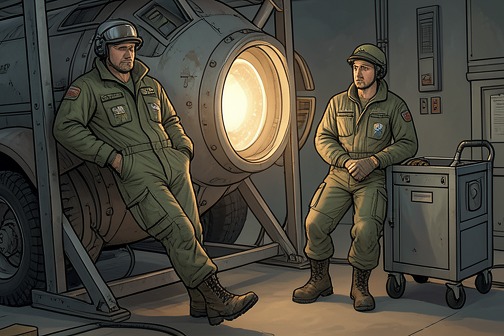
Aboard the [PFSS Grain & Steel](entity:object-recall-object-pfss-grain-steel-9bc7c60493a3), [Rocco Swift](entity:character-recall-character-rocco-swift-5f214073f0c8) banters with his wingman [Eric Irons](entity:character-recall-character-eric-irons-dcaa3d86a281) while maintainers work on his customized [T4X-2 Martian](entity:object-recall-object-t4x-2-martian-a9dad06b0ba1). Rumors suggest their force may be heading for the [Gulf of Promise](entity:location-recall-location-1803f6772e69), but [Rocco](entity:character-recall-character-rocco-0c553d7faaea) doubts the [Union](entity:organization-recall-organization-union-e1c19d15829d) would risk a direct strike into Tharcian territory. He expects the fleet to focus on the larger strategic struggle instead.
Rocco’s confidence in his machine and his status as an ace is matched by his impatience with standard maintenance limits. He argues that the people who design machines from a desk do not understand what a pilot needs in combat. The exchange establishes both his swagger and the close working friendship that anchors him in the coming battle.
2 November 2135, before 1400 Colony Time
The Pontiac’s Agents
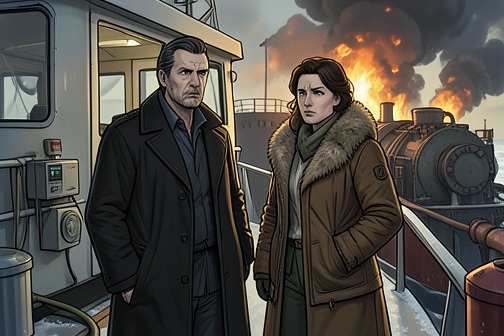
At the ice hauler Pontiac, [Roland](entity:character-recall-character-roland-0ceeb2dc978c) recognizes the caller as [Valentin Fulbright](entity:character-recall-character-valentin-fulbright-4abaf26947f4), a former academy classmate now serving in intelligence. [Fulbright](entity:character-recall-character-fulbright-5e79d689db00) and his companion are the only survivors aboard, and they are preparing to scuttle the vessel. Roland and [Novac](entity:character-recall-character-novac-5c9202a9e2e0) take them aboard their Panzerters and escape just before an explosion destroys the ship’s engine section.
Fulbright’s rescue exposes Roland to a veteran’s assessment of the [Union](entity:organization-recall-organization-union-e1c19d15829d)’s Martian Panzerters: their performance is far beyond the old Tharcian models, and their pilots are trained with new methods. Roland answers with faith in pilot skill over machinery, invoking his grandfather’s victories. The pickup saves an intelligence asset but foreshadows the classmate’s betrayal and their future combat encounter.
2 November 2135, early afternoon
The Blackwater’s Readiness
Marcell confronts the administrative failure that has left the Blackwater without its expected pilots. Instead of accepting an improvised personnel pool, he demands full records and decides to assemble the squadrons himself. [Anna Strauss](entity:character-recall-character-anna-strauss-256048b41dfa) explains the ship’s intended role: its air wing needs torpedo specialists for a campaign of guerrilla strikes behind enemy lines.
Marcell also reveals that [Union](entity:organization-recall-organization-union-e1c19d15829d) communications have been cracked and a major task force is moving toward [Mar de Paulo](entity:location-recall-location-mar-de-paulo-25bcac73eb08). The ship’s departure schedule, its shortage of trained crews, and the approaching threat leave little room for ordinary preparation. He takes responsibility for the logistics and searches for any way to make the refitted ship combat-ready.
2 November 2135, afternoon
Fulbright’s Warning
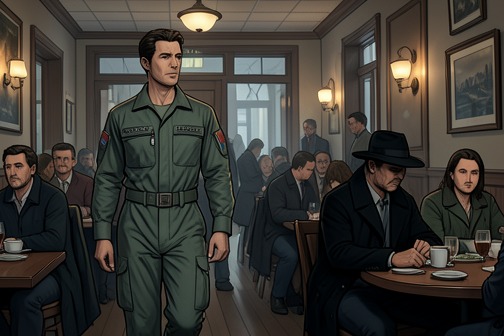
[Roland](entity:character-recall-character-roland-0ceeb2dc978c) gives [Fulbright](entity:character-recall-character-fulbright-5e79d689db00) a tour of [Fredrick](entity:location-recall-location-a6eefa56cec3) and takes him to a seafood restaurant. Fulbright speaks openly about his failed attempt to steal a [Panther](entity:object-recall-object-panther-cda3bff70cc7) and warns that the [Union](entity:organization-recall-organization-union-e1c19d15829d)’s machines are superior to the older Tharcian models. Roland refuses to accept that the machine alone decides a fight, insisting that a capable pilot can still prevail in an older one.
The conversation sharpens their contrasting temperaments: Roland is hungry to prove himself, while Fulbright treats his former classmate as an unimpressive striver. Roland receives orders to help move Panzerters, then learns that he is being transferred to a ship. The reunion that began as a rescue ends with Fulbright’s contempt and Roland’s first concrete step toward combat.
2 November 2135, 1630 Colony Time
The Base Comes Under Attack
While [Roland](entity:character-recall-character-roland-0ceeb2dc978c) is testing a [Panzerter](entity:object-recall-object-panzerter-95125a427339) inside [Fredrick](entity:location-recall-location-a6eefa56cec3), explosions tear through the barracks and gunfire breaks out near the hangars. A warning reports that someone is stealing a machine. The colony’s alarms then announce an enemy fleet, confirming that the disturbance is part of a coordinated attack.
Three Panthers emerge from a burning hangar, one carrying torpedoes capable of devastating the colony’s pressurized habitats. Roland attacks before they can escape, turning a maintenance flight into a fight for the settlement’s survival. The attack reveals that the enemy has reached the training base and that the colony’s civilians are directly exposed.
2 November 2135, 1630–1652 Colony Time
Val’s Defection
[Roland](entity:character-recall-character-roland-0ceeb2dc978c) disables the [Panther](entity:object-recall-object-panther-cda3bff70cc7) carrying torpedoes, then fights the remaining attackers above the colony. He uses a captured shield and close maneuvering to survive their rifle fire, but the enemy’s shots strike civilian homes. During the duel, he discovers that the pilot leading the attack is [Fulbright](entity:character-recall-character-fulbright-5e79d689db00), who tries to escape toward the docking collar.
Fulbright insists that his betrayal serves a greater good, invoking the promise of a world without hunger or conflict. Roland rejects the justification and presses the attack, forcing Fulbright to abandon the fight under the anchorage’s point defenses. Their former friendship is now open hostility, and Roland’s belief in the cause he serves is tested against the consequences of Fulbright’s actions.
2 November 2135, before the main fleet engagement
Rocco’s Battle Briefing
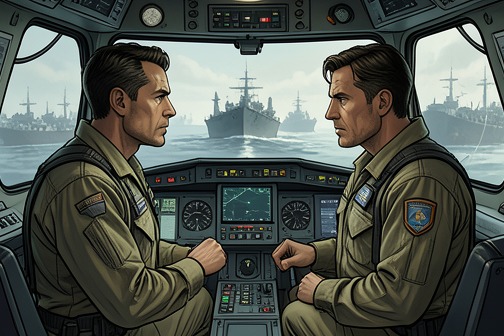
[Rocco](entity:character-recall-character-rocco-0c553d7faaea) receives orders to escort the torpedo specialists attacking the Tharcian heavy cruisers, including [Impervious](entity:object-recall-object-impervious-3e5c44b98a82). The [Union](entity:organization-recall-organization-union-e1c19d15829d) task force plans to disguise its size and timing with electronic warfare, making a fleeing civilian flotilla appear to be the vanguard of a different crisis. The deception is meant to draw Tharcian defenders away from their positions before the Union strikes.
Rocco and [Wayne Wendel Wheeler](entity:character-recall-character-wayne-wendel-wheele-47e127764afa) coordinate their squadrons, planning how to reach the target through the screening ships. The mission depends on surprise and cooperation: Rocco’s pilots must clear a path while Wheeler’s deliver torpedoes. Their preparation places the ace at the center of the coming fleet battle, even as the attack unfolds on multiple fronts.
2 November 2135, 1640 Colony Time
Blackwater Detects the Deception
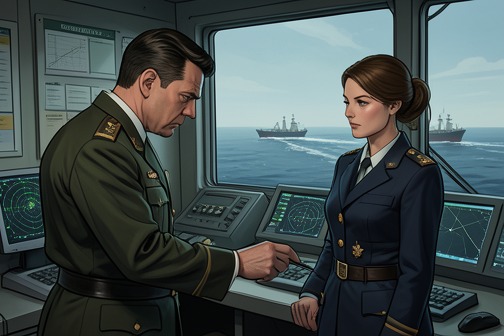
As the Blackwater’s crew return from shore leave, Marcell studies a burst reporting civilian ships approaching from the [Amazon Sea](entity:location-recall-location-fceade437d06). He and [Gunnery Sergeant Hoffmann](entity:character-recall-character-gunnery-sergeant-ho-be02c55fae46) recognize that the formation is too orderly for panicked refugees and that the ships are not accelerating as fleeing vessels should. Marcell suspects a [Union](entity:organization-recall-organization-union-e1c19d15829d) deception based on the radar-shadow tactics used at [Vespa](entity:location-recall-location-vespa-12ecbffa9305).
He orders action stations and warns the [Gulf Squadron](entity:organization-recall-organization-gulf-squadron-505bdb75ad42) that the apparent flotilla may conceal a larger force. The ship’s crew responds with disciplined urgency, but the Blackwater lacks the Panzerters it was meant to receive. Marcell must now defend the colony and the refugees with an undermanned ship and whatever help he can improvise.
2 November 2135, shortly after 1640 Colony Time
Rocco Enters the Battle
[Rocco](entity:character-recall-character-rocco-0c553d7faaea) launches from the Grain & Steel as the fleet engagement begins. The battle is already damaging ships on both sides, with [Union](entity:organization-recall-organization-union-e1c19d15829d) corvettes, Tharcian defenders, and Panzerters tangled among railgun and missile fire. Rocco’s squadron forms up with Wheeler’s torpedo specialists and advances under escort toward the enemy heavy cruisers.
The decisive target is [Impervious](entity:object-recall-object-impervious-3e5c44b98a82), whose missile batteries threaten the Union’s lighter ships. Rocco’s role is not merely to score kills: he must keep the defensive screen from stopping Wheeler’s torpedo flight. The scale of the engagement and the losses among the ships around them make clear that this attack could decide whether the Union force can hold its position.
2 November 2135, 1652 Colony Time onward
Roland’s First Defense
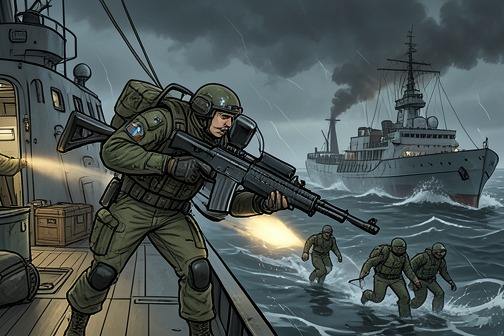
After [Fulbright](entity:character-recall-character-fulbright-5e79d689db00) retreats, [Roland](entity:character-recall-character-roland-0ceeb2dc978c) is called aboard the Blackwater and given an urgent defensive mission. The ship is trapped in [Fredrick](entity:location-recall-location-a6eefa56cec3)’s dock by a disabled assault lander, and [Union](entity:organization-recall-organization-union-e1c19d15829d) forces are attacking the surrounding settlement. Marcell orders Roland to stop missiles and landers from reaching the docking bay until the ship can get underway.
Roland launches in his repaired [Panzerter III](entity:object-recall-object-panzerter-iii-660540db8c86) with fresh weapons and little time to absorb the chaos around him. He destroys incoming missiles and disables assault craft, but the Union landers release marine Panzerters and shuttles. The fight turns the young pilot into the Blackwater’s only immediate air defense, responsible for the ship and civilians crowded in the anchorage.
2 November 2135, late afternoon
The Civilian Evacuation
[Roland](entity:character-recall-character-roland-0ceeb2dc978c) destroys or disables assault landers and their shuttles before they can reach the docking bay. When the [Union](entity:organization-recall-organization-union-e1c19d15829d) marines emerge, he uses his limited ammunition and the debris around him to prevent them from landing. One assault lander blocks the bay, and the Blackwater finally smashes it apart with its prow, opening a path for recovery and departure.
Marcell also forces a passenger liner to accept evacuees by invoking the maritime code of conduct and backing the demand with the ship’s weapons. The battle leaves the Blackwater’s original crew and fleeing civilians dependent on one another. Roland returns from his first combat sorties with confirmed kills, while the ship’s command crew begins organizing a survival effort rather than a simple escape.
2 November 2135, early evening
The Recon Cruiser’s Interference
With the [Gulf Squadron](entity:organization-recall-organization-gulf-squadron-505bdb75ad42) losing ships, Marcell identifies a [Union](entity:organization-recall-organization-union-e1c19d15829d) reconnaissance cruiser as the source of jamming that is blinding the defenders. He sends [Roland](entity:character-recall-character-roland-0ceeb2dc978c) on a torpedo mission against it, hoping that disabling the cruiser will restore communications and allow the scattered Tharcian ships and civilians to escape into the shoal zone.
The mission is dangerous: the cruiser has escorts, and Roland’s old machine is not a torpedo specialist. He nevertheless launches with a small supply of torpedoes and relies on wreckage for concealment. The task is a turning point for the Blackwater’s role in the battle, shifting Roland from local defense to a strike whose success could save an entire flotilla.
2 November 2135, evening
A Rescue in the Shoals
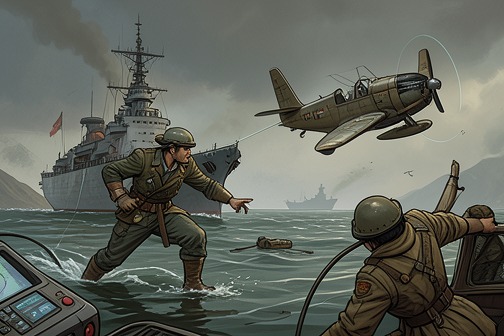
On his approach to the reconnaissance cruiser, [Roland](entity:character-recall-character-roland-0ceeb2dc978c) encounters a damaged Tharcian pilot drifting toward the shoal zone while [Union](entity:organization-recall-organization-union-e1c19d15829d) corvettes close in. He abandons the safer plan of preserving surprise and attacks the cruiser, then coordinates with the stranded pilot, [Duncan Glenn](entity:character-recall-character-duncan-glenn-2a352c72b602), to disable its engineering section. Roland’s torpedoes cripple the cruiser and destroy an escort destroyer, while Duncan finishes the drive with his sword.
[Rocco](entity:character-recall-character-rocco-0c553d7faaea)’s reinforcements arrive and drive off the corvettes, allowing Roland to recover Duncan despite severe damage to both machines. Duncan joins the Blackwater’s improvised air wing as Roland’s new wingman. The rescue costs Roland his own equipment and safety margin, but it restores the possibility of communications and adds a second pilot to the beleaguered ship.
2 November 2135, evening
The Fleet Retreats into Debris
As the reconnaissance cruiser lost its combat capability, Marcel gathered the surviving ships and civilians, leading them into the Lagrange Shoal area. The Shoal area allowed them to avoid the Alliance fleet's search, but also restricted navigation and communication. The orbital patrol boats used maps and buoys to guide
2 November 2135, evening
Rocco Breaks Impervious
Roko's squadron broke through the defense around the [Impervious](entity:object-recall-object-impervious-3e5c44b98a82) laid by the Tarsia fleet. A coordinated attack killed several pilots, but Roko adapted, using a destroyed destroyer as a weapon, pushing it into the defensive formation to create an opening. Subsequently, Wheeler's torpedo bomber formation
2 November 2135, evening
The Refugee Ships Need Supplies
The crew of the Blackwater began transporting food and medical supplies among civilian vessels hiding in the Lagrange Shoal area. [Roland](entity:character-recall-character-roland-0ceeb2dc978c) repeatedly delivered supplies to the passenger ship, which was crowded with children and families with limited resources. He witnessed the human cost of battle, and [Hoffman](entity:character-recall-character-hoffman-d191ef6bb957), the artillery specialist, reminded
2 November 2135, night
The Supply Drone Ambush
[Roland](entity:character-recall-character-roland-0ceeb2dc978c) approaches the Lagrange Shoal area to intercept the supply unmanned vessel, preparing to use the orbital patrol code to divert it to the refugee center. The transfer is not yet complete when the Alliance's Fuzatsu mechs arrive. A green-painted ace pilot launches an attack, damaging Roland
2 November 2135, late evening
The Wrecked Transport Signal
A military transport ship sent an encrypted signal from deep within the Lagrange Shoal area, indicating that the ship may be carrying classified cargo. Marcel realized that there might be isolated units in need of fuel, parts, or ammunition on board, but the signal could also be a trap. He sent [Roland](entity:character-recall-character-roland-0ceeb2dc978c)
3 November 2135, shortly after midnight Colony Time
The Ghost Colony Pursuit
[Roland](entity:character-recall-character-roland-0ceeb2dc978c) rushes through the Lagrange Shoal area, speeding toward the transport ship as the Alliance's fire searches for him in the debris around him. He takes cover in the ruins of an abandoned colony, where scattered corpses and decaying buildings reveal that people once lived here. An Alliance Fuzet
3 November 2135, shortly after midnight
Rocco Finds Verdun
After Fubrayt claimed [Roland](entity:character-recall-character-roland-0ceeb2dc978c) was dead without confirmation, [Rocco](entity:character-recall-character-rocco-0c553d7faaea) searched this abandoned colony. Rocco did not believe the report, ordered a scan, and then discovered that this settlement was called [Verdun](entity:location-recall-location-verdun-acdf464dace2). He also found on the colony's shell a strange cylinder marked VX-73 and a
3 November 2135, early morning
Blackwater’s Deception Plan
Marcel's ambush partially succeeded: the alliance torpedoes destroyed several small ships, but failed to hit the most important target; the patrol boat named Thunderchild collided with the reconnaissance cruiser, significantly reducing its ability to search the Lagrange shoal area. This sacrifice bought time, but also exposed the
3 November 2135, around 0540 Colony Time
Charlotte and the Ozelot
[Roland](entity:character-recall-character-roland-0ceeb2dc978c) arrived at the damaged military transport ship and collided with the disabled [Panzerter](entity:object-recall-object-panzerter-95125a427339) onto the hull. Inside, he found [Charlotte Huber](entity:character-recall-character-charlotte-huber-ea807457ed2a)—the only survivor on the ship. She survived by relying on the remaining air and electricity on the ship. They estimated their supplies would only last for a short time
3 November 2135, around 0550 Colony Time
The Ozelot’s First Launch
Before [Roland](entity:character-recall-character-roland-0ceeb2dc978c) and [Charlotte](entity:character-recall-character-charlotte-45ddf3085f55) left, Buffett rushed to the transport ship and confronted them. Roland attacked him with a combat stick in zero gravity, but the alliance's firepower tore open the cargo hold, forcing the two to take cover. Charlotte assisted in starting [Ozelot](entity:object-recall-object-ozelot-0e94f902f7e6), while Roland removed its securing mechanism and
3 November 2135, around 0559 Colony Time
Rocco Meets the Ozelot
Roko saw a new Tarsia Fanzat mecha appear from the transport ship, and immediately opened fire, but saw it evade the attack at an incredible speed. The mecha's laser rifle destroyed one of Friedbert's electronic fighters in a single shot. Roko quickly realized this was
3 November 2135, shortly after 0615 Colony Time
The Ozelot’s Ambush
[Charlotte](entity:character-recall-character-charlotte-45ddf3085f55) was affected by the acceleration from the battle, so [Roland](entity:character-recall-character-roland-0ceeb2dc978c) restricted his mobility and set a trap using the wreckage in the Lagrange Shoal area. He lured the Alliance's Fanzat mechs into the range of the laser rifle, destroying several enemy machines, then passed through the ruins of
3 November 2135, around 0705 Colony Time
Rocco Recovers Fulbright
After [Roland](entity:character-recall-character-roland-0ceeb2dc978c) left, Rokko returned to rescue the incapacitated Fubray. Although he disapproved of the agent's poor decisions and the casualties caused by his command, Rokko extracted fuel from Fubray's damaged mecha and asked about [Verdun](entity:location-recall-location-verdun-acdf464dace2). From this, he learned that
3 November 2135, around 0725–0730 Colony Time
The Danubia Arrives
Alliance warships pass through the Lagrange Shoal area to pursue [Roland](entity:character-recall-character-roland-0ceeb2dc978c). He pilots [Ozelot](entity:object-recall-object-ozelot-0e94f902f7e6) and destroys two destroyers, but loses his weapons and sustains damage. Just as he attempts to escape, a massive Tarsian battlecruiser appears from the debris: [Danubia](entity:object-recall-object-danubia-9cbc27dd07e0)
3 November 2135, around 0745 Colony Time
The Union Force Withdraws
when the battle situation began to be unfavorable to the alliance, the surviving pilots of Roke and Wheeler tried to cross the minefield to escape, while the Tarsia forces continued their attack. Roke pushed a destroyed destroyer into the minefield, detonating it to create a path, while risking
3 November 2135, after the battle
The Ozelot Returns
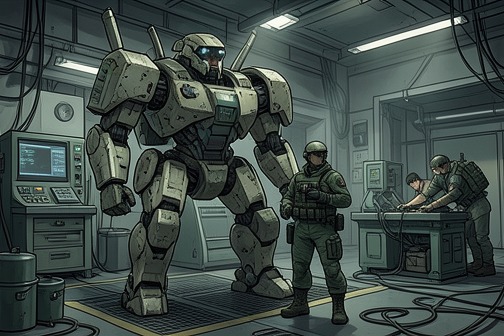
[Charlotte](entity:character-recall-character-charlotte-45ddf3085f55) and [Roland](entity:character-recall-character-roland-0ceeb2dc978c) recover aboard the Blackwater, where Charlotte reports that the other Ozelots in the transport were lost. The surviving machine can be maintained from the spare parts aboard, and its improvised combat trial has provided valuable performance data. Roland and Charlotte’s ordeal establishes mutual trust, while the Blackwater gains a rare advanced [Panzerter](entity:object-recall-object-panzerter-95125a427339) and a technician able to service it.
Marcell orders the wrecks scuttled and prepares to return to Deimos. He also reviews salvage, including a specialized anti-ship [Jagdpanzerter](entity:object-recall-object-jagdpanzerter-704389f75e88) intended for Duncan and conversions based on older machines. The ship’s mission is shifting from emergency survival toward rebuilding its combat capability, though it has only two pilots and a severe shortage of trained personnel.
4 November 2135, after the return toward Deimos
A Mission to the Giant Station
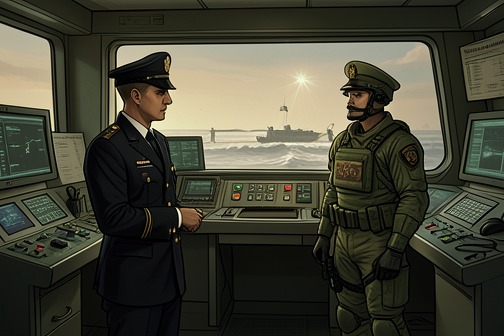
Aboard the Grain & Steel, [Rocco](entity:character-recall-character-rocco-0c553d7faaea) and [Fulbright](entity:character-recall-character-fulbright-5e79d689db00) report to Admiral [Cyrus Gray](entity:character-recall-character-cyrus-gray-399d6d9440d6). Gray treats the loss of the classified cargo and the appearance of the [Ozelot](entity:object-recall-object-ozelot-0e94f902f7e6) not as a simple failure but as intelligence: the [Union](entity:organization-recall-organization-union-e1c19d15829d) now knows the Tharcians have developed an advanced [Panzerter](entity:object-recall-object-panzerter-95125a427339), and it needs to discover where the machines are being made.
Gray identifies a massive station as the next target and orders Rocco and Fulbright to go there. Rocco, whose respect for [Roland](entity:character-recall-character-roland-0ceeb2dc978c) has grown through combat, welcomes the prospect of a worthy opponent, while Fulbright’s role remains bound to the intelligence operation that has already cost lives. The order points the Union’s attention toward a new campaign beyond the battle at [Promise](entity:location-recall-location-promise-ef2ad729e826).
4 November 2135, aboard the Blackwater
Marcell’s New Squadron
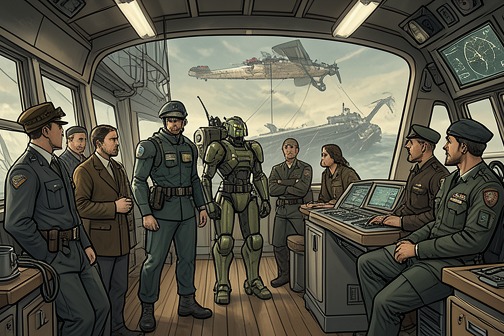
Marcell briefs his small and unconventional crew on the next phase of the Blackwater’s work. The destruction of Naval Air Station [Fredrick](entity:location-recall-location-a6eefa56cec3) has reduced the pilot pipeline, leaving the ship dangerously short of aircrew. Its task will begin by finding more pilots at a vast station, and the mix of experienced officers, improvised equipment, and salvaged machines will have to make up for the missing squadrons.
[Roland](entity:character-recall-character-roland-0ceeb2dc978c), Duncan, [Charlotte](entity:character-recall-character-charlotte-45ddf3085f55), Anna, and [Gunnery Sergeant Hoffmann](entity:character-recall-character-gunnery-sergeant-ho-be02c55fae46) prepare for a mission unlike ordinary fleet duty. The Blackwater is no longer just a battered escort that survived an attack; it is becoming the nucleus of a mobile, irregular force operating behind enemy lines. The promise of that new role is shadowed by the question of how a handful of people can sustain a campaign against the [Union](entity:organization-recall-organization-union-e1c19d15829d).
4 November 2135, 2200 Deimos Time
The Corruption Investigation
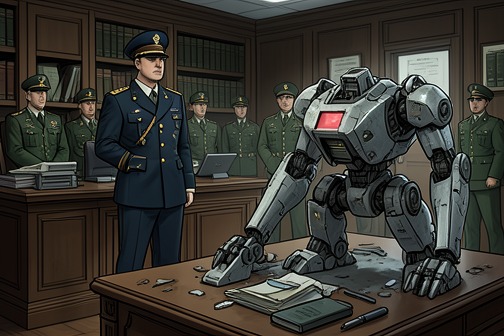
At the [Tharcian Naval Command Complex](entity:location-recall-location-tharcian-naval-comma-2c5fe4f1ce76), [Fleet Admiral Von Braun](entity:character-recall-character-fleet-admiral-von-b-1a967364d6f2) reviews the [Ozelot](entity:object-recall-object-ozelot-0e94f902f7e6)’s emergency combat results and learns that its secrecy has been compromised. He reflects on the decision to field the unreliable [Panther](entity:object-recall-object-panther-cda3bff70cc7) and notes that wartime procurement authority now allows him to subsidize competitors and demand better performance from [Rainer Orbital Industries](entity:organization-recall-organization-rainer-orbital-i-5c13e9ea7798).
Von Braun also receives reports of embezzlement from the naval modernization program and the strategic fuel reserve. He orders arrests to remain discreet so the public will not lose confidence in the fleet. The investigation links the military’s shortages and equipment failures to institutional corruption, revealing that the Tharcian war effort is being undermined from within as well as attacked from outside.
4 November 2135, late evening Deimos Time
Marcell’s Promotion
Von Braun meets Marcell, praises his performance at [Vespa](entity:location-recall-location-vespa-12ecbffa9305) and [Promise](entity:location-recall-location-promise-ef2ad729e826), and promotes him to captain. He explains that the [Union](entity:organization-recall-organization-union-e1c19d15829d) believed the Blackwater had been destroyed multiple times, a confusion that helped Marcell’s force survive and strike unexpectedly. The admiral trusts Marcell’s ability to combine audacity with restraint, qualities needed for the Blackwater’s unconventional mission.
Marcell receives orders for an independent squadron built around the Blackwater, two destroyers, and several frigates. He accepts the responsibility and begins preparing a requisition list. The promotion resolves his doubt about whether he belongs in command, but it also places him at the head of a small force expected to operate with limited resources and uncertain support.
After the novel’s main events
The Red World War Preview
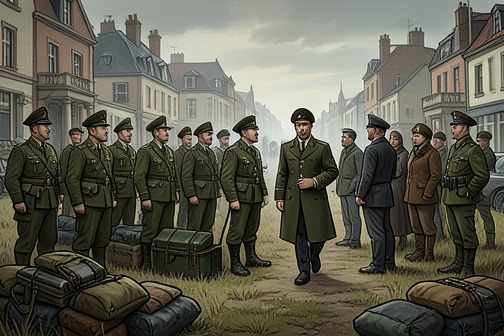
The appended preview shifts to an earlier surface-war episode featuring Lieutenant [Paul Reiter](entity:character-recall-character-paul-reiter-3ebfb335bb78) and Corporal [Mondragon](entity:character-recall-character-mondragon-af52efe82a93). They prepare their equipment and Panzerters during repeated mobilization drills, uncertain whether the latest political crisis will finally lead to war. Their routines and maintenance problems show the ground forces living with the strain of a conflict that has not yet fully begun.
Reiter learns that a [Union](entity:organization-recall-organization-union-e1c19d15829d) delegation has arrived in New Franklin, and his commander warns that the coming night may be their last peaceful one. The preview ends with the platoon dismissed early, poised between ordinary military routine and the possibility of a larger war. It serves as a glimpse into another front in the same conflict rather than a continuation of the Blackwater crew’s plot.