Candide's disillusionment with optimism
CandideCandide’s disillusionment with optimism is a gradual collision between Pangloss’s all-explaining philosophy and the suffering Candide encounters. He begins by accepting that events must be for the best; after war, punishment, and witnessing enslavement, he calls optimism a delusion. His final response to Pangloss’s renewed explanation is not another philosophical system, but a turn toward useful work.
Inherited Doctrine and Early Doubt
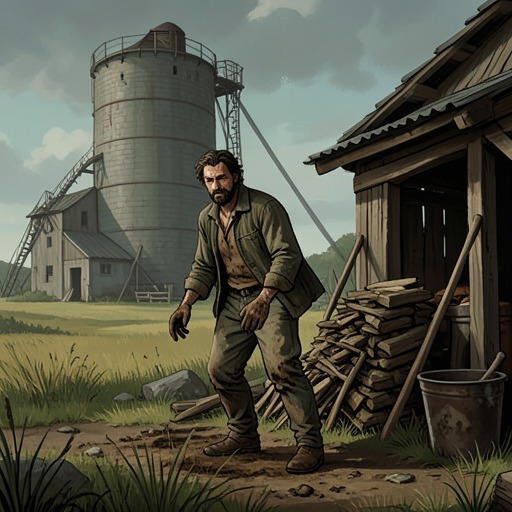
Pangloss teaches that every effect has a cause and that the world is arranged for the best. His examples make the doctrine seem to follow from ordinary things: noses are suited to spectacles, legs to stockings, and stones to castles. Candide listens with the untested trust of a pupil and believes that his own good fortune at Thunder-ten-Tronckh Castle confirms the professor’s teaching. At this stage, optimism is not merely an abstract proposition to him; it orders his understanding of his home, his prospects, and his admiration for Pangloss.
War puts that confidence under pressure without immediately breaking it. Candide witnesses the armies of the Bulgarians and Abares kill tens of thousands, then passes through villages destroyed by both sides. He escapes with little food and reaches Holland still carrying Cunegonde in his thoughts. When he begs for bread, he explains his expulsion, military punishment, and present need as necessary links in a chain of causes. Even deprivation is fitted into the doctrine: events cannot be otherwise, he reasons, although what he needs at that moment is food. His words show how thoroughly Pangloss’s teaching has become Candide’s first language for interpreting misfortune.
Lisbon: Suffering Becomes Personal
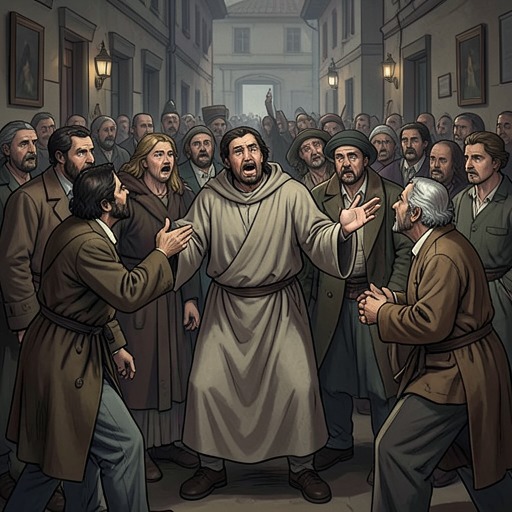
In Lisbon, the doctrine meets punishment and loss more directly. Candide is whipped in a religious ceremony, while Pangloss is hanged; the same day, an earthquake strikes. Bloodied and shaken, Candide asks himself how this can be the best of all possible worlds. His question is not yet a settled rejection: he compares the punishment with what he endured among the Bulgarians and laments Pangloss, the Anabaptist James, and Cunegonde as losses. But the scene has changed the terms of his belief. Suffering is no longer a distant consequence that can be fitted neatly into an explanation; it has reached the people he loves and the teacher whose philosophy had made that explanation persuasive.
Surinam and the Explicit Rejection
The decisive break comes in Surinam, where Candide hears an enslaved man explain the bodily punishments imposed on workers and the loss of a hand or leg in particular circumstances. The man connects European sugar to this system and recounts how his mother had presented enslavement as a source of family fortune, a promise his own experience contradicts. He also points to the contradiction between Dutch preachers’ teaching that Black and white people are children of Adam and their treatment of enslaved people as less than kin.
Candide responds by saying that Pangloss had not anticipated this abomination and that he must renounce optimism. Asked by Cacambo what optimism means, he defines it as the madness of maintaining that everything is right when it is wrong. The encounter gives his rejection a concrete basis: the harm is not an abstract imperfection but a human condition Candide has witnessed and heard described. He weeps as he enters Surinam. His statement marks a turning point, though not the end of every recurrence of despair or every temptation to explain events through the old doctrine.
Renewed Doubt and a Rival View
Later, in Venice, Candide’s expectation that Cunegonde will arrive goes unmet, and he has no news of Cacambo. He imagines that Cunegonde is dead and concludes that everything is misery and illusion; in melancholy, he avoids the opera, Carnival diversions, and the company of women. Martin sharpens the contrast between their outlooks. He says that, apart from El Dorado, the world appears abandoned to a malignant power: cities and families seek one another’s destruction, the weak suffer under the powerful, and even apparently peaceful places are troubled by private distress. Candide’s agreement in Venice shows how strongly disappointment can pull him toward Martin’s pessimism, but this despair is tied to uncertainty and feared loss rather than a new proof of Pangloss’s system.
Pangloss’s Persistence and Candide’s Ending
When Candide later encounters Pangloss again, he asks whether the philosopher still believed that everything happens for the best after being hanged, dissected, whipped, and forced to row in a galley. Pangloss answers that he has not changed his opinion, invoking philosophical principles to defend it. Their exchange makes the divide plain: Candide’s question sets the body’s experience against an argument that remains intact even after its proponent has endured repeated suffering.
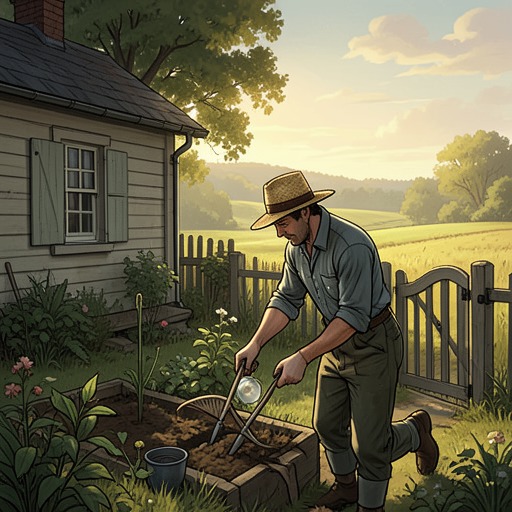
At the close, Pangloss again arranges Candide’s misfortunes into a chain of events, arguing that without his expulsion, punishment, travels through America, attack on the Baron, and loss of the sheep from El Dorado, he would not now be eating preserved citrons and pistachio nuts. Candide does not answer by constructing a rival account of why the chain occurred. He proposes that they cultivate their garden. The ending leaves his earlier renunciation in view but shifts its practical consequence: rather than allow another abstract explanation to settle the question, Candide turns the group toward productive activity. His disillusionment is therefore both a rejection of Pangloss’s assurance and a change in how he responds to the world that assurance could not repair.