General's sword
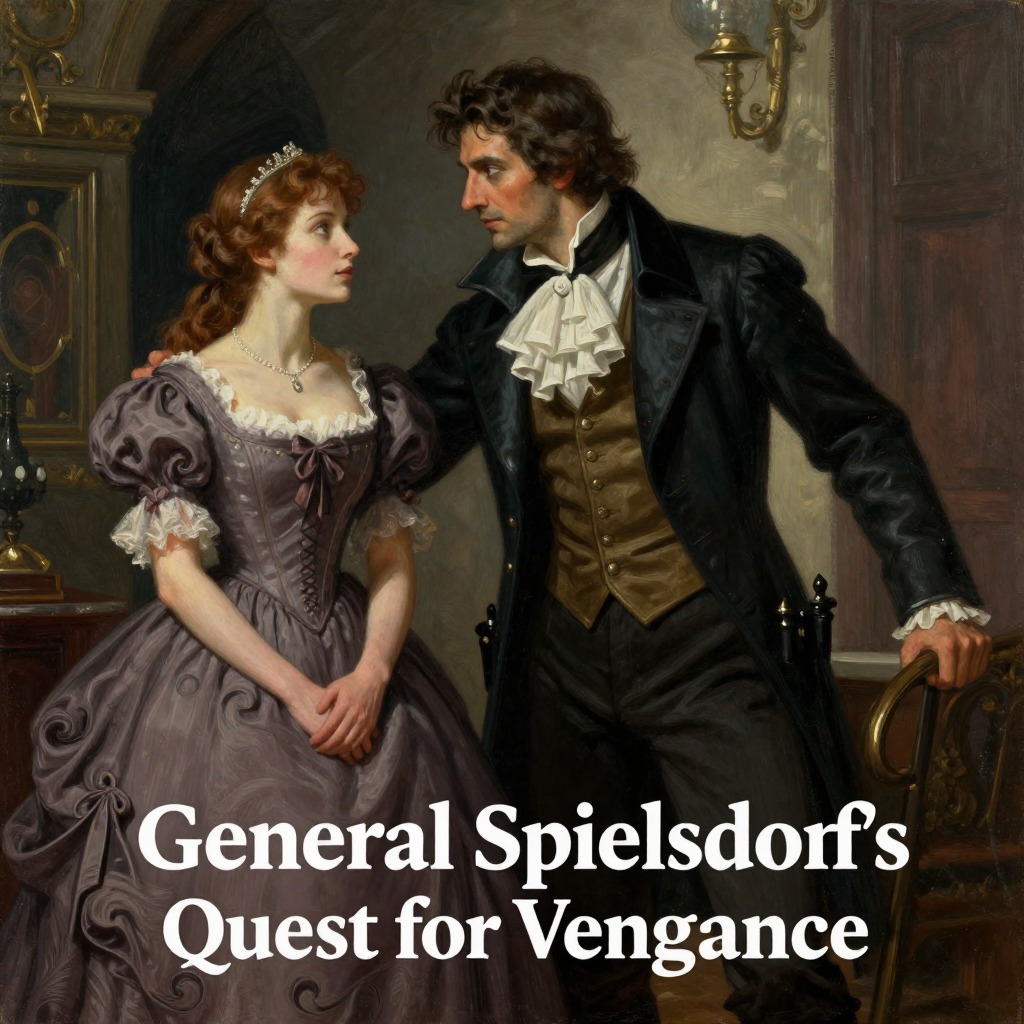
CarmillaGeneral Spielsdorf's sword is the instrument of his failed vengeance against the vampire who destroyed his ward. It appears at the two moments when the old soldier confronts the supernatural enemy directly, and in both cases it proves powerless against a creature that slips through the world of solid objects. The sword's failure marks the limit of ordinary human weaponry against the vampire, and it forces the General to turn to the more brutal methods of the stake and the hatchet.
The Sword in the Bedroom
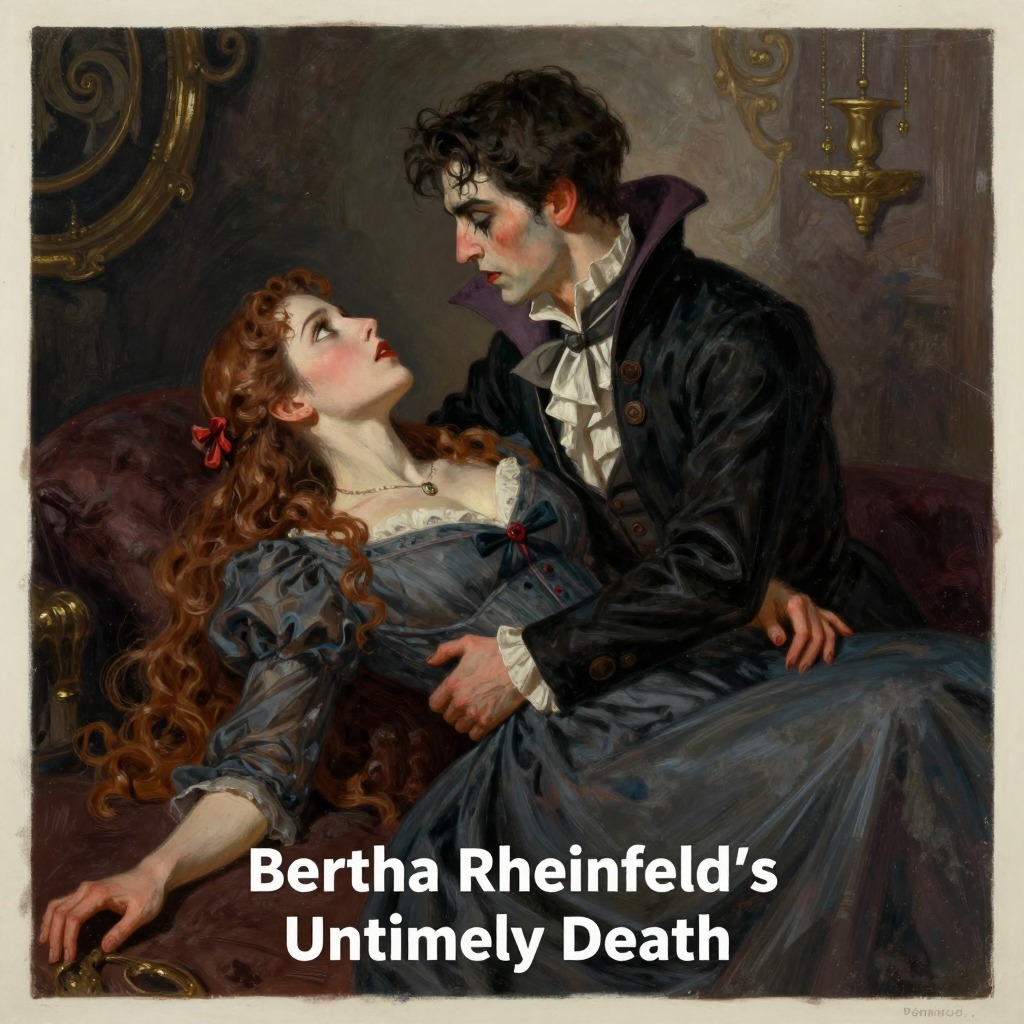
The sword first appears in the narrative of General Spielsdorf, told to Laura and her father as they drive toward the ruins of Karnstein. When the physician from Gratz diagnosed Bertha Rheinfeldt's illness as the work of a vampire, he left instructions that the General should conceal himself in the dark dressing room that opened upon the patient's room, with his sword laid on the table beside him. The General followed these directions, standing at the door and peeping through a small crevice, watching until Bertha was fast asleep. A little after one o'clock, he saw a large black object, very ill-defined, crawl over the foot of the bed and spread itself up to the girl's throat, where it swelled into a great, palpitating mass. For a few moments he stood petrified, then sprang forward with his sword in his hand. The black creature contracted toward the foot of the bed, glided over it, and stood on the floor about a yard below the foot of the bed, where the General saw Millarca, the name by which Carmilla was known to him, with a glare of skulking ferocity and horror fixed on him. He struck at her instantly with his sword, but saw her standing near the door, unscathed. Horrified, he pursued and struck again, but she was gone, and his sword flew to shivers against the door.
The Sword at the Chapel
The sword's second appearance is briefer but no less decisive. At the Chapel of Karnstein, where the party has come to inspect the ruins and the General has just heard the woodman's account of the vampire's history, Carmilla enters the shadowy chapel through a narrow arched doorway. Laura, glad to see her friend, nods smiling in answer to her peculiarly engaging smile. But the old man by her side, with a cry, catches up the woodman's hatchet and starts forward. On seeing him, a brutalized change comes over Carmilla's features, an instantaneous and horrible transformation, as she makes a crouching step backwards. Before Laura can utter a scream, the General strikes at her with all his force, but she dives under his blow and, unscathed, catches him in her tiny grasp by the wrist. He struggles for a moment to release his arm, but his hand opens, the axe falls to the ground, and the girl is gone. The sword is not mentioned in this scene; it is the hatchet that the General seizes, and it too fails. The sword's earlier shattering against the door has already established the pattern: no blade, however well aimed, can touch the vampire.
The Failure of the Sword and Its Significance
The sword's double failure is not merely a matter of bad luck. It reveals the fundamental nature of the vampire as a creature that exists between the solid and the spectral. The sword, the weapon of a gentleman and a soldier, is the instrument of honorable combat, but it cannot harm a being that is not bound by the ordinary laws of matter. The General's sword shatters against the door, not against the vampire, and the hatchet falls from his nerveless hand when Carmilla grips his wrist. The vampire's power over the hand, as Baron Vordenburg later explains, is one of its signs: the slender hand of Mircalla closed like a vice of steel on the General's wrist when he raised the hatchet to strike, and its power leaves a numbness in the limb it seizes. The sword, then, is not merely useless; it is actively defeated, its steel broken and its wielder disarmed. Only the stake driven through the heart, the head struck off, and the body burned to ashes can destroy the vampire, and these are not the weapons of a duel but of an execution. The sword's failure thus marks the transition from the General's personal vengeance, conducted with the tools of his military past, to the collective, ritual destruction carried out by the Imperial Commission according to ancient practice. The sword is the relic of a world that believes in honorable combat; the vampire belongs to a world that requires the hatchet, the stake, and the fire.