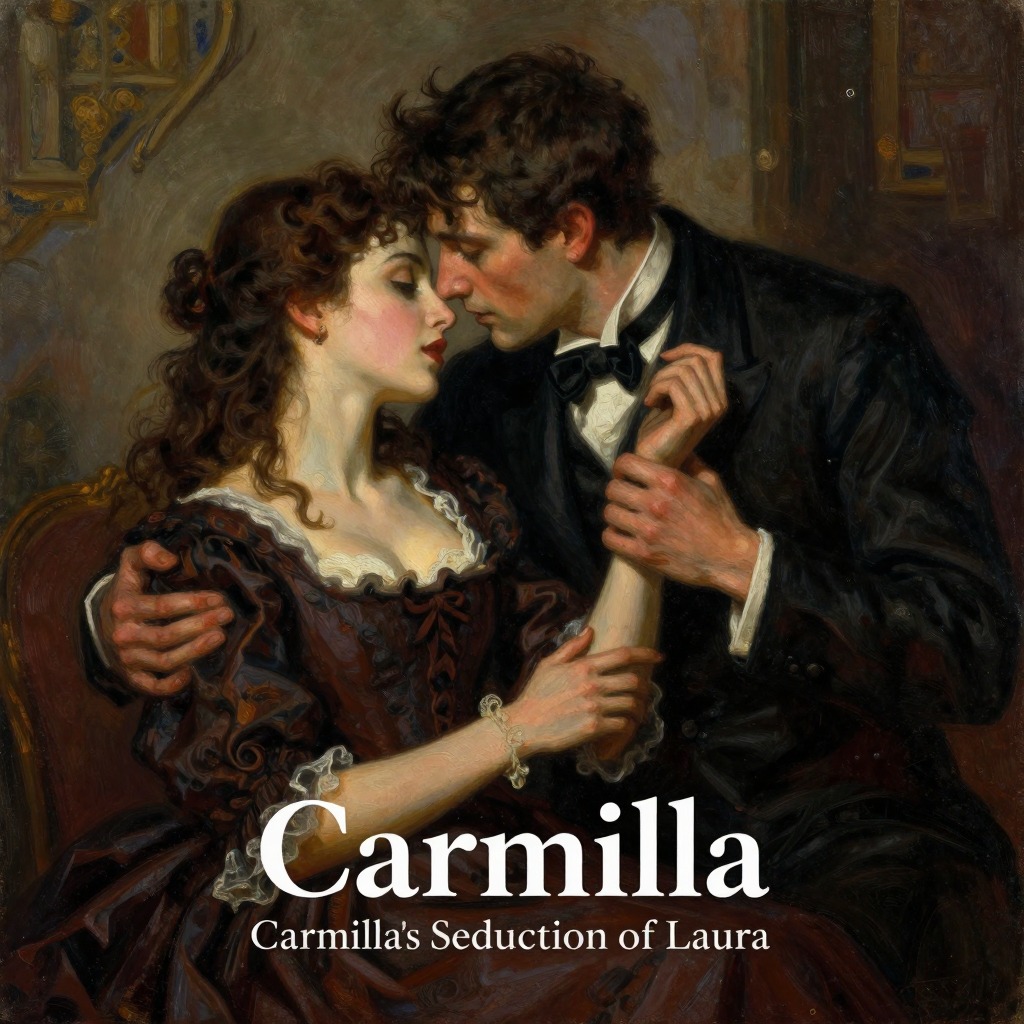
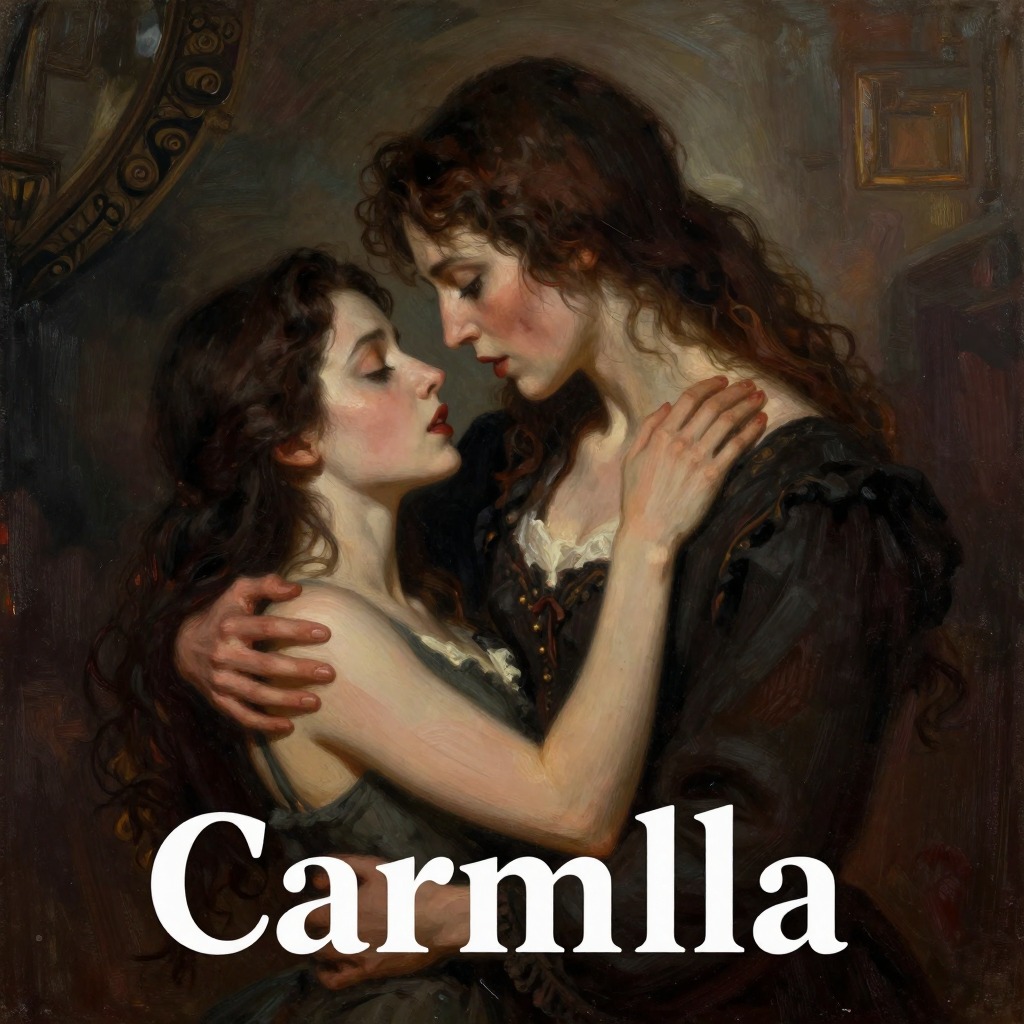
Love will have its sacrifices. No sacrifice without blood.
CarmillaThe phrase "Love will have its sacrifices. No sacrifice without blood" is one of the most direct and disturbing statements of the vampire Carmilla's philosophy in Sheridan Le Fanu's novella. Uttered in a moment of intimate confession, it collapses the boundary between romantic devotion and mortal predation, revealing the core logic that drives her relationship with the narrator, Laura.
Context and Utterance
Carmilla speaks these words late one night as she prepares for bed, in a conversation with Laura that has turned toward the nature of love and death. Laura has just asked whether Carmilla will ever confide in her fully, and Carmilla has responded with a rhapsody about the selfishness of love and her own jealous nature. "How jealous I am you cannot know," she has said. "You must come with me, loving me, to death; or else hate me and still come with me, and hating me through death and after." Then, shifting tone, she recalls her first ball, describing how she was "all but assassinated in my bed, wounded here"—touching her breast—"and never was the same since." When Laura asks if she was near dying, Carmilla answers, "Yes, very—a cruel love—strange love, that would have taken my life." It is at this point that she delivers the aphorism: "Love will have its sacrifices. No sacrifice without blood." She then immediately declares herself sleepy and asks how she can get up to lock her door, as if the revelation were no more than a passing thought.
Thematic Significance
The statement crystallizes the central paradox of Carmilla's nature: she experiences her vampiric feeding as an act of love, and she demands from her victims not merely their blood but their willing participation in a union that ends in death. Throughout the novella, Carmilla speaks to Laura in the language of romantic obsession—"You are mine, you shall be mine, you and I are one for ever"—and her embraces produce in Laura a mixture of pleasure, fear, and revulsion. The phrase "Love will have its sacrifices" reframes the vampire's nightly drainings as a kind of erotic sacrament, one in which the victim's lifeblood is the necessary offering. The corollary, "No sacrifice without blood," makes explicit what the romantic rhetoric otherwise obscures: that this love is literally consummated through the taking of life. The words also echo the earlier, more lyrical formulation Carmilla had used while walking in the forest: "To die as lovers may—to die together, so that they may live together." Together, these utterances form a coherent theology of vampiric love, in which death is not the end of relationship but its fulfillment, and blood is the medium of union.
Narrative Role
For Laura, who narrates the story years afterward, Carmilla's words remain hauntingly ambiguous. She records them without fully understanding them at the time, and even in retrospect she seems unable to decide whether they represent genuine madness, calculated seduction, or the literal truth of Carmilla's condition. The phrase thus functions as a piece of dramatic irony: the reader, by the end of the story, recognizes it as a precise description of the vampire's modus operandi, while Laura, still under Carmilla's influence, hears it only as another of her "wild nonsense" speeches. The aphorism also anticipates the novella's final revelation that Carmilla—under her original name Mircalla, Countess Karnstein—had been a vampire for more than a century, and that her "love" for Laura was merely the latest instance of a pattern repeated across generations of victims. In this light, the statement becomes a kind of signature, a confession that the vampire herself seems almost proud to make.