pious sacrilege
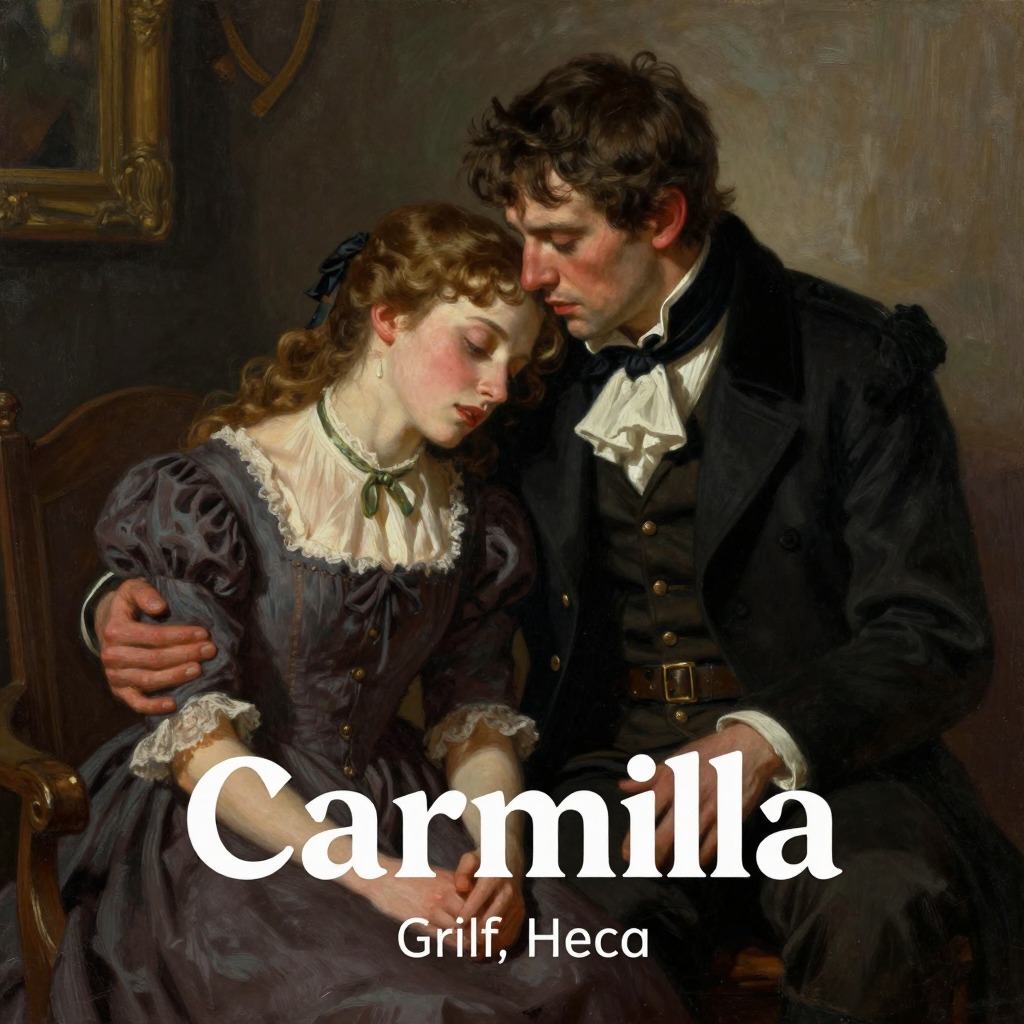
CarmillaThe phrase "pious sacrilege" is General Spielsdorf's term for his intended desecration of the Karnstein tomb, a paradoxical act of religious violence meant to destroy the vampire Mircalla and end her murderous reign. It crystallizes the moral inversion at the heart of the story: a holy man must commit a profane act to combat an unholy evil, and the General, a grieving soldier, becomes the agent of this necessary transgression.
Origin and Context
The expression appears during the carriage journey to the ruined village of Karnstein, as General Spielsdorf reveals his purpose to Laura's father. Having just lost his beloved niece and ward, Bertha Rheinfeldt, to the vampire's attacks, the General declares his intention to "unearth some of those fine people" and "relieve our earth of certain monsters." He then names his mission: "I hope, by God's blessing, to accomplish a pious sacrilege here." The phrase is spoken with fierce intensity, his anger and horror still raw from Bertha's death. Laura's father, who has not yet grasped the supernatural truth, listens with growing alarm, his earlier suspicion of the General's sanity now replaced by "keen intelligence and alarm."
Meaning and Paradox
The oxymoron "pious sacrilege" captures the central dilemma of the vampire hunt. The act of opening a grave, mutilating a corpse, and burning the remains is, in ordinary terms, a desecration—a violation of the dead and of the sanctity of the tomb. Yet the General frames it as a pious duty, a service to God and humanity. The vampire, though dead in body, is a living evil that preys on the living; to destroy it is an act of mercy and justice. The General's language echoes the logic of the Inquisition and the legal procedures that will later govern the vampire's execution: the Church and the state must collaborate in a ritual of purification that is both judicial and sacred. The phrase thus bridges the secular vengeance of a bereaved uncle and the religious imperative to cleanse the land of a demonic plague.
The Act Itself
The "pious sacrilege" is carried out in the Chapel of Karnstein the following day. The grave of the Countess Mircalla is opened, and the body is found in a state of apparent life: the features are tinted with warmth, the eyes open, the limbs flexible, and the leaden coffin floats with blood. The official proceedings, witnessed by the Imperial Commission, follow the ancient practice: a sharp stake is driven through the heart, the head is struck off, and the body and head are placed on a pile of wood and reduced to ashes, which are thrown upon the river. The General, who had raised the woodman's hatchet against Carmilla in the chapel the day before, now sees his purpose fulfilled through the sanctioned violence of the law. The phrase "pious sacrilege" thus describes not only his personal vow but the entire ritual of exorcism that the community performs.
Thematic Significance
The concept of "pious sacrilege" resonates with the story's broader exploration of boundaries—between life and death, the natural and the supernatural, the sacred and the profane. The vampire itself is a creature that violates these boundaries, existing in an "amphibious" state between the grave and the living world. To combat it, the living must also cross a boundary, committing an act that would normally be a sin in order to serve a higher good. The phrase also reflects the General's own transformation: from a skeptical, rational soldier into a man who believes in the supernatural and is willing to break the most fundamental taboos. His grief and rage have sanctified his mission, making the desecration of a tomb a holy duty. In this way, "pious sacrilege" becomes the story's most concise statement of the moral and theological paradox at its heart: that the fight against absolute evil may require the righteous to commit acts that would otherwise be unforgivable.