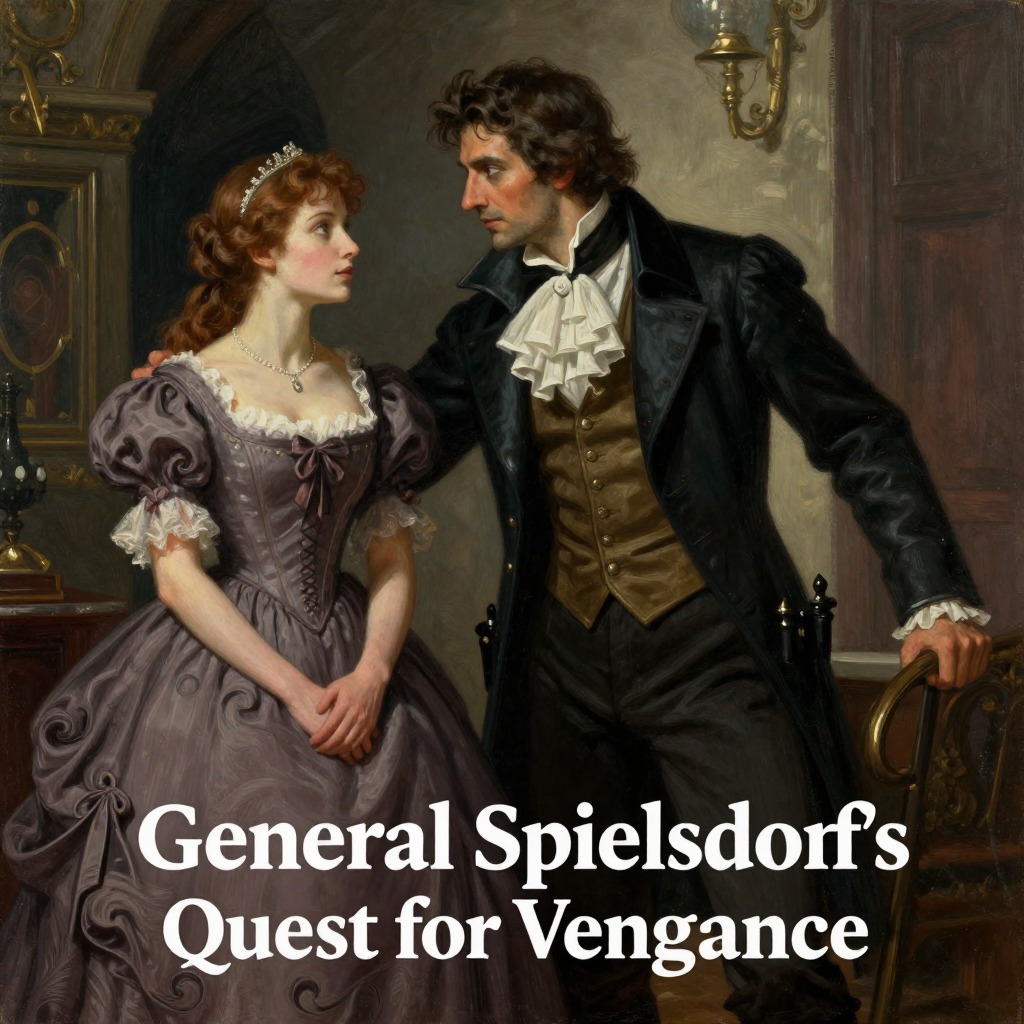
the fiend who betrayed our infatuated hospitality
CarmillaIn Sheridan Le Fanu's Carmilla, the phrase "the fiend who betrayed our infatuated hospitality" appears in a letter from General Spielsdorf to Laura's father, written in the immediate aftermath of his ward Bertha Rheinfeldt's death. The words are not merely an expression of grief but a formal accusation that names the precise mechanism of the vampire's predation: the exploitation of the host-guest relationship, the sacred bond of hospitality that the Gothic tradition treats as inviolable. The General, a retired soldier and a man of honor, uses the language of betrayal to describe what he now understands as a calculated infiltration of his home.
Origin and Context
The phrase occurs in the letter that Laura reads aloud to her father on the evening of Carmilla's arrival at the schloss. General Spielsdorf writes in a state of near distraction, his sentences veering between self-reproach and fury. He had expected to bring his beloved niece and ward, Bertha Rheinfeldt, to visit Laura and her father, but instead he writes to announce her death. The letter describes how he "thought I was receiving into my house innocence, gaiety, a charming companion for my lost Bertha" and then reveals that this expectation was shattered by the presence of a "fiend" who "betrayed our infatuated hospitality." The word "infatuated" carries a double meaning: it suggests both the General's foolish blindness and the obsessive, almost romantic fascination that the vampire inspires in her victims.
The Betrayal of Hospitality
The General's accusation directly connects the vampire's method to the social institution of hospitality. In the story, Carmilla (under the alias Millarca) gains entry to the Spielsdorf household through a chance encounter at a masked ball, where she and her mother, the Countess, manipulate the General into accepting the young woman as a guest. The Countess pleads urgent business and extracts a promise of secrecy, leaving her daughter in the General's care. Once inside the schloss, Millarca exhibits the same languid habits, nocturnal disappearances, and strange physical symptoms that later characterize Carmilla's stay at Laura's home. The General's phrase thus identifies the vampire's essential strategy: she does not break in but is invited in, exploiting the host's sense of duty and chivalry.
The Fiend's Identity
The "fiend" is later revealed to be Mircalla, Countess Karnstein, a vampire who has been dead for more than a century but continues to prey on the living under anagrammatic variations of her name—Carmilla, Millarca. The General's use of the word "fiend" aligns with the story's supernatural framework, in which the vampire is not merely a murderer but a demonic entity that corrupts the natural order. The phrase also echoes the woodman's account of the Moravian nobleman who destroyed a vampire at Karnstein, and it anticipates the formal legal proceedings of the Imperial Commission that ultimately execute the vampire. The General's personal vendetta, expressed in his vow to "track and extinguish a monster," transforms his grief into a righteous mission.
Thematic Significance
The expression "the fiend who betrayed our infatuated hospitality" encapsulates the central anxiety of Le Fanu's novella: the fear that the home, the supposed sanctuary of family and innocence, is permeable to evil. The vampire does not attack from outside but insinuates herself into the domestic sphere, winning the affection of her victims and their guardians. The General's self-accusation—"I curse my conceited incredulity, my despicable affectation of superiority, my blindness, my obstinacy"—reflects the guilt of the host who failed to recognize the predator within. The phrase thus serves as a moral and emotional pivot, marking the moment when the story's horror shifts from external threat to internal betrayal.