OxyContin
CherryOxyContin is the prescription opioid around which the narrator and Emily organize their worsening dependence: it offers short-lived relief, consumes money meant for other purposes, and eventually becomes harder to obtain in a form they can use. Its pills initially seem more dependable than street heroin, but their security is conditional—on money, on Big’s supply, and on a formulation that can still be crushed and injected.
Identity and Use
The narrator and Emily are already injecting OxyContin in the morning and relying on it to keep withdrawal at bay. They each inject 20 milligrams, but the effect lasts only a few hours. A twenty-milligram dose might suffice for someone who is not deeply dependent; for the couple, using the drug continuously, it barely registers. Their tolerance has changed what counts as a useful amount: unless they inject at least forty-five dollars’ worth, they lose time without gaining meaningful relief, and even that purchase only postpones the return of withdrawal symptoms.
The contrast between the drug’s measured dose and its escalating cost is central to its place in their lives. The pills are not a stable treatment or a lasting solution. They buy a brief interval in which the immediate pain recedes, after which the need begins again. The couple’s plans and daily movements consequently turn on procuring enough OxyContin to get through the next stretch, rather than on securing a durable supply or escaping dependence.
Supply and Exchange
Big is a key source because he sells OxyContin, not heroin. He has a prescription for fibromyalgia and can carry pills through the day without attracting trouble. He also obtains pills by buying them from older people. When asked how he knows whom to approach, he explains that he asks poor people. The arrangement places the drug within an informal economy of prescriptions, resale, and need; for the narrator and Emily, Big’s regular availability makes him valuable even though he cannot supply the heroin they would also seek.
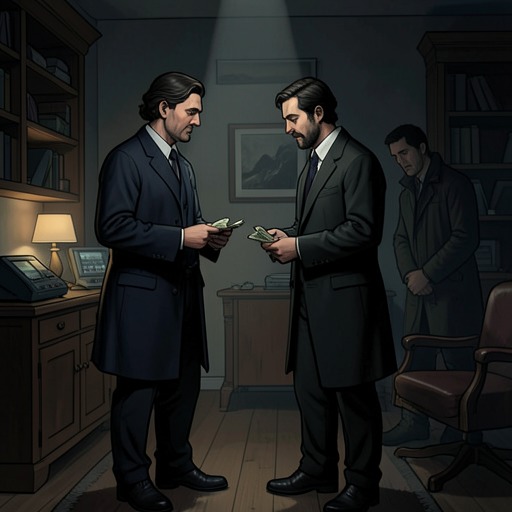
One purchase makes the cost of that access concrete. The narrator uses money from an educational grant intended to pay for studies to buy pills from Big, counting out the money while Big counts the tablets. The narrator returns to the Rock-and-Roll McDonald’s with enough OxyContin for the couple to last until Monday, relieved despite having spent nine hundred dollars he could not afford to lose. The relief is inseparable from the financial damage: money set aside for education has become a few days’ supply.
That supply also contrasts with an unsuccessful attempt to obtain heroin through Gary. Gary claims to have drugs but arrives without them, later leaving with the narrator’s $180. The loss matters, but the OxyContin bought from Big prevents it from becoming an immediate crisis for the couple. The episode shows why pills can seem comparatively dependable: Gary’s promised heroin disappears with the money, whereas Big’s tablets are counted and physically received. Yet this is only a temporary advantage, not security against the next shortage.
The Cycle of Relief
As withdrawal returns, the couple dissolve pills and inject them again. On one night, they feel so bad that they each take a larger dose; the two tablets cost them ninety dollars, and afterward they feel better and expect to get through the night. They already anticipate that the next morning will require another ninety dollars simply to get out of bed. The sequence makes the drug’s relief both immediate and bounded: a dose changes how they feel now, while the next expenditure is already built into the expectation of waking.
The same logic shapes their decisions when they have a little money. They consider buying heroin in a larger amount, but the narrator recognizes the risk that street heroin may be heavily cut: a purchase described as three grams could contain only one gram of heroin, while a seven-gram purchase might still yield only one gram of heroin and substantially more adulterant. OxyContin, by contrast, is not cut in that way. Because Big is not regarded as dishonest, buying pills seems the safer use of scarce cash. The preference is practical rather than a sign of control: the pills are trusted as a product, but the couple remain dependent on buying and injecting them repeatedly.
The narrator and Emily return to Big for ten pills on a day that begins with the hope that things are going well. That ordinary errand carries the same fragile promise as the earlier purchase: a limited quantity offers immediate breathing room, not an end to the cycle. Each transaction renews relief while leaving the underlying dependence, and the need to find the next supply, in place.
Formulation Change and Consequences
The supply problem becomes more severe when manufacturers change how OxyContin is made. The newer pills are hard like rubber and cannot be crushed; when crushed pills are mixed with water, they form a gel that cannot be injected. The change therefore disrupts not just availability but the couple’s established way of using the drug. Pills that remain present in circulation may no longer be usable for them, while the older, crushable version grows steadily rarer.
The narrator explicitly separates Big from the shortage: Big would have OxyContin as long as it continued to be manufactured. The difficulty lies in what the pills have become, not in his unwillingness to sell. For the couple, a supply of tablets that cannot be injected does not solve the problem. As the older formulation dwindles, they foresee being left with heroin as their only workable drug, even though Big does not sell it. That prospect means relying on an unknown dealer whom they do not trust and expecting to suffer more severely from withdrawal.
Narrative Significance
OxyContin’s role shifts from an expensive but comparatively reliable reprieve to a source of looming instability. Its short duration is established in the couple’s morning injections and repeated returns to the drug; its cost appears in money diverted from education and in purchases calculated only to reach the next night or morning. The pills’ apparent dependability is repeatedly qualified by their limited effect, the need to obtain them again, and the shrinking supply of a formulation that can be injected.
The formulation change makes the couple’s dependence vulnerable to an external alteration in the product itself. They have built their routines around crushing and dissolving pills, so a physical change that prevents injection threatens to redirect them toward a less predictable source of heroin. OxyContin thus marks both a temporary refuge from withdrawal and the narrowness of the choices available to the narrator and Emily: the substance can briefly ease their suffering, but it cannot provide lasting relief or protect them from the next disruption.