Calcutta's Dry-Day System
ChowringheeCalcutta’s dry-day system is a restriction on drinking in public that redirects, rather than extinguishes, the city’s appetite for alcohol. At the Hotel Shahjahan, it makes a lobby drink impermissible while private hospitality continues behind closed doors; its effects are visible both in Phokla Chatterjee’s anger and in the elaborate arrangements through which business guests find somewhere to drink.
Rules and Contradictions
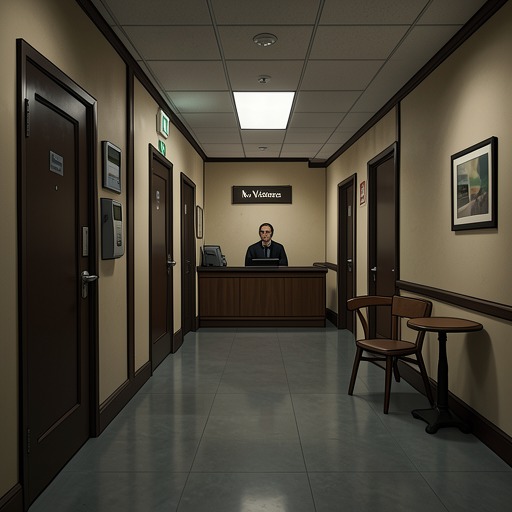
The evidence presents dry days through the practical distinction between alcohol being available and people being allowed to drink it publicly. When Phokla Chatterjee asks for a drink in the hotel lobby, a staff member refuses, explaining that drinks cannot be served there. Satyasundar Bose continues working and responds with a smile. The exchange places the rule not in an abstract legal account but at a working counter: a guest wants a drink, an employee has no authority to provide one, and the restriction is enforced through the ordinary routines of hotel service.
Phokla objects to what he sees as the inconsistency of the arrangement. In his account, the authorities do not object to alcohol being sold, yet people are prevented from drinking in public. His complaint invokes the struggle against British rule and the deaths of the country’s martyrs, setting the current restriction against the promises of independence. The novel does not supply a full legal history or resolve the contradiction he describes. Instead, his outburst makes the system’s perceived unfairness part of the scene: a rule experienced as political disappointment as well as personal inconvenience.
Private Drinking and Unequal Access
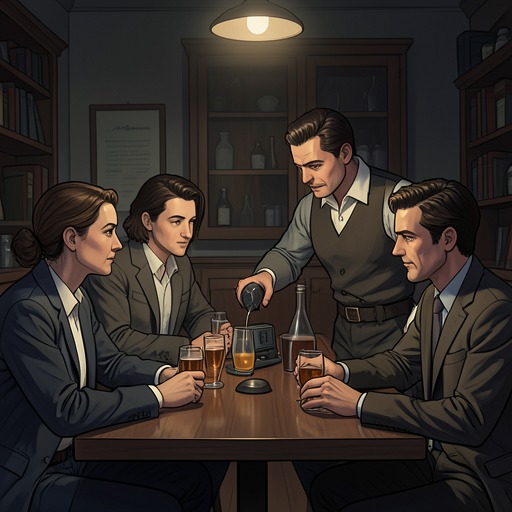
The alternative to a public bar is not abstinence. Phokla explains that he was the first to take Agarwalla to Mrs Chakladar’s home, where people could drink quietly in a domestic atmosphere. On dry days, the minimum admission cost there was twenty rupees. That concrete price marks private access as a paid privilege, not an equivalent public option. The house’s appeal rests on being able to drink in comfort and relative privacy, while the entry charge puts a cost on that discretion.
The arrangement also extends beyond dry days. Phokla says that Agarwalla later began taking guests there on other days and went regularly. In a separate episode, Anindo Pakrashi reports that guests wanted to return to Mrs Chakladar’s, but senior government officials had hired the place for the entire night. Mrs Kanoria had promised her own guests that no one else would be present, and the officials were cautious about the possibility of a newspaper report. Together, these details show private drinking as part of a wider hospitality economy: access depends on hosts, bookings, money, and discretion, not simply on the formal status of the day.
Workers, Clients, and the Business of Drink
Phokla’s account connects that economy to the labour of people who arrange entertainment for others. He says that he has spent his life doing other people’s dirty work, helping businessmen entertain clients, while his own return has been free drinks, occasional payments of a few hundred rupees, and a diseased liver. He imagines that capital of his own could have supported an industrial group and given work to hundreds of unemployed young people. His bitterness exposes an unequal distribution of benefit: wealthy clients receive hospitality, while the intermediary who helps supply it is left with neither a fortune nor good health.
The hotel’s managers also treat guest business as a source of revenue. Satyasundar Bose presents an incoming business delegation as good news for the Hotel Shahjahan, anticipating full rooms, a return to former occupancy levels, and renewed investment in dancers. He also reminds the narrator to send reports to the police. The delegation scene does not define the dry-day rule, but it places drinking and entertainment within the hotel’s managed traffic of guests, business, and official procedure. The public restriction coexists with commercial efforts to keep visitors entertained and spending.
Recurrence and Narrative Significance
Dry days recur as a condition that alters where characters go and what hotel staff can do. When Marco Polo fails to return after leaving early in the evening, Mathura Singh explains that he usually goes somewhere to drink on a dry day, but has never before been away so long. The episode does not identify his destination or explain his delay; its significance lies in the unusual length of his absence. A familiar pattern of going out for a drink becomes a source of anxiety when it breaks.
Across these scenes, the system is shown less as a simple prohibition than as a pressure that redistributes drinking into particular spaces. The hotel lobby is governed by rules and staff limitations; the private house offers costly, controlled access; and the hotel itself profits from the guests and entertainment that keep the city’s hospitality business moving. Phokla’s protest, the price of admission, the officials’ concern about publicity, and Marco Polo’s habitual departure give the policy distinct human consequences without reducing them to a single legal explanation.