The Confinement of Bar Hostesses During the Day and After Work
ChowringheeThe Confinement of Bar Hostesses During the Day and After Work is a gendered restriction advertised as part of the Hotel Shahjahan’s protection of its reputation. Its clearest recorded instance is the promise that Marian Booth and Jane Grey would be kept locked up during the day and after completing their work at night. Jane’s rejection of the arrangement turns that boast of control into a test of the hotel’s treatment of women workers.
The Advertisement and Its Promise
Hobbs produces an old newspaper clipping from a notebook of press cuttings spanning decades. The Hotel Shahjahan’s manager announces that Marian Booth and Jane Grey will arrive at Kidderpore aboard the SS Hawaii on September 22, and advertises their service to guests in language that makes their pleasure and well-being the hotel’s concern. Beneath that promise, the notice says the women will remain locked up during the day and after their nightly duties, ostensibly to preserve the hotel’s hard-won reputation.
The juxtaposition makes the confinement part of the advertisement’s sales pitch rather than a private staff arrangement: the hotel publicly presents the restriction as evidence of its respectability. Yet the notice also shows how that reputation is made to depend on controlling the women whose labor and presence are being promoted. The clipping survives as evidence because Hobbs kept it among his collected newspapers; a boast designed for a passing publicity campaign becomes a record that can later be examined.
Silverton’s Reframing and Jane’s Refusal
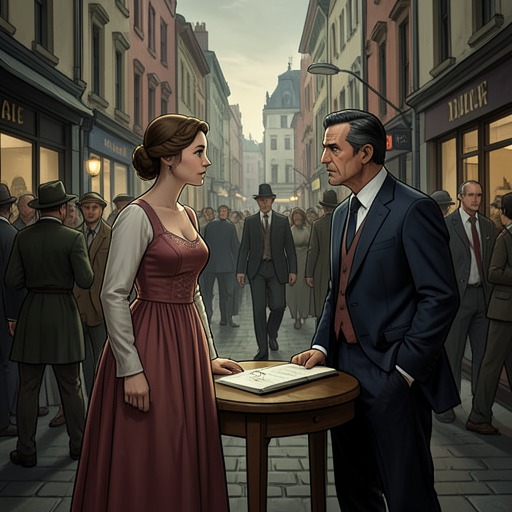
When Jane objects to signing a contract, Silverton first tries to persuade her to reconsider and offers her a commission on sales. He then tells her that the lock-up was only a publicity strategy and offers her the key, saying she may do as she pleases. His explanation recasts the advertised confinement as a device for attracting attention, while his offer of a key suggests that the restriction can be withdrawn at his discretion.
Jane declines to treat that concession as a solution. She tells him there is no longer any need for her to be kept locked up and suggests that he can give the supposed opportunity to the new barmaid. She refuses the contract and chooses to resign. Her decision follows her discovery of the conditions behind the hotel’s offer: she had come from severe poverty at home to earn a decent living, not simply to make money, and the commission does not alter what she has seen.
Public Image and the Management of Women’s Visibility
The episode sets the hotel’s crafted public image against the worker’s judgment of its actual terms. Silverton’s description of the lock-up as publicity makes the contradiction explicit: the confinement is presented to newspaper readers as a reassurance about the hotel, then privately explained to Jane as a marketing tactic. Her refusal punctures that presentation by refusing the material inducement and the employer’s power to define the arrangement as harmless.
Elsewhere, the hotel’s control of women’s public appearance takes a different form during Connie’s performance. At the end of the first act, the electricians extinguish the lights to preserve her modesty; when the lights return, she is backstage in a robe and out of breath. This is not described as confinement, but it places the advertised lock-up beside another managed boundary between women’s work, exposure before an audience, and retreat from view. Together, the episodes make the hotel’s concern with women’s visibility part of its commercial staging, while Jane’s departure establishes the limits of the control she is willing to accept.