the marriage of sex and technology
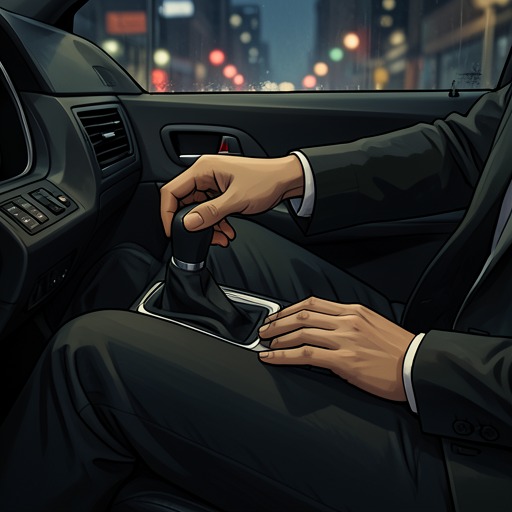
CrashThe marriage of sex and technology is the governing expression for Crash's transformation of automotive modernity into an erotic and catastrophic system. It describes a world in which cars, instruments, roads, cameras, crash tests, and bodies become inseparable, so that sexual acts are repeatedly staged through the forms of collisions and technological control. The phrase is therefore both a description of the novel's recurrent imagery and a diagnosis of its future: sex and technology form a nightmare marriage whose intimacy is inseparable from violence, injury, and death.
Definition and Narrative Function
The expression first operates as a summary of the novel's central vision. After the narrator's crash, the erotic fantasies generated by pain lead him toward an investigation of the motor-car in all its forms. His affair with Helen Remington develops alongside visits to stock-car races and experiments involving crashed vehicles, while Robert Vaughan pursues an even more extreme fantasy: dying in a car crash with Elizabeth Taylor. The expression gathers these plot lines into a single structure, in which technological objects and sexual bodies continually interpret and intensify one another.
The marriage is not presented as a harmonious union. It is a nightmare because the car's designed surfaces and mechanisms absorb human desire while also organizing mutilation. The narrator imagines the interior of a vehicle as a sexual field, reading the instrument panel, steering assembly, controls, and chromium fittings as bodily geometries. In one hospital fantasy, rescue procedures become so stylized that even an imagined sexual intrusion by a fireman seems consistent with the scene's formal logic of violence and rescue. Technology has not displaced sexuality; it has given sexuality a new, frightening choreography.
Bodies, Cars, and Erotic Surfaces
The expression becomes concrete in the narrator's sexual encounters with Helen Remington. During intercourse in a parked car, he registers her body against the vehicle's instrument panel, clocks, speedometer, and steering wheel, so that the act appears to take place between human anatomy and automotive design rather than within a purely human relationship. Afterward, Helen handles the narrator's penis while examining the car's compartment for other possible uses of the act, and the narrator responds by touching her breast while gazing at the instrument panel as a jewel-like technological grotto. The car functions simultaneously as room, machine, partner, and diagram.
The same fusion governs the narrator's encounter with Helen at the airport. While a coach rams a taxi below the European Terminal, injured people are lifted from the wreckage and police vehicles push through the traffic jam. The sexual act above the concourse continues within the visual and acoustic field of that accident. The narrator then sees Vaughan photographing him from across the parking bays, treating the sexual scene and the surrounding traffic violence as parts of the same observable system. The collision below does not interrupt desire; it supplies the spectacle through which desire is rendered technologically legible.
The expression reaches one of its clearest forms in the car-wash encounter between Catherine Ballard and Vaughan. As the rollers pound the roof and doors, Catherine and Vaughan have sex inside the moving machinery. Their bodies are pressed into postures that recall the injured occupants of a crashed limousine, while the narrator imagines their union as a celebration of the marriage of their bodies with benign technology. The machine cleanses the car even as the sexual act reproduces the gestures of injury, making the apparent harmlessness of the wash inseparable from the violence encoded in the bodies' positions. When the cycle ends, the car is immaculate, but the erotic scene has converted its automated routine into a repetition of crash imagery.
Injury, Repetition, and Technological Death
Robert Vaughan gives the expression its most concentrated and destructive form. Once a television computer specialist concerned with computerized control of international traffic systems, Vaughan combines scientific authority, aggressive self-publicity, and the appearance of a hoodlum. His career ends after a severe motorcycle crash, and his face retains the displaced, reassembled appearance of that impact. His scars are not simply evidence of past damage: they become part of his sexual and technological identity, visible signs through which he seeks to connect bodies, machines, and future collisions.
Vaughan's obsession with Elizabeth Taylor's death is articulated through a detailed fantasy of a head-on crash. He imagines the two cars collapsing together in endlessly repeated slow motion, the actress's face breaking through frosted windshield glass, compound fractures caused by handbrake mountings, and injuries to both victims' genitals. In the fantasy, the manufacturer's medallion pierces her uterus, while his semen spreads across the luminous engine dials that preserve the final temperature and fuel levels. Reproduction, mechanical measurement, and death occupy the same image. The car's instruments record the catastrophe even as the bodies turn it into an erotic consummation.
Vaughan is calm only when describing this final crash. He speaks of its wounds with the tenderness of a separated lover and uses his own sexuality to keep the narrator under his influence. His desire is therefore not merely for a particular woman or a spectacular accident; it is for a total scene in which erotic attachment, technological impact, bodily mutilation, and death become indistinguishable. His damaged body supplies the emotional and physical bridge between the machine and the imagined catastrophe.
The Road Research Laboratory converts this private fantasy into a public technical procedure. A motorcycle and a saloon car, each carrying mannequins, are deliberately driven into one another before spectators. The impact crushes the bonnet, windshield, and roof; the mannequin family's front-seat woman is embedded in the fractured windshield; and engineers collect the severed-looking sections of the fibreglass cyclist as if gathering the remains of a ritual sacrifice. The test is designed to measure and manage danger, yet its spectacle produces the same fascination with posture, wounds, and collision that governs Vaughan's sexuality. Scientific control thus becomes another form of eroticized death rehearsal.
Collective Spectacle and Future Rebirth
The marriage also extends beyond individual fantasies into public life. At a crash involving a limousine and a taxi, spectators observe the displaced radiator grille, distorted frame, and patterns of frosting on shattered glass with the calm concentration of knowledgeable consumers. The crowd's studied interest suggests that modern traffic has made disaster a shared visual culture. Around the accident, the immobilized traffic forms a paralysed hurricane, and the narrator feels at ease within it, as though the multiplying vehicles have finally relieved his obsessions rather than caused them.
The spectators' imagined sexual response to the injured young woman in the limousine turns the accident into a collective reproductive scene. The broken compartment becomes a chamber in which violence and desire are joined, and the crowd imagines future life emerging from their conjunction. This is not an isolated private perversion: the accident has made the entire public roadway an erotic theatre, with police, spectators, rescue workers, vehicles, and bodily wounds arranged in a common ritual.
The narrator's final reflections give the expression a quasi-religious dimension. Sitting with Vaughan in a damaged car, he experiences calm, tenderness, and love for both Vaughan and the metal enclosure. The two men expose their scars to the injury sites inside the vehicle and to the traffic beyond it, celebrating through their wounds the imagined rebirth of those killed by traffic and of the millions who have yet to die. The wrecked car becomes a metal bower, while wounds function as points of contact between human bodies, machines, the dead, and the future.
When the narrator later watches Catherine's aircraft above the motorway, the vehicles below appear to draw the possible trajectories of flight across the landscape. Technology with wings supplies a blueprint for a passage toward heaven, but the vision remains inseparable from Vaughan's body, his flies, his scars, and his anticipated return through twisted radiator grilles and cascading windshield glass. Even Vaughan's death cannot end the system he represents. The crash becomes a form of rebirth, and technological wreckage becomes the medium through which desire persists.
Thematic Significance
The marriage of sex and technology names Crash's collapse of distinctions that modern culture normally keeps apart: pleasure and pain, engineering and fantasy, rescue and intrusion, public safety and spectacle, love and violence, reproduction and death. The narrator's hospital fantasies, Helen Remington's erotic use of the car, Vaughan's crash photographs, the laboratory test, the car wash, and the spectators gathered around wreckage all repeat the same underlying movement. A machine first structures the scene; the body then enters its geometry; injury supplies the scene's erotic charge; and death appears as the final consummation.
The expression also explains why the novel treats traffic technology as more than a background. Vaughan's damaged expertise, his Lincoln Continental, his interest in President Kennedy's assassination, and his determination to engineer a final collision make the automobile a historical and symbolic instrument as well as a means of transport. The car carries public memory, masculine authority, scientific calculation, sexual fantasy, and self-destruction at once. Its polished surfaces promise control, while its crashes reveal the violence already latent in that promise.
Ultimately, the marriage is a warning rather than a program for liberation. The book presents an overlit technological future in which desire is increasingly drawn toward designed environments, recorded images, simulated impacts, and bodily damage. Its disturbing power lies in showing that the future does not arrive by abolishing human sexuality; it arrives by giving sexuality new machines through which to repeat its oldest impulses toward possession, reproduction, violence, and death.