Memoria amorosa
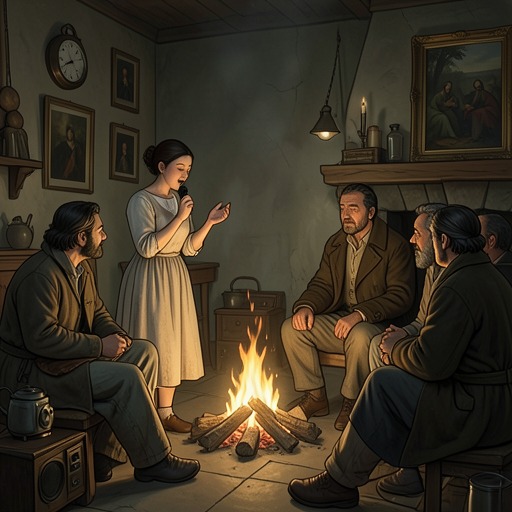
DianaMemoria amorosa is the recollection of past love as an active, often painful force in the present. In Los siete libros de la Diana, memory is not simply a record of happiness: it reopens promises, reinterprets cherished objects, and makes familiar landscapes bear the weight of changed relationships. The novel gives this process a pastoral form, placing recollection beside rivers, fountains, flocks, and songs; its recurring question is not only what was loved, but what remains of that love after time has altered its terms.
Pastoral Places and the Return of Memory
Sireno’s arrival in the mountains of León begins with a landscape that summons an earlier life. At the green meadows watered by the Ezla River, he remembers the contentment he once enjoyed there, when he was free and tended his flock. His former days had a settled pastoral rhythm: he watched the sheep, took pleasure in the spring flowers, and used a rabel or zampoña to compose verses praised by the shepherdesses of the district. He had not concerned himself with fortune, changing times, or the ambitions of courtiers. Love interrupts that self-contained world; returning to the same meadows, he finds that their beauty now sharpens rather than soothes his grief.
A beech tree and the bank of the river frame his return to the place where he first saw Diana. He looks across the familiar landscape until his gaze reaches that remembered meeting-place, and the sight releases tears and sighs. The setting functions as a trigger: a physical location makes an absent relationship present, but cannot restore the earlier freedom with which Sireno once inhabited it. The countryside remains a place of flowers and water; for the returning shepherd, it has also become an archive of loss.
The fountain of the alders gives Selvagia a parallel setting for recollection. After bringing her flock into the woods, she sits beside the water and recalls Alanio’s earlier devotion: he had wept before her and begged for mercy, while she had refused him. Now she understands herself as the abandoned lover, asking how the man who once pleaded could have tired so quickly of loving her. Her memory makes the reversal legible. The past is not merely something she longs for; it is evidence against the present, because Alanio’s former conduct and apparent constancy make his change especially difficult to accept.
Tokens, Letters, and the Contradictions of Memory
Sireno’s recollection gathers around objects he has kept close. After dwelling on the old meeting and the vows Diana made by the clear fountain, he takes from his breast a paper wrapped around green silk cords and Diana’s hair. These tokens give his memories a material focus: they can be handled and returned to their place, even though the relationship they signify cannot be recovered in the same way. His response is divided. He calls the relics deceptive, yet cannot bring himself to part with them; having seen them is itself part of his suffering.
The paper also contains a letter Diana sent during their happier period. Sireno first wishes it destroyed and resents the thought that anyone might read it; then he unfolds it. The letter recalls Diana’s assurances that she loved him deeply, asks him not to surrender to jealousy and suspicion, and promises that her honor would remain intact. In the present, those assurances do not settle his grief. The letter preserves what she once said, but its survival also exposes the distance between the language of their former intimacy and the loss he now experiences. Written words endure in a way that the confidence they offered did not.
Selvagia’s memories work differently but make a related conflict visible. She recalls not only Alanio’s tears and petitions but her own earlier refusal of compassion. That remembered history complicates her accusation: the roles have changed, and she now suffers the kind of helpless attachment she once failed to understand. She also measures the present against the promises she believed in, including the hope that a love not driven by desire beyond loving her would not end. Recollection therefore carries both grievance and self-recognition. It supplies a history for her pain without making the present reversal disappear.
Songs as Forms of Recollection
The novel gives memory a voice through pastoral song. Sireno’s return to the landscape leads into a lament, but his singing is repeatedly interrupted or overtaken by tears. After one sad song, he lets the rabel fall, takes up Diana’s golden hair again, and discovers her letter among the objects in his bag. The sequence links musical expression to the material acts of remembering: song gives grief a public form, while the relics draw it back toward the private history of the couple.
Other songs make the passage of time itself an object of lament. A sonnet heard in the pastoral gathering begins by looking back on greater happiness and a soul that once knew more joy. Another song imagines time as a cruel executioner and longs for the wheel of fortune to be fixed, so that change might cease. These poetic forms do not merely interrupt the prose narrative. Their backward-looking language and images of unstable fortune turn individual sorrow into a repeated pattern: remembered happiness is measured against a present that has moved beyond it.
Diana’s later song beside the fountain returns the narrative to a place already charged with the lovers’ history. Her loose hair, lowered gaze, and tears accompany a romance that presents sadness as bound to the circumstances of her birth and life. Sireno, listening from among the myrtles with Selvagia and Silvano, acknowledges that there was a time when her music and her sight would have given him greater pleasure than they do now. The scene repeats the old conjunction of Diana, song, and the fountain, but changes its emotional result. The remembered setting remains; Sireno’s response has altered.
Time, Change, and the Limits of Recovery
Across these episodes, memory preserves distinctions that time threatens to blur: past vows against present absence, former contentment against current grief, and earlier devotion against later change. A Portuguese song associated with Duarda similarly places changing times and the ending of life beside the persistence of faith. It offers a concise contrast to the lovers’ histories: some commitments are voiced as enduring, while the attachments recalled by Sireno and Selvagia have been transformed by events.
Memoria amorosa in the novel is consequently neither a simple refuge nor a cure. The remembered meadow does not return Sireno to the freedom he once possessed; the letter cannot make Diana’s past assurances sufficient to his present; and Selvagia’s recollection of Alanio’s devotion explains the depth of her injury without restoring his constancy. Songs, landscapes, and keepsakes make the past perceptible, but they also mark its distance. Their force lies in that double action: love survives as memory, even when the relationship remembered can no longer be resumed in its former shape.