The liminal phase
DopesickThe liminal phase names a narrow opening between a person’s willingness to seek treatment and the moment that willingness passes. In Dopesick, it is not simply a test of resolve: the opening can close while families and volunteers search for a bed, arrange transport, or try to bridge institutions that do not coordinate care. Through Tess Henry’s repeated attempts to enter treatment, the phrase describes both a precarious human interval and a service system’s failure to respond quickly enough.
Meaning and Narrative Function
Jamie Waldrop gives the interval its name while trying to help Tess find long-term rehabilitation. She explains that readiness to leave for treatment may last only a short time, so a bed and practical arrangements have to be available before the person changes course. The term turns an apparently private decision into a problem of timing: a wish for help can be real and urgent, yet still not carry someone through the steps required to receive it.
That distinction matters throughout the account. Treatment is not a single destination reached by deciding to recover. It involves finding an appropriate program, meeting its requirements, arranging payment and travel, and maintaining connection through transitions such as discharge from a hospital or detox center. Each delay can make the next step less attainable. The phrase therefore directs attention away from an uncomplicated story of individual choice and toward the fragile connection between a person’s readiness and the availability of care.
The Conditions Around Treatment
Tess’s circumstances show how much that opening depends on practical resources. After leaving jail while nearly seven months pregnant, she stayed with her mother and attempted to make a relationship with her baby’s father work. Her family then found the Life Center of Galax, one of the few facilities in Virginia that accepted patients receiving medication-assisted treatment. Private insurance covered most of the $20,000 cost, while her father paid a $6,500 deductible from the remainder of her college savings. Tess used Subutex during the final month of pregnancy, after spending the earlier part of the pregnancy in heroin addiction.
Later, buprenorphine helped Tess feel normal and prevented withdrawal while reducing cravings, but the price of maintaining treatment remained substantial. Insurance covered 80 percent of the medication, whereas visits to her addiction doctor required cash: $700 up front and $90 to $100 per follow-up, potentially as often as four times a month. Patricia criticized these cash-only arrangements, and waiting lists further restricted access. At the time, federal rules limited MAT-certified doctors to 100 patients; the cap rose to 275 later in 2016. These details make clear that readiness alone could not secure consistent treatment when access was constrained by cost, provider capacity, and waiting time.
Social acceptance also shaped whether care could continue. Tess had attended Alcoholics Anonymous and Narcotics Anonymous meetings, but some participants regarded buprenorphine as incompatible with being clean. Although Narcotics Anonymous officially accepted medication-assisted treatment, members asked to sponsor or mentor Tess declined. The resulting rejection added another barrier to support at a point when she was trying to remain connected to recovery. The book places this stigma alongside the broader gaps between health care and criminal justice, gaps that families and volunteers were left to navigate while addiction remained hidden by shame.
Openings That Close
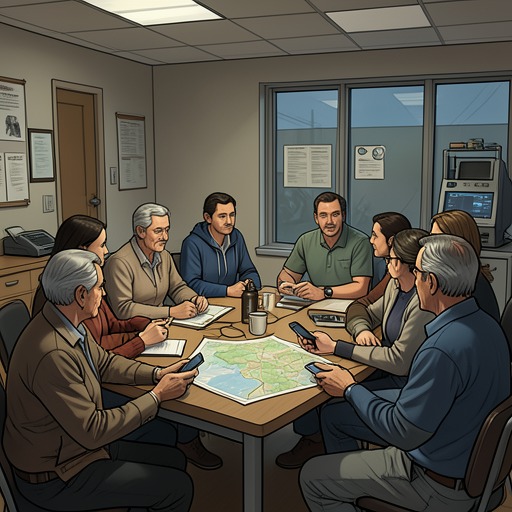
During several months in early 2016, Jamie and other Hope Initiative volunteers tried to help Tess move from crisis toward treatment. As summer turned to fall, Tess moved among the streets, jail, a battered women’s shelter, and psychiatric wards. She wanted Jamie to find a long-term program, but the moment when she would accept that help could be brief. Before the volunteers could meet her, she disappeared again. The problem was not simply that a suitable program had to be found; the timing of its availability had to match her willingness to go.
A later attempt illustrates the same fragility. While Tess was in a local hospital, volunteers tried to arrange a long-term rehabilitation placement in Nevada. They needed a bed available when she left the hospital and had to address a remaining $12,000 cost after the rest of her college fund had been spent. Patricia considered asking her eighty-five-year-old father to release part of Tess’s expected inheritance early. The family was trying to coordinate a narrow period of opportunity against financial and logistical obstacles, rather than relying on motivation alone.
The window closed again when Tess checked herself out of the hospital before a place in an Asheville rehabilitation program, or another placement, could be secured. Patricia described how one contact on Tess’s cellphone could draw her back into a dangerous spiral. By late 2016, this repeated loss of opportunity unfolded amid rising overdose danger: Roanoke recorded the state’s highest number of emergency-room overdose visits from September to November, most driven by fentanyl. The surrounding crisis sharpened the consequences of delay without making a timely treatment placement any easier to secure.
From Individual Readiness to System Design
The Hope Initiative tried to make the response more immediate. Its volunteers assembled a five-page spreadsheet listing thirty-six rehabilitation and aftercare providers across the southeastern United States, so they could contact programs according to a patient’s finances and available beds. At the Bradley Free Clinic, people without outstanding warrants could meet trained volunteers who helped troubleshoot care, while social-service workers could assist eligible patients with Medicaid applications. The spreadsheet is a practical counterpart to the liminal phase: it organizes information and contacts in anticipation of a moment that may not last long.
The same concern appears in work to shorten the passage from emergency treatment to continuing care. Warren Bickel received a grant to pilot protocols that would connect overdose patients directly from emergency rooms to outpatient buprenorphine, including through a newly approved monthly injection. In his account of a family friend, a physician had reduced the man’s Suboxone dose after he tested positive for other opioids; Bickel argued that the patient needed a higher dose, not a lower one. His proposed transfer protocols addressed a point at which a short break in care could undermine the chance to continue treatment.
The liminal phase thus functions as more than a description of Tess’s recurring uncertainty. It exposes the mismatch between the speed of a person’s changing readiness and the slower pace of systems organized around beds, fees, eligibility, appointments, and discharge procedures. In Dopesick, hope depends not only on whether someone is willing to accept help, but also on whether families, clinicians, and volunteers can make the next step possible while that willingness remains.