Papal infallibility
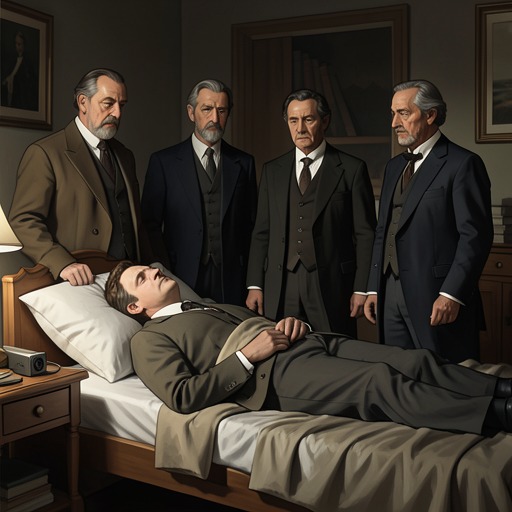
DublinersPapal infallibility is presented in a bedroom conversation as a doctrine about the limits of papal error and the authority of an ex cathedra declaration. Martin Cunningham’s explanation moves from a troubled question about morally compromised popes to a dramatic story of dissent and submission: the doctrine, as he tells it, does not claim that every pope is admirable, but that none has taught false doctrine when speaking with the Church’s highest authority. The scene’s force lies as much in the telling as in the proposition, which gathers the listeners into a moment of solemn belief.
The Doctrine in Conversation
The discussion begins when Tom Kernan, troubled in mind and trying to recall Protestant theology on difficult points, asks Cunningham whether some earlier popes had not been “up to the knocker.” His hesitation and circumlocution make the question less a formal challenge than an attempt to reconcile the failings of individual religious leaders with the Church’s claims. Cunningham concedes that there were “bad lots,” then distinguishes their personal conduct from doctrinal teaching: not even the worst drunkard or most “out-and-out ruffian,” he says, ever preached false doctrine ex cathedra.
Fogarty supplies the concise explanation that gives the exchange its doctrinal center: when the Pope speaks ex cathedra, he is infallible. The claim is therefore framed in a particular sense. It concerns authoritative teaching, not a declaration that popes are personally without sin or weakness. Kernan says he remembers the doctrine from when he was younger, though his recollection trails into uncertainty. The conversation retains that unevenness: Catholic teaching is being recalled and explained among laymen, not delivered as a formal theological lesson.
Cunningham’s Story of Resistance
Asked how papal infallibility became a dogma, Cunningham turns the doctrine into a historical scene. He describes a sacred college of cardinals, archbishops, and bishops in which, in his account, all but two supported the doctrine. One opponent is identified as a German cardinal whose name Cunningham cannot settle; Power jokes about the uncertainty, while Fogarty doubts Cunningham’s identification of the other dissenter. Cunningham insists that the second was John MacHale, also called John of Tuam.
The narrative reaches its decisive instant when the Pope stands and declares infallibility a dogma of the Church ex cathedra. Cunningham depicts MacHale, who had argued against the proposal, rising at once to cry “Credo!” The declaration changes the status of the matter in the story: resistance gives way to submission as soon as the papal pronouncement is made. Cunningham says that MacHale’s response demonstrated his faith; he then contrasts him with the German cardinal, who would not submit and left the Church. In this telling, the doctrine is dramatized not merely as a rule about authoritative speech but as a test of obedience once that speech has occurred.
Authority as Speech and Performance
The episode gives a performative shape to the doctrine. Within Cunningham’s account, the Pope’s words do not simply describe an existing belief: his ex cathedra declaration establishes infallibility as dogma. MacHale’s “Credo!” then answers that authoritative utterance with an act of assent. The sequence is sharply staged—debate, papal declaration, immediate submission—and its emotional clarity is more pronounced than the conversation’s uncertain details about the dissenters’ identities.
The mode of persuasion is also significant. Cunningham’s story relies on a memorable contrast between the near-unanimous assembly, the two opponents, and the different outcomes of their resistance. His image of MacHale fighting “dog and devil” gives the dispute the energy of a struggle, while the cry of belief supplies its resolution. The listeners are not offered a detached account; they are drawn toward the doctrine through voice, gesture, and narrative suspense.
The Listeners and the Scene’s Effect
Cunningham holds up two thick fingers while recounting the two dissenters, then drinks before resuming the story. The others follow his lead. Earlier, whisky being poured into glasses has provided what the narrative calls an agreeable interlude; now the drink and the conversation sit beside one another, joining ordinary sociability to talk of church authority. The detail does not cancel the seriousness of the subject. Instead, the scene shows religious belief being sustained through the familiar rhythms of a gathering as well as through formal doctrine.
The effect of Cunningham’s performance is made explicit: his words build a vast image of the Church in the minds of those listening, and his deep, raucous voice thrills them as he speaks the word of belief and submission. When Mrs Kernan enters, drying her hands, she encounters a solemn company. She does not interrupt the silence but leans over the rail at the foot of the bed. Kernan then says that he once saw John MacHale and will never forget it, shifting the exchange from Cunningham’s account of a historical confrontation to Kernan’s own remembered encounter with the figure at its center.
Significance
Papal infallibility brings together authority, memory, and the social force of storytelling. Cunningham distinguishes the alleged moral failings of individual popes from the narrower claim that an ex cathedra teaching is protected from doctrinal error. But the scene gives that distinction life through a tale in which argument ends at the moment of declaration and belief is expressed as immediate submission.
At the same time, the exchange exposes the distance between doctrine and the men’s grasp of its historical details. The German cardinal’s name shifts uncertainly, and the identity of the second opponent is disputed before Cunningham reasserts it. That uncertainty does not undo the story’s effect: the scene’s center is the remembered cry “Credo!” and the solemn hush it creates among the listeners. By the time Mrs Kernan enters, the doctrine has become not only an idea under discussion but the occasion for a shared performance of reverence.