Seal of the confessional
DublinersThe Seal of the confessional is one of the priestly duties that the boy learns to regard as exceptionally grave. Through Father James Flynn’s explanations, it becomes part of a wider education in the intricate obligations of the Church, rather than a simple rule detached from religious practice.
Meaning in the Boy’s Instruction
Father James Flynn tests the boy with questions about whether particular sins are mortal, venial, or merely imperfections. These lessons unsettle the boy’s assumption that the Church’s institutions consist of straightforward acts: he begins to see them as complex and mysterious systems requiring careful distinctions and serious judgment.
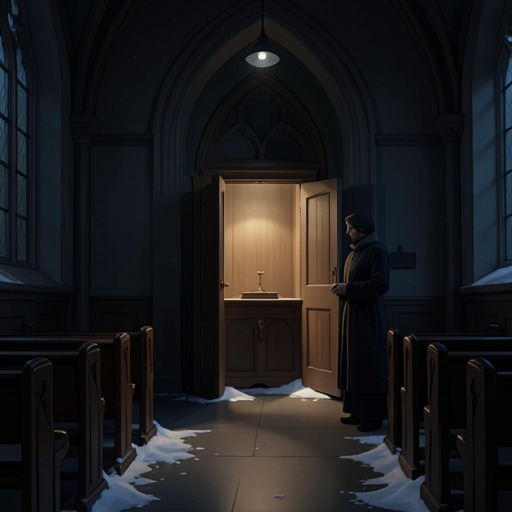
Within that instruction, the duties of a priest toward the Eucharist and the secrecy of the confessional stand out to the boy as especially weighty. He wonders how anyone could find the courage to undertake them. The seal is thus presented not merely as a restriction on speech, but as a demanding responsibility bound to the priest’s office.
The Boy’s Memory of Father James Flynn
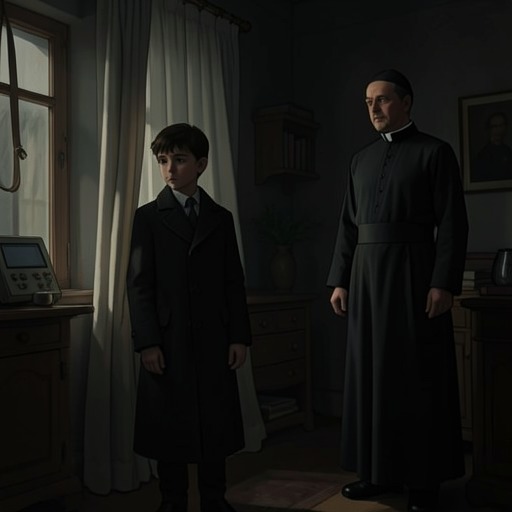
The boy’s sense of the seal’s gravity belongs to a larger memory of Father James Flynn as a teacher. Flynn had studied at the Irish college in Rome, taught the boy to pronounce Latin, and explained the ceremonies of the Mass and the vestments worn by a priest. His lessons made religious practice feel both more intelligible in detail and more mysterious in its demands.
Flynn also rehearsed the responses of the Mass with the boy and put him through difficult questions about sin and conduct. When the boy struggled to answer, Flynn would smile and nod; as he recited, Flynn sometimes pushed pinches of snuff into his nostrils. These remembered gestures place the instruction in the texture of their personal acquaintance, while the boy’s unease at Flynn’s exposed, discoloured teeth recalls the strangeness that persisted alongside familiarity.
Narrative Significance
The seal contributes to the story’s portrayal of religious authority through the boy’s perspective: its obligations are known to him through teaching, but their full weight remains beyond his understanding. His questions do not resolve the mysteries of the priest’s office; instead, they reveal how much judgment and responsibility he associates with it.
After Father James Flynn’s death, the boy recalls these lessons while walking in the sun. He had felt a surprising freedom at the news of the death, despite recognizing how much Flynn had taught him. The remembered gravity of the confessional duty sharpens this tension between instruction and unease, attachment and release; the passage presents the obligation as part of what made the priestly world both compelling and difficult for the boy to comprehend.