The Halfpenny Marvel
DublinersThe Halfpenny Marvel is a cheap adventure paper in “An Encounter,” where it helps turn reading into both a rehearsal for escape and a source of conflict with school authority. Kept among Joe Dillon’s adventure magazines, it feeds the boys’ Wild West games; when Leo Dillon is caught with a copy during a Roman History lesson, Father Butler dismisses its contents as rubbish and orders him back to his studies. The paper’s significance lies in that double role: it opens a door in the boys’ imagination, then becomes the object through which their school polices what they should read.
Identity and Place in the Boys’ Library
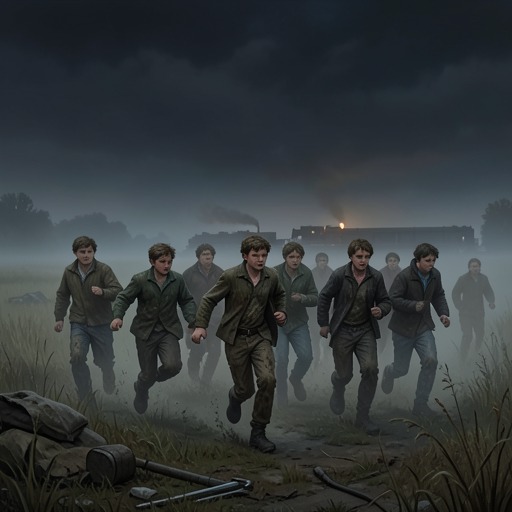
Joe Dillon’s little library consists of old numbers of The Union Jack, Pluck, and The Halfpenny Marvel. The magazines are not merely named as reading matter: they provide the imaginative material for the boys’ evening games in the back garden. They arrange Indian battles, storm the stable loft held by Joe and his younger brother Leo, or fight on the grass. Joe, wearing an old tea-cosy as a headdress and beating a tin, gives each bout its victorious ending with a war dance. The paper belongs to a shared world of borrowed adventure, acted out with makeshift equipment and an exuberance that the narrator finds both exciting and intimidating.
The narrator does not respond to the collection in a uniform way. Wild West stories are remote from his nature, and he is among the more reluctant boys who join the group partly because they fear seeming studious or lacking in robustness. He prefers American detective stories, especially those that feature fierce, unkempt, beautiful girls. Yet the adventure literature still matters to him: it opens a prospect of escape from the routines and expectations of home and school. The Halfpenny Marvel thus belongs to a broader imaginative appetite, even where it is not the narrator’s preferred kind of story.
The Magazine in the Classroom
The contrast between private play and school discipline sharpens when Father Butler is hearing the boys recite Roman History. He questions Leo over the lesson, prompting him to continue the passage beginning with the words “Hardly had the day.” Leo cannot answer the historical question adequately, and Father Butler discovers a copy of The Halfpenny Marvel in his pocket. As Leo hands it up, the other boys assume innocent expressions; Father Butler turns its pages and identifies a story about “The Apache Chief!” The magazine, previously a source of collective play, is now a piece of evidence against a pupil who has not been studying.
Father Butler calls the story rubbish and condemns the man who writes such material. He says he might understand a boy reading it if he were a National School boy, but finds it surprising that educated pupils should do so. His reprimand links literary taste to class and educational status: the same popular paper that supplies the boys’ games is presented as beneath the proper reading of pupils at their school. He warns Leo not to bring any more of it into the college and tells him to get back to work. The correction is aimed at Leo, but it alters the narrator’s sense of the group’s adventure reading too.
Escape, Shame, and the Desire for Experience
The narrator describes the rebuke as draining much of the Wild West’s glory. Leo’s confused, puffy face awakens one of the narrator’s consciences, suggesting that the spectacle of punishment makes the pleasure of the reading harder to separate from shame. The scene does not, however, extinguish the attraction. Once the school’s restraining influence is distant, the narrator again hungers for wild sensations and for the escape offered by stories of disorder. The magazine’s imaginative force survives the teacher’s attempt to confine it to the category of worthless distraction.
The tension becomes a matter of action rather than reading alone. The boys’ nightly mimic battles eventually grow as wearisome to the narrator as the morning routine of school. He wants real adventures, and concludes that such adventures do not come to people who stay at home: they must be sought abroad. As summer approaches, he decides to break out of school life for at least one day and plans a day of truancy with Leo Dillon and Mahony. They save sixpence apiece and arrange to meet on the Canal Bridge before going along the Wharf Road, crossing by ferry, and walking out to the Pigeon House. The plan is not an episode supplied by the magazine, but it grows out of the contrast the story has established between imagined adventure and the desire to experience something beyond routine.
Narrative Significance
The Halfpenny Marvel is a modest physical object with an outsized place in the episode’s structure. It first appears as one title in Joe’s collection, embedded in a world of games; it then reappears in a lesson, where the boys’ excitement gives way to surveillance and reprimand. That movement makes the paper a hinge between fantasy and institution. The boys can stage battles in the garden, but in the classroom their reading is judged against Roman History, discipline, and the standards implied by the word educated.
The paper also helps distinguish the narrator’s stages of desire. He is not simply a devoted reader of Wild West stories: he is initially reluctant to perform their roughness, drawn more strongly to detective tales, and unsettled by the punishment of Leo. Nevertheless, the adventure stories give form to his wish to escape. When imitation ceases to satisfy him, the yearning they have helped kindle points outward, toward the planned excursion. The title therefore marks the gap between adventure consumed as cheap printed fiction and adventure imagined as something that must be sought in life, without guaranteeing that the real outing will fulfill the promise of the stories.